Aeropress Techniques to Extract Maximum Flavor in Under a Minute With Precise Infusion Timing
Use the inverted Aeropress method with 17g of medium-fine ground coffee-about the texture of granulated sugar-and 250ml of water at 175°F (80°C) for balanced, rich flavor. Stir firmly 10–12 times, then press steadily for 20–30 seconds. Avoid rushing the press or using boiling water to prevent bitterness. A burr grinder and gooseneck kettle improve control. You’ll see how small tweaks sharpen results.
Notable Insights
- Use the inverted method with 17g coffee and 250ml water just off boil for full control and precise timing.
- Apply firm, steady pressure for 20–30 seconds to maximize flavor without over-extraction or sludge.
- Grind coffee to a uniform medium-fine consistency, similar to granulated sugar, to ensure balanced extraction.
- Optimize water temperature to 175°F (80°C) to highlight sweetness and avoid bitterness in fast brewing.
- Perform 10–12 firm stirs immediately after pouring to achieve even saturation and consistent flavor.
Brew Bold Aeropress Coffee in Under 60 Seconds
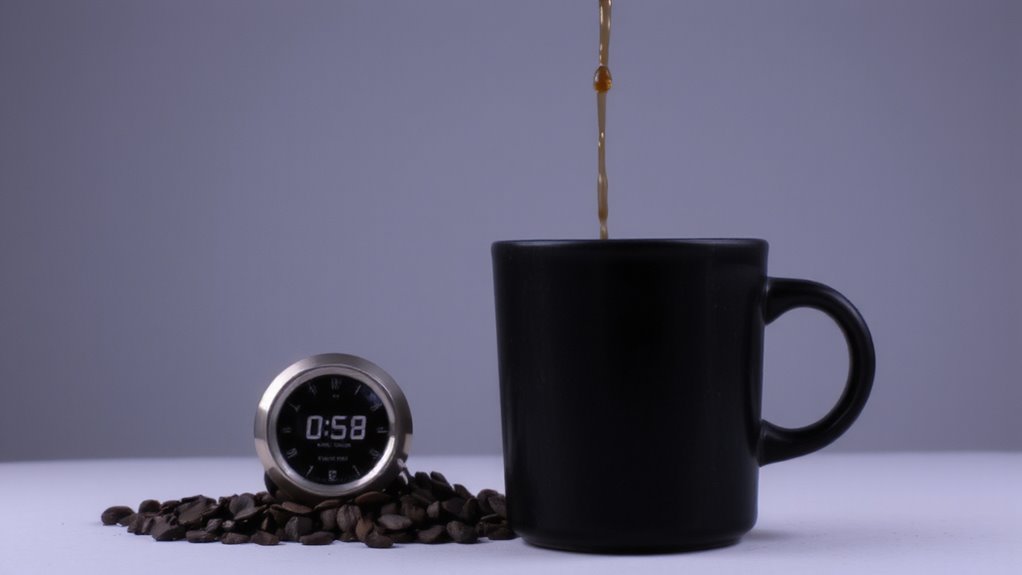
Speed matters when chasing bold, rich coffee, and the Aeropress delivers-especially when you’ve only got under a minute. You can achieve near espresso extraction in around 50 seconds by using a fine grind and a fast, consistent stir. This method relies on pressure infusion, where your press forces hot water through compacted grounds, intensifying flavor and body. Use 17 grams of coffee and 250 ml of water just off boil, inverted if preferred, for maximum control. A firm, steady press takes about 20–30 seconds-too fast and you under-extract; too slow and it over-extracts. While not true espresso, this quick technique mimics its strength without needing an expensive machine. It works best with medium-dark roasts and medium-fine beans. Keep your equipment clean-residue skews taste. This is practical, repeatable, and ideal when time and flavor both matter. For even better results, consider using essential Aeropress accessories that enhance precision and consistency in every brew.
Why Fast Aeropress Brewing Actually Works
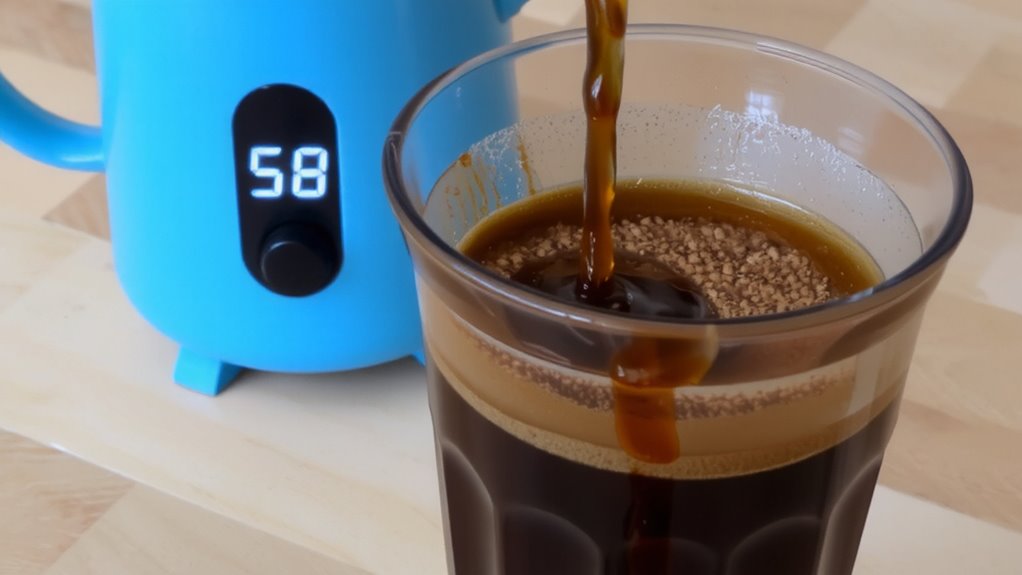
You’ve seen how quick brewing delivers bold flavor in under a minute, but it’s worth asking why such a short process works so well. The answer lies in rapid extraction and pressure dynamics. When you press the Aeropress, you apply pressure that forces water through coffee grounds faster than gravity alone. This pressure speeds up extraction, pulling out desirable flavors before bitterness has time to develop. Rapid extraction works best with the right balance of grind, time, and pressure-too little, and your coffee tastes weak; too much, and it becomes harsh. Unlike drip brewing, which relies solely on gravity, the Aeropress uses active pressure to control the flow, making it more efficient. This method consistently produces rich, clean coffee because you’re extracting quickly but effectively. It’s not just fast-it’s smart chemistry in action.
The Best Grind Size for Quick Brewing
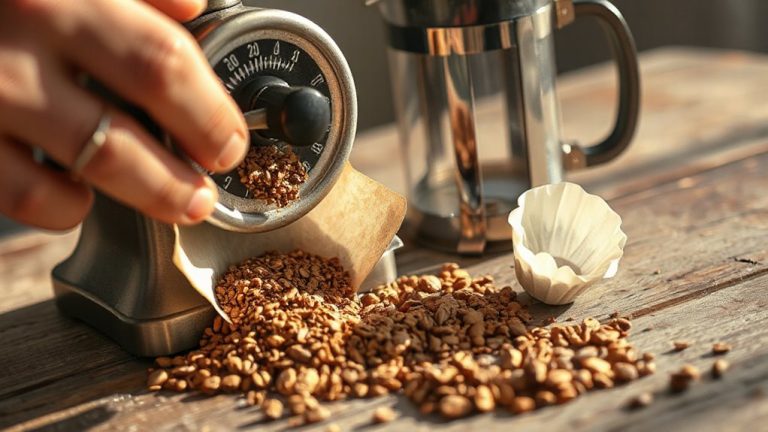
Fine but not dusty-that’s the sweet spot for grind size when brewing quickly in an Aeropress. You want particles similar to granulated sugar, fine enough to extract fast but not so fine that they clog or over-extract. Grind consistency matters because uneven particles lead to unbalanced flavor-some under-extract while others turn bitter. A burr grinder gives you way better particle distribution than a blade model, ensuring most pieces are the same size. If your grind’s inconsistent, you’ll taste the flaws fast, especially in short brews where timing is tight. Go with a quality grinder like the Baratza Encore or Fellow Ode; they deliver reliable results. Avoid powdery fines-they slow drainage and can make your coffee harsh. Aim for uniformity, not just fineness. With good grind consistency, your quick brew stays smooth, rich, and fully extracted, every time. The best coffee grinders combine precision and durability to maintain optimal grind size and consistency.
Use This Water Temperature for Balanced Flavor
Around 175°F (80°C) is where you’ll hit the sweet spot for water temperature when aiming for balanced flavor in an Aeropress. This temp gently extracts sweetness and acidity without pulling out harsh, bitter compounds. If your water’s too hot-say, above 195°F-it can over-extract, especially with lighter roasts or delicate bean origin profiles like Ethiopian or Kenyan. Cooler water also works better with soft water, where mineral content affects extraction; hard water may need slight adjustments due to differences in water chemistry. Always consider your roast level and bean origin: dense beans from high altitudes often need slightly warmer water, but 175°F is a safe starting point. You can tweak by ±5°F based on taste. Use a gooseneck kettle with a thermometer or a temperature-controlled model like the Fellow Stagg EKG for accuracy. This small control makes a real difference in clarity and balance. For precise pour control, consider a gooseneck kettle designed specifically for pour-over brewing.
Stop These 5 Speed-Brew Mistakes
What’s the hurry? Rushing your Aeropress brew often leads to weak, uneven coffee. First, don’t skip pre-wetting the filter- it stabilizes temperature and keeps paper taste out. Second, skipping a proper stir means poor extraction; use 10–12 firm stirs for even saturation. Third, pressing too hard forces sludge through the filter, making brew bitter and messy-let pressure build naturally. Fourth, using inconsistently ground coffee ruins brewing consistency, so invest in a decent burr grinder. Fifth, ignoring your equipment upgrades, like a metal filter or gooseneck kettle, limits control and flavor clarity. Each shortcut might save seconds, but they sacrifice quality. For repeatable, rich coffee, slow down and respect the steps. Consistency beats speed. Your taste buds will notice the difference-even if you’re brewing in under a minute.
Dial In Time, Grind, and Temp for Intensity
Once you’ve fixed the speed-related errors in your Aeropress routine, it’s time to focus on the three main variables that shape your brew’s strength and clarity: time, grind size, and water temperature. Your brew time directly affects flavor extraction-too short and it’s weak, too long and it’s bitter. A finer grind increases surface area, boosting extraction, but go too fine and you risk over-extraction or clogging. Water temp matters just as much; aim for 175–205°F. Lower temps slow extraction, useful for bright, acidic beans, while higher temps speed it up, ideal for deeper notes. Unlike cold brewing, which uses room temp or cold water over hours, Aeropress relies on precise heat and timing. Adjust one variable at a time. Try a medium-fine grind with 200°F water and a 60-second brew to start. That combo often delivers balanced intensity without harshness.
How to Make 45-Second Aeropress Coffee (Step-by-Step)
A 45-second Aeropress brew isn’t about rushing-it’s a controlled method that favors brightness and clarity, especially with lighter roast beans. Start by heating water to around 175°F-just off boiling-and grind your coffee to a medium-fine consistency, like table salt. Place a filter in the cap, rinse it, and assemble the chamber on your mug. Add 14 grams of coffee, then pour 200 grams of water, starting your timer. Stir gently for 10 seconds to guarantee even saturation. At 30 seconds, press down steadily and evenly until you hit 45 seconds. Stop pressing when you hear a hiss-this prevents bitterness. Unlike a cold brew, which takes hours and extracts slowly, this quick method avoids flavor degradation by limiting exposure time, preserving acidity and aroma. Use a sturdy mug and fresh beans for best results. This technique works well when you want clarity without sediment or over-extraction.
On a final note
You can brew bold, flavorful coffee in under a minute with the Aeropress if you use a fine grind, water just off boil (around 200°F), and precise timing. Avoid rushing the stir or skipping the bloom. Stick to 45–60 seconds total infusion time, then press steadily. It won’t mimic a French press or drip, but for speed and clarity, it works. With practice, it’s repeatable, portable, and consistent-perfect for quick mornings.