Maximizing Aroma Release Through Controlled Water Temperature in AeroPress Brewing
Use water between 175°F and 205°F to maximize aroma in your AeroPress brew-too hot causes bitterness, too cool leads to flat flavor. Let boiling water sit 30 seconds to hit 195–200°F, ideal for bright, clean cups. Pair cooler temps with a finer grind, hotter water with medium-fine. A gooseneck kettle helps maintain precision. Preheat your gear to stabilize extraction. You’ll find small tweaks can noticeably refine your results.
Notable Insights
- Use water between 175°F and 205°F to preserve volatile aromatic compounds during AeroPress brewing.
- Aim for 195–200°F by waiting 30 seconds after boiling to optimize aroma without scorching grounds.
- Cooler temperatures (175–185°F) enhance clarity and delicate floral notes in light roast coffees.
- Pair finer grinds with lower temperatures to increase extraction efficiency and aromatic complexity.
- Maintain consistency using a temperature-controlled gooseneck kettle to maximize repeatable aroma release.
How Water Temperature Affects AeroPress Aroma
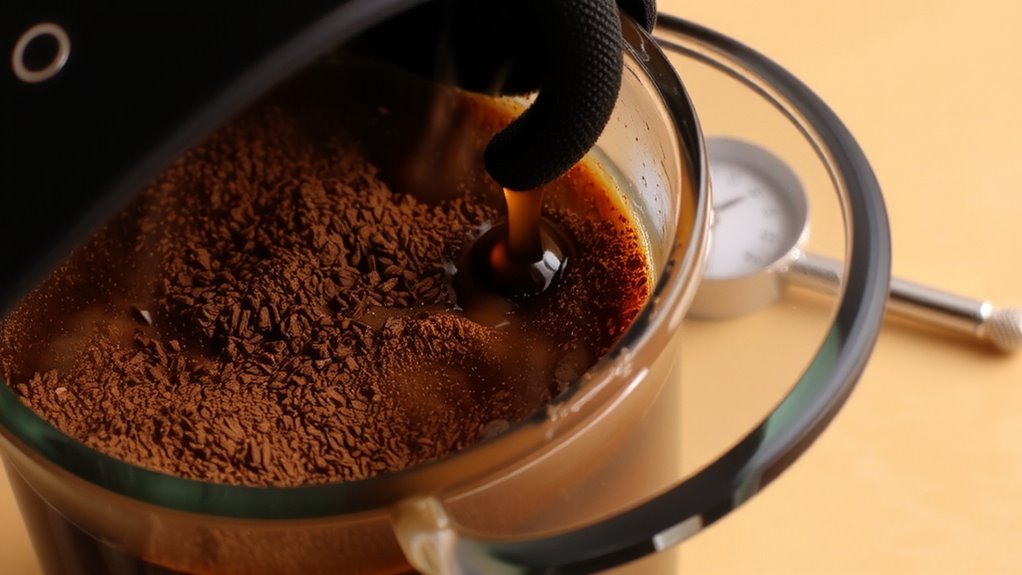
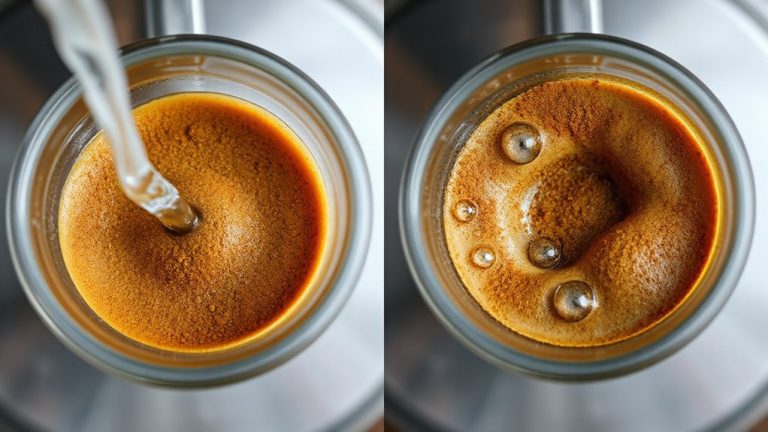
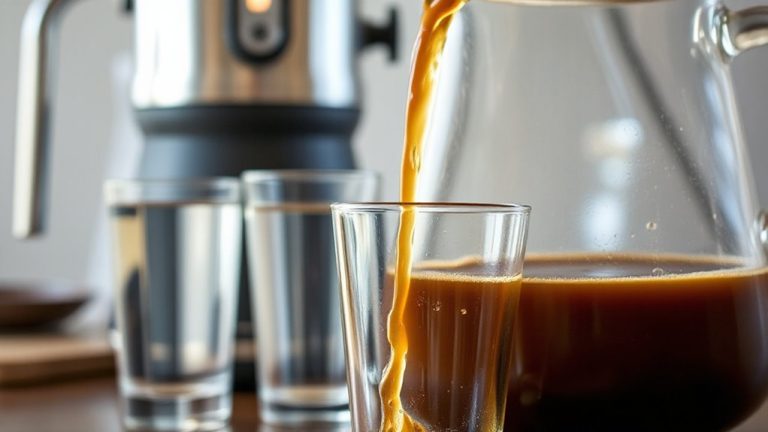
While you might be tempted to use boiling water right off the kettle, doing so can actually harm the aromatic quality of your AeroPress brew. High heat accelerates coffee oxidation, breaking down delicate flavor compounds and leaving your cup flat and bitter. For better aroma, slightly cooler water slows this process, preserving complexity. It also improves bloom duration-around 30 to 45 seconds-allowing CO2 to escape evenly so extraction is more consistent. Too hot, and gases release too fast, shortening the bloom and reducing clarity in the cup. You’re not just brewing coffee-you’re managing chemical reactions. Controlled water temperature helps balance them. While some prefer boiling water for boldness, most find cooler temps enhance sweetness and aroma. Use a gooseneck kettle with an accurate thermometer or an adjustable temperature model like the Fellow Stagg EKG. It gives you control without hassle, letting you fine-tune each brew with repeatable results. A top-rated gooseneck kettle can make a significant difference in temperature precision and pour control.
Use 175°F to 205°F for Optimal Flavor
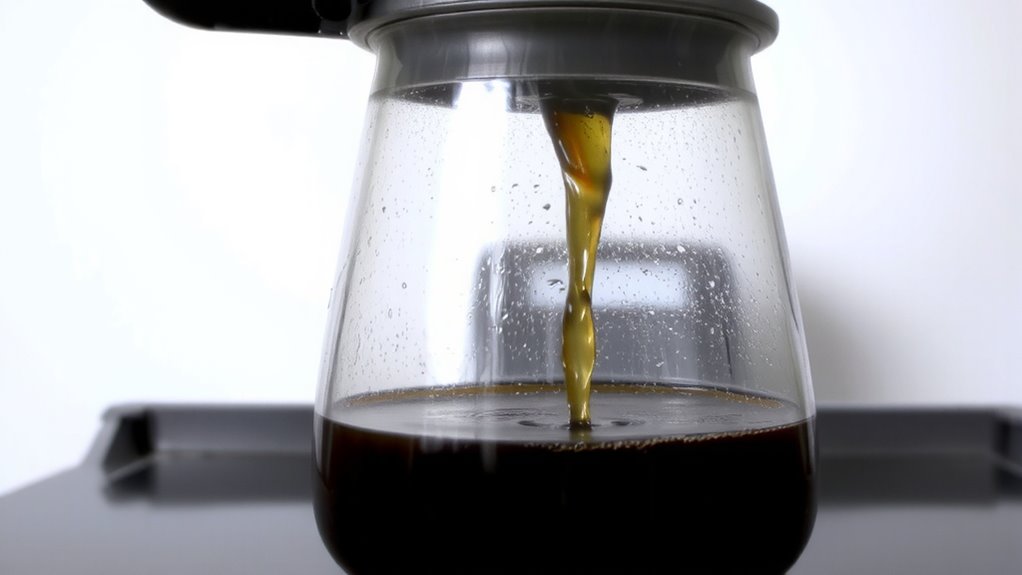
Most brewers agree that the sweet spot for AeroPress water temperature falls between 175°F and 205°F, and hitting that range consistently makes a real difference in flavor. Too cold, and your brew lacks clarity; too hot, and bitterness creeps in fast. Staying within this window helps achieve brew symmetry-balancing extraction speed and solubility for even results. You’re not just chasing strength-you’re fine-tuning flavor calibration, pulling out nuanced notes without over-extracting harsh compounds. A gooseneck kettle with temperature control, like the Fellow Stagg EKG, makes hitting 185°F or 195°F repeatable. Dialing in depends on your beans and preferred profile: lighter roasts often do better near 200°F, while darker roasts can shine at 185°F. Consistency here means predictable, cleaner cups every time. This precision isn’t fussy-it’s practical control that shapes your final cup with reliability. Exploring different pour techniques can further refine your results, as seen in methods highlighted in Perfect Your Pour: Top Manual Coffee Brewing Methods, where manual brewing methods play a critical role in aroma and flavor development.
Match Grind Size to Water Temperature
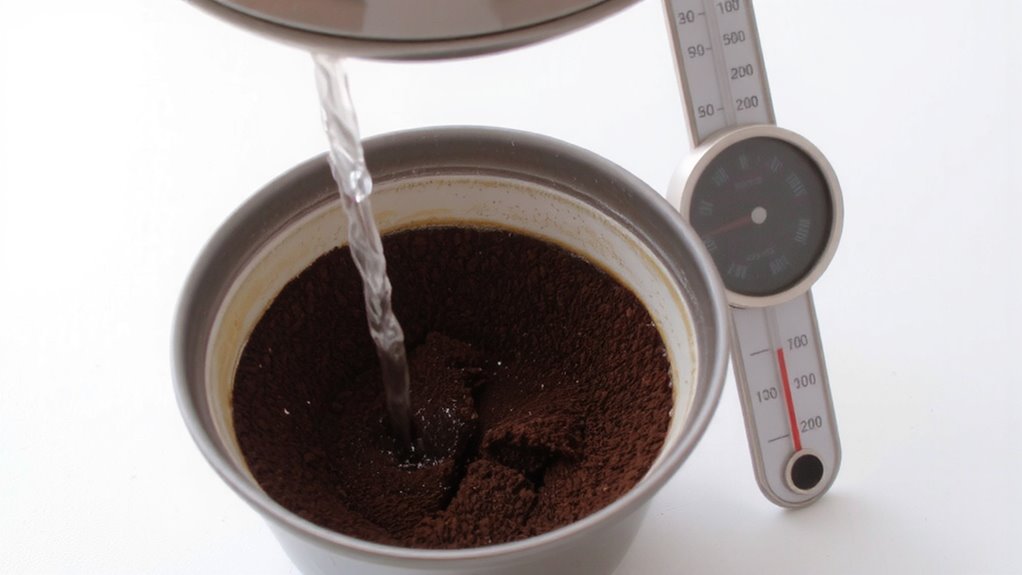
Since water temperature affects extraction speed, you’ll want to pair it with the right grind size to avoid over- or under-extracting your coffee. If you’re using hotter water (like 200°F), go with a slightly coarser grind-think medium-fine, similar to table salt-to slow extraction and prevent bitterness. Cooler water (around 175°F) needs a finer grind to increase surface area and compensate for slower extraction. Maintaining grind consistency is key; uneven particles lead to uneven extraction, muddying your cup. A burr grinder gives you that control, while blade grinders often don’t. Your contact time matters too: shorter brews (1–2 minutes) work better with finer grinds, longer ones need coarser settings. Matching grind size to temperature guarantees balanced flavor and maximizes aroma without overdoing acidity or bitterness. For precise measurements that support consistent brewing, consider using one of the best coffee scales recommended by experts.
Dial In Your AeroPress Temperature
What if the key to revealing your coffee’s full aroma wasn’t just technique, but temperature? You can fine-tune your AeroPress game by dialing in water temperature with precision. Proper water preheating stabilizes brewing conditions, improving extraction. Pair this with controlled brew agitation-gentle stirring-to activate even aroma release without over-extracting bitter notes.
| Temp (°C) | Taste Profile | Best For |
|---|---|---|
| 80 | Bright, tea-like | Light roasts |
| 85 | Balanced, clean | Medium roasts |
| 90 | Full-bodied | Dark roasts |
| 93 | Bold, intense | Espresso-style |
| 96+ | Risk of bitterness | Not recommended |
Adjusting temperature gives you more control than changing grind or time alone. Use a gooseneck kettle with thermometer for accuracy. With water preheating and consistent brew agitation, you’ll hit the sweet spot faster-every time.
Fix These Common Water Temp Mistakes
Ever wonder why your AeroPress brew sometimes tastes flat or bitter, even when you follow the same steps? Chances are, water temperature is the culprit. Letting your kettle sit too long after boiling drops the temp too low, leading to under-extraction and dull flavor. On the flip side, pouring water straight off a rolling boil (above 205°F) scorches delicate compounds, causing aroma degradation and harsh notes. These mistakes create brewing inconsistencies that ruin batch-to-batch accuracy. Don’t rely on timing-use a thermometer or temperature-controlled kettle for precision. If you’re using a standard electric kettle, wait about 30 seconds off boil for a safe 195–200°F range. This sweet spot maximizes aroma release without damage. Skipping this step might seem minor, but it directly impacts clarity, balance, and scent intensity in your cup. Control the temp, and you’ll eliminate the most common, avoidable flaws in your routine.
Fine-Tune Temp, Grind & Time for Your Taste
How do you make your AeroPress brew taste exactly how you like it? Start by adjusting water temperature-lighter roasts from bright bean origins like Ethiopia often shine at 195–205°F, while darker beans handle 185–195°F. Your grind size matters just as much: finer grinds increase extraction, which can boost flavor but risk bitterness if overdone. Coarser grinds slow extraction, useful for longer brew times. Speaking of time, most ideal steep times fall between 1:30 and 2:30 minutes, but tweak based on your trial. Since the AeroPress is a compact brew vessel, it cools quickly-preheating helps maintain stable temp. Always consider how bean origin, roast, and your equipment interact. Small, consistent changes to temp, grind, and time let you tune the brew precisely. Test one variable at a time, and take notes-your perfect cup is personal, but science-guided.
On a final note
You’ve got more control over your AeroPress aroma than you think. Stick to 175°F–205°F, adjust grind size with temperature, and tweak time to match. Don’t use boiling water-it scalds beans and creates bitterness. A gooseneck kettle helps, but a thermometer works too. Small changes add up: cooler water gives smoother results, hotter brings out boldness. Test one variable at a time.