Choosing Between Porcelain, Stainless Steel, and Glass Containers to Optimize Moka Pot Brewing Efficiency
You’ll get the most reliable results with stainless steel-it heats evenly, resists warping, and works on any stove. Porcelain keeps heat well and adds elegance, but it’s fragile and needs careful heat control. Glass lets you watch the brew, helping time your pot’s removal, though it cools quickly and risks cracking. For daily use, stainless steel like Bialetti or Alessi models offers durability and consistency. Each material shapes your brew-knowing their strengths helps you choose wisely.
Notable Insights
- Stainless steel offers optimal brewing efficiency with even heating, durability, and consistent pressure buildup.
- Porcelain provides flavor neutrality and good heat retention but requires careful, low-heat use to prevent cracking.
- Glass allows real-time brew monitoring for precise extraction control but has poor heat retention.
- Stainless steel resists warping and thermal shock, making it ideal for daily use on any stovetop.
- Choose stainless steel for performance, porcelain for aesthetics, and glass for visual brewing precision.
How Material Affects Moka Pot Coffee Quality
Material matters when it comes to your moka pot’s performance and the final cup. If you’re using a plastic or lower-density material, you’ll notice higher material porosity, which can absorb oils and odors over time, affecting taste. These materials also tend to have low thermal inertia, meaning they heat up and cool down quickly-this can lead to uneven brewing or scalded coffee. Porcelain, while attractive, shares similar issues: it’s prone to cracking under rapid temperature shifts and retains heat inconsistently. You’re better off avoiding it for daily use unless you’re prioritizing aesthetics over function. Materials with lower porosity and more stable thermal inertia deliver cleaner, more repeatable results. You’ll want something that resists staining, won’t impart off-flavors, and responds predictably to heat. That balance affects extraction, bitterness, and aroma in your final brew-key factors you can control by choosing wisely.
Stainless Steel: Best for Heat and Durability
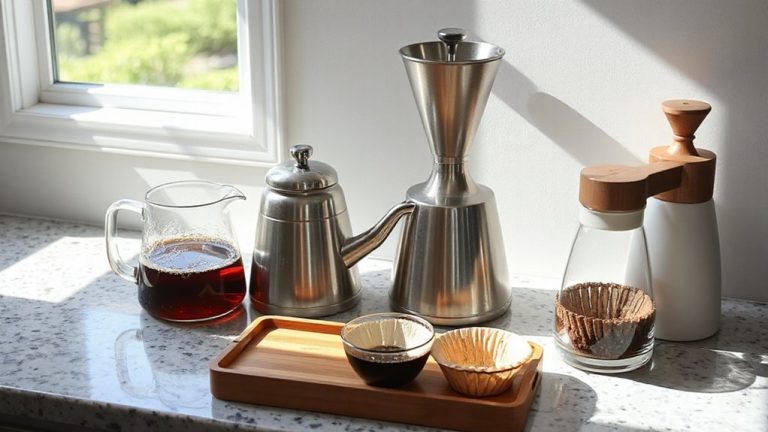
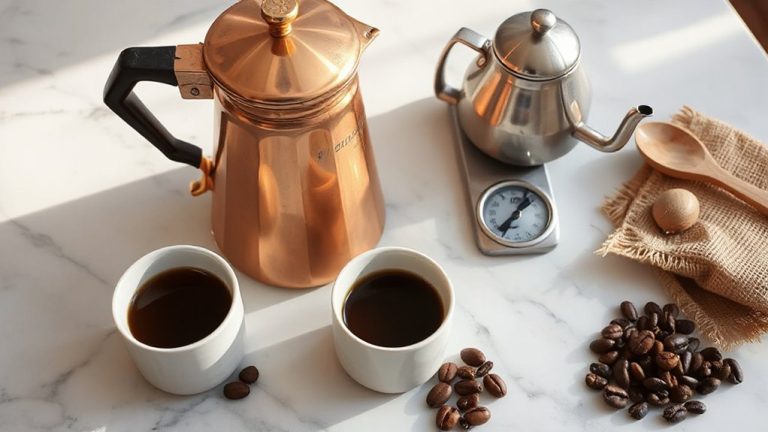
While other materials may seem appealing at first glance, stainless steel stands out for its ability to handle heat evenly and resist wear over time. You benefit from its strong thermal conductivity, ensuring rapid, consistent heating across the base and walls-critical for stable pressure buildup in your Moka pot. Unlike cheaper aluminum models, high-quality stainless steel won’t warp after repeated stovetop use, offering long term resilience whether you’re on electric, gas, or induction. It’s also non-reactive, so no off-flavors seep into your coffee. Sure, it’s heavier than glass or porcelain and doesn’t show brew levels as clearly, but durability wins when you’re brewing daily. Brands like Alessi and Bialetti offer polished 18/10 steel models that last years with minimal care. If you value reliability and performance over aesthetics, stainless steel is your best bet-practical, efficient, and built to last.
Porcelain: Pure Flavor, Even Warming
A porcelain Moka pot brings a unique blend of flavor purity and steady heat distribution to your brew routine. You’ll notice its excellent thermal retention keeps the water and steam at a consistent temperature during brewing, which helps extract a balanced shot without sudden spikes. Porcelain’s flavor neutrality guarantees no metallic aftertaste-your coffee tastes exactly as it should, clean and true to origin. However, you must use low to medium heat, as high temperatures can crack the material. Unlike stainless steel, porcelain is more fragile and not ideal for stovetop types that generate intense, uneven heat. It works best on electric or smooth-top stoves where control is easier. While it heats more slowly, the even warming helps avoid scalding the grounds. Popular models like the Bialetti Mukka Express use porcelain for these reasons. Just handle with care-this material demands more attention but rewards it with quality.
Glass: See-Through Control, Cooler Brew
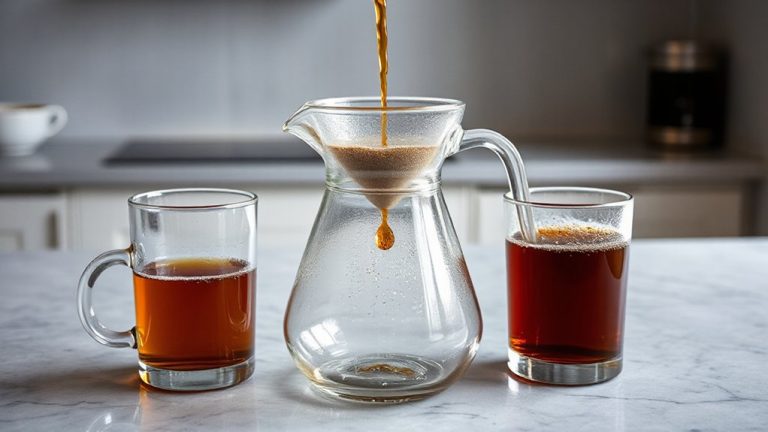
You can watch your brew progress in real time with a glass Moka pot, something porcelain doesn’t allow. This transparency advantage lets you see when brewing starts, peaks, and ends, helping you remove the pot at the ideal moment. But glass has high temperature sensitivity, cooling faster than stainless steel or porcelain once off the heat. That means your coffee can drop below peak serving temperature quicker. Glass also requires careful handling-it’s fragile and can crack under sudden heat changes. While it doesn’t add flavor like some metals, it doesn’t retain heat well either. Use it on low to medium heat to reduce thermal shock. Ideal for induction cooktops only with a heat diffuser. If you value visual control over heat retention, glass gives you precision brewing insight-but you must act fast once brewing finishes to preserve warmth.
Pick Your Ideal Moka Pot Container by Use Case
How often do you brew, and where? If you make coffee daily at home, stainless steel is your best bet-built to last, heats evenly, and offers exceptional ease of cleaning. Its sleek look holds up over years, delivering consistent brews with minimal maintenance. Porcelain shines in aesthetic appeal, perfect for slow weekend mornings or serving guests-it looks great on a rustic table, but it’s fragile and slower to clean. Glass? It’s ideal if you want to watch the brewing process, though it breaks easily and doesn’t retain heat well. For office or travel use, go stainless: durable, efficient, and simple to wipe down. Prioritize function over form if you’re brewing daily; choose porcelain only if presentation matters more than practicality. Match your container to your routine, not just your decor.
On a final note
You’ll get the most consistent brews with stainless steel-it handles heat well and lasts. If flavor purity matters most, porcelain’s a solid pick, but it’s fragile. Glass lets you watch the brew, though it cools faster and risks overheating if left too long on the stove. Match the material to your stove type, cleaning habits, and how much you value control versus durability. Each has trade-offs; your routine decides the best fit.