Influence of Glass Containers on Pour Over Coffee Acidity Levels
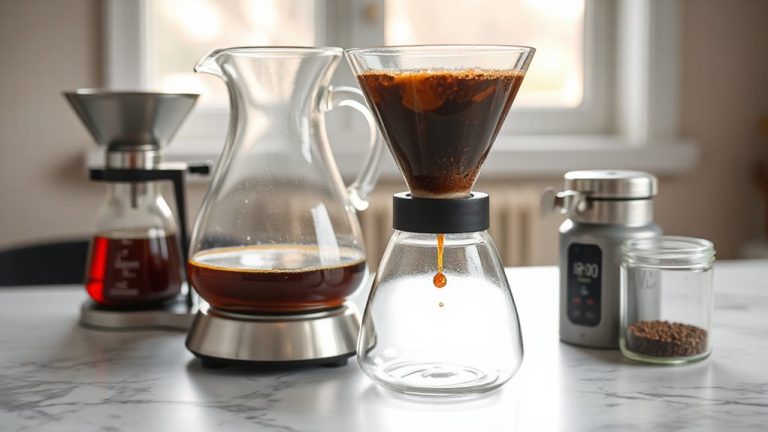
Your pour over coffee’s acidity can be affected by the glass you use. Low-quality soda-lime glass may leach minerals over time, subtly altering pH and flavor. Borosilicate glass, like in Hario V60 or Chemex, resists heat and acids better, preserving clarity and balance. It won’t absorb oils or distort brightness, unlike softer glass. Tempered glass is safe but check for damage. For consistent results, choose medium-thick, high-grade carafes like Fellow Stagg or Kalita. You’ll notice how gear shapes your cup.
Notable Insights
- Borosilicate glass minimizes mineral leaching, preserving coffee’s natural acidity and flavor balance.
- Soda-lime glass may leach minerals over time, potentially altering pH and distorting bright notes.
- High-quality glass reduces porosity, preventing residue absorption that could affect perceived acidity.
- Thicker glass carafes retain heat longer, intensifying acidity in light-roast African coffees.
- Properly maintained tempered glass ensures a neutral brewing surface, avoiding unwanted flavor interference.
How Glass Material Affects Pour Over Coffee Acidity
While the material of your pour over brewer might seem like a small detail, it can subtly influence the final taste of your coffee, including perceived acidity. Glass is popular for its clean, neutral profile, but not all glass is the same. Standard glass has slight glass porosity, which over time may harbor residues that affect flavor clarity. Though minimal, repeated use without proper cleaning can amplify these effects. You also face potential mineral leaching with lower-quality glass, especially if exposed to acidic coffee regularly. While leaching is rare in modern food-safe glass, cheap soda-lime variants are more prone to it than borosilicate. This could subtly shift taste, possibly enhancing sour notes. For best results, choose well-made brewers like Hario V60 or Chemex, which use higher-grade glass. They resist both porosity and leaching, giving you a purer expression of your coffee’s natural acidity.
Borosilicate Vs. Soda-Lime: Which Changes Coffee pH?
Borosilicate glass is your better bet if you want to keep the pH of your pour over coffee stable and true to the bean. Its low glass porosity means it won’t absorb compounds or introduce off-flavors. More importantly, it resists mineral leaching, so no unwanted ions sneak into your brew and shift the pH. Soda-lime glass, common in cheaper carafes, is more prone to both issues-especially when exposed to heat and acidity over time. That slight leaching can subtly raise acidity or distort taste, particularly with long-term use. While soda-lime is functional for occasional brewing, borosilicate stands up better to daily routines and high heat. If you’re serious about flavor accuracy and pH consistency, go for brands like Chemex or Bodum that use borosilicate. You’ll avoid chemical interference and enjoy coffee as the beans intended-clean, balanced, and unaltered. One excellent example is the Chemex coffee makers line, known for combining borosilicate construction with optimal brewing design.
Can Heat-Resistant Glass Preserve Flavor Stability?
If you’re brewing pour over regularly, you’ll want a carafe that won’t warp flavors over time, and heat-resistant glass like borosilicate delivers just that. It handles thermal shock well, meaning sudden temperature changes-like hot coffee hitting the sides-won’t weaken or crack it over time. That durability helps maintain a neutral surface, so your coffee tastes like the beans, not the container. Unlike plastic or low-grade glass, borosilicate resists absorbing residues or odors that could accelerate flavor oxidation, preserving brightness and clarity in the cup. While not completely inert, it’s far better than soda-lime glass, especially with repeated use. Just hand-wash it to avoid soap film buildup. If you value consistent flavor over weeks or months, a borosilicate carafe is a practical choice-offering stability, longevity, and reliable performance without altering acidity or body. Among top-rated options, the best glass carafe coffee makers combine this material quality with optimal brewing performance.
Does Tempered Glass Reduce Brightness in Pour Over?
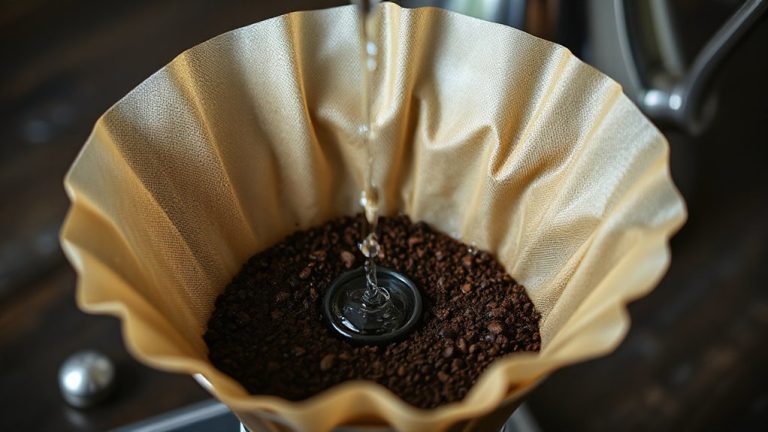
You’ve likely noticed how clean, consistent gear choices matter when you’re aiming for a bright, expressive pour over-whether it’s water temperature or grind size, every detail plays a role. Tempered glass doesn’t reduce brightness on its own-its structure is stable and inert, so it won’t interact chemically with your coffee. Unlike lower-quality glass, it resists glass etching longer, especially when cleaned properly, preserving clarity and function over time. There’s no evidence of mineral leaching from tempered glass under normal brewing conditions, so your cup stays pure. However, if the glass is damaged or repeatedly exposed to extreme thermal shifts, micro-fractures can form, potentially harboring residues that affect taste indirectly. For pour over, use a high-quality tempered carafe like those from Kalita or Hario-durable, neutral, and safe. Just avoid abrasive cleaners to prevent surface wear. With proper care, your glass gear won’t dull your coffee’s brightness.
Choose a Pour Over Carafe That Balances Acidity
Why does your choice of pour over carafe matter when balancing acidity in coffee? The material and design affect temperature retention, which influences how acidity develops during brewing time. Glass carafes, especially tempered ones, hold heat well-sometimes too well-amplifying bright notes from high-acid beans. If your coffee origin is Ethiopia or Kenya, known for vibrant, fruity acidity, a thick carafe might make it taste sharp or unbalanced. Go for a carafe with a medium build, like the Hario V60 Buono or Fellow Stagg, which offer steady heat without overemphasizing sourness. Thin glass cools faster, taming acidity slightly, which works better for light roasts with delicate profiles. Adjusting brewing time also plays a role-shorter pours increase brightness, and a stable carafe helps maintain consistency. Choose one that complements, not dominates, your coffee’s natural traits. For precise control and optimal results, consider one of the top pour-over coffee makers based on expert testing and performance.
On a final note
Your pour over’s glass carafe won’t drastically change coffee acidity, but material matters. Borosilicate glass handles heat better than soda-lime, reducing thermal shock and preserving flavor stability. Tempered glass is durable but may slightly mute brightness. For balanced acidity, choose a borosilicate vessel like a Hario or Kalita server. It maintains temperature without reacting to coffee, ensuring clean, consistent results. Match your gear to your brew method-consistency comes from both process and proper tools.