The Impact of Water Quality on Espresso Crema Texture and Flavor Complexity During Preparation
Your espresso’s crema and flavor depend heavily on water quality. Too much calcium boosts crema but risks scale in your Rocket R58, while magnesium improves flavor but doesn’t stabilize crema as well. Ideal water sits between 75–250 ppm TDS with balanced minerals-products like Third Wave Water or a BWT filter make this easy. Hard water causes bitterness and machine issues; soft water leaves espresso sour and flat. Test with a TDS meter, adjust as needed, and keep things consistent for better shots every time.
Notable Insights
- Water with balanced calcium levels enhances crema stability by aiding coffee oil emulsification during espresso extraction.
- Magnesium improves flavor complexity by extracting acidic compounds that complement crema’s richness and perceived body.
- Ideal water hardness (50–150 ppm) supports both crema texture and balanced flavor development in espresso shots.
- Hard water causes scale buildup, impairing machine performance and leading to bitter, uneven extractions with poor crema.
- Soft water lacks essential minerals, resulting in sour, thin espresso with weak crema and reduced flavor clarity.
Why Water Quality Makes or Breaks Espresso
While you might focus on beans or machine settings, the water you use plays a crucial role in how your espresso turns out. Poor water quality can throw off extraction, no matter how precise your grind consistency or perfect your water temperature. If your water contains too many minerals, it can cause scale buildup in machines like the Breville Baristas Express, affecting performance. Too little, and your espresso may taste flat. Balanced water guarantees even extraction, letting flavors develop fully. You’ll want a TDS (total dissolved solids) level between 75–250 ppm for best results. Filtered water or specialty blends like Third Wave Water simplify this. Always check your machine’s water source-tap water varies widely by location. Proper water improves shot stability, especially when dialing in grind consistency. And since water temperature interacts with extraction, consistent water quality helps maintain that ideal 195–205°F range without fluctuations. Upgrading your water with a dedicated espresso machine water filter can significantly enhance both machine longevity and espresso quality.
How Calcium and Magnesium Affect Crema
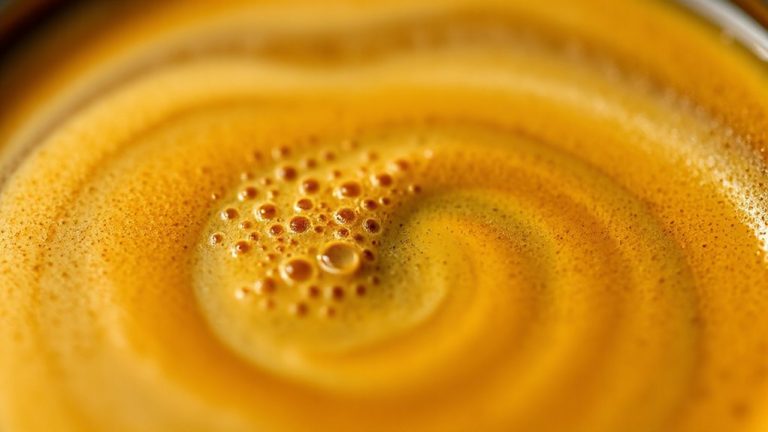
Since crema depends on how well water interacts with coffee oils during extraction, the levels of calcium and magnesium in your water make a real difference. Calcium boosts crema stability by helping oils emulsify, giving you a thicker, longer-lasting layer. But too much can lead to scaling in machines like the Rocket R58, so it’s a balance. Magnesium pulls more acidic compounds, improving flavor synergy with the oils in crema, which enhances complexity. It doesn’t stabilize crema as well as calcium, though. Using water with a balanced ratio of both-like that from a BWT filter-supports both texture and taste. You’ll notice clearer highs and better-rounded bodies in your shot. If your water lacks these minerals, crema thins out fast, and flavors fall flat. You’re not just brewing coffee-you’re managing chemistry. Adjusting mineral content isn’t optional if you want consistent results. Travelers who prioritize water quality on the go often pair their best portable coffee makers with compact filtration solutions to maintain crema integrity.
Ideal Water Hardness for Balanced Extraction
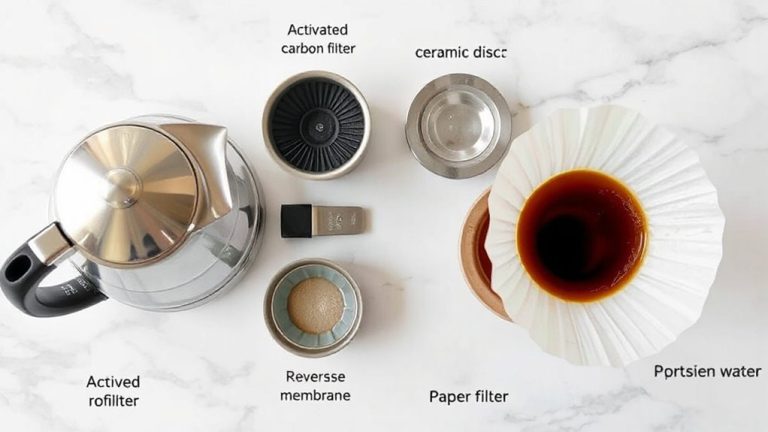
When aiming for balanced extraction, you’ll want water with moderate hardness-typically between 50 and 150 ppm total hardness-because it delivers enough minerals to support flavor development without overloading your machine. This range guarantees a stable mineral balance, helping pull sweetness and clarity from the coffee without encouraging scale. Too little or too much mineral content skews extraction, but staying within this sweet spot keeps flavors even and crema stable. Using a reliable water filtration system tailored for espresso, like a three-stage reverse osmosis unit with mineral reinfusion, helps maintain consistent hardness. Brands like Third Wave Water or Peak Water offer customizable mineral packets to hit this target if your tap water falls short. Monitoring total dissolved solids (TDS) alongside hardness guarantees your water supports, rather than sabotages, ideal extraction. For optimal flavor, choose water specifically formulated for coffee brewing, as the best water for coffee enhances both aroma and aftertaste.
What Goes Wrong With Hard or Soft Water
Most espresso problems tied to water come down to hardness-either too much or too little-and each causes distinct issues that hurt flavor and machine performance. If your water’s too hard, scale builds up in boilers and group heads, reducing heat transfer and clogging valves. You’ll also get a mineral imbalance that over-extracts bitterness while muting sweetness. On the flip side, soft water lacks buffering capacity, leading to alkalinity fluctuations that make espresso sour and thin. It corrodes metal parts faster and weakens crema, leaving it patchy or flat. Neither extreme supports stable extraction or rich mouthfeel. You’re left with inconsistent shots, shorter machine life, and off-flavors no roast profile can fix. Even high-end machines underperform with poor water. So while hard or soft water might seem like simple quirks, they actively undermine both taste and equipment-making balanced mineral content essential for serious espresso.
How to Test and Adjust Your Water for Espresso
What’s in your water really matters-so how do you find out what you’re pulling shots with? Start by testing it with a simple TDS (total dissolved solids) meter; aim for 150 ppm as a baseline. If levels are off, you’ll need water filtration. Options like countertop reverse osmosis plus re-mineralization cartridges give control without complexity. For a quicker fix, brands like Third Wave Water offer mineral packets that adjust hardness precisely. After adjusting, run taste calibration: pull shots daily, tweaking water until crema is thick and flavor balanced. Don’t guess-track changes and note how acidity, body, and sweetness shift. Over-softened water flattens taste, while too much hardness causes scale and bitter shots. Adjust incrementally. Test monthly, especially if your source changes. Reliable water filtration and consistent taste calibration mean repeatable espresso-every time.
How Top Cafés Tailor Water for Perfect Shots
Because the minerals in water directly affect extraction and crema, leading cafés don’t just filter their water-they engineer it. You need proper water filtration to remove chlorine and impurities that harm flavor, but that’s only step one. Top bars then use mineral balancing to add back specific amounts of magnesium and calcium, which help extract the espresso’s full range of flavors without over-extracting bitterness. For example, places like Stumptown and Blue Bottle use third-wave water systems, like those from 3rdWave Water or Peak Water, which provide precise mineral packets. These let you adjust water to hit the Specialty Coffee Association’s recommended range: 75–175 ppm total hardness. Too little mineral content leads to flat shots; too much causes scale and bitterness. With consistent mineral balancing and reliable water filtration, your crema becomes richer, sweeter, and more stable-every time.
On a final note
Your espresso’s crema and flavor hinge on water quality. Hard water clogs machines and over-extracts; soft water under-extracts and flattens taste. Aim for balanced mineral content-around 50–150 ppm hardness, with calcium and magnesium supporting extraction. Use third-party test strips or a TDS meter, then adjust with filtered or specialty espresso water like Third Wave Water. Top cafes tweak blends for consistency. You don’t need lab gear, but you do need awareness-your machine and palate will thank you.