Why Water Purity Affects Crema Formation in Espresso Shots
Your espresso’s crema suffers if your water’s off. Chlorine and sediments disrupt oil emulsification, leaving flat, patchy foam. Too many minerals (hard water) causes scale and uneven extraction; too few (soft or distilled) leads to weak, sour shots. You need balanced minerals-50–150 ppm hardness with calcium and magnesium-to stabilize crema. Carbon filtering (like Brita) helps, but re-mineralizing with Third Wave Water or using tested bottled water gives reliable results. Get the water right, and you’ll see why the pros never skip this step.
Notable Insights
- Impurities in water disrupt oil emulsification, leading to weak or unstable crema formation.
- Chlorine alters coffee oil structure and diminishes crema thickness and longevity.
- Proper mineral content (50–150 ppm) supports balanced extraction and rich, persistent crema.
- Hard water causes scale buildup and uneven extraction, resulting in patchy or thin crema.
- Filtered, re-mineralized water ensures consistent extraction and optimal crema stability.
What Is Crema: and Why Water Quality Matters for Espresso?
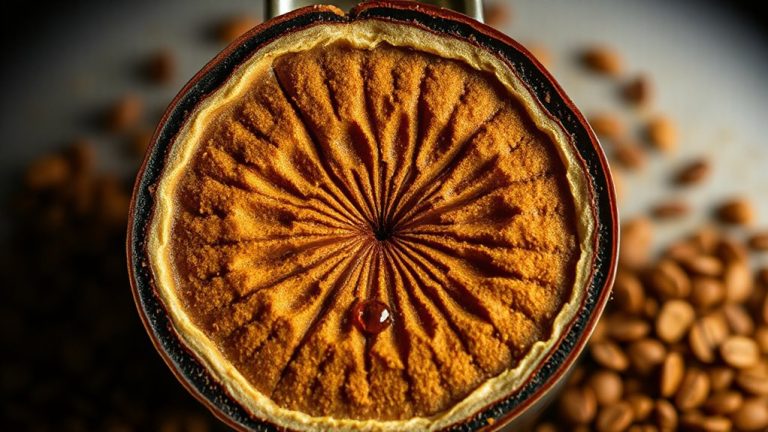
Crema-the golden-brown layer topping a well-pulled espresso-starts with water quality just as much as it does with beans or machine. You need clean, properly filtered water because impurities can interfere with extraction and destabilize crema. Even with perfect tamping pressure and ideal grind consistency, poor water ruins texture and volume. Too many minerals or chlorine alters how oils emulsify, giving flat, patchy results. A carbon-filtered system like Brita or a third-party solution such as Peak Water delivers reliable balance without scaling your machine. Consistent grind consistency guarantees even flow, while correct tamping pressure prevents channeling-all this matters, but water underpins it all. If your water tastes off, your shot will too. You don’t need lab-grade purity, just removal of chlorine and sediment. For most home baristas, a simple filter paired with fresh beans and precise technique gets the job done efficiently.
How Water Minerals Shape Espresso Extraction
While your grinder and technique play major roles, the minerals in your water quietly shape how evenly and completely your espresso extracts. Balanced minerals like calcium and magnesium support stable extraction, helping you get the most from your beans without overdoing bitterness or sourness. Too little mineral content? Your shots may taste flat. Too much? You risk scale buildup and uneven extraction. Maintaining proper water temperature and consistent grind consistency guarantees these minerals aid extraction instead of hindering it.
| Mineral Level | Extraction Effect |
|---|---|
| Too low | Weak, under-extracted shots |
| Balanced | Even, flavorful espresso |
| Too high | Bitter, uneven pulls |
Use filtered water with added minerals if needed, like Third Wave Water, or test your tap with a TDS meter. Your machine and palate will thank you.
Hard vs. Soft Water: What Hurts Your Crema?
What if your water is the reason your espresso’s crema looks thin or fades too fast? Hard water, with high water hardness, often contains too many minerals like calcium and magnesium. These can interfere with proper extraction, leading to a bitter shot and unstable crema. Soft water, on the other hand, lacks essential minerals, resulting in under-extraction and a flat, lifeless crema. Neither extreme supports the ideal mineral balance coffee needs. You need just enough minerals to stabilize the emulsion of oils and gases forming the crema, but not so much that they clog your machine or distort flavor. If you’re using tap water, you may be dealing with inconsistent water hardness that shifts shot quality day to day. Consider testing your water or trying a balanced bottled brand like Third Wave Water or Peak Universal. Your machine and your espresso will perform more consistently.
Best Mineral Levels for Rich, Stable Crema
You’ve probably noticed how inconsistent water hardness can ruin both flavor and crema, whether your water’s too hard or too soft. For rich, stable crema, aim for a balanced mineral profile-specifically 50–150 ppm total hardness with a mix of calcium and magnesium. Too little mineral content, like in distilled or overly filtered water, won’t support crema formation. Too much leads to scale buildup and uneven extraction. The ideal mineral balance enhances extraction efficiency, promoting even emulsification of oils critical for crema. Third Wave Water sachets or re-mineralization cartridges (like those from BWT or Peak Water) offer precise control. Always pair your water with fresh, evenly ground beans and proper machine pressure. Your espresso’s texture and crema depend on consistency-small tweaks in water hardness directly impact shot quality. Test different levels, track results, and stick with what delivers a full, golden-brown crema that lasts.
Why Chlorine and Impurities Ruin Flavor and Foam
Ever wonder why your espresso tastes off or the crema collapses too fast? Chlorine and other impurities in your water are likely the culprits. That faint chlorine odor isn’t just unpleasant-it reacts with coffee oils, weakening crema structure and leaving a sharp, chemical aftertaste. Chlorine damages machine components over time, too. Impurity buildup, like metals or sediment, clogs brew heads and alters extraction, leading to uneven shots. These contaminants prevent the even emulsification needed for stable foam. Even if your machine is clean, bad water sabotages flavor before the brew starts. Using tap water with high chlorine or particulates means fighting against your own setup. The result? Flat crema, muted notes, and shorter machine life. You don’t need lab-grade purity, but ditching untreated tap water is a basic step serious baristas don’t skip.
How to Test and Fix Your Water for Better Espresso
How do you know if your water is holding your espresso back? Start by testing your water’s mineral content with test strips or a TDS meter-ideal levels are between 75–150 ppm. High chlorine or dissolved solids affect crema and taste. If your water fails the test, consider a dedicated water filtration system like Everpure or a DIY reverse osmosis setup. These remove impurities while letting you reintroduce minerals for balanced extraction. Don’t forget brewing temperature: even with perfect water, overheating scalds coffee, while underheating reduces crema. Most machines operate best at 195–205°F. Pair clean, balanced water with stable brewing temperature, and you’ll see immediate improvements. Simple fixes-like replacing old filters regularly or descaling your machine-also keep performance consistent. Better water doesn’t need magic-just measurement, filtration, and attention to detail.
7 Ways to Brew Creamier Espresso With Better Water
While water quality often goes unnoticed, it directly shapes the texture and stability of your espresso’s crema. Using filtered water with balanced minerals-like that from a third-wave water kit or a reverse osmosis system with re-mineralization-helps extract more evenly, boosting crema thickness. Too much chlorine or hardness, though, leads to flat, patchy crema and off-flavors. Pair good water with a fresh bean origin known for sweetness, like a washed Ethiopian or Colombian, and you’ll see better results. A medium to medium-dark roast profile works best, preserving oils and sugars without over-charing. Avoid over-extraction by adjusting grind size and dose-finer isn’t always better. Machines like the Breville Dual Boiler or Rocket R58 shine when fed clean, consistent water. Ultimately, better water means clearer flavor and richer crema, no matter your setup.
On a final note
Your water直接影响 the crema on your espresso. Too many minerals in hard water cause uneven extraction and flat foam, while soft or distilled water lacks support for stable crema. Chlorine and impurities hurt taste and texture. For best results, use water with balanced minerals-like Third Wave Water or a calibrated filter. Test with a TDS meter, aim for 120–150 ppm, and adjust as needed. Good water means better extraction, richer crema, and a cleaner shot-every time.