French Press Coffee and Serving Temperature: Ideal Range for Flavor
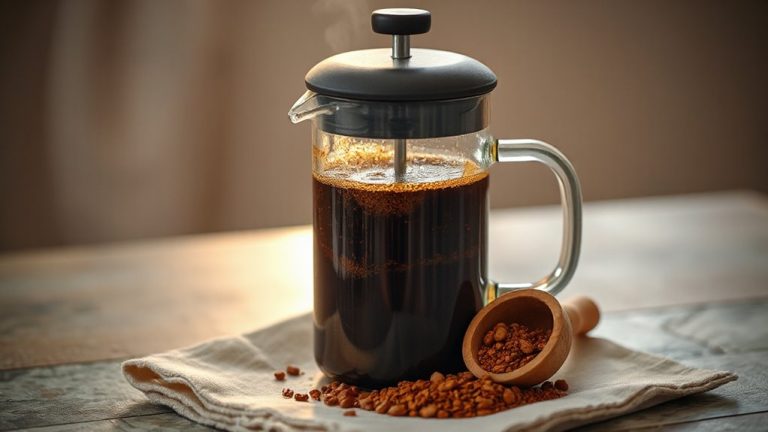
Use water between 195°F and 205°F for the best French press flavor-too cool and your coffee tastes sour, too hot and it turns bitter. Let boiling water sit 30 seconds to hit the sweet spot. Light roasts and high-altitude beans do well at 200°F, while dark roasts prefer 195°F to avoid harshness. A coarse grind and preheated double-walled press help maintain stable temps. Use filtered water and a calibrated thermometer for consistency. You’ll find small tweaks make a noticeable difference in every cup.
Notable Insights
- The ideal French press brewing temperature is 195°F to 205°F for balanced extraction and optimal flavor.
- Use 200°F water for most beans to achieve a well-rounded cup with a 4-minute steep.
- Light roasts and high-altitude beans benefit from 200°F to enhance bright, fruity notes.
- Dark roasts do best at 190°F–195°F to avoid bitterness from over-extraction.
- Let boiled water cool 30 seconds to reach ideal range and use filtered water for consistent results.
What Temperature Should French Press Coffee Be?
Brew temperature plays a key role in how your French press coffee tastes. If it’s too low, you’ll under-extract, leaving flavors flat and sour; too high, and bitterness takes over. Bean density affects how heat penetrates each grind-denser beans, like high-altitude Arabicas, often need slightly hotter water to extract fully. Grind coarseness also matters: a coarse grind slows extraction, requiring stable heat to pull out balanced notes. With French press, water sits with grounds for four minutes, so starting temperature must account for heat loss. You’re not just heating water-you’re managing contact time, bean structure, and particle size. Go with fresh, evenly ground beans and preheat your press to minimize drops. While the exact ideal range isn’t covered here, you should know that matching temperature to bean density and grind coarseness gives you control, not luck, over flavor.
The Ideal French Press Coffee Temperature Range
You’ve got your beans, your grind, and you’re ready to start-now it’s about getting the heat just right. For French press coffee, the ideal temperature range is 195°F to 205°F. Water in this range extracts flavors efficiently without scalding the grounds. Too cool, and your brew time extends, risking under-extraction. Too hot, and you risk bitterness-even with fresh bean freshness. Maintaining proper heat guarantees balanced flavor and maximum oils.
| Temp (°F) | Effect on Brew | Best For |
|---|---|---|
| 195 | Smooth, light extraction | Light roasts, shorter brew time |
| 200 | Balanced flavor | Most beans, standard 4-minute brew |
| 205 | Full body, bold notes | Dark roasts, peak bean freshness |
How Brew Water Affects French Press Coffee Temperature
While boiling water might seem like the obvious choice, using it straight off the boil can actually push your French press brew past the ideal 205°F mark, leading to harsh flavors. Your brew water temperature matters because it directly affects extraction and final cup quality. Letting water cool 30 seconds off the boil usually brings it into the right range. Good heat retention in your press-especially with double-walled carafes-helps maintain stable temps during the steep. But water quality is just as essential; poor mineral content can under-extract or create off-flavors, even if temperature is perfect. Use filtered water with balanced minerals for consistent results. Tap water varies by region, so if your coffee tastes flat or bitter, check the source. Getting both the initial brew water temp and water quality right sets a solid foundation for flavor. For optimal heat retention, consider models featured in the Best French Press Picks for 2024.
Measure and Control French Press Coffee Temperature
If you’re serious about consistent French press coffee, measuring the temperature isn’t optional-it’s essential. Use a digital thermometer to check brew water right after heating; aim for 195°F to 205°F. This range extracts flavor without excessive bitterness. For accuracy, perform equipment calibration on your thermometer monthly-simply test it in boiling water (212°F at sea level) and adjust as needed. Your French press’s heat retention matters, too. A double-walled stainless steel press holds heat better than glass, keeping coffee within the ideal range longer during steeping. Avoid thin glass models if your kitchen’s cool. Preheating the brewer with hot water also boosts heat retention. Don’t guess-measure at each step. Reliable tools and consistent habits guarantee repeatable results. A small effort in control makes a clear difference in your cup’s quality, batch after batch. For precise and fast readings, consider using one of the best coffee thermometers designed specifically for brewing.
French Press Temperature Mistakes to Avoid
Getting the temperature right sets the foundation for good French press coffee, but even with the right gear and habits, small mistakes can still derail your brew. If your water’s too hot-above 205°F-you risk scalding the grounds, especially if your grind size is too fine, leading to bitter, over-extracted coffee. On the flip side, water below 195°F under-extracts, leaving your cup sour and weak. Don’t just guess the temp-use a kettle with a built-in thermometer. Also, keep grind size consistent: too coarse and you’ll need a longer steep time, increasing chance of over-extraction. Aim for a 4-minute steep; beyond 5 minutes, sediment and bitterness rise, especially with finer grinds. Matching grind size to steep time and water temp guarantees clean, balanced results every time.
How Roast and Origin Change Your Ideal Temperature
Since roast level affects how quickly coffee extracts, you’ll want to adjust your water temperature accordingly. Lighter roasts are denser, with higher bean density, so they need hotter water-around 200°F-to fully develop flavor brightness and extract complex notes. Beans from high-altitude origins, like Ethiopian or Kenyan, often benefit from this higher range to highlight their lively, fruity characteristics. Darker roasts, however, are less dense and more soluble. Using water too hot-above 195°F-can over-extract, leading to bitterness. For these, aim for 190–195°F to smooth out flavors without harshness. Cold-climate beans, such as those from Sumatra, often have lower acidity and respond better to slightly lower temps. Matching temperature to roast and origin helps balance sweetness, clarity, and body. You’re not just brewing-you’re tuning extraction to the bean’s natural traits for better, more consistent results. For optimal results, use a coarse French press grind to prevent over-extraction and ensure a clean, balanced cup.
Keep French Press Coffee at the Perfect Serving Heat
While you can brew at the right temperature, your French press coffee cools fast once it’s poured, so keeping it at an ideal serving heat matters just as much. Coffee freshness starts fading quickly past 160°F, and poor serving timing can dull flavor. To enjoy ideal taste, serve within 5–10 minutes after brewing and keep your cup insulated. Here’s how different methods affect heat retention:
| Method | Heat Retention (Minutes) |
|---|---|
| Ceramic mug | 10–15 |
| Insulated travel mug | 30–45 |
| Preheated French press | 20–25 |
| Glass carafe | 10–12 |
| Thermal carafe | 35–50 |
Thermal carafes preserve heat and coffee freshness best. Serving timing is critical-wait too long and you lose aromatic complexity. If you’re not drinking right away, transfer to a thermal server instead of leaving it on a heat source, which can over-extract and harm flavor.
On a final note
You’ll get the best flavor from your French press when brewing between 195°F and 205°F. Water this hot extracts oils and aromas fully without scalding the grounds. Use a gooseneck kettle with a thermometer or a temperature-controlled electric kettle for accuracy. Avoid boiling water, especially with light roasts, as it can create bitterness. Keep coffee hot in a preheated carafe or thermal server, but don’t reheat it-flavor degrades quickly.