French Press Coffee for Bold Lovers: Using Extra Coarse Grind and 8-Minute Steep
Use a coarse grind, like flaky sea salt, to avoid sludge and let oils enrich your brew. Steep for exactly 8 minutes-any longer and it turns bitter. Water at 200°F extracts fully without scalding. The metal filter preserves bold flavors and natural body, especially with dark or medium roasts from beans like Sumatra or Ethiopian Yirgacheffe. Skip pre-ground coffee or blade grinders-they hurt consistency. You’ll get the richest results by controlling these details. There’s more to optimizing strength and clarity just ahead.
Notable Insights
- Use an extra coarse grind, similar to flaky sea salt, to prevent over-extraction and sludge in your French press brew.
- Steep for exactly 8 minutes to achieve a full-bodied, balanced cup without harsh bitterness.
- Heat water to 200°F-just off the boil-for optimal extraction without scalding the coffee grounds.
- Choose bold, fresh beans like Sumatra or Ethiopian Yirgacheffe, ideally medium to dark roast, for rich flavor.
- Use a burr grinder for consistent coarse particles, minimizing fines that cloud the final brew.
Use a Coarse Grind for a Fuller French Press Brew
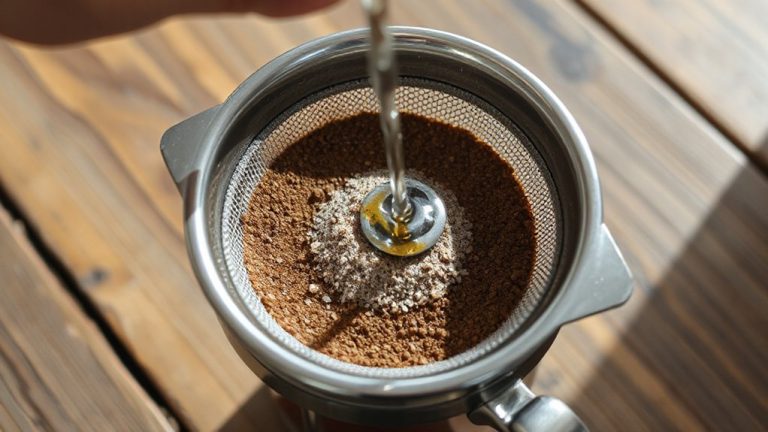
Most of the time, grinding your coffee too fine for a French press leads to over-extraction and sludge in your cup-so go coarse. You need even grind consistency to prevent bitter or weak spots in your brew. A burr grinder, like the Baratza Encore, gives you that uniformity far better than a blade grinder ever will. Aim for pieces about the size of flaky sea salt. If your grind varies in size, fines sneak through and muddle your coffee. Water temperature matters too-just off the boil, around 200°F, is ideal. Too hot, and you’ll scald the grounds; too cool, and extraction falls flat. This combo-coarse, even grounds and proper water temperature-delivers balanced flavor without sediment or harshness. Coarseness prevents clogging the press, making pressing smooth. You’ll get clarity and body, not grit. It’s simple: consistent coarse grind plus right heat equals better press. For 2024, the best French press models enhance this brewing precision with improved filters and heat retention, making Best French Press Picks essential for optimal results.
Steep for 8 Minutes for Maximum French Press Richness
You’ll want to let your French press steep for a full 8 minutes to get the richest, most balanced cup. This steep time allows the coarse grounds to fully extract, giving you depth without excessive bitterness. Use water temperature around 200°F-just off the boil-so it’s hot enough to extract flavors but not so hot that it scorches the coffee. If the water’s too cool, say below 195°F, extraction slows and your brew may taste weak. Stick to the 8-minute mark; going longer, like 10 minutes, often leads to over-extraction and grittiness, especially with finer grinds. A timer helps keep results consistent. While some experiment with shorter steep times for lighter profiles, 8 minutes remains the standard for full-bodied results. Pair this with a proper coarse grind and you’re set. No need for special gear-just a kettle, French press, and attention to timing and heat. For optimal results, use a perfect French press grind that ensures even extraction and eliminates sediment in your cup.
Why French Press Makes the Boldest Coffee
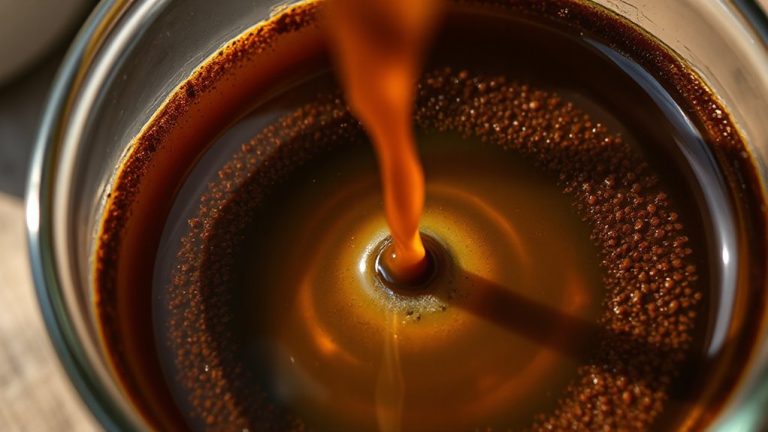
That 8-minute steep you just timed isn’t just about consistency-it’s a key reason your French press delivers such bold flavor. Unlike paper-filtered methods, your French press uses a metal mesh, which lets natural oils pass through. That means more rich flavor and a heavier body in your cup. Those oils also carry the coffee’s true essence, boosting the bold aroma with every pour. The extra coarse grind prevents over-extraction while still allowing full immersion, so flavors develop evenly without bitterness. Compared to drip or pour-over, the French press doesn’t absorb taste-it preserves it. Results? A robust, full-bodied brew that highlights the beans’ profile without filtering out character. Just remember, water quality and coffee freshness matter just as much. Use filtered water and beans roasted within the last two weeks for best results. It’s not flashy gear-it’s science, simplicity, and taste working together. For those avoiding synthetic materials, choosing a plastic-free model supports both durability and flavor purity with a plastic-free French press.
Skip These Common French Press Mistakes
While it might seem straightforward, brewing with a French press can go wrong in ways that dull the flavor, even with quality beans and water. You’re likely using water temperature that’s too high-aim for around 200°F, just under boiling, to avoid scalding the grounds and creating bitterness. Pouring boiling water directly into the brewing vessel can also damage glass carafes over time, increasing crack risk. Avoid steeping longer than 8 minutes, as over-extraction leads to harshness. Stir gently after adding water to guarantee even saturation, but don’t re-stir during steeping-it disrupts the process. Use an extra coarse grind to prevent sludge and clogging the mesh filter. Don’t drive down too hard or fast; a steady press prevents agitation. And always decant immediately after brewing to stop over-extraction-leaving coffee in the brewing vessel ruins clarity and balance.
Best Coffee Beans for a Strong French Press Cup
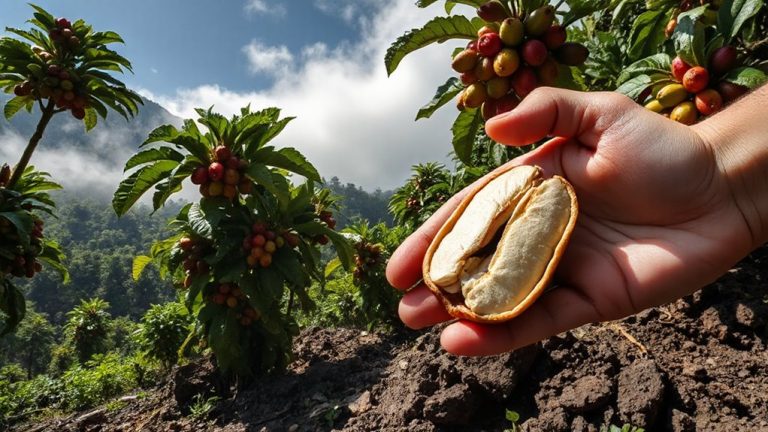
A well-brewed French press cup starts with avoiding common missteps, but it’s the beans that ultimately define the strength and depth of your coffee. For bold flavor, choose beans with robust profiles, like Sumatra or Ethiopian Yirgacheffe-known for earthy or fruity intensity. Coffee bean origins matter: African beans often bring brightness, while South American and Indonesian ones deliver heavier body, ideal for French press’s full immersion. Dark or medium roasts work best, enhancing richness without over-extracting. Though French press history traces back to the 1920s, its design favors beans that bloom fully, releasing oils and sediment that paper filters would block. Avoid overly light roasts-they can taste thin here. Freshness is key: use beans roasted within the past two weeks. Grind them coarsely just before brewing to preserve flavor. The right beans don’t just complement the method-they make it work.
On a final note
Use an extra coarse grind and steep for 8 minutes to get a bold, full-bodied cup from your French press. This method draws out rich flavors without over-extracting bitterness. Avoid fine grinds or cheap presses with weak plungers. Choose a burr grinder like the Baratza Encore for consistency. Stick to fresh, high-quality beans-medium to dark roasts work best. Just follow the steps, skip the common mistakes, and you’ll brew strong, satisfying coffee every time.