Using Refractometers to Measure Extraction Yield in Filter Coffee Accurately
You can measure your filter coffee’s extraction yield accurately with a refractometer like the Atago PAL-COFFEE, which analyzes dissolved solids to determine if you’re in the ideal 18–22% range. Calibrate with distilled water, filter a cooled sample, then place a few drops on the prism for a quick reading. Watch for calibration drift and clean the prism after each use. This helps you adjust grind, time, or temperature with real data-so you’ll get more consistent, balanced results every time.
Notable Insights
- Calibrate the refractometer with distilled water before each use to ensure accurate readings.
- Brew filter coffee as usual, then cool and filter the sample to remove oils and grounds.
- Use a clean prism, apply a few drops of coffee, and close the lid gently for measurement.
- Take 2–3 readings and average them to improve precision and reduce error.
- Match TDS % to extraction yield: 1.15–1.35% TDS corresponds to 18–22% ideal extraction.
What Is Coffee Extraction Yield?
Extraction yield-the amount of coffee solubles pulled into your brew-tells you how efficiently your grind, water, and timing are working together. You’re not just making coffee; you’re managing coffee chemistry. Too fine a grind or water that’s too hot can over-extract, pulling bitter compounds. Too coarse or too cool, and you under-extract, leaving behind sweetness and complexity. The sweet spot? A solubility balance around 18–22%. This range captures flavors without harshness, giving clarity and body. Light roasts often need slightly higher yields to reveal their nuanced notes, while dark roasts can turn sour or sharp past 20%. You don’t need lab gear to start-adjust grind size, water temp, or brew time and taste the difference. But if you want precision, measuring extraction yield removes guesswork, helping you replicate great results batch after batch.
How a Refractometer Works
You’ve got the basics of extraction yield down-now it’s time to see how you can measure it accurately. A refractometer does this by using optical principles to detect how much dissolved coffee is in your brew. When you place a few drops of coffee on the prism, light passes through the sample. The device measures how much the light bends, or refracts, based on the concentration of solids. The more dissolved coffee, the greater the light refraction. This reading, in refractive index, converts to total dissolved solids (TDS), which helps calculate extraction yield. Refractometers are small, handheld tools, like the Atago PAL-COFFEE, built for quick, repeatable results. They’re more precise than guesswork or taste alone, though they require proper cleaning and calibration. You don’t need lab skills-just a steady hand and clear sample.
How to Use a Refractometer for Pour-Over
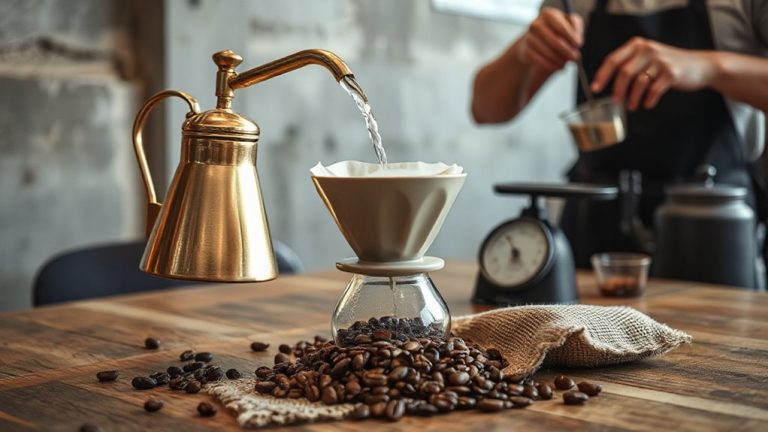
So, how do you actually measure your pour-over’s strength with a refractometer? Start with proper calibration techniques-use distilled water or calibration solution before each use to guarantee accurate readings. Once calibrated, prepare your sample: brew your pour-over as usual, then let it cool slightly to stabilize the temperature. For reliable results, swirl the coffee to homogenize dissolved solids and filter it through a fine mesh or syringe filter to remove fines and oils. This sample preparation step prevents debris from skewing the reading. Place a few drops on the refractometer’s prism, close the lid gently, and wait a few seconds. Read the total dissolved solids (TDS) percentage displayed. Remember, consistency in both calibration techniques and sample preparation is critical. Repeat 2–3 times to confirm accuracy. Use a lab-grade digital refractometer like VST or Atago for the best results. Avoid leaving liquid on the prism after use-clean it immediately.
What Your Extraction Numbers Mean
Why do your extraction numbers matter? Because they reveal your brew’s extraction efficiency and solubles concentration-two keys to flavor balance. Too low, and your coffee tastes sour; too high, it turns bitter. A refractometer helps you see what your palate might miss. Here’s how common ranges typically break down:
| Extraction Yield (%) | Solubles Concentration (TDS %) | Likely Flavor Profile |
|---|---|---|
| < 18% | < 1.15% | Under-extracted, weak, sour |
| 18–22% | 1.15–1.35% | Balanced, ideal extraction |
| > 22% | > 1.35% | Over-extracted, harsh, bitter |
You want to hit that sweet spot: high enough extraction efficiency to capture desirable compounds, but not so high that you pull unwanted bitterness. Monitoring these numbers lets you tweak grind size, brew time, or water temperature with real data-not just guesswork. It’s precision that improves consistency, cup after cup.
Common Refractometer Mistakes to Avoid
A refractometer can be a powerful tool for measuring coffee extraction, but inaccuracies often come from simple user errors. You might forget to clean the prism after each use, leaving behind coffee residue that skews your readings. Always rinse it with distilled water and wipe gently with a soft cloth. Calibration drift is another common issue-if you don’t calibrate before every use using distilled water, your results won’t be reliable. Don’t assume it’s still zeroed from yesterday. Also, applying too much coffee slurry or letting it dry on the surface affects accuracy. Use just enough to cover the prism without spilling. Let the sample sit for 30 seconds to stabilize. And remember: lighting matters. Readings in dim light lead to misinterpretation. Avoid these mistakes, and your data stays consistent and useful.
On a final note
You get accurate extraction numbers with a refractometer, but it’s not always practical. For consistency in pour-over, models like the VST Lab II give reliable results if you follow steps precisely. Poor technique skews readings, so calibrate often and clean the prism well. While helpful, refractometers can’t fix bad brewing habits-water quality, grind size, and pouring matter just as much. Use one to dial in recipes, then trust your taste.