Troubleshooting a Grinder That’s Making Unusual Grinding Noises
If your grinder’s making grinding noises, start by checking for old coffee grounds or debris stuck in the burrs-clean it out with a dry brush or compressed air. Worn or misaligned burrs often cause loud, uneven sounds, especially in grinders over three to five years old. Tighten any loose screws around the motor or burr carrier, as shifting parts can rattle. If the motor struggles or smells burnt, it may be failing. High-end models like Baratza or Fellow Ode let you replace burrs or gaskets easily, often fixing the issue. Keep going to uncover specific fixes for your grinder’s type and symptoms.
Notable Insights
- Unplug the grinder and clean coffee grounds or debris that may be obstructing moving parts.
- Inspect burrs for wear, damage, or misalignment causing uneven grinding and loud noises.
- Tighten loose screws, especially around the motor mount and burr assembly, to eliminate rattling.
- Check for electrical issues like burning smells or intermittent operation indicating motor or wiring problems.
- Consider replacement if the grinder is older than 3–5 years or repair costs exceed its value.
Why Is Your Grinder Making Grinding Noises?
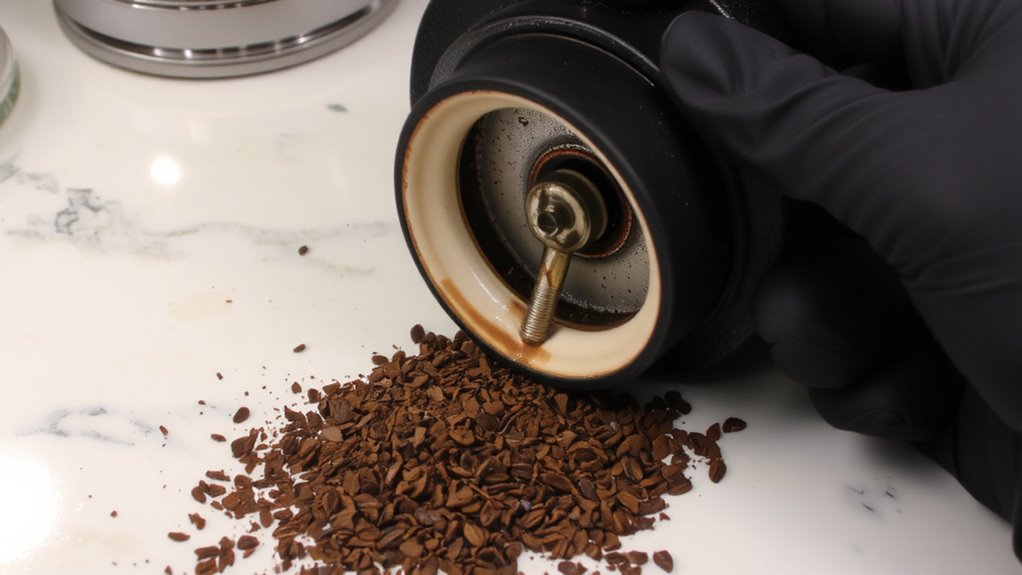
A grinding noise from your grinder usually points to worn burrs or foreign debris caught in the grinding chamber. As your grinder ages, metal burrs wear down and lose alignment, creating uneven contact that produces a harsh, metallic sound. This wear is natural over time, especially with daily use in machines older than three to five years. You’ll notice reduced grind consistency and longer grind times. While debris can contribute, persistent noise despite cleaning often reflects internal wear or emerging electrical issues-like a struggling motor or frayed wiring-especially in older models. If the noise comes with burning smells or intermittent operation, electrical problems are likely. You’re better off replacing units with these symptoms rather than repairing them. Cheaper grinders rarely have serviceable parts. Upgrade to a burr grinder with a warranty, like a Baratza Encore or Fellow Ode, for long-term reliability and quieter performance. Prevention includes regular cleaning and avoiding oily beans. For consistently balanced shots and cleaner operation, consider choosing one of the top-recommended models for espresso and pour-over, such as the Baratza Encore.
Check for Coffee Grounds and Debris First
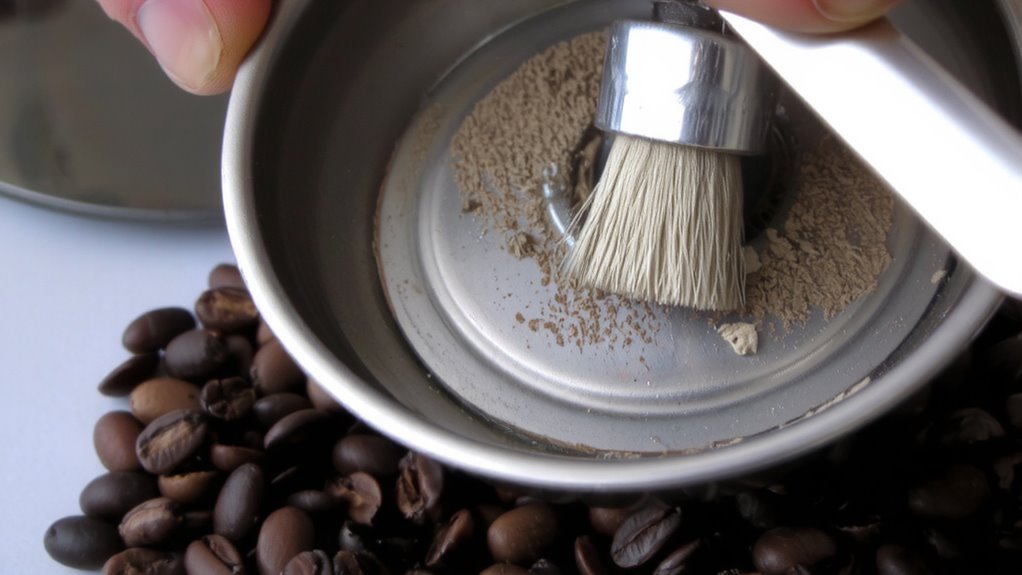
Grime buildup’s a common culprit when your grinder starts sounding rough. Coffee buildup can restrict moving parts and lead to uneven grinding, while trapped debris may cause abnormal noise. Before diving into complex fixes, unplug the grinder and disassemble accessible parts like the hopper and grounds bin. Use a dry brush or compressed air to remove old grounds and dust. Check for any visible debris stuck near the burr area-don’t use water or liquids, as they can damage internal mechanisms. Loose components often rattle, mimicking grinding issues, so verify all parts are snug and properly seated. Choosing the right coffee and espresso grinders can significantly reduce long-term maintenance issues.
Inspect the Burrs for Wear or Damage
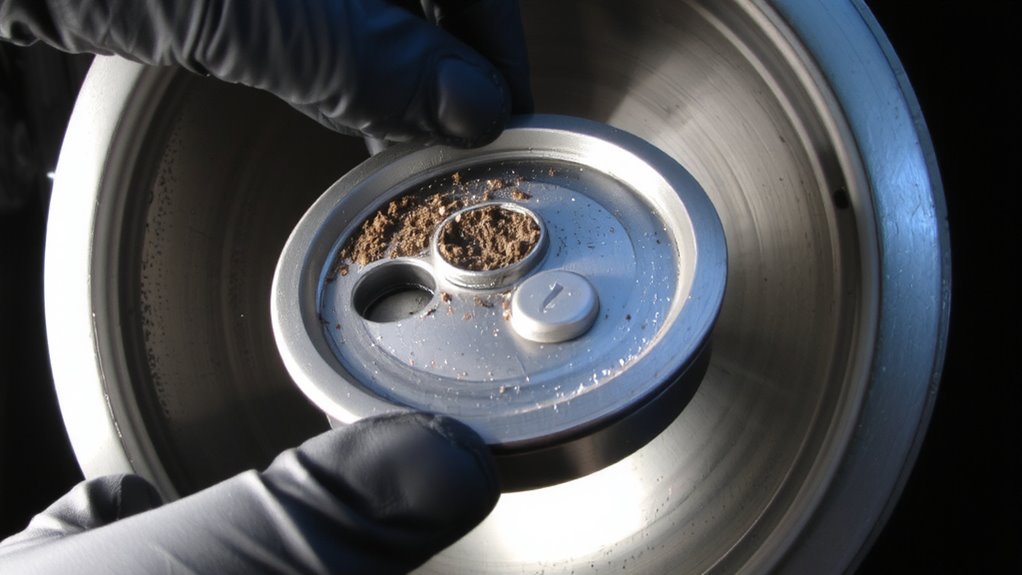
Those steady metal rings inside your grinder-the burrs-take a beating over time, and when they wear down or get damaged, noise levels often spike. You’ll notice uneven grinding or strange sounds like rattling or high-pitched scraping. Check both burrs carefully: look for chipped edges, flat spots, or signs of corrosion. Worn burrs won’t crush beans cleanly, which ruins grind consistency and stresses the motor. Misaligned burrs also cause friction and noise, so verify burr alignment during inspection. If they’re off-center or wobbling slightly, that’s likely the culprit. Flat burrs, like those in the Baratza Encore, can last 500–800 grams of coffee before wear becomes noticeable; conical types, such as in the Fellow Ode, often go longer. Replacing worn or misaligned burrs restores smooth operation and quieter performance. Don’t skip this step-if grinding feels strained, the burrs are probably the issue. For more guidance, check out our Best Espresso Grinders roundup to find models known for durable burr sets and long-term performance.
Tighten Loose Parts Causing Noise
If the burrs aren’t the source of the noise, it’s time to check what’s rattling inside the grinder’s housing-loose screws, nuts, or assembly pieces can rattle or vibrate at high speeds, creating a grinding or buzzing sound even with clean, intact burrs. You’ll want to power off and unplug the grinder first, then inspect the outer casing and internal mounting points. Tighten any loose screws you find, especially near the motor mount or burr carrier. Worn gaskets can also contribute to instability, letting parts shift during operation. While they don’t always cause noise directly, degraded gaskets reduce structural integrity and should be replaced if flattened or cracked. Not all grinders allow easy access to these components-budget models often use sealed designs. Higher-end grinders like the Baratza Virtuoso or Fellow Ode make maintenance easier. A quick once-over every few months helps prevent noise and extends lifespan.
Look for Motor and Bearing Failure
While grinding noise often stems from loose parts or dull burrs, it can sometimes point to deeper issues like motor or bearing failure-especially in grinders that have been heavily used over several years. If you hear a persistent motor hum or a low bearing rumble, those are key warning signs. A healthy motor should run smoothly, not strain or vibrate abnormally. Similarly, worn bearings often create a growling sound that gets worse over time.
| Symptom | Likely Cause | What to Do |
|---|---|---|
| Loud motor hum | Overloaded or failing motor | Test voltage, check for blockages |
| Bearing rumble | Worn or dry bearings | Inspect for play, lubricate or replace |
| Sudden stoppage | Seized bearing or motor burnout | Replace component or unit |
Ignoring these sounds can lead to complete failure. If motor hum or bearing rumble persists after basic checks, professional service or replacement may be needed.
Adjust Grind Settings and Hopper Position
Since improper settings can often cause unwanted noise, checking your grind size and hopper alignment should be part of any troubleshooting routine. If your grinder’s making odd sounds, the issue might not be mechanical-it could just need grind calibration. Too fine a setting increases resistance, forcing the motor to strain and creating loud grinding or buzzing. Adjust the burrs to a coarser setting and test again. Also, verify the hopper is properly seated. Poor hopper alignment can misfeed beans, causing uneven grinding and vibration. Make sure it clicks securely into place and isn’t tilted. Some grinders, like the Baratza Encore, allow easy calibration via a numbered ring-others require tools. Avoid over-tightening. Test run the grinder without beans first to listen for improvement. Correct settings often reduce noise markedly.
When to Replace or Repair Your Grinder
You’ve checked the grind settings and made sure the hopper’s seated right, but the noise hasn’t gone away-now it’s time to figure out whether your grinder’s due for a repair or it’s just easier to replace it. Start by checking warranty coverage; if your grinder is still under warranty, the manufacturer may cover repair or replacement at little or no cost. If it’s out of warranty, weigh the repair cost against the price of a new model. Older grinders with worn burrs or motor issues often cost more to fix than replace. Consider upgrade options-newer models may offer better grind consistency, quieter operation, or smart features. Entry-level grinders under $100 usually aren’t worth repairing. For high-end models like Baratza or Mahlkönig, repairs may extend life and save money. But if noise persists and performance drops, replacement is often the smarter move.
On a final note
If your grinder’s making grinding noises, start by cleaning out old grounds and debris-often the quick fix. Worn or damaged burrs, especially in budget models like the Cuisinart DBM-8, may need replacement. Tighten any loose parts, and check for motor or bearing issues, common in older units. Adjust grind settings or hopper placement before deciding to repair or replace. A well-maintained grinder lasts years; ignore persistent noise, and you’ll risk poorer espresso and costly damage down the line.