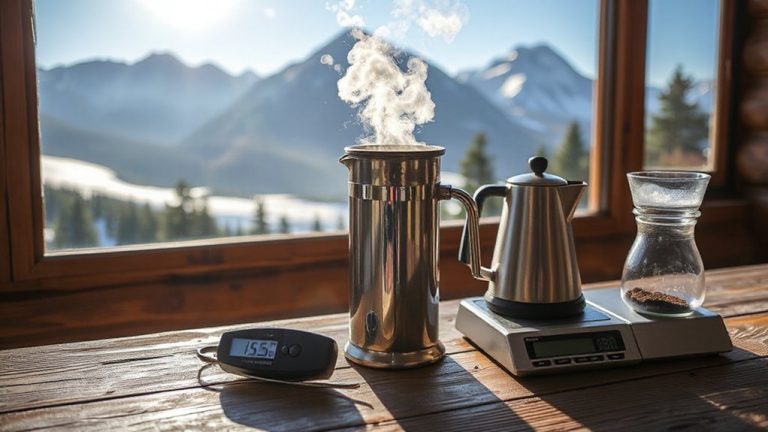
How to Prevent Over-Extraction in a Metal Filter French Press With Coarser Grind
Use a coarser grind, like coarse sea salt, to slow extraction and reduce bitterness with your metal filter. Keep brew time to about 4 minutes-longer steeping pulls out harsh compounds. Stick to water between 195–205°F to avoid scalding the grounds. Stir once gently after pouring to guarantee even saturation without over-agitating. Rinse the filter after each use and clean it weekly to prevent oil buildup. A consistent grind from a burr grinder makes a real difference. You’ll find more subtle adjustments can further refine your cup.
Notable Insights
- Use a coarse grind, similar to sea salt, to slow extraction and reduce bitterness with a metal filter.
- Limit brew time to 4 minutes to prevent over-extraction from fine particles passing through the metal filter.
- Maintain water temperature between 195–205°F to avoid extracting excessive bitter compounds.
- Stir gently once after pouring to ensure even saturation without increasing harshness.
- Clean the metal filter thoroughly after each use to prevent oil buildup and clogging that disrupts flow.
Why Metal Filters Cause Bitter French Press Coffee
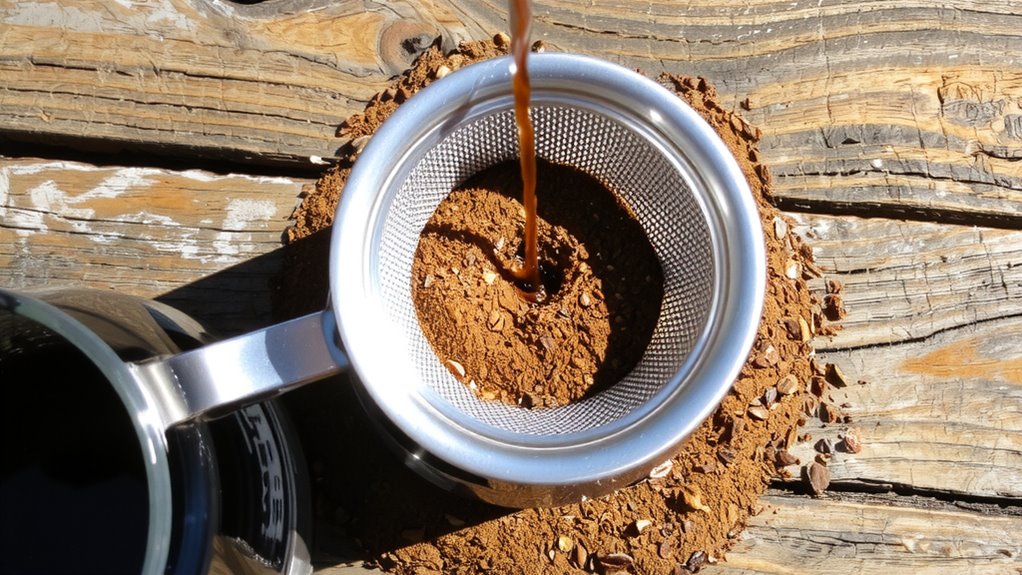
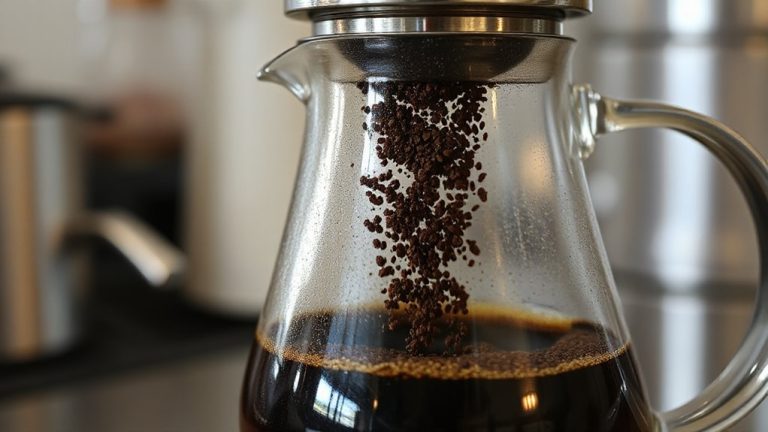
A metal filter in your French press might seem like a durable, eco-friendly choice-after all, it’s reusable and cuts down on waste-but it often lets fine coffee particles and oils pass through more freely than other filtration methods. That increased oil transfer contributes to a heavier body but also carries more bitter compounds, especially if brewing time or grind size isn’t tightly controlled. Over time, metal corrosion can occur, particularly with frequent exposure to moisture and acidic coffee, compromising filter integrity and potentially introducing off-flavors. Buildup from oils also leads to filter clogging, which disrupts water flow and creates uneven extraction. While stainless steel filters resist corrosion better than cheaper alloys, they still require regular cleaning with hot water and gentle scrubbing. Ceramic or paper filters, though less eco-friendly, offer cleaner cups with less sediment and fewer bitterness issues. If you stick with metal, diligent maintenance is essential. For those seeking a fully plastic-free experience, consider a plastic-free French press made from stainless steel, glass, or ceramic.
Use a Coarser Grind to Prevent Over-Extraction
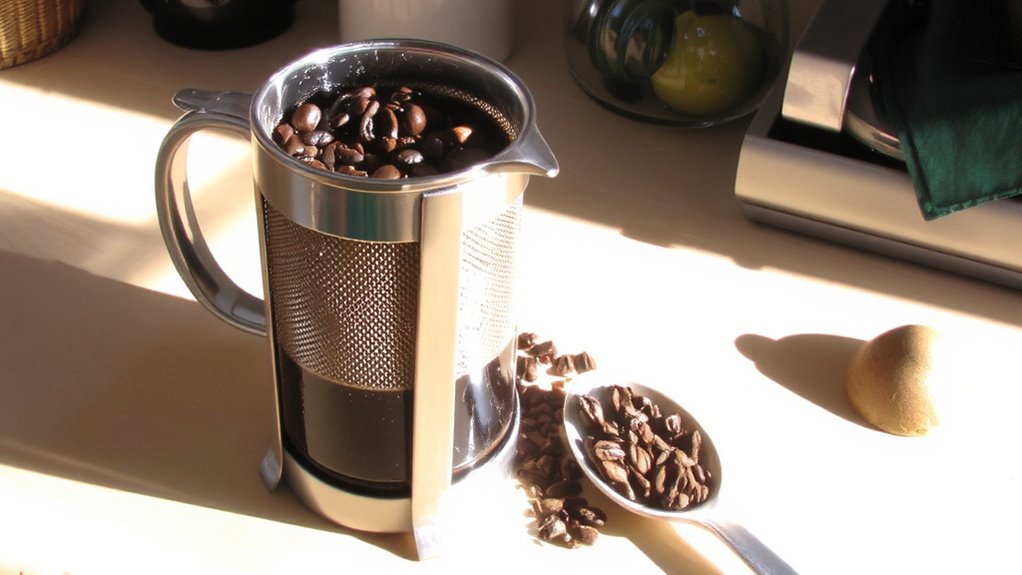
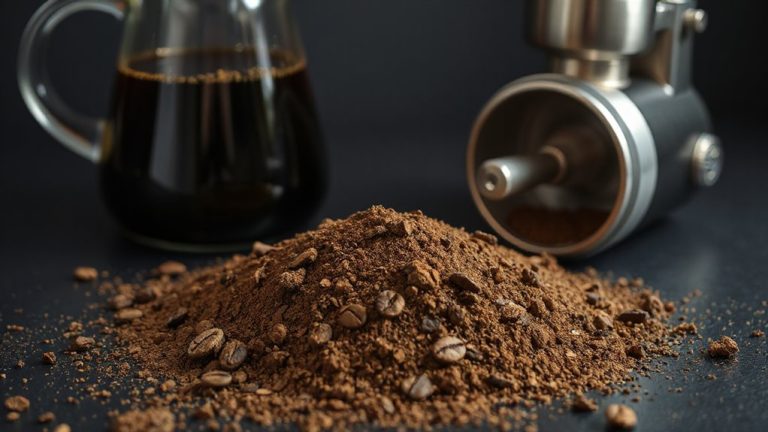
You might still end up with bitter coffee even with a clean metal filter, and that’s often because the grind size is too fine. A finer grind increases surface area, speeding up extraction and often leading to over-extraction-especially with metal filters that allow more fines through. Switching to a coarser grind slows extraction, helping you achieve better extraction balance. This means more sweetness and clarity, less harshness. For a French press with a metal filter, aim for a grind like coarse sea salt. Consistency matters just as much as size-uneven particles lead to uneven extraction. Use a burr grinder for better grind consistency, avoiding blade grinders that create a mix of boulders and dust. While coarser isn’t always stronger, it prevents bitterness. You’ll find cleaner, smoother results when your grind size and filter work together. For best results, follow the Perfect French Press Coffee Grind Guide to fine-tune your technique.
Brew Time for French Press With Metal Filter
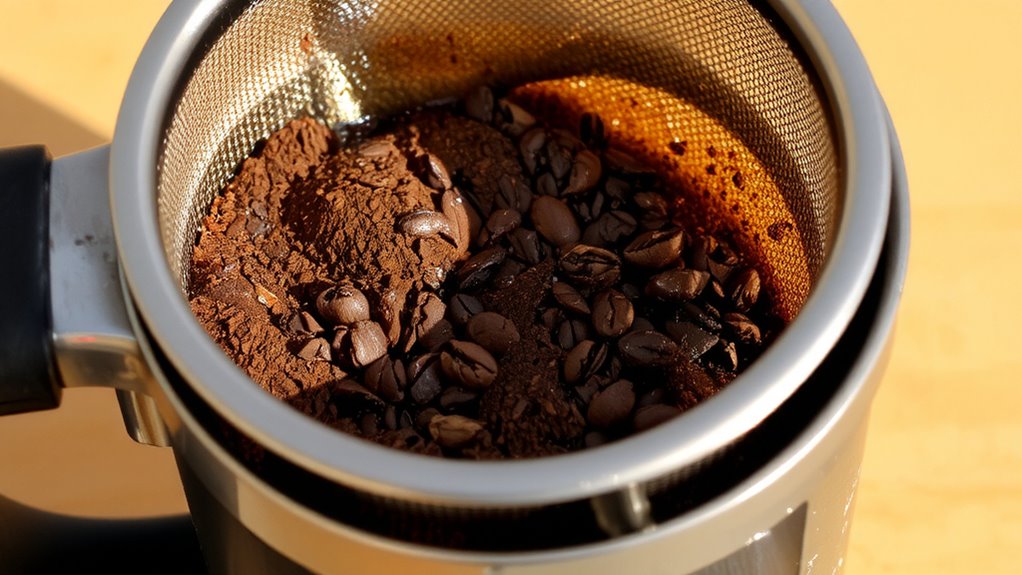
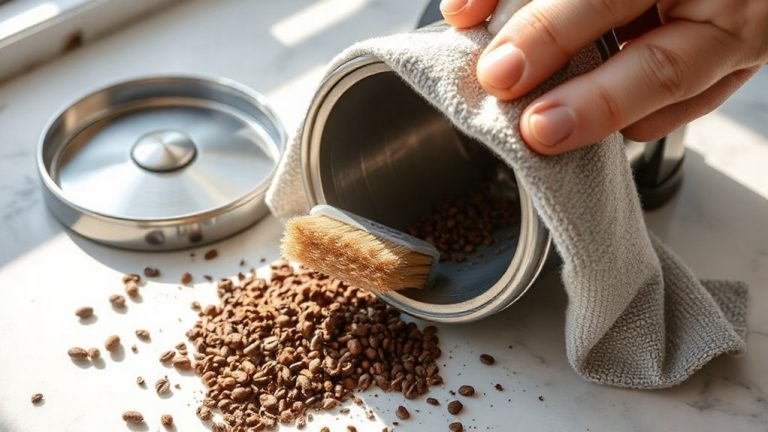
With metal filters, brew time plays a critical role in avoiding over-extraction, since they allow more fine particles to pass through compared to paper. You’ll want to stick to 4 minutes for most setups-any longer and those fines can make your coffee taste bitter. A consistent grind and timer help maintain brew consistency. If you’re getting harsh or muddy results, shorten the time slightly. Don’t forget that proper filter maintenance matters; old or clogged filters disrupt water flow and extraction. Rinse your metal filter after every use and deep-clean it weekly with mild detergent or vinegar to preserve performance. Unlike paper, metal filters aren’t disposable, so keeping them in good shape saves money and improves results over time. Use a gooseneck kettle for better control, and always stir gently after pouring to guarantee even saturation. These small steps make a real difference in daily brewing precision. For long-term durability and performance, consider investing in one of the best French press picks for 2024.
Water Temperature Tips for Metal Filter Brewing
Since metal filters let more fines into the brew, water temperature becomes even more critical in preventing over-extraction. You’ll want to aim for 195–205°F-the sweet spot where extraction is efficient without pulling out excessive bitterness. If your water’s too hot, especially above 205°F, you’ll risk harsh flavors fast. Water hardness also plays a role: soft water can lead to over-extraction, while very hard water may cause uneven extraction and affect taste. Use filtered tap water if possible for balance. The brew vessel material matters, too. Glass or stainless steel French presses retain heat better than plastic, helping maintain a stable temperature throughout the brew. Avoid preheating with boiling water if your vessel is thin or plastic-it can warp or create uneven temps. Keep your gear and water in check, and you’ll get cleaner, more consistent results.
Stir Gently to Avoid Over-Extraction
A gentle stir during brewing helps control extraction by promoting even saturation without agitating the coffee grounds too much. You only need one slow, circular stir with a wooden or plastic spoon right after pouring the water. This guarantees all the grounds are wet, which supports consistent extraction. But be careful-over-stirring increases agitation control issues and can lead to over-extraction, especially with longer brew times. Metal filters already allow more fines through than paper, so aggressive stirring makes the coffee harsher and cloudier. Gentle stirring minimizes turbulence, helping maintain a balanced cup. Avoid metal spoons, as they can scratch the carafe. Some brewers skip stirring entirely, but a light mix reduces channeling. If your coffee tastes bitter, revisit your stirring technique before adjusting grind or time. It’s a small move with real impact-done right, it supports cleaner flavor and better results with your metal filter setup.
Ideal Grind Size for Metal Filter French Press
Grind size makes or breaks your French press coffee, especially with a metal filter. You’ll want a coarse grind-think sea salt-to slow extraction and prevent bitterness. Metal filters let more oils and fines through than paper, so grind consistency matters even more. Uneven particles cause some to over-extract while others under-extract, muddying flavor. Aim for high particle uniformity, which blade grinders rarely deliver. A burr grinder, like the Baratza Encore or Oxbrew Hand Grinder, gives you that even, coarse grind consistently. Too fine, and you’ll get sludge and harshness; too coarse, and the brew tastes weak. Adjust in small steps until your coffee tastes balanced, not sharp or flat. With the right grind, your metal filter press brew stays clean, rich, and repeatable-no guesswork needed. It’s about control, not luck.
On a final note
Use a coarse grind, like sea salt, to avoid over-extraction with a metal filter French press. Brew for 4 minutes, using water just under boiling (200°F). Stir once gently after adding water. Metal filters let more fines through than paper, so proper grind size and timing keep coffee smooth, not bitter. If it’s harsh, go coarser. This method balances clarity and body without paper waste.