Espresso Extraction 101: Dialing in the Perfect Shot With Grind, Dose, and Tamp Pressure
Your espresso tastes sour or bitter when extraction’s off, and that starts with grind, dose, and tamp. Use a fine but not too fine grind-aim for 25–30 seconds brew time. Dose correctly for your basket size, usually 18–20g for a double. Tamp evenly, not harder, to avoid channeling. If flavor’s flat or sharp, tweak one variable at a time. A consistent setup means better shots every time-and more control the longer you work at it.
Notable Insights
- Adjust grind size to control brew time: finer grinds slow extraction, while coarser grinds speed it up.
- Match coffee dose precisely to basket size to prevent under- or over-extraction.
- Aim for a brew time of 25–30 seconds for a balanced double shot.
- Tamp evenly and level to ensure consistent water flow and avoid channeling.
- Change only one variable at a time when dialing in to accurately assess its impact.
Why Your Espresso Tastes Sour or Bitter
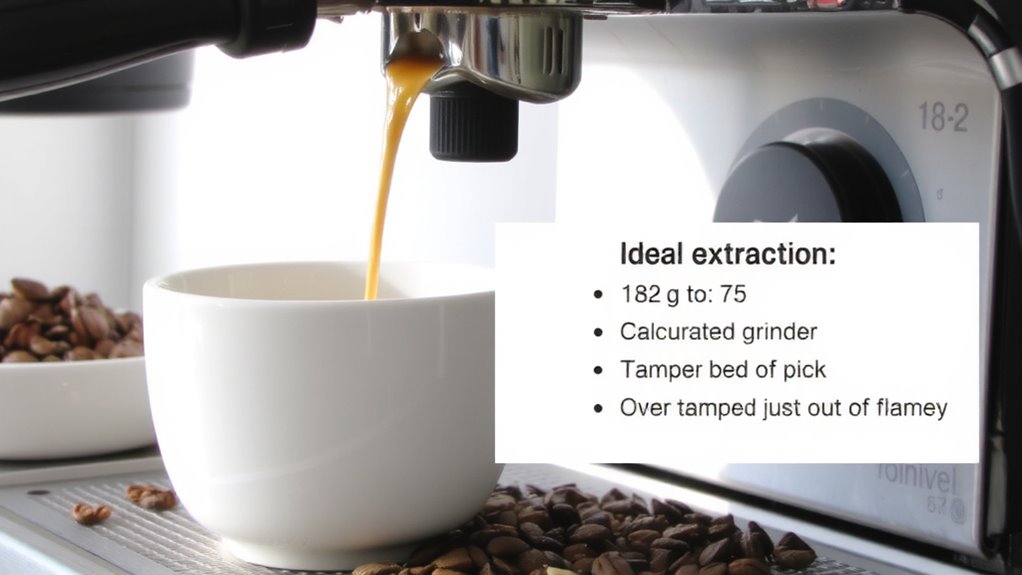
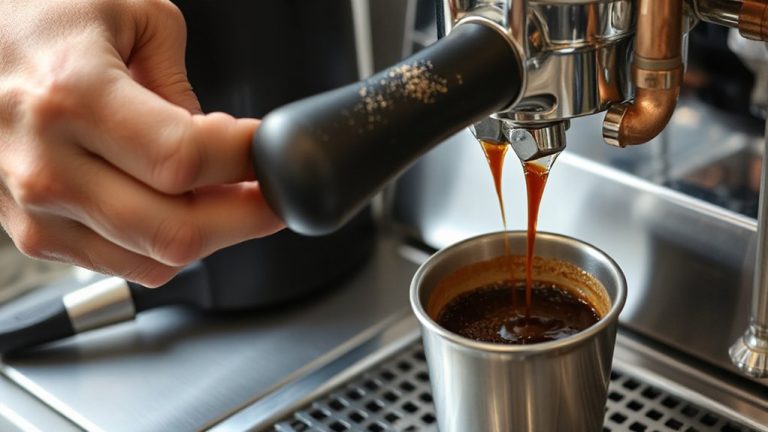
Why does your espresso sometimes taste sharp and sour, or harsh and bitter? It’s often because of imbalanced water temperature or brew time. If your shot pulls too fast-say, under 25 seconds-and tastes sour, the water didn’t have enough time to extract the good compounds, especially if the water temperature is too low. Most machines work best between 195°F and 205°F. Too cold, and you under-extract; too hot, and you risk scorching, leading to bitterness. A brew time over 30 seconds with high temperature usually causes over-extraction, making espresso harsh. You’re not just chasing flavor-you’re balancing chemistry. Adjusting your machine’s temperature settings or controlling brew time through dose or pressure helps. A stable boiler and a reliable timer are practical tools. Small tweaks make clear differences. For precise temperature control, consider using a coffee brewing thermometer to monitor water temperature directly at the group head.
Fix Your Grind Size for Better Extraction
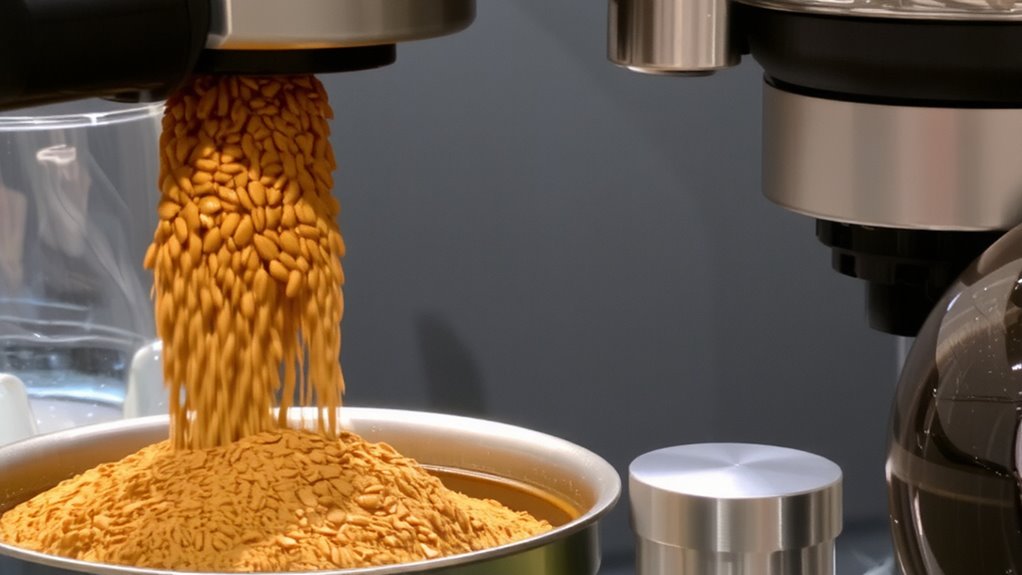
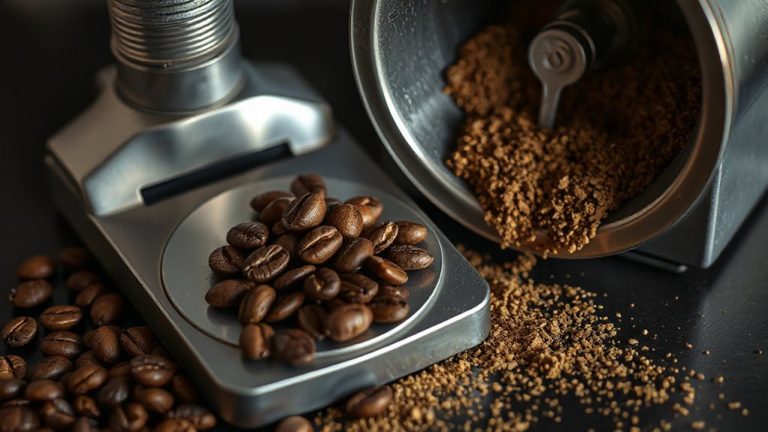
Grind size is the most immediate lever you can pull to fix extraction issues. If your shot pulls too fast and tastes sour, go finer-this increases surface area and slows water flow. If it’s too slow and bitter, go coarser to reduce over-extraction. Your grinder’s quality directly impacts grind consistency and particle distribution, which affect how evenly coffee extracts. Blade grinders create uneven particle distribution, leading to inconsistent extraction. Burr grinders, especially flat or conical types, give better grind consistency. Even with a good grinder, wear over time worsens particle distribution, so maintenance matters. Adjust in small increments-changing one notch can make a real difference. Always let your grinder run for a few seconds to clear old grounds. Freshly ground, uniformly sized particles mean more control and better flavor. That’s how you fix extraction, one tweak at a time. For the best results, consider investing in one of the best espresso grinders recommended by experts.
Dose Right for a Balanced Espresso Shot
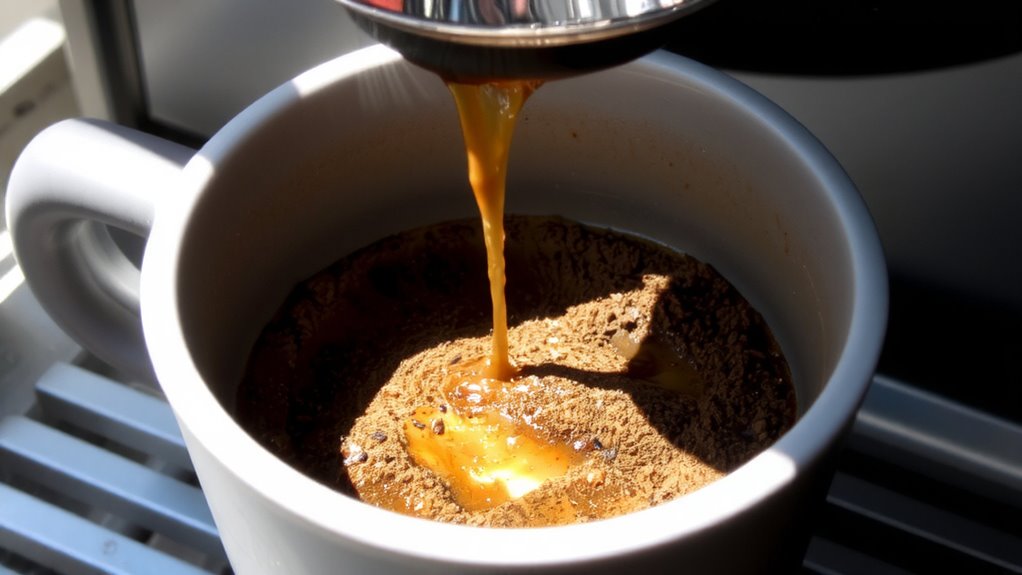
Getting your dose right is key to pulling a balanced espresso shot, and it starts with measuring your coffee and basket size carefully. If you’re using a 18g basket, dose 18g of coffee-no guessing. Under-dosing leads to thin, sour shots; over-dosing causes clogging and uneven extraction. Always weigh your dose; consistency matters more than volume. Fresh beans improve espresso freshness, but they don’t fix a wrong dose. Pair the correct dose with stable water temperature-most machines work best between 195°F and 205°F. A precise dose guarantees even water flow, which supports clarity and sweetness in the cup. Too much or too little coffee disrupts timing, especially when combined with fine grinds. For home baristas, a $20 digital scale makes a real difference. Match your dose to your basket, keep water temperature steady, and you’ll lock in repeatable results shot after shot. A reliable coffee scale ensures consistent dosing and accurate shot tracking over time.
Tamp Evenly: Not Necessarily Harder
A level tamp matters more than how hard you press-it’s about creating a flat, even surface so water flows uniformly through the puck. Pressing too hard won’t fix uneven extraction and might compact the coffee unevenly. Instead, focus on tamp consistency: use the same motion and pressure every time, whether you’re using a stock tamper or a calibrated one like the Pullman Chainless. Your wrist angle and counter height affect portafilter alignment, so set up your station to let your arm tamp straight down. A tilted tamp causes channeling, where water escapes through weak spots, leading to sour or bitter shots. Keep the portafilter level and your tamp flat-check it visually or use a distribution tool first. Consistency beats force every time. With good tamp consistency and proper portafilter alignment, you’ll see tighter shot times and balanced flavor.
Quick Fixes for Common Espresso Problems
Why does your espresso sometimes taste sour, bitter, or just flat? If it’s sour, your brew time is likely too short or your grind too coarse, leading to under-extraction. Try fine-tuning your grind size or increasing the dose slightly. If it’s bitter, the brew time may be too long-your grind could be too fine or your tamp too firm-causing over-extraction. Adjust the grind coarser or check your tamping pressure. Water temperature matters too; if it’s below 195°F, extraction suffers. Most machines allow minor temp adjustments-use a tool like a thermofilter to verify. A standard brew time of 25–30 seconds with 18–20g of coffee usually works for double shots. Pull a test shot, taste, and tweak one variable at a time. Consistency beats guesswork. Track changes in dose, grind, and brew time to find your ideal balance.
On a final note
You’ve got the tools to fix sour or bitter shots-adjust grind size first, as it’s the most sensitive control. Use a consistent dose that fits your portafilter. Tamp evenly, not harder, to avoid restricting flow. These three variables work together, so change one at a time. A good grinder and scale help a lot. Dialing in takes practice, but even small tweaks make coffee taste noticeably better.