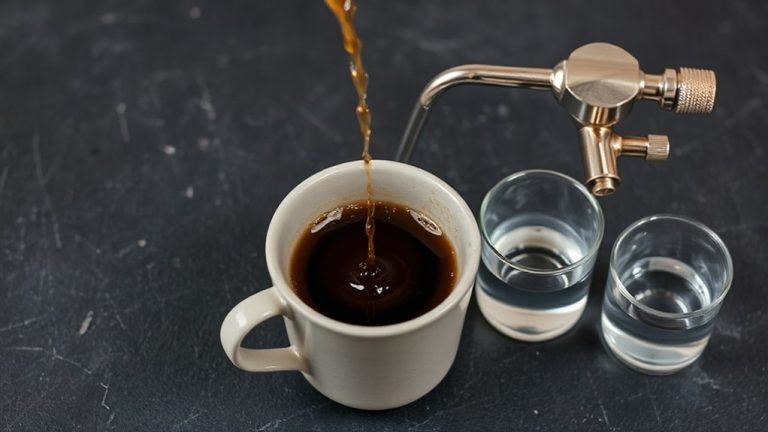
Proper Technique for Flushing Your Espresso Machine With Water Before Brewing
Turn on your machine and let it heat up fully before you start. Remove the portafilter, insert a blind basket, and lock it into the group head securely. Press the brew button and run water for 5–10 seconds to clear out any cooled residue. Stop the cycle, then remove the portafilter. This stabilizes temperature and pressure for better shots. Skipping this can lead to sour, uneven espresso. For best results, keep your machine clean and follow through with proper maintenance habits.
Notable Insights
- Turn on the espresso machine and wait for it to reach full operating temperature before flushing.
- Remove the portafilter and install a blind basket to block water flow during the flush.
- Lock the portafilter securely into the group head with proper alignment to prevent leaks.
- Activate the brew cycle and run water for 5–10 seconds to clear cooled residual water.
- Stop the flush, then remove and dry the portafilter before preparing your espresso shot.
Why Flushing Your Espresso Machine Matters
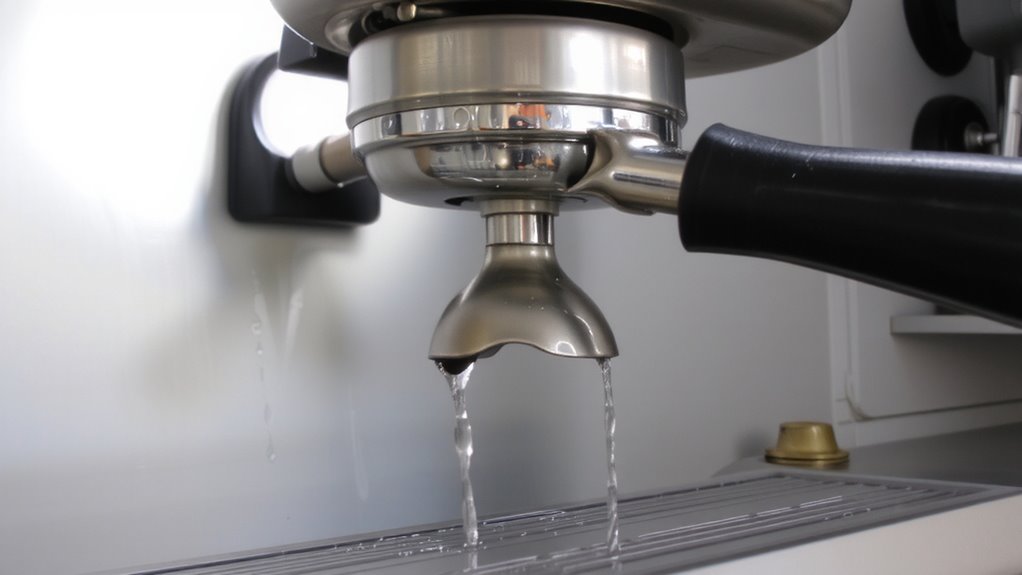
While your espresso machine might seem fine even after sitting idle, skipping a proper flush can hurt your drink quality more than you’d think. Residual water in the group head cools over time, so when you brew without flushing, the incoming water won’t hit the ideal water temperature right away. That means uneven extraction and a flat, sour shot. Flushing clears out this cooled water, stabilizing both temperature and group head pressure before you pull your shot. Machines like the Lelit Bianca or Rocket R58 rely on consistent thermal stability-without a flush, even high-end gear underperforms. You’re also clearing built-up coffee fines or mineral deposits that interfere with even water flow. While some lever machines need less flushing, most semi-automatics benefit from a quick 5–10 second purge. It’s a small step, but it directly impacts pressure consistency and heat retention-two pillars of a balanced espresso. Skip it, and you risk wasting good beans.
How to Flush Your Espresso Machine (Step by Step)
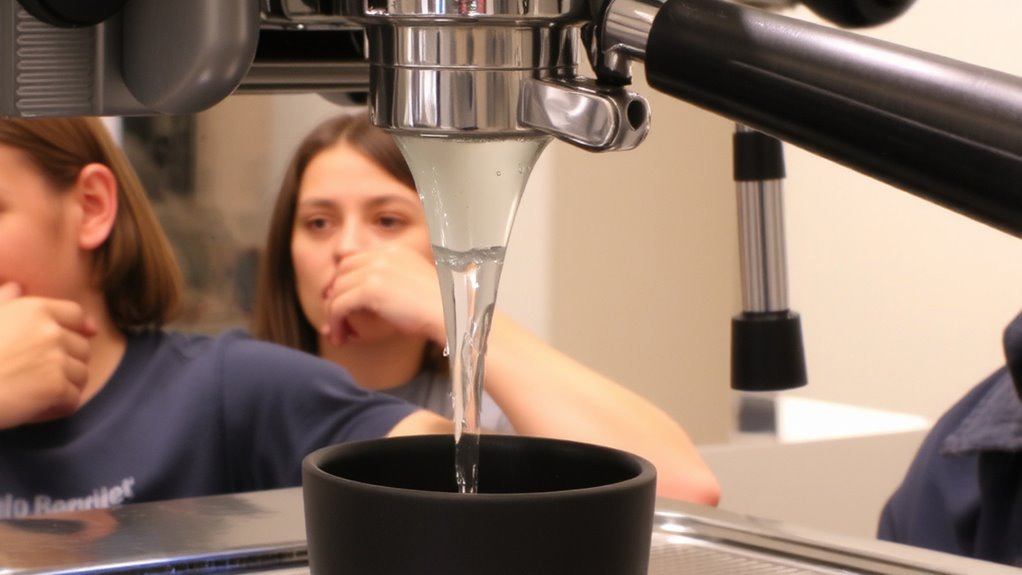
How do you get the best out of your espresso machine right from the first shot? Start by turning on your machine and letting it heat up fully-this guarantees proper water temperature for extraction. Once heated, remove the portafilter and insert the blind basket. Lock the portafilter into the group head with firm, correct portafilter alignment to avoid leaks or damage. Press the brew button and run water through for 5–10 seconds. This clears old residue and stabilizes the machine’s internal temperature. Stop the shot, then release the portafilter. Run a rinse cycle with the clean basket or wipe the shower screen if needed. Flushing improves consistency, especially on machines that cycle heat frequently. It’s a small step, but it directly impacts shot quality by maintaining ideal conditions. Use this method every time you start brewing.
How Often Should You Flush Your Machine?
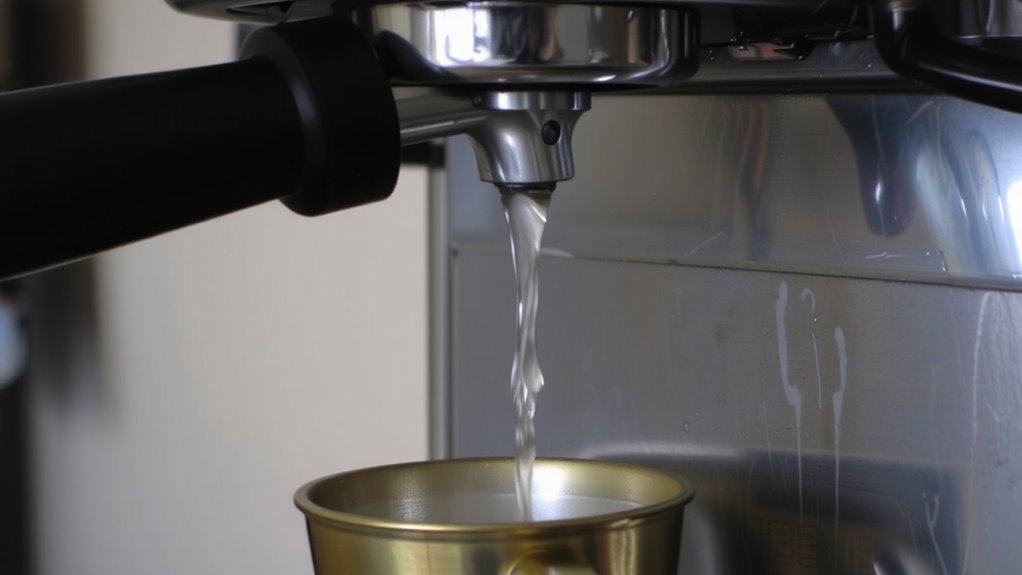
You’ll usually want to flush your espresso machine at the start of each brewing session, especially if it’s been sitting idle for several hours. This water frequency helps clear out stale water and residual oils that can affect flavor. If you’re brewing multiple times a day, a quick flush between shots isn’t necessary, but a brief one every few hours can support consistent temperature and cleanliness. For home users, flushing once at the beginning and end of each session is usually enough. Commercial machines may need more frequent flushing due to higher use. Keeping up with this simple step improves machine maintenance and extends the life of internal components like the group head and portafilter. It also prevents scale buildup when combined with regular backflushing and descaling. Don’t skip it-consistent water frequency with proper maintenance guarantees better-tasting espresso and keeps your machine running smoothly.
Why Your Espresso Still Tastes Bad After Flushing
What if your espresso still tastes off even after a fresh flush? The issue might not be your routine-it could be your water. High water hardness leads to mineral deposits building up inside your machine over time, especially in the boiler and group head. These deposits can alter temperature stability and restrict water flow, which directly impacts extraction. Even regular flushing won’t remove these buildups once they’ve formed. If you’re using tap water with high calcium and magnesium levels, scaling is likely the culprit. You might notice bitter, uneven, or dull shots despite clean equipment and fresh beans. A water hardness test can confirm the problem. Consider switching to filtered or bottled water with balanced mineral content, or use a dedicated filtration system made for espresso machines. Preventing mineral deposits early saves flavor and extends machine life. For high-volume environments, investing in commercial-grade equipment like a Keurig commercial coffee maker ensures consistent performance and durability under heavy use.
Pro Tips for Cleaner Shots and a Longer-Lasting Machine
A good flush clears the group head of old coffee residues, but keeping your machine in top shape requires more than just a quick rinse between shots. You should backflush weekly with a blind basket and water-no detergent unless specified by your machine’s manual. This prevents oil buildup that affects flavor and function. Check your portafilter fit often; a loose fit causes pressure leaks, leading to under-extracted, sour shots. A snug, secure fit guarantees consistent pressure during extraction. Also, monitor water temperature-it should stay between 195°F and 205°F. Too hot, and you burn the puck; too cool, and your espresso tastes weak. Machines with PID controllers let you adjust this easily. Regular descaling, proper steam wand wiping, and dry pucks help, too. These habits mean cleaner shots, fewer repairs, and longer machine life-without overcomplicating your routine. Consider using a high-quality drip tray to catch spills and maintain a clean workspace.
On a final note
You should flush your espresso machine before brewing to clear old residue and stabilize temperature. Run water through the group head for 3–5 seconds, then wipe the portafilter. Do this daily if you use the machine often. Flushing helps, but bad taste may still come from old beans, poor grind, or scale buildup. Clean your machine regularly and use filtered water. A clean machine gives better shots and lasts longer.