Understanding Specialty Coffee Grading Standards: What You Need to Know About Scoring Systems Used by Experts in the Industry
You’ll find specialty coffee graded on a 100-point scale, with 80+ marking true specialty status. Experts called Q Graders assess aroma, acidity, body, and more, using standards set by the Specialty Coffee Association. Beans from high altitudes, like Ethiopian or Colombian, often score higher due to flavor clarity. A score reflects consistency and care, not just taste. Light to medium roasts let origin traits shine. Ready to explore what these scores mean for your cup?
Notable Insights
- Specialty coffee must score 80+ on the SCA’s 100-point scale to be considered high-quality and defect-free.
- The SCA scoring system evaluates ten sensory attributes, including aroma, acidity, body, and flavor balance.
- Trained Q Graders assess coffee using standardized light to medium roasts for consistent, objective evaluation.
- Higher scores (85+) often reflect complex flavors like citrus or floral notes and minimal to no defects.
- Origin, altitude, and bean variety influence flavor, but roasting and cupping consistency are critical for scoring.
What Is Specialty Coffee Grading (And Why It Matters)
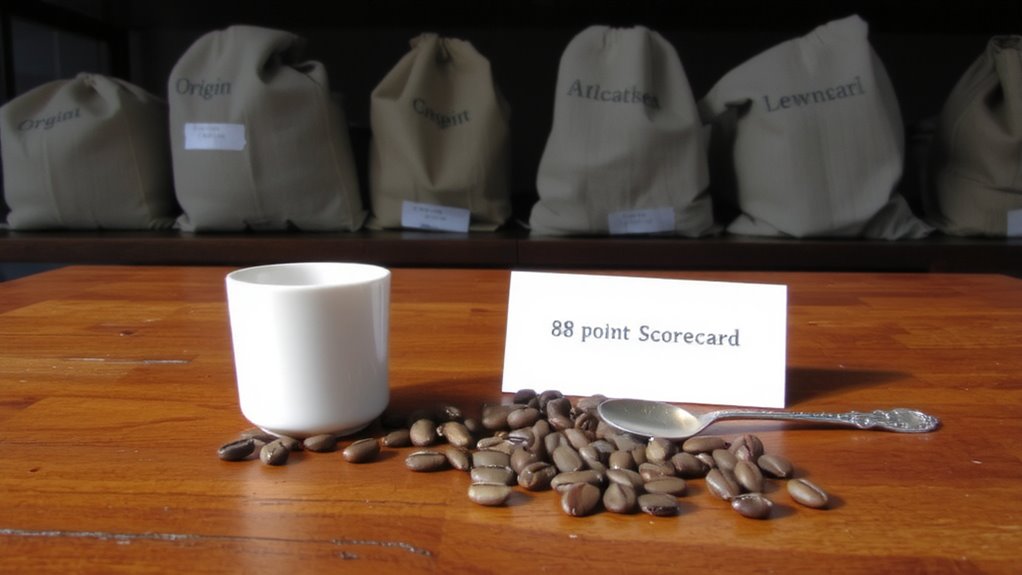
Specialty coffee grading is a systematic way to evaluate coffee quality based on factors like bean appearance, aroma, flavor, acidity, body, and aftertaste. You rely on this process to identify coffees worth the specialty label-typically scoring 80+ on a 100-point scale. Bean genetics play a big role; heirloom varieties like Geisha often deliver nuanced flavors, while modern hybrids may offer disease resistance with less complexity. Growing altitude matters too-beans from 1,200 to 2,000 meters tend to be denser, with brighter acidity and more developed sugars due to cooler temperatures. These traits translate into cleaner cups with distinct profiles, which matter if you’re choosing beans for brewing methods like pour-over or espresso. Grading secures consistency, so you’re not guessing quality. It helps roasters select appropriate profiles and helps you pick beans that match your taste or equipment needs.
How the SCA Scores Coffee From 0 to 100
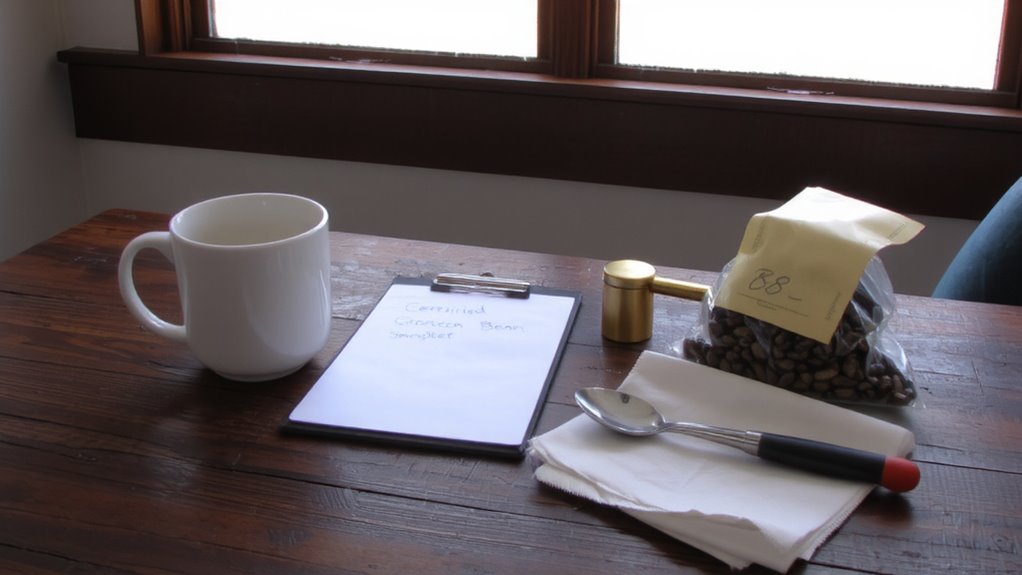
You already know that high marks mean a better shot at a bright, clean cup with distinct flavors, but how do those numbers actually come about? The Specialty Coffee Association (SCA) uses a 100-point scale to score coffee based on objective criteria. Coffees scoring 80 or above are considered specialty grade. Trained tasters evaluate each sample for key factors like aroma, acidity, body, and aftertaste. They also assess the overall cup profile, which captures how well the flavors develop from first sip to finish. A strong score depends heavily on flavor balance-no single trait should overpower the others. For example, bright acidity is good, but not if it clashes with bitterness. Roast consistency and absence of defects also play a role. The final score helps roasters and buyers compare quality across origins and batches in a standardized way.
What Experts Taste: The 10 Sensory Attributes Graded
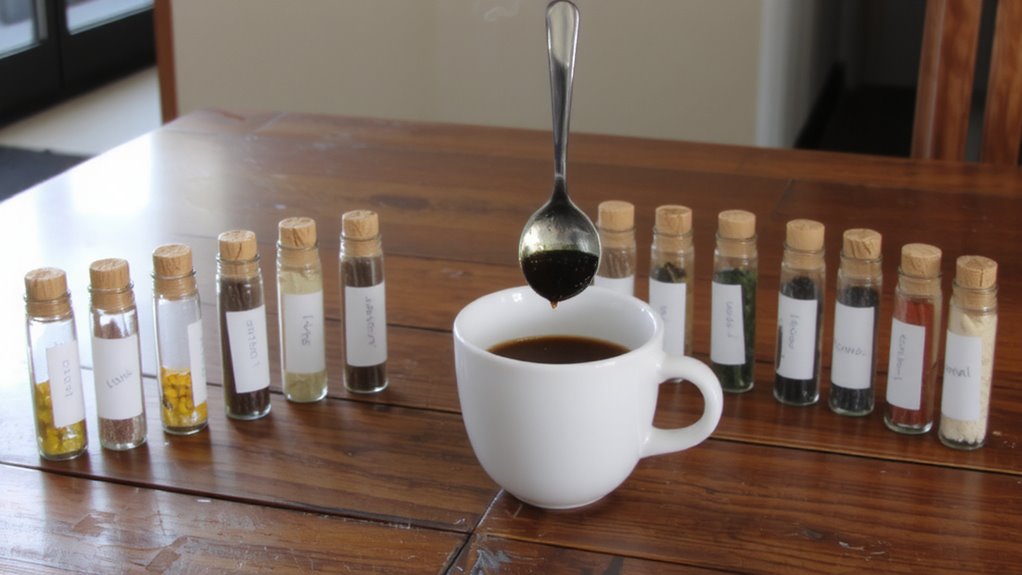
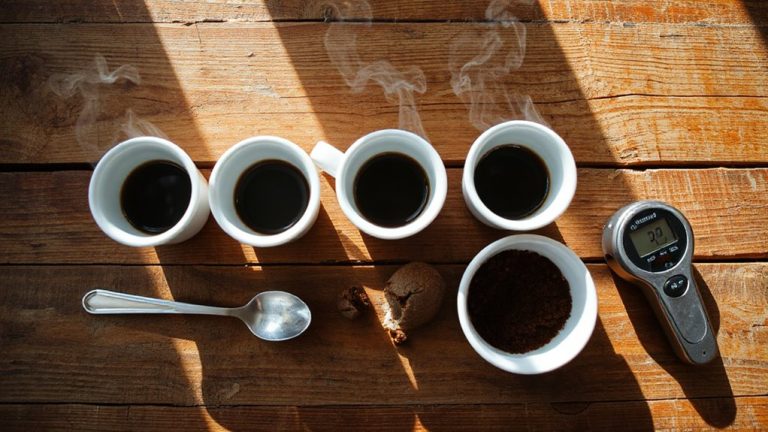
When evaluating coffee, experts break down the experience into ten key sensory attributes that determine its final score. You’ll assess aroma, flavor, aftertaste, acidity, body, balance, uniformity, clean cup, sweetness, and overall impression. Flavor complexity matters-think layers of fruit, chocolate, or floral notes, not just a single flat taste. Acidity should be bright but not sour, like a crisp apple rather than vinegar. Body balance means the mouthfeel and weight sit well with the other traits-light like tea or full like broth-without overpowering. A syrupy espresso needs enough sweetness and structure to match its heft, while a light roast filter brew should feel crisp and integrated. Judges cup multiple times, checking consistency across brews. Each sip is measured, with points deducted for flaws like staleness or bitterness. You don’t just taste-you analyze how all ten traits work together, ensuring no single element dominates unless it enhances the whole.
What Coffee Scores Really Mean in Specialty Grading
A score isn’t just a number-it’s a snapshot of quality backed by strict standards. When you see a coffee rated 80 or above, know it passed a rigorous evaluation by trained tasters. Scores below 80 aren’t specialty grade, meaning they lack the complexity or cleanliness expected in today’s coffee culture. Each point reflects real benchmarks: aroma, acidity, body, and-critically-flavor profiles. A coffee scoring 85+ often delivers distinct, balanced flavors like citrus, chocolate, or floral notes, with minimal defects. These scores help you compare beans objectively, especially when choosing between bags at a café or online. Higher scores don’t always mean better for your taste, but they do indicate higher consistency and care in production. Knowing this helps you make smarter choices, whether you’re using a pour-over, espresso machine, or French press.
Does Roast & Origin Affect Coffee Grading?
How do roast and origin shape a coffee’s grade? Your coffee’s geographic origin plays a key role-factors like altitude, soil, and climate affect bean density and flavor compounds. Beans from Ethiopia might show floral, citrus notes, while those from Colombia often taste sweeter and more balanced. These inherent traits influence scoring, but only if the roast profile supports them. Roasters must tailor development to highlight a bean’s potential. Too dark, and you mask origin characteristics; too light, and some beans taste underdeveloped. Graders evaluate coffee at a standardized light to medium roast to guarantee fairness and clarity. That way, scores reflect the bean’s true quality, not roast style. While origin sets the foundation, the roast profile determines whether those qualities shine. Both matter, but grading prioritizes origin potential revealed through appropriate roasting.
Who Are Q Graders and How Are They Certified?
You’ve seen how origin and roast influence a coffee’s score, but someone still has to determine that score-and that’s where Q Graders come in. These professionals are trained in sensory evaluation and certified by the Coffee Quality Institute (CQI) through rigorous Q Grader certification exams. To earn the title, you must pass 22 tests, including aroma identification, green coffee grading, and triangle cupping. The core is consistent, accurate scoring across multiple trials.
| Skill | Required Test | Pass Threshold |
|---|---|---|
| Cupping Consistency | 3-day exam | 85% accuracy |
| Acidity Recognition | Flavor profiling | Correct ID |
| Body Detection | Mouthfeel analysis | Within range |
| Defect Detection | Sensory evaluation | Zero major flaws |
Achieving Q Grader certification means you can score coffee using a standardized 100-point scale, ensuring reliability across global markets.
Why Coffee Scores Change Taste, Price, and Availability
While scoring doesn’t directly change how coffee tastes, it does shape how it’s valued, priced, and distributed. You’ll often pay more for a brew with a score above 85-it signals rarity and quality, driving up demand. High scores influence market trends, pushing roasters to source top-tier beans, which can limit availability. Lower-scoring coffees might be more accessible and affordable, but they’re not necessarily bad-just less aligned with current preferences. Your consumer perception matters: a high score can make you expect brighter acidity or smoother finish, even if subtle. Score-based pricing also affects what’s stocked locally-retailers focus on what sells, often favoring high-scoring or trending origins. So while the number won’t alter flavor in your cup, it impacts what you buy, brew, and believe tastes better.
On a final note
You now know how specialty coffee is graded, from the SCA’s 100-point scale to the 10 attributes experts evaluate. A higher score often means better flavor clarity and balance, but it doesn’t guarantee you’ll like it more. Roast and origin matter, but so does brewing method and equipment. If you’re using a pour-over or espresso machine, match your bean’s profile to your setup. Scores guide quality, but your taste and gear determine the real result.