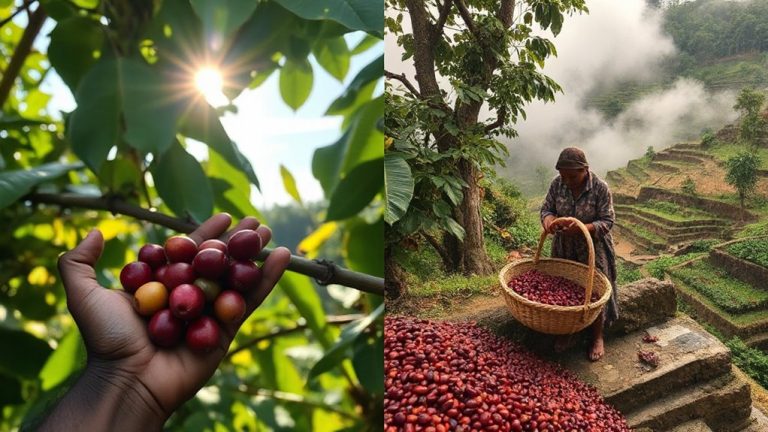
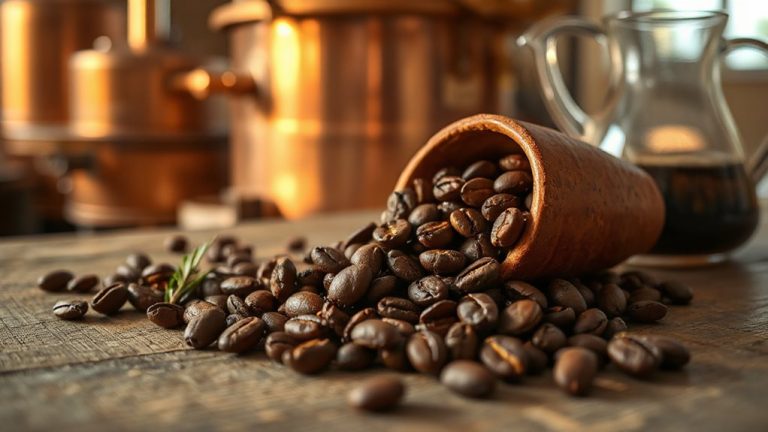
The Impact of Fermentation on Coffee Processing Methods: How This Technique Can Enhance Your Brew’s Complexity
You control fermentation’s impact by choosing how long and under what conditions mucilage breaks down around coffee beans. It shapes acidity, sweetness, and body-washed beans gain brightness with less risk, naturals develop bold fruitiness but need careful timing. Anaerobic tanks boost wine-like notes; co-fermentation with fruits adds depth. Time, yeast, and temperature matter: even a few hours can shift flavors. Watch for pH and heat to avoid off-notes. There’s more to how these choices define your cup.
Notable Insights
- Fermentation breaks down mucilage in coffee beans, influencing flavor clarity and complexity across processing methods.
- Washed processes use controlled fermentation for clean, bright profiles with high bean integrity.
- Natural fermentation inside the fruit enhances bold, fruity notes but risks over-fermentation and inconsistency.
- Honey processing balances residual sugar fermentation to boost sweetness and body while maintaining stability.
- Anaerobic and co-fermentation techniques intensify complexity, adding wine-like or fruit-forward characteristics through controlled microbial activity.
What Is Fermentation in Coffee Processing?
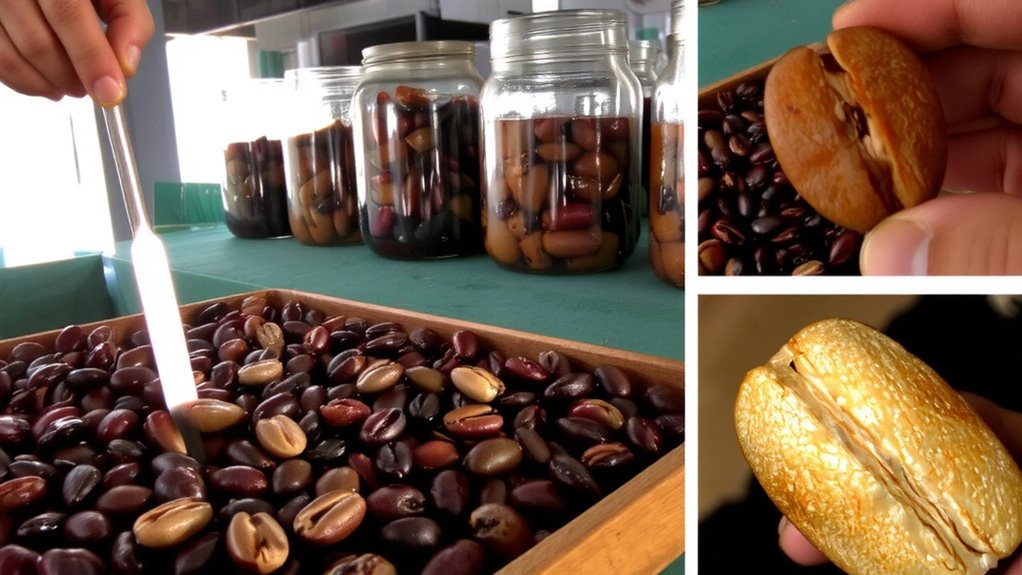
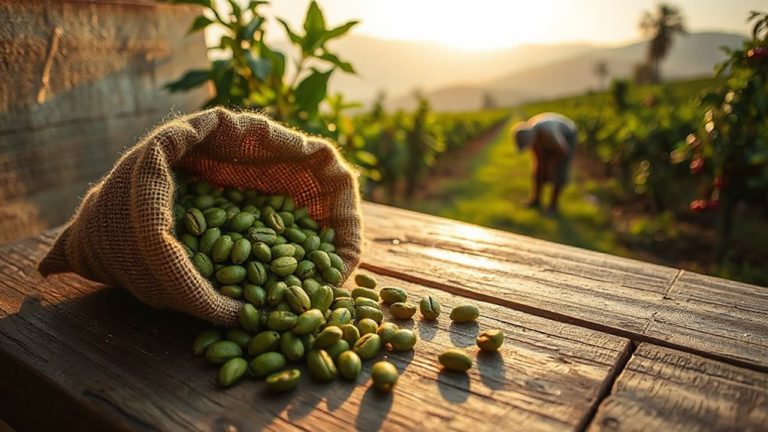
While fermentation might sound like something better suited to yogurt or beer, it’s actually an essential step in how your coffee develops its flavor. You’re relying on controlled microbial activity to break down the sugary mucilage clinging to the beans after depulping. This process happens naturally or with added cultures, depending on the method. If done right, fermentation preserves bean integrity, ensuring the seed isn’t damaged by overexposure to moisture or heat. You have to monitor time and temperature closely-too long and the beans can sour or lose structure. Washed, honey, and natural processes all use fermentation differently, so your choice affects consistency and effort required. Equipment like fermentation tanks or pH meters helps maintain control, especially at scale. It’s not magic-it’s science you can manage with attention and the right setup.
How Fermentation Changes Coffee Flavor
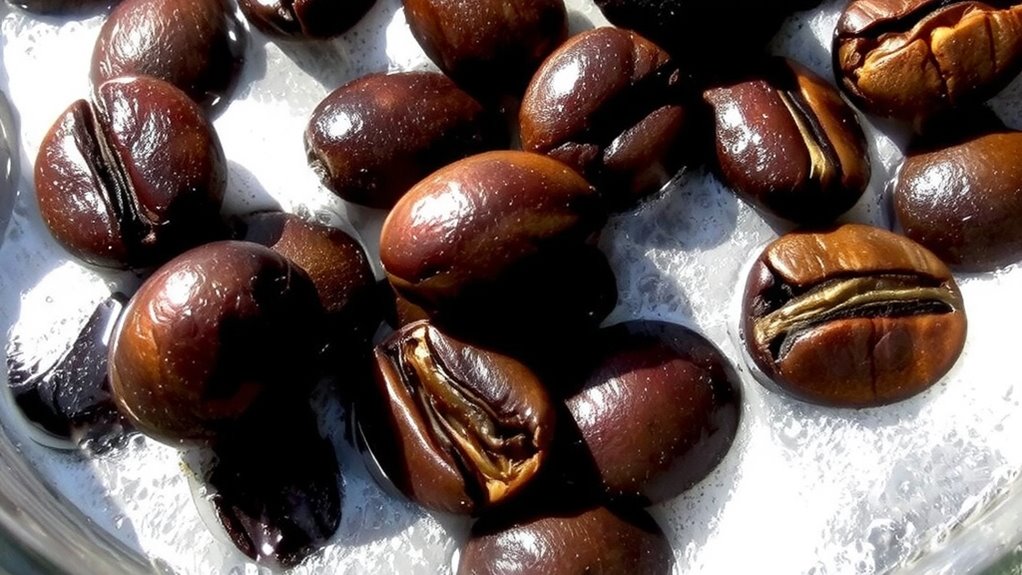
Because fermentation directly influences the chemical makeup of the coffee bean, it plays a key role in shaping the final cup profile. You’ll notice a distinct flavor transformation depending on how long and under what conditions fermentation occurs. Longer fermentation often increases acidity and can highlight fruity or floral notes, while shorter cycles may preserve cleaner, more straightforward flavors. Controlling temperature and pH helps prevent over-fermentation, which risks off-flavors. When managed well, this process enhances sensory depth, making your brew more layered and dynamic. Anaerobic fermentation, for example, commonly yields heavier body and pronounced wine-like characteristics, whereas open-air methods offer brighter, more variable profiles. Tools like fermentation tanks with sensors allow better monitoring, though they add cost. Whether you’re a producer or a serious home brewer, understanding this stage helps you predict and refine flavor outcomes with greater precision.
Fermentation Across Washed, Natural, and Honey Processes
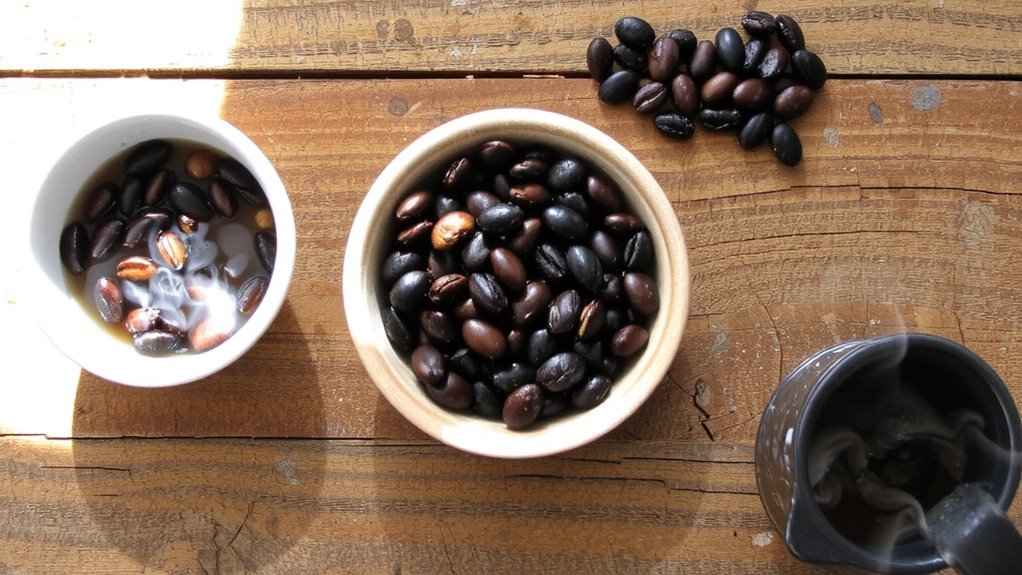
Fermentation shows up in different ways across the main coffee processing methods, and knowing how it works in washed, natural, and honey processes helps you make better choices in the roastery or brewing setup. In washed processing, you remove the mucilage before fermentation, leading to clean cups with high bean integrity but less sweetness. Natural processing lets the bean ferment inside the fruit, boosting flavor complexity but risking over-fermentation. Honey processes strike a balance-partial mucilage retention shapes body and sweetness while maintaining more bean integrity than naturals.
| Process | Emotional Result |
|---|---|
| Washed | Clarity, precision |
| Natural | Wild, bold, adventurous |
| Honey | Smooth, rounded comfort |
| Wet Ferment (Washed) | Crisp control |
| Extended Dry (Natural) | Unpredictable joy |
Each method guides how fermentation shapes your final brew.
How Time, Temperature, and Yeast Change Flavor
When you let coffee ferment, time, temperature, and yeast work together to define the final flavor-too short or too cold, and the changes stay shallow; too long or too warm, and you risk off-flavors or spoilage. You need consistent temperature control to keep fermentation predictable; many producers use insulated tanks or water jackets to maintain stable conditions. Time varies: 12–72 hours is common, but even a few extra hours can intensify fruitiness or cause imbalance. Yeast selection plays a key role-you might use native microbes from the farm, but many now choose specific strains like *Saccharomyces cerevisiae* for cleaner, more repeatable results. Commercial yeast can enhance sweetness or acidity, depending on the strain, but requires sanitation and monitoring. Wild fermentation is cheaper but less consistent. With careful yeast selection and tight temperature control, you gain precision-turning variability into a tool rather than a risk.
Anaerobic and Co-Fermentation: Pushing the Limits
You’ve already seen how time, temperature, and yeast shape flavor in traditional fermentation, but now producers are testing the edges with methods that offer tighter control and bolder results. Anaerobic fermentation seals coffee in oxygen-free tanks, slowing microbial activity and intensifying fruit-forward notes like cherry or lime. Since the tanks are closed, they allow for carbon capture, reducing emissions and supporting eco-friendly processing. Co-fermentation takes it further-producers add other fruits, like passionfruit or grapes, to create microbial synergy, enhancing complexity through shared yeast and bacteria strains. These methods require precise monitoring: pH meters, temperature probes, and fermentation locks are essential. While stainless steel tanks yield consistency, they’re costly compared to jerry cans. You don’t need lab-grade gear to appreciate the results, but understanding the process helps you choose coffees with deliberate, layered profiles worth the extra cost.
What Can Go Wrong (And Right) With Long Fermentation
While longer fermentation can deepen a coffee’s complexity, it also increases the risk of over-fermentation if not carefully managed. You might encounter off-flavors like vinegar or rot if time or temperature isn’t monitored. These over fermentation risks can ruin a batch, especially in warm, uncontrolled environments. On the flip side, getting it right means accessing bold fruitiness, acidity, and depth that elevate your brew. That’s where the under fermentation rewards come in-shorter or tightly controlled ferments preserve sweetness and clarity, avoiding the pitfalls of excess. You’ll need precise timing, clean tanks, and consistent temperatures. Natural processes vary, so relying on sight and smell isn’t enough. Use pH meters or Brix refractometers for better control. Whether you’re using stainless steel tanks or fermentation bags, consistency beats guesswork. Balance is key-push too far, and you lose quality; pull back too soon, and you miss out on flavor.
How to Taste Fermented Coffee Notes
Getting the most out of fermented coffee starts with knowing how to detect the flavors that fermentation produces. Begin by smelling the brew-fermented coffees often have distinct aroma profiles, like ripe fruit, wine, or tangy yogurt. Swirl the cup gently to release more scent before tasting. When you sip, let the coffee coat your tongue to pick up subtle flavor nuances. Look for brightness, acidity, or tropical notes like mango or passionfruit, common in anaerobically fermented beans. Contrast that with washed coffees, which are cleaner but less complex. Use a light roast to preserve delicate fermented characteristics. A gooseneck kettle and pour-over setup, like a Hario V60, helps control extraction and highlight these traits. A well-chosen pour-over coffee maker can significantly elevate the clarity and complexity of fermented coffees. Avoid dark roasts or French presses, which can mask finer details. Pay attention across multiple sips-fermented notes often evolve as the coffee cools.
On a final note
Fermentation shapes your coffee’s flavor more than you might think. By controlling time, temperature, and microbes, producers can boost sweetness, acidity, or complexity. Washed, natural, and honey processes each use fermentation differently-some rely on ambient yeast, others use anaerobic tanks for precision. While long fermentations can yield fruity, wine-like notes, they risk off-flavors if not monitored. Choose beans labeled with process details to explore these differences reliably.