Espresso Extraction Time: 25-30 Sec for Best Caffeine Kick
You get most of your espresso’s caffeine in the first 15 seconds, so longer pulls don’t boost alertness much. A 25–30 second shot balances flavor and stimulation without bitterness. Light roasts offer slightly more caffeine but need precise timing to avoid sourness. Grind size and dose matter more than pull time for consistency. Ethiopian beans extract faster than Brazilian, and dark roasts dissolve quicker than light. For reliable results, use a burr grinder and scale-your daily routine will improve.
Notable Insights
- Espresso extraction time of 25–30 seconds optimally balances caffeine content and flavor for peak alertness.
- Caffeine is mostly extracted in the first 10–15 seconds, making extended pulls ineffective for increasing stimulation.
- Longer extraction increases strength and body but adds bitterness, not significantly more caffeine.
- Light roasts may offer slightly more caffeine but require precise timing to avoid sourness and ensure palatability.
- Consistent grind size and proper dose are critical for achieving target extraction times and reliable alertness benefits.
What Is Espresso Extraction Time: and Why It Matters
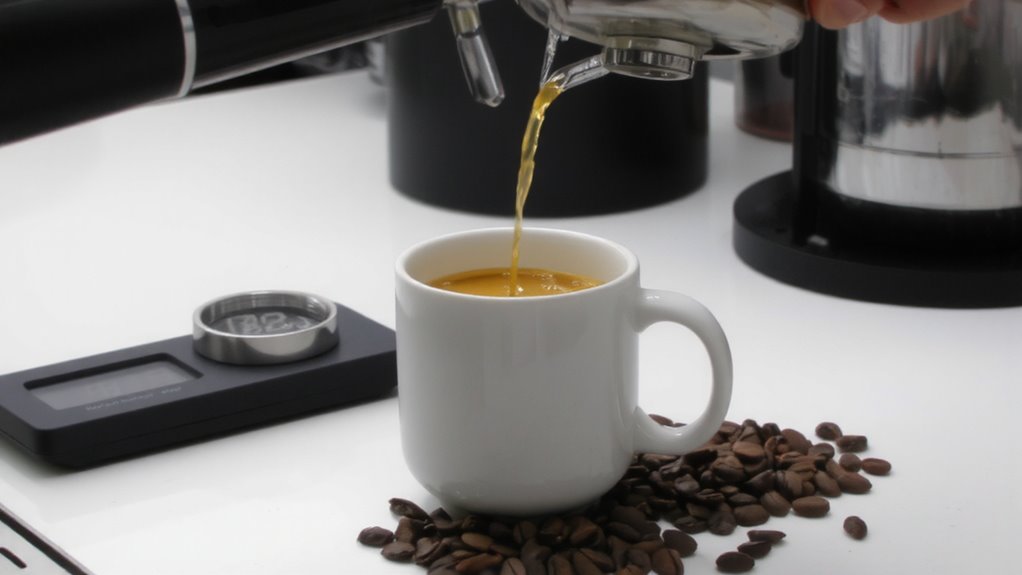
What exactly happens between the moment you press start on your espresso machine and that rich stream of coffee hitting the cup? That’s extraction time-the period when hot water pulls flavor compounds from ground coffee. It typically lasts 25 to 30 seconds in a well-tuned shot. This window matters because it shapes your espresso’s balance. Too short, and you’ll get sour notes; too long, and bitterness creeps in. Your bean origin affects this-beans from Ethiopia, for example, may extract faster than Brazilian ones. Roast level plays a role too: darker roasts are more soluble, extracting quicker than dense, light roasts. You need to adjust grind size and dose accordingly. A consistent extraction time guarantees repeatable flavor, letting you compare shots and tweak confidently. It’s not just timing-it’s control. Know your variables.
How Extraction Time Changes Strength and Flavor
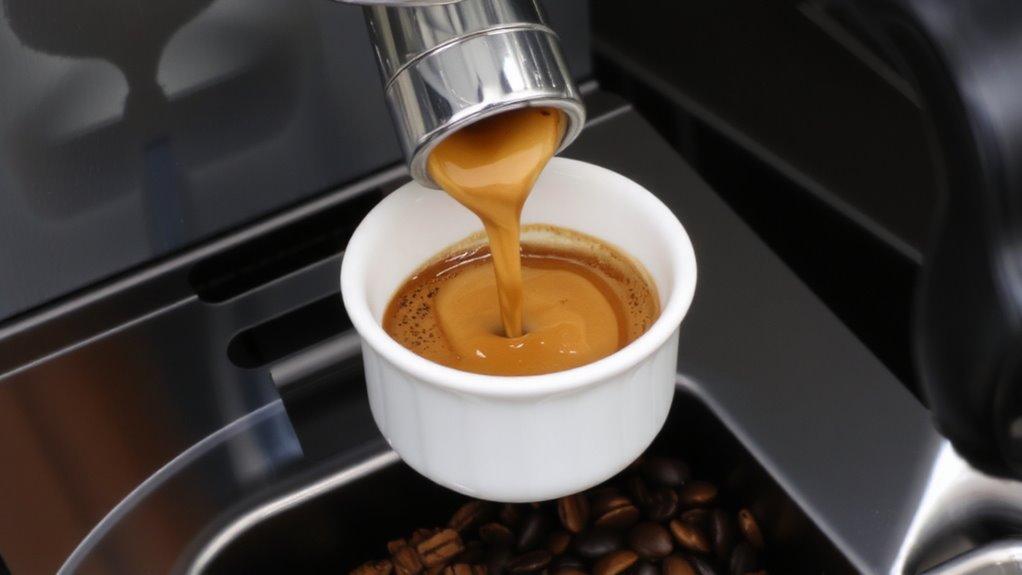
Though extraction time doesn’t directly increase caffeine content-since most caffeine comes out early in the brew-letting the shot run longer does pull more total dissolved solids, which affects strength and flavor. You’ll notice a heavier body and more intense taste with longer pulls, but risk bitterness if overdone. Shorter shots (18–22 seconds) highlight acidity and sweetness, especially in light roast beans from African origins like Ethiopia. These delicate notes can vanish if over-extracted. Darker roasts, like Italian-style beans from South America, handle longer times (25–30 seconds) better, developing richer, chocolatey depth without harshness. Your roast level and bean origin determine the sweet spot. A lighter roast needs precision; a darker one offers more leeway. Adjust grind size first, then tweak time to fine-tune flavor-don’t rely on time alone. For best results, match your coffee grind size to the intended extraction time and brew method.
Does a Longer Espresso Pull Extract More Caffeine?
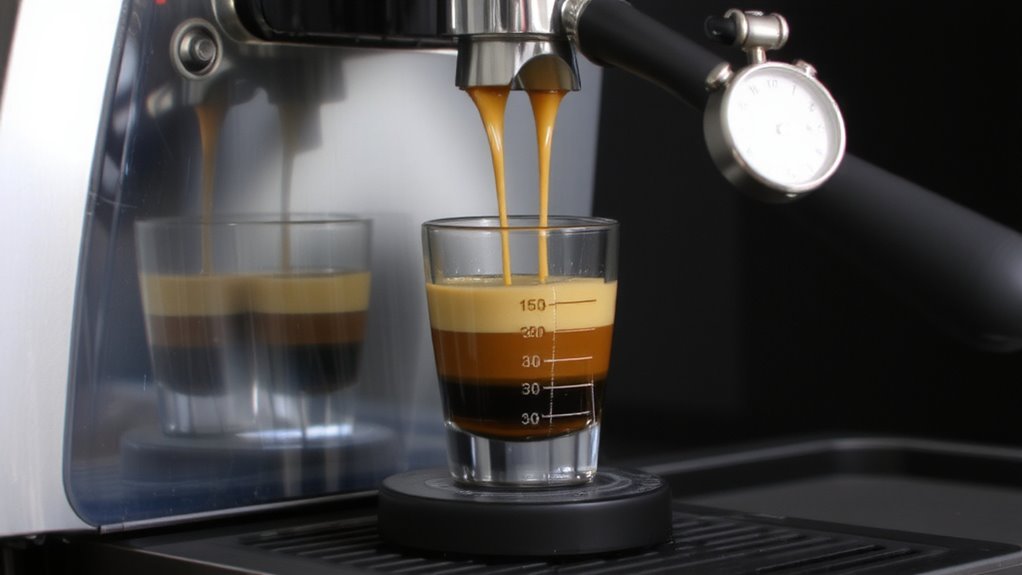
If you’re chasing more caffeine, extending your espresso pull won’t give you much of a boost-most caffeine extracts in the first 10 to 15 seconds of brewing. That’s because caffeine solubility in hot water is high early on, and the compound dissolves quickly under pressure. After that point, additional contact duration mainly pulls more bitter compounds and oils, not extra caffeine. A standard 25–30 second shot already captures nearly all available caffeine from the grounds. Going longer, say 40+ seconds, increases volume and alters flavor but adds negligible caffeine. If you need more caffeine, it’s better to increase dose (use more coffee) rather than drag out the pull. Machines with stable pressure and good temperature control guarantee consistent extraction. Relying on longer contact duration won’t deliver the perk you want-focus on dose and grind instead.
What’s the Best Extraction Time for Alertness?
How quickly can your morning espresso kick in? For peak alertness, aim for a 25–30 second extraction. This range consistently delivers balanced caffeine levels and flavor without unnecessary delay. Your choice of bean origin affects this-dense, high-altitude beans like Ethiopian Yirgacheffe may need precise timing to access full stimulation potential. Pair that with a medium roast level, which preserves more caffeine than dark roasts while still developing enough sweetness for a smooth kick. Light roasts retain slightly more caffeine but can taste sharp if under-extracted. Equipment matters: dial in your grinder and use a scale to guarantee consistency. Pulling shots too short sacrifices caffeine and brightness; going longer increases bitterness without meaningful gains in alertness. Stick to 25–30 seconds, adjust grind as needed, and you’ll get reliable energy with every shot-fast, effective, and grounded in real results.
How Under- vs. Over-Extraction Affect Caffeine and Taste
What happens when your espresso shot falls short or runs too long? If it’s under-extracted-say, less than 20 seconds-you’ll get sour, sharp flavors because only the most soluble compounds pulled out. Caffeine levels don’t drop much, but taste certainly suffers. With over-extraction-beyond 30 seconds-bitter, ashy notes dominate as deeper compounds flood in. While caffeine increases slightly, the harshness often isn’t worth it. Your brew method plays a key role here: pressure and time must match your grind and machine capability. Bean origin matters too-dense beans from Ethiopia may resist extraction, while softer Brazilian beans might over-extract faster. A balanced shot pulls the best from both flavor and caffeine-aim for that sweet spot.
How to Control Extraction Time With Grind and Dose
Time is your lever-pull it the right way, and you’re in control. If your shot pulls too fast, go finer on the grind; too slow, go coarser. Small tweaks make big differences, especially with modern grinders that offer high grind consistency. Uneven particles lead to uneven extraction, so a burr grinder-like a Baratza Sette or Fellow Ode-pays off fast. Dose matters just as much: more coffee slows the flow, less speeds it up. Aim for even dose distribution in the portafilter-tap gently or use a distribution tool like the Leveler to avoid channels. Don’t pack harder to slow time; that’s a band-aid. Instead, balance grind size and dose first. With consistent grind consistency and proper dose distribution, you’ll hit that 25–30 second sweet spot reliably, shot after shot. Investing in one of the best coffee grinders can significantly improve your shot consistency and overall espresso quality.
How Water, Freshness, and Dose Interact With Extraction Time
While water quality, coffee freshness, and dose all play distinct roles in extraction, they’re not isolated factors-they interact in ways that directly affect your shot time and overall flavor. Your water temperature (typically 195–205°F) impacts how quickly solubles dissolve; too low and extraction lags, too high and bitterness creeps in. Fresh beans release CO2, affecting flow-too fresh and your shot slows, too old and it rushes. Dose size, paired with grind, determines resistance. Bean origin matters too: dense beans from high altitudes (like Ethiopian Yirgacheffe) often need finer grinds and stable temps to extract fully.
| Factor | Effect on Extraction Time | Practical Tip |
|---|---|---|
| High water temp | Decreases | Avoid >205°F to prevent scalding |
| Stale beans | Increases | Use within 3–4 weeks of roast |
| High dose | Increases | Adjust grind to compensate |
| Low water temp | Increases | Aim for 195–205°F range |
| Dense bean origin | Increases | Fine-tune grind and pressure |
On a final note
You’ll get the most balanced shot by pulling espresso between 25–30 seconds. Too short, and it’s weak with less caffeine; too long, and bitterness rises without meaningful caffeine gains. Grind size matters most-finer slows flow, coarser speeds it. Use fresh beans, a precise dose (18–20g for doubles), and clean equipment. A decent scale and timer are low-cost tools that make a real difference.