How Grind Size Affects Espresso Extraction Efficiency: The Importance of Consistency in Achieving Desired Flavor Profiles
Your grind size controls how fast water pulls flavor from coffee, directly affecting taste and balance. Too coarse, and water zips through-sour, weak shots result, especially in light roasts. Too fine, and flow slows, pulling out bitter, harsh notes. Uneven grinds create both problems at once, as fines over-extract while coarse bits stay underdone. For even extraction, use a quality grinder like the Baratza Sette or Lelit Bella-consistent burrs matter more than tamping or temperature tweaks. A stable grind gives you predictable, balanced espresso every time, and there’s more to fine-tuning your setup where that came from.
Notable Insights
- Grind size directly controls water flow and extraction time, impacting espresso balance and flavor clarity.
- Too fine a grind causes over-extraction, leading to bitter, harsh shots due to excessive resistance.
- Too coarse a grind results in under-extraction, producing sour, weak espresso from rapid water passage.
- Inconsistent grind particles cause uneven extraction, with fines over-extracting and coarse bits under-extracting.
- High-quality, well-maintained grinders ensure uniform particle size, enabling consistent extraction and optimal flavor.
Why Grind Size Makes or Breaks Espresso
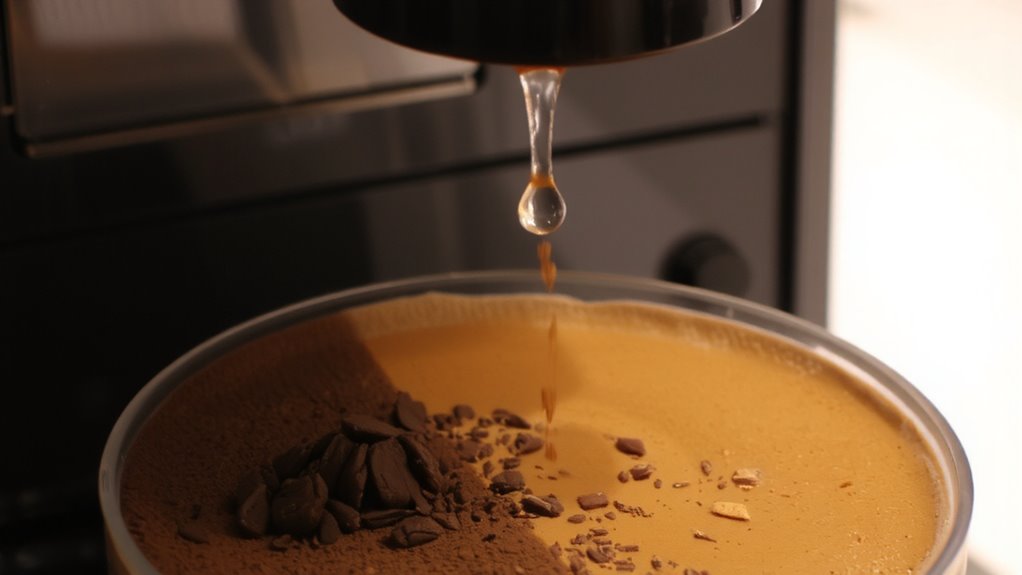
While it might seem like a small detail, getting the grind size right is one of the most important factors in pulling a balanced espresso shot. If your grind is too fine, water can’t move through easily, leading to over-extraction even with correct tamping pressure and proper water temperature. On the other hand, too fine a grind increases resistance, often causing channeling. You’ll notice bitter, harsh shots that don’t reflect the bean’s true flavor. Machines like the Breville Duo Temp or Rocket R58 manage water temperature well, but they can’t fix poor grind consistency. A quality burr grinder-such as the Baratza Sette 270-gives you precise control. Always adjust grind size before tweaking tamping pressure or temperature. Small changes make big differences. Aim for a shot that flows like warm honey, with a 25–30 second extraction. That’s how you hit balance. For optimal results, consider one of the best burr grinders for coffee lovers to maintain uniform particle size. best burr grinders
Too Coarse? You’re Getting Sour Espresso
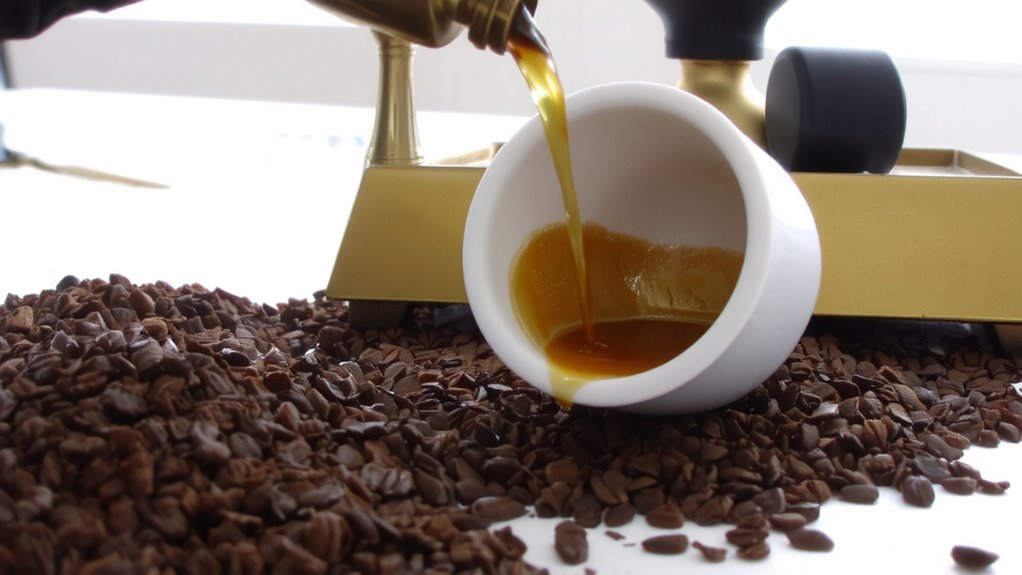
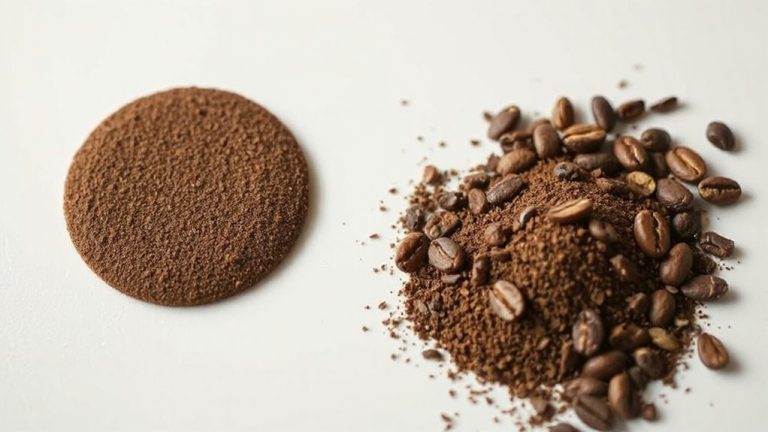
If your espresso shots taste sharp or sour, the grind size is likely too coarse. When grounds are too big, water rushes through too fast, causing under-extraction and leaving behind bitter compounds while pulling out mostly sour notes. This often leads to water channeling, where water finds easy paths through the puck, bypassing coffee entirely. The result? Weak, uneven shots with a thin body and unbalanced acidity. You’ll notice this especially with light roasts, which are naturally brighter. To fix it, adjust your grinder one notch finer-many entry-level blade grinders struggle here, so consider a burr model like the Baratza Encore for more control. Don’t tweak too much at once; small changes make a big difference. A consistent, slightly finer grind slows water flow, promoting even extraction and reducing sourness. Aim for a balanced shot in 25–30 seconds. For espresso, the ideal grind size falls within the fine grind range, similar to powdered sugar, to ensure proper resistance and extraction time.
Too Fine? Bitter Shots Ahead
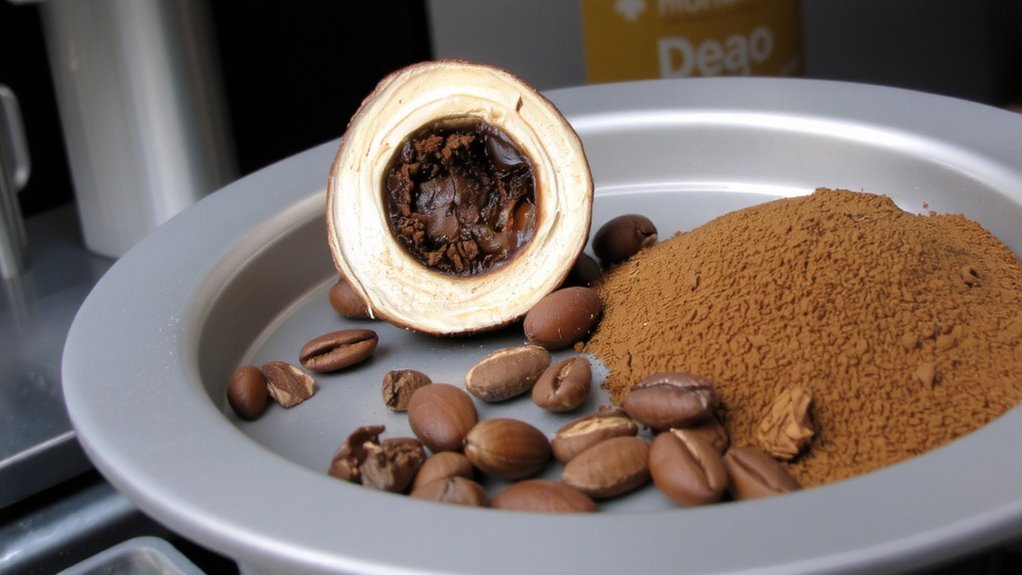
Since the grind size is too fine, water struggles to move through the coffee puck, leading to over-extraction and bitter flavors. You’re pulling more than just flavor-you’re dragging out harsh compounds that overpower the cup. Bitterness control becomes critical here; without it, your espresso loses sweetness and complexity. A finer grind increases surface area, which sounds helpful but often backfires without precise timing or lower brew ratios. Machines like the Breville Barista Express or Lelit Anna require careful adjustment to avoid this trap. You need to balance extraction time-ideally between 25–30 seconds-and monitor how flavor shifts. Too far into over-extraction and you lose flavor balance, ending up with a medicinal, astringent shot. Adjusting even slightly coarser can bring clarity. It’s not just about strength-it’s about dialing in for smoothness, sweetness, and control. Consistency wins. Choosing the right best coffee grinder can make a significant difference in achieving the precise and uniform grind needed for optimal extraction.
How Uneven Grinds Ruin Flavor and Extraction
A consistent grind isn’t just helpful-it’s what stands between a balanced shot and a messy one. When your coffee particles vary in size, you’ll face extraction problems fast. Fine grounds extract early, turning bitter, while coarse ones under-extract, adding sourness. This inconsistency leads to particle segregation in the portafilter, where fines sink and larger bits rise, creating uneven density. Water then takes the path of least resistance, causing channeling issues-streams of water blast through weak spots, over-extracting some areas and ignoring others. You end up with a sour, bitter, hollow shot no matter how good your machine or beans. Even tamp pressure can’t fix this. The problem isn’t your technique-it’s your grinder’s output. Inconsistent grinds sabotage control, making repeatable, flavorful espresso nearly impossible. Fix the grind, and you fix the foundation.
Grinders That Deliver Even Espresso Grinds
While you can’t control every variable in espresso, your grinder is the one piece of equipment that demands attention if you want even extractions. A high-quality grinder with precise bur游戏副本 alignment guarantees consistent particle distribution, which directly impacts flavor and shot stability. Flat and conical burr grinders, like the Lelit Bella or Baratza Sette, minimize fines and boulders when aligned correctly. Poor alignment causes uneven grinding, leading to clogging and inconsistent flow. You’ll notice better shots when the grinder maintains tight tolerances and durable burrs. Entry-level grinders often sacrifice precision, yielding wider particle distribution that hurts extraction. Stepless grinders give you finer control, but only if the burrs stay aligned. Regular cleaning and calibration help, but starting with a grinder built for espresso-like the DF64 or Niche Zero-means less drift and more even outputs. That consistency is what lets your espresso taste balanced, shot after shot.
How to Adjust Your Grind for Perfect Espresso
What if your espresso tastes sour or bitter, even with the right machine and beans? The issue might be your grind size. If it’s too coarse, under-extraction brings sourness; too fine, and bitterness from over-extraction creeps in. Start by adjusting your grinder in small increments-most quality grinders, like the Baratza Virtuoso or Eureka Mignon, allow precise changes. Always keep your tamping pressure consistent-around 30 pounds-so only the grind affects flow rate. Also, guarantee your water temperature is stable (ideally 195–205°F), as heat fluctuations impact extraction. Pull shots after each adjustment and observe time and taste: a 25–30 second shot usually indicates balance. Too fast? Grind finer. Too slow? Go coarser. Small tweaks matter, and consistency across variables gives you control. Your perfect espresso depends on this routine precision-grind, tamp, temperature, repeat.
Fixing Common Espresso Problems With Grind Tweaks
Why does your espresso sometimes miss the mark, even when you’re following the same steps? Small inconsistencies in grind size, tamping pressure, or water temperature can drastically alter extraction. Luckily, most common issues can be fixed with simple grind adjustments.
| Problem | Likely Cause | Grind Fix |
|---|---|---|
| Bitter, over-extracted | Grind too fine | Go coarser |
| Sour, under-extracted | Grind too coarse | Go finer |
| Inconsistent shots | Uneven tamping pressure | Adjust grind for evenness |
| Channeling | Poor grind distribution + water temperature too high | Refine grind and stabilize temp |
If shots pull too fast and taste sour, your grind’s probably too coarse. If they crawl and taste bitter, it’s too fine. Adjust incrementally. Remember, tamping pressure affects puck stability, while water temperature influences extraction speed-keep both consistent to isolate grind changes. Your grinder’s uniformity plays a big role, so invest in one that delivers even particles.
On a final note
You need the right grind size to get good espresso. Too coarse and your shot tastes sour; too fine and it turns bitter. Uneven grinds cause inconsistent extraction, ruining flavor. A quality burr grinder, like the Baratza Sette or Eureka Mignon, helps you get even particles. Adjust your grind in small steps and watch shot time and taste. Simple tweaks fix most problems and improve your daily espresso fast.