How to Optimize Grind Size for a Smoother Cold Brew With Less Sediment
Use a coarse grind, like breadcrumbs or sea salt, to prevent over-extraction and reduce sediment in your cold brew. A burr grinder gives you consistent particles, which helps avoid grit and guarantees even extraction. Match the grind to your brewer-go coarse for French press, slightly finer (but still coarse) for paper filters like Toddy. Fine particles cause sludge, so skip blade grinders. Keep settings stable for repeatable results. The right grind setup makes a cleaner, smoother cup every time.
Notable Insights
- Use a coarse grind to minimize sediment and avoid over-extraction during long steep times.
- Aim for particle consistency similar to breadcrumbs or coarse sea salt for optimal texture.
- Choose a burr grinder to ensure uniform particles and reduce fines that cause grittiness.
- Match grind size to your brewer: coarse for French press, slightly finer but still coarse for paper filters.
- Grind beans fresh and maintain consistent settings to achieve repeatable, smooth cold brew results.
Choose the Right Grind Size for Smooth Cold Brew
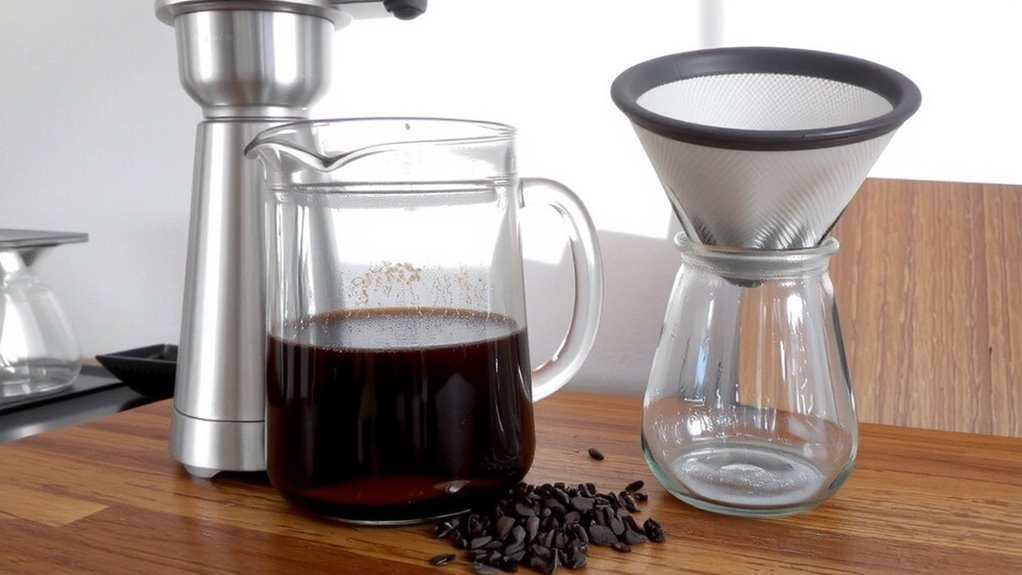
Grind size makes or breaks your cold brew-too fine and you’ll get bitterness, too coarse and the result tastes weak. You need a balance that allows proper flavor extraction without overdoing it. A medium-coarse to coarse grind works best, slowing down extraction so you avoid harsh notes. With cold brew, your brewing time is long-usually 12 to 24 hours-so the grind must match that slow process. If it’s too fine, over-extraction happens, bringing out unwanted bitterness even in cold water. Go too coarse, and you won’t pull enough flavor, leaving your coffee flat. Think consistency: aim for particles like breadcrumbs or slightly larger. A good burr grinder, like the Baratza Encore or Fellow Ode, helps hit that target reliably. Match grind size to your brewing time-longer steep? Lean coarser. It’s practical tuning, not guesswork.
Use Coarse Grind to Reduce Sediment and Grittiness
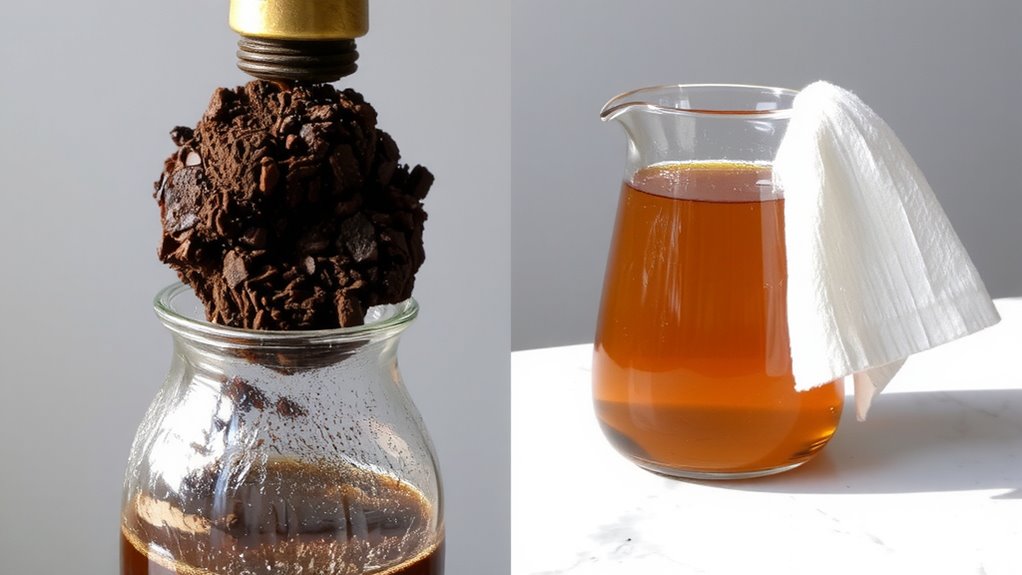
Most of your cold brew’s smoothness hinges on how well you minimize fine particles, and using a coarse grind is the simplest way to cut down on sediment and that gritty mouthfeel. A coarse texture slows extraction and lets filters catch more fines, giving you better sediment control without extra steps. You’ll notice a cleaner cup-especially with immersion brewers or French presses, where fines slip through easily. For the most consistent results, choose a burr grinder designed for cold brew applications.
| Grind Level | Resulting Experience |
|---|---|
| Too Fine | Muddy, grainy, harsh |
| Just Right | Smooth, rich, clean |
| Too Coarse | Weak, under-extracted |
Stick to a burr grinder set wide-like for French press-and avoid blade grinders. They create uneven particles, increasing sediment. With proper coarse grinding, you’re not just avoiding grit-you’re building the foundation for a balanced, easy-drinking cold brew that pours cleanly and tastes even better.
Match Your Grind to Your Brewer and Filter Type
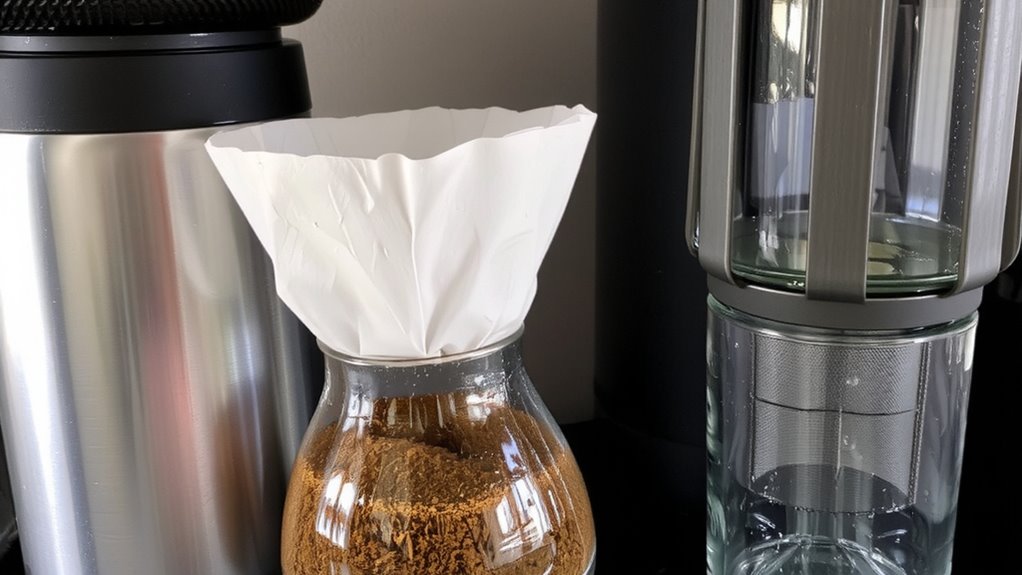
A well-chosen grind size can make or break your cold brew, depending on your setup. If you’re using a French press, go coarse-especially if your filter isn’t fine. The metal mesh can’t catch fine particles, so a consistent coarse grind reduces sediment. For systems like the Toddy or Oxo Cold Brew, which use paper filters, you can go slightly finer, but still stay on the coarse side to avoid clogging or over-extraction. Your burr type matters: flat burrs give a more uniform grind than conical, helping control extraction. Regular grinder calibration guarantees consistency, especially after long runs or changes in humidity. Blade grinders won’t cut it-they create uneven particles that increase grit. Match your grind not just to brew time, but to your brewer and filter. That small tweak improves clarity and smoothness, cup after cup. For best results, consider investing in one of the top cold brew grinders recommended for consistent coarse grinding.
Fix Common Grind Mistakes That Cause Grit
You’ve matched your grind to your brew crushers and filter, but if your cold brew still feels sandy or leaves sludge at the bottom of the glass, it’s likely due to common grind errors-even with the right setup. Inconsistent particle size is the usual culprit. A poor bloom consistency, often caused by uneven grinding, leads to clogged filters and fine sediment slipping through. Water quality also plays a role-hard water can amplify extraction imbalances, making grit more noticeable. Avoid blade grinders; they create erratic particles. Instead, use a burr grinder with stable settings. For those using best at-home cold brew makers, proper grind alignment enhances clarity and flavor.
| Issue | Cause | Fix |
|---|---|---|
| Gritty texture | Fine particles | Use burr grinder, clean regularly |
| Cloudy brew | Poor bloom consistency | Stir gently after pouring |
| Sludge buildup | Water quality issues | Use filtered water |
| Uneven extraction | Inconsistent grind size | Calibrate grinder monthly |
Keep Every Batch Smooth With Consistent Grind Settings
Every successful cold brew batch starts with a grinder that delivers uniform particles-without it, even the best beans or water won’t save you from inconsistency. You need a burr grinder, not a blade model, because it gives you repeatable settings and even particle size. Once you find the right coarse grind-like sea salt-stick with it. Changing settings between batches leads to uneven extraction and more sediment. Grind freshness matters: always grind right before steeping to preserve flavor and avoid bitterness. Even with ideal water temperature (room temp or slightly cooler), inconsistent grinds disrupt clarity. A consistent grind guarantees smooth, clean cold brew every time. Models like the Baratza Encore or Fellow Ode simplify this with precise, stable settings. Skip the guesswork. Lock in your grind size, keep it fresh, and let time do the rest. Consistency isn’t perfection-it’s repetition with control.
On a final note
You’ll get the smoothest cold brew with a coarse grind, which reduces sediment and prevents grit. If you’re using a French press, coarse is essential; for cold brew bags or metal filters, stick with coarse too. A blade grinder can cause inconsistency, so use a burr grinder like the Baratza Encore for uniform particles. Adjust your grind only if the brew tastes weak or too harsh-otherwise, keep it coarse and consistent for clean, smooth results every time.