Understanding the Impact of Soil Type on Specialty Coffee Farming: A Detailed Examination of Nutrient Composition and Bean Development
Your coffee’s flavor starts in the soil, where type and nutrients shape every bean. Volcanic soils, rich in potassium and magnesium, boost sugar development and acidity, giving coffees from regions like Tarrazú vibrant fruit and chocolate notes. Clay holds water but risks root rot; sand drains fast, demanding more irrigation. Keep pH between 5.5 and 6.5 so nutrients stay available. Test soil every year, add compost to build organic matter, and rely on high-CEC soils to hold nutrients. Strong roots and balanced minerals mean healthier plants and better cups. You’ll find matching varietals and precise improvement steps next.
Notable Insights
- Volcanic soil enhances coffee quality with high mineral content, promoting dense beans and complex flavors like citrus, berry, and chocolate.
- Clay soil’s poor drainage limits root growth and oxygen, increasing risks of waterlogging and root suffocation in coffee plants.
- Sandy soil drains rapidly, requiring frequent irrigation but encouraging deeper root systems as plants seek water.
- Optimal soil pH (5.5–6.5) maximizes nutrient availability, while extremes cause toxicity or deficiencies in essential minerals.
- High cation exchange capacity and organic matter improve nutrient retention, supported by compost, cover crops, and mycorrhizal networks.
Why Soil Type Affects Specialty Coffee Quality
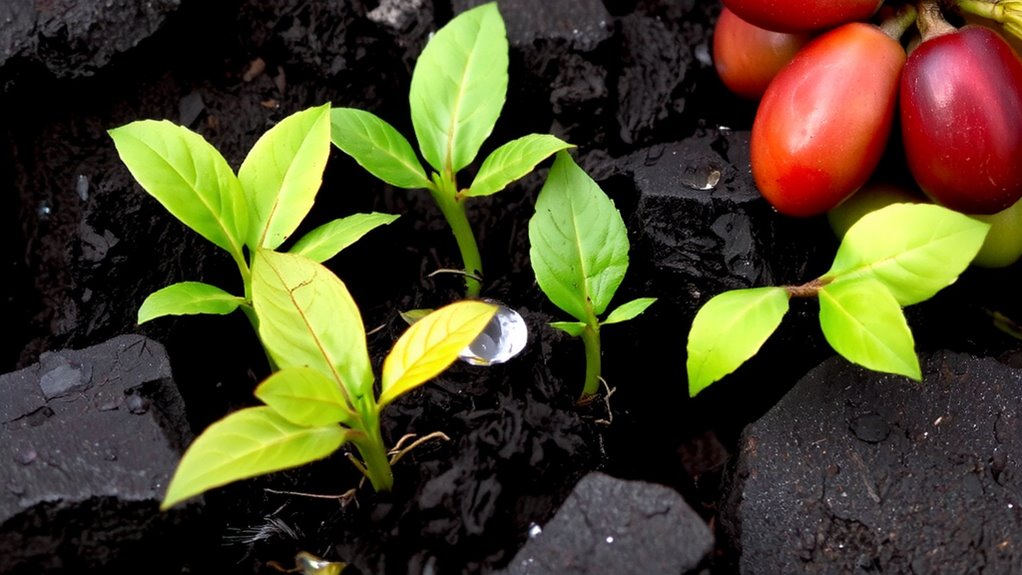
While you can grow coffee in many types of soil, not all will help produce the high-quality beans that define specialty coffee. Your soil choice directly impacts terroir expression-the unique flavor profile shaped by environment. Volcanic, loamy, and well-drained soils tend to work best. They hold just enough organic matter to feed plants slowly without encouraging excess foliage. Too much organic matter? You risk watery beans and inconsistent ripening. Too little? Poor root development and nutrient stress. The right balance supports steady growth and concentrated sugars in cherries. You’ll notice tastier, more complex cups when soil structure, drainage, and mineral content align. Sandy loam, for example, offers good drainage but requires careful composting to maintain organic matter. Clay soils retain nutrients but demand elevation and slope to prevent waterlogging. Choose wisely-your soil sets the stage for quality.
How Volcanic Soil Enhances Specialty Coffee Flavor
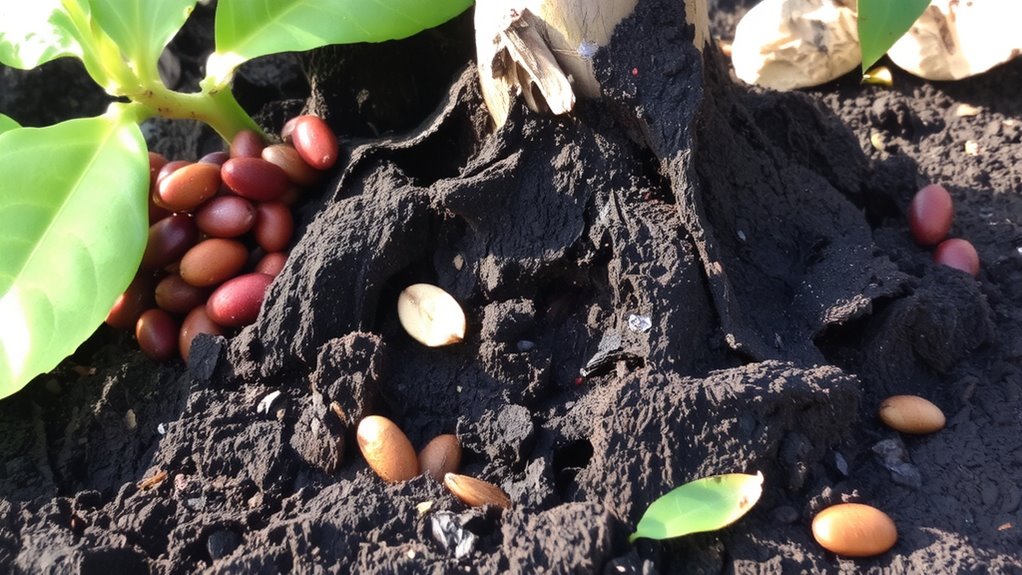
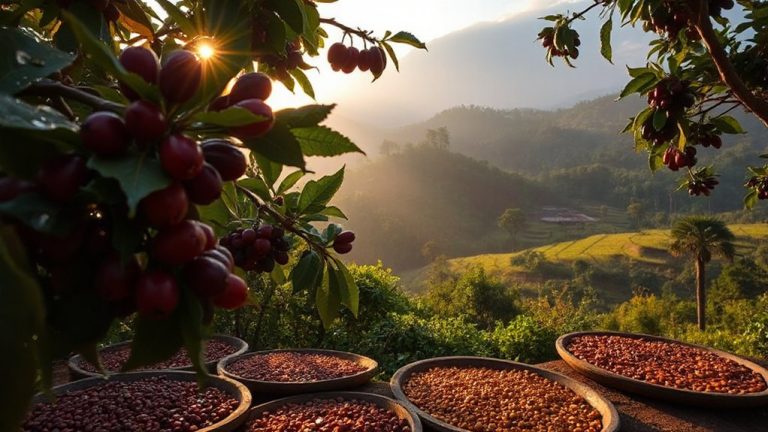
Because volcanic soil is rich in minerals like potassium, phosphorus, and magnesium, it gives coffee plants the balanced nutrition needed for developing complex flavor compounds in the beans. You’ll find that its mineral richness directly influences the bean’s density and sugar development during maturation, which translates to brighter acidity and deeper flavor notes like citrus, berry, or chocolate. Volcanic aeration also plays a key role-lava-origin soils have porous structures that promote strong root systems and prevent waterlogging. This means oxygen reaches roots more efficiently, supporting consistent growth. Farms in regions like Mount Kenya or Costa Rica’s Tarrazú rely on these soils for high-scoring specialty lots. If you’re sourcing beans, look for origination near active or dormant volcanoes, as they often indicate improved flavor clarity. While not a guarantee, volcanic soil offers natural advantages you can taste in the cup-provided farming and processing are well-managed.
How Clay and Sandy Soils Affect Drainage and Roots
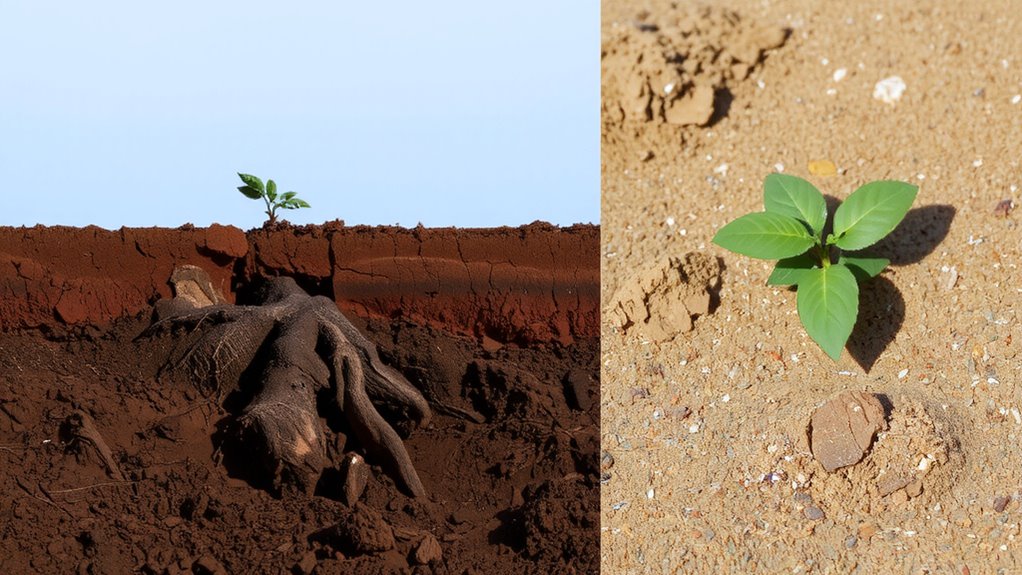
When it comes to coffee farming, the type of soil plays a major role in how well roots grow and how water moves through the ground. If you’re working with clay soil, you’ll notice it holds water tightly, leading to high water retention. While that sounds helpful, it can suffocate roots if drainage is poor, limiting root depth and oxygen access. On the flip side, sandy soil drains quickly, reducing water retention and often leaving roots thirsty. This forces plants to develop deeper root systems to reach moisture, potentially improving root depth over time. For you, this means clay soils require careful management to prevent waterlogging, while sandy soils need frequent irrigation and mulching to retain moisture. Each option has trade-offs: clay sustains moisture but risks compaction; sand avoids saturation but dries fast. Choosing the right soil depends on your climate, rainfall patterns, and how much irrigation support you can provide.
How Soil pH Influences Nutrient Uptake in Coffee
If you’ve ever wondered why your coffee plants aren’t thriving despite proper watering and sunlight, the soil’s pH might be the hidden culprit. Coffee prefers slightly acidic conditions, typically between 5.5 and 6.5. In this range, nutrient solubility is optimized, meaning essential elements like nitrogen, phosphorus, and potassium dissolve more readily and become available for roots to absorb. If the soil turns too acidic-below 5.5-aluminum and manganese can become overly soluble, potentially reaching toxic levels. On the other hand, if pH climbs too high, nutrients like iron and zinc become less soluble and harder for plants to take up. You’ll want to test your soil regularly using a reliable pH meter or kit. Adjustments can be made: add lime to raise pH or sulfur to lower it. Maintaining balance guarantees your coffee plants access the nutrients they need to grow strong and produce high-quality beans.
Essential Minerals in Coffee Soils and How Plants Absorb Them
What makes certain soils better at producing top-tier coffee? It’s not just texture or pH-your coffee plants rely on essential minerals like potassium, calcium, and magnesium for strong growth and bean development. These nutrients stick to soil particles and become available through cation exchange, a process where plant roots swap hydrogen ions for essential minerals. The higher the cation exchange capacity (CEC), the better the soil holds and supplies nutrients. You’ll see stronger uptake when mycorrhizal networks form-these fungi connect to roots, extending reach and boosting absorption, especially phosphorus. Not all soils support this equally; loamy, well-structured soils with organic matter encourage both high CEC and fungal activity. Volcanic soils, like those in Guatemala or Ethiopia, naturally offer these traits. If your farm lacks such soils, adding compost or biochar can improve CEC and support mycorrhizal networks, giving your coffee a clearer path to quality.
Which Coffee Varietals Grow Best in Which Soils?
While some coffee varietals adapt to a range of soil types, others thrive only when their specific mineral and drainage needs are met. You’ll find Bourbon performs best in deep, well-drained volcanic soils rich in organic matter, where root systems spread easily and nutrient uptake is efficient. In contrast, Robusta tolerates heavier clay soils but suffers if soil compaction restricts airflow. Caturra, a compact Arabica variant, prefers loamy soils with high organic matter content and resists waterlogging better than Typica, which demands perfect drainage. If soil compaction is an issue, consider varietals like Catimor, bred for hardiness in dense or poorly structured soils. Even so, all varietals produce higher-quality beans when grown in loose, aerated ground with consistent nutrient availability. Choosing the right varietal for your soil structure improves yield and bean quality-skip this step, and even good farming practices can’t compensate.
How to Test and Improve Your Coffee Farm’s Soil
Since your coffee plants depend heavily on soil quality, testing your farm’s soil is a smart first step toward better yields and bean quality. You can send samples to an agricultural lab or use a field test kit to check pH, nutrients, and texture. Pay close attention to organic matter-ideally, levels should be between 3% and 5% to support strong root development and water retention. Healthy soil microbiology also plays a key role; beneficial microbes help break down organic matter and make nutrients available to plants. To improve your soil, compost and cover crops like legumes boost organic matter and support microbial life. Avoid over-tilling, which disrupts soil structure and harms microbiology. If your soil is too acidic, lime can help adjust pH. Regular testing every 1–2 years confirms adjustments are working and helps maintain ideal growing conditions.
On a final note
You’ll get better beans by matching coffee varietals to soil types that support their needs. Volcanic soils boost flavor with rich minerals, while clay holds water but risks root rot. Sandy soils drain fast but need more feeding. Test your soil’s pH and nutrients yearly. If it’s too acidic or poor in nitrogen, phosphorus, or potassium, amend with organic matter or balanced fertilizers. Good soil means healthier plants and more consistent, high-scoring coffees.