Exploring African Coffee Growing Regions: Discovering the Rich Flavors From Highlands and Lowlands Across Various Countries
You’re sipping a bright, floral Ethiopian Yirgacheffe, grown at 2,000 meters where cool air and volcanic soil slow bean development for dense, flavorful seeds. Highland regions like Kenya and Tanzania yield crisp, acidic coffees, best with light roasts and pour-over brewing. Lowland areas struggle with heat and elevation, limiting quality. Natural processing in Ethiopia adds fruitiness, while washed beans from Rwanda offer clarity. Each region’s altitude, method, and climate shape the cup-your next pour holds deeper origins.
Notable Insights
- African coffee thrives in highland regions (1,200–2,200 m), where altitude and cool temperatures produce dense, flavorful beans.
- Ethiopia, the birthplace of coffee, offers heirloom varieties with floral, fruity notes from regions like Yirgacheffe and Sidama.
- Kenyan and Tanzanian coffees are known for bright acidity, peaberry beans, and AA-grade quality, best showcased in light roasts.
- Uganda, Rwanda, and Burundi are emerging origins with balanced profiles, emphasizing washed and natural processing for specialty markets.
- Processing methods-washed, natural, and honey-shape African coffee flavor, influencing clarity, body, and fruit-forward sweetness.
How Africa’s Climate and Altitude Shape Coffee
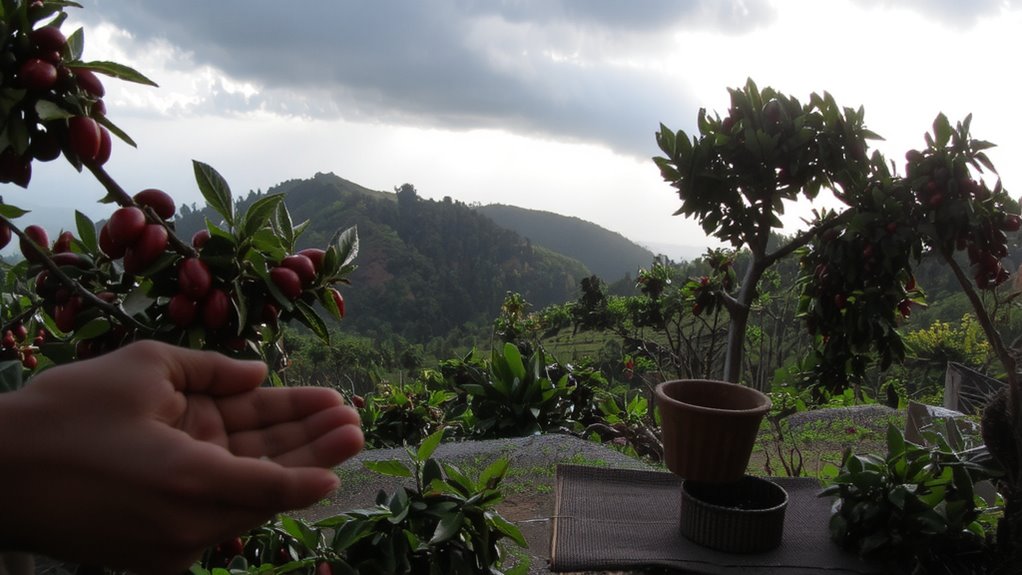
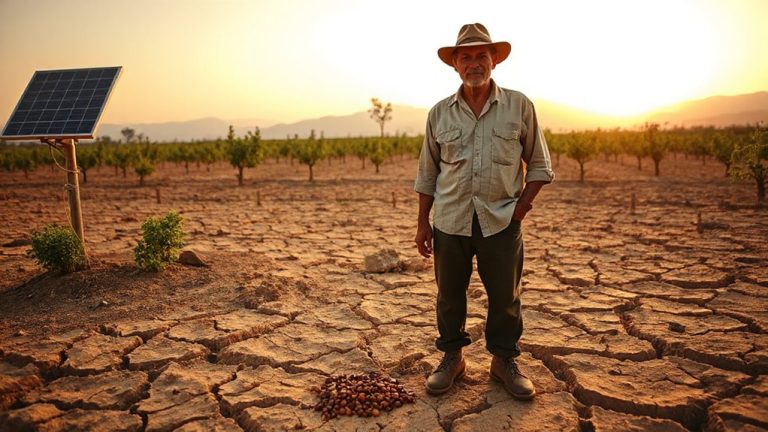
While you might think all coffee grows the same, Africa’s unique mix of high altitudes and tropical climates actually plays a big role in how your beans turn out. Higher elevations slow bean development, leading to denser, more flavorful seeds-ideal for bright, complex brews. Most African coffee thrives inland, where volcanic soils and consistent rainfall support healthy plants. You’ll rarely find coffee in desert climates since they lack the moisture and stable temperatures coffee needs. Coastal regions, while humid, often stay too warm and low in elevation, producing beans that lack the acidity and nuance favored in specialty markets. For best results, focus on highland farms between 1,200 and 2,200 meters. These zones offer maximum airflow, sunlight, and temperature swings. If you’re sourcing beans, check origin details-altitude and climate directly affect roast performance and flavor clarity in your cup. Exploring top African producers reveals that countries like Ethiopia and Kenya are renowned for their best African coffee selections.
Ethiopia: The Birthplace of African Coffee and Home of Heirlooms
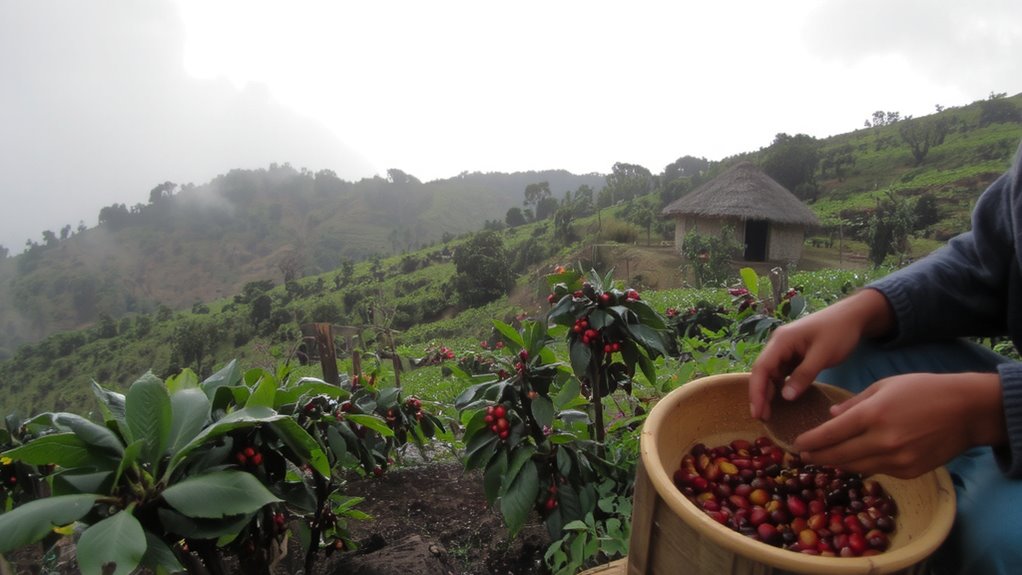
If you’re looking for the origin of coffee as we comprehend it, start in Ethiopia, where the plant first grew wild in the highland forests of Kaffa. This is where coffee genetics began, and where wild cultivars still thrive today. Ethiopian beans aren’t grown from uniform crops-they’re often harvested from diverse, uncultivated trees, giving each batch unique flavor. That diversity is why Ethiopian coffees often taste fruity, floral, or tea-like.
| Region | Elevation (m) | Common Processing |
|---|---|---|
| Yirgacheffe | 1,800–2,200 | Washed |
| Sidama | 1,500–2,100 | Washed/Natural |
| Limu | 1,500–2,000 | Washed |
Choose beans labeled “heirloom” to experience these original wild cultivars. For best results, brew with a pour-over to highlight their bright, complex notes. Equipment like a gooseneck kettle and ceramic filter improve clarity. For those seeking the finest expressions of this heritage, consider exploring Best Ethiopian Coffee Picks to find top-rated beans that showcase the country’s unparalleled coffee diversity.
Kenya and Tanzania: Bright Acidity, Peaberry, and AA Grading
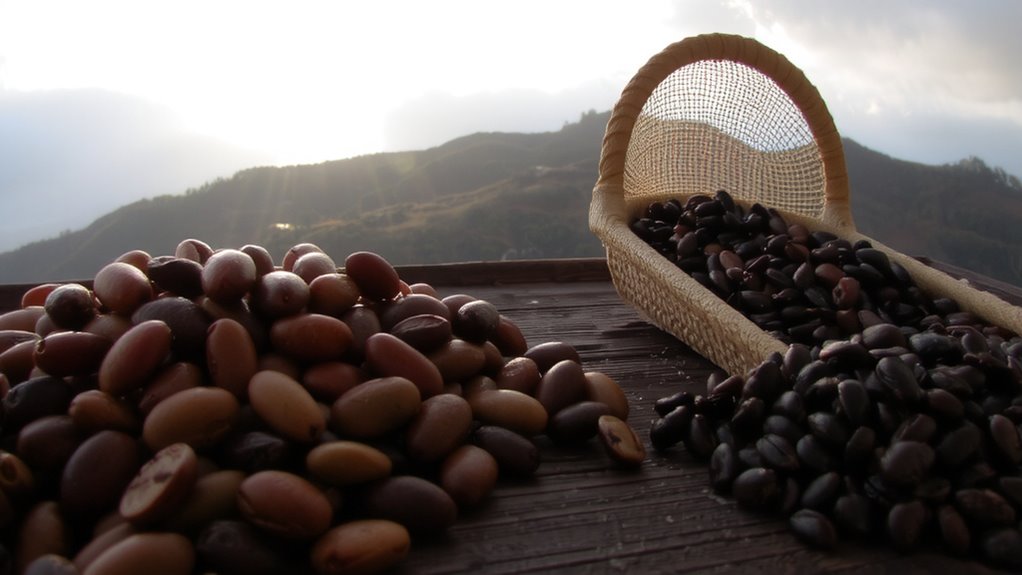
Kenya and Tanzania deliver coffees known for their sharp, wine-like acidity and clean profiles, shaped by high elevations and meticulous processing. You’ll often find bright citrus and berry notes, especially when brewed with a pour-over or Aeropress, which highlight their clarity. Kenya peaberry beans-smaller, denser, and roasted more evenly-are prized for their intense, syrupy flavor; they work well in espresso or moka pot applications where concentration matters. Meanwhile, Tanzania AA grading indicates large bean size and high quality, typically translating to balanced sweetness and pronounced acidity. These beans shine in light to medium roasts, preserving their nuanced structure. When buying, check roast dates and opt for whole bean unless you’re grinding immediately. Avoid dark roasts-they mute the vibrant traits these coffees are known for. Freshness and proper grind size are key to getting the most from both Kenya peaberry and Tanzania AA grading.
Uganda and Beyond: Emerging African Coffee Origins
What if some of the next standout African coffees aren’t from the usual regions but from places like Uganda, Rwanda, or Burundi? You’re already seeing shifts in export trends, with these countries increasing specialty coffee volumes. Uganda, often overlooked, now produces well-balanced beans from high-altitude farms, gaining attention in artisan roasting circles. Rwanda and Burundi focus on quality control, helping smallholders access premium markets. Their washed coffees offer clarity, while naturals bring fruit-forward notes-useful for roasters targeting diverse palates. Unlike larger producers, these origins often have limited output, so traceability matters. When sourcing, check certification and harvest dates. Roast profiles tend to favor medium development to preserve sweetness and body. For your setup, a consistent roaster with good airflow helps maximize their potential. These emerging origins won’t replace Ethiopia or Kenya, but they’re strong alternatives when you want complexity without extreme acidity.
How African Processing Methods Create Distinct Flavor Profiles
| Method | Flavor Impact | Common In |
|---|---|---|
| Washed | Clean, bright, higher acidity | Rwanda, Kenya |
| Natural | Fruit-forward, heavier body | Ethiopia, Uganda |
| Honey | Balanced sweetness, mild body | Burundi |
| Dry Fermentation | Increased complexity | Specialty lots |
| Sun Drying | Enhanced sweetness, uniformity | Most small farms |
On a final note
You now know how Africa’s altitude and climate shape bold, bright coffees-from Ethiopia’s fruity heirlooms to Kenya’s AA beans. Washed processing gives clarity; natural methods add sweetness. For best results, use a burr grinder and pour-over to highlight acidity. Cold brew works well with Ugandan robustas. Match method to bean: high-grown East African coffees shine when brewed precisely, while lower-grown ones tolerate drip or French press. Choose gear that fits your bean source.