How to Calibrate a Stepless Grinder Using Time and Taste as Guides
Start with a consistent dose and pull a test shot, noting the time from first drop to target yield. If it’s under 25 seconds and tastes sour, go finer; if over 30 seconds and bitter, go coarser. Make tiny grind adjustments-quarter-turns matter on stepless grinders like the Niche Zero or Compak E10. Taste each shot and track time to refine. Repeat until flavor is balanced and shots are consistent. Small tweaks make big differences, and precision comes with practice.
Notable Insights
- Begin by pulling a test shot with consistent dose and tamp to establish a baseline extraction time.
- Adjust grind size finer if the shot is sour and fast, or coarser if bitter and slow.
- Target a 25–30 second shot time for optimal extraction with a balanced, sweet flavor profile.
- Use taste as the final indicator, confirming that time-based adjustments yield ideal flavor.
- Verify calibration by pulling 3–5 shots to ensure repeatable timing and consistent taste.
Why Stepless Grinders Need a Different Approach
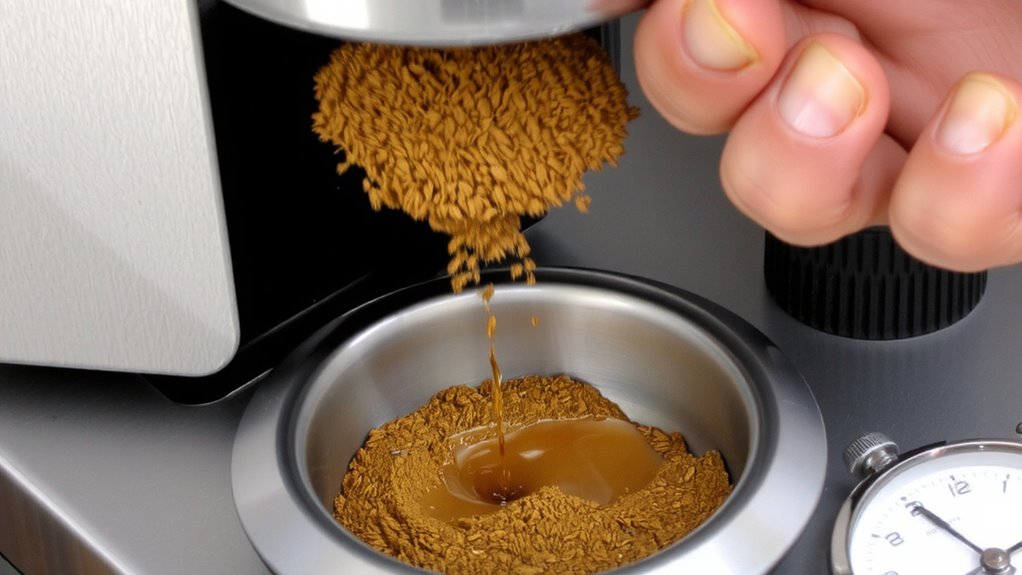
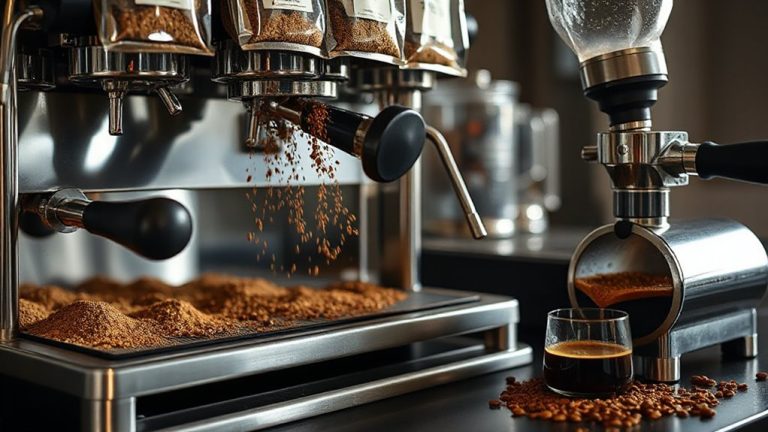
Precision matters most with stepless grinders, and that’s why they demand a different approach than stepped models. You’re in control of every micron of grind size, which brings both power and responsibility. Unlike stepped grinders that click into preset positions, stepless designs rely on mechanical precision-your adjustments directly affect extraction. Even a quarter-turn can shift brew time enough to alter flavor variability. That’s not a flaw; it’s the point. Models like the Niche Zero or Compak E10 emphasize this fine-tuned control, letting you target exact particle distribution. But consistency means you must track changes methodically. Without reference points, it’s easy to miss ideal settings. You can’t guess your way to balance-especially when dialing in for espresso. Small tweaks matter, and each adjustment ripples through flavor clarity, acidity, and body. Your grinder doesn’t forgive sloppiness. You need focus, repetition, and attention to detail.
Pull a Test Shot With Consistent Dose and Dose Time
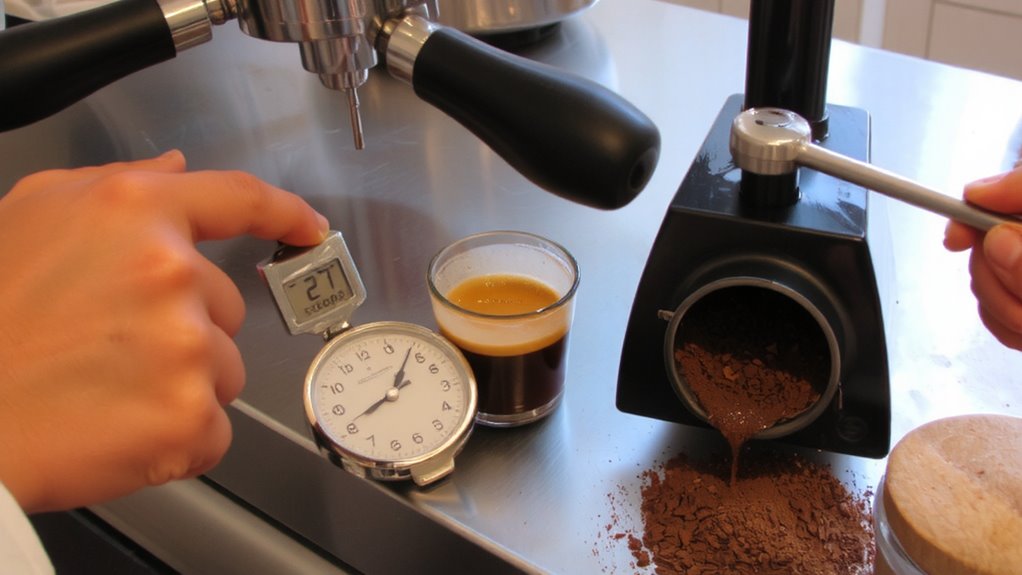
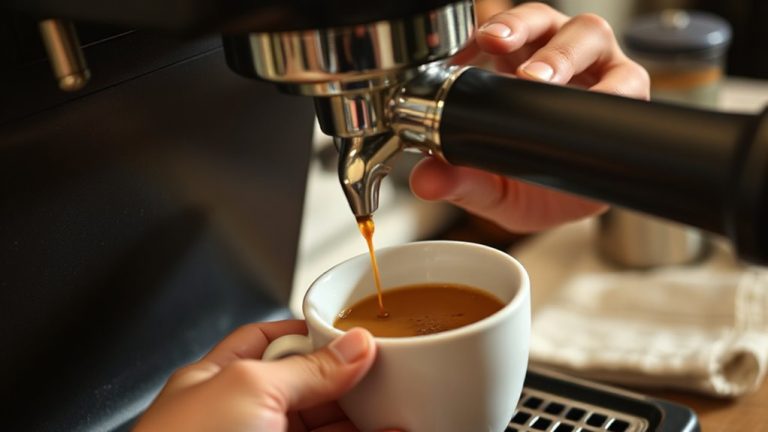
Where do you go once you’ve set your grinder’s initial position? You pull your first test shot-no guessing, just controlled variables. Use the same dose and tamp pressure each time so you’re only testing grind size. Your machine’s water pressure and temperature must stay stable; fluctuations ruin consistency. Aim for standard 9-bar pressure and a machine temperature around 200°F. Time the shot from first drop to the full yield. Keep the dose steady-say, 18g in, 36g out-and adjust only the grind. If the shot runs too fast, the espresso is likely under-extracted and thin. Too slow, and it risks over-extraction. You’re not tasting yet-just gathering timing data. This step locks in repeatability before flavor decisions come into play. Stay precise, stay consistent.
Taste Critically: Is It Sour or Bitter?
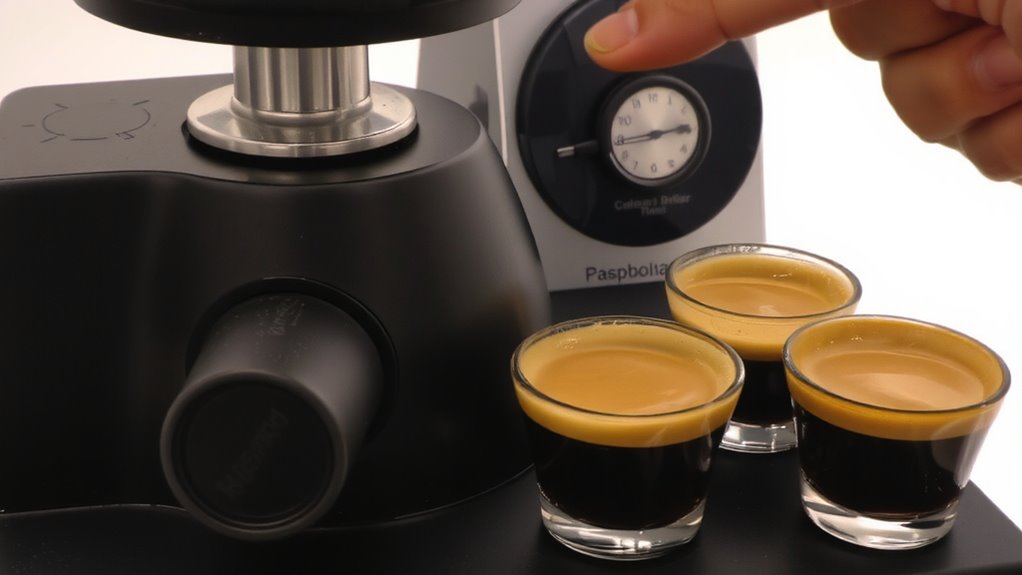
Now that you’ve logged your shot time with a consistent dose and machine setup, it’s time to pay attention to what really matters-the taste. You’ll need to distinguish between sour and bitter to dial in properly. Sour shots often taste underdeveloped, with sharp acidic notes and a hollow finish. Bitter ones feel harsh, drying, and burnt, signaling over-extraction. Getting the right flavor balance means tuning the grind so neither dominates. Using a high-quality coffee distribution tool can help ensure even extraction and improve flavor consistency.
| Taste | Mouthfeel | What It Tells You |
|---|---|---|
| Sour | Bright, thin | Under-extracted, too fast |
| Bitter | Harsh, drying | Over-extracted, too slow |
| Balanced | Smooth, rounded | Flavor balance is on target |
| Sweet | Full, clean | Extraction is ideal |
Listen to the feedback your palate gives-your best tool.
Adjust Grind Based on Flavor and Brew Time
How do you turn sour or bitter shots into something balanced and sweet? You adjust your grind size based on flavor and brew time. If the shot pulls too fast and tastes sour, the grind’s likely too coarse, hurting extraction efficiency-finer settings slow flow and boost extraction. If it’s slow and bitter, go coarser to reduce over-extraction. Aim for a 25–30 second shot with full, sweet flavor. Good grind uniformity from a quality stepless grinder guarantees even extraction, minimizing stray sour or bitter notes. Inconsistent particles lead to uneven extraction, no matter the time. Machines like the Lelit Anna or OE Lusso paired with grinders such as the DF64 or MK40 improve control. Time guides your adjustments; taste confirms them. You’re balancing physical brewing time with sensory feedback to hit ideal extraction efficiency. Each bean, roast, and machine setup behaves differently-your grind must adapt.
Make Micro-Adjustments Until Balanced
What separates a functional shot from a truly balanced one? It’s the fine-tuning. After your initial grind and taste, make micro-adjustments-tiny twists of the grinder dial-to shift extraction just enough to improve flavor. You’re chasing flavor precision, not big changes. Even a half-turn can transform sourness into sweetness or dial back bitterness. Repeat brews, tweak gradually, and taste mindfully. Each small shift tests how grind stability affects the final cup. A stable grind means particles are consistent, so water passes evenly-critical for dialing in. If your grinder wobbles in output, even slight, it’ll muddy results. Grinders like the Niche Zero or DK-40 offer the stability needed for this stage. Keep notes on changes and outcomes. Stop when acidity, body, and sweetness feel aligned. That’s balance. You won’t get there in one leap-patience and precision do.
Confirm Consistency Across Multiple Shots
Why would you trust a single shot to represent your grind setting? One shot might taste great by chance, but consistency proves your adjustments work. Pull three to five shots in a row using the same grind time, tamping pressure, and dose. Check that each has a similar flow rate and flavor profile. If they vary, your grind isn’t stable yet. Even small changes in brew temperature or water quality can affect results, so keep both consistent during testing. Hard water or fluctuating temps distort taste, making it harder to judge grind changes. If shots taste balanced and extraction looks even, you’re likely dialed in. If not, tweak the grind slightly and repeat. Consistency across shots-not just one-confirms your calibration is reliable and ready for daily use.
On a final note
You’ve got the tools: time and taste. Use consistent doses, track shot length, and adjust your stepless grinder in small turns. If it’s sour, go finer; if bitter, go coarser. Repeat until balanced. Confirm with three good shots in a row. This method beats guesswork. Brands like EK43 or Fiorenzato respond well. No special gear needed-just attention and practice. It’s not magic. It’s routine.