Why Ruvuma Region Coffee Offers Unique Spicy and Herbal Nuances
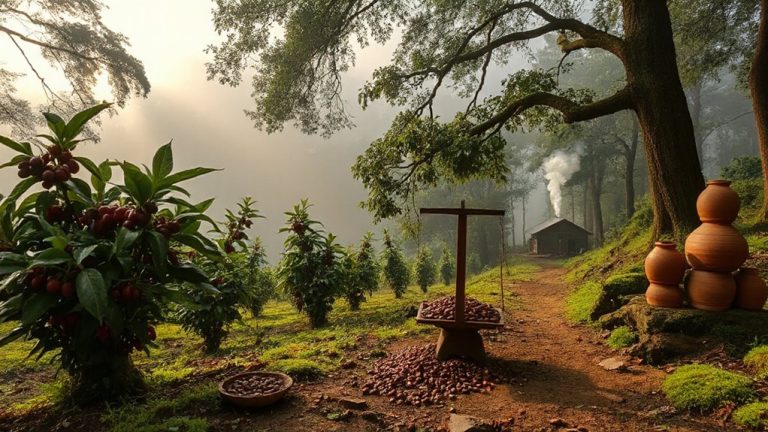
You get spicy and herbal notes in Ruvuma coffee because it grows on high plateaus with cool nights and granite-rich soils that slow maturation and concentrate flavor. Farmers at 1,500–1,800 meters manage crops by hand, using shade trees and natural methods that boost bean density. Controlled fermentation and sun-drying on raised beds lock in clarity. The region’s microclimate and precise processing preserve bright, peppery tones-especially in lighter roasts. You’ll find these flavors are consistent, not accidental, and shaped by elevation, soil, and care you can taste in every cup.
Notable Insights
- High-altitude plateaus in Ruvuma provide cool nights that slow coffee maturation, enhancing bean density and flavor complexity.
- Altitudes of 1,500–1,800 meters extend cherry development, promoting bright, peppery notes through increased sugar and acid complexity.
- Weathered granite soils create mild plant stress and limit root depth, concentrating nutrients and contributing to herbal flavor nuances.
- Smallholder farms practice shade management and crop rotation, supporting slower ripening and sustained soil health for flavor integrity.
- Controlled wet-hulling and natural processing with precise fermentation preserve spicy and herbal characteristics in the final cup.
Why Ruvuma’s Terroir Stands Out
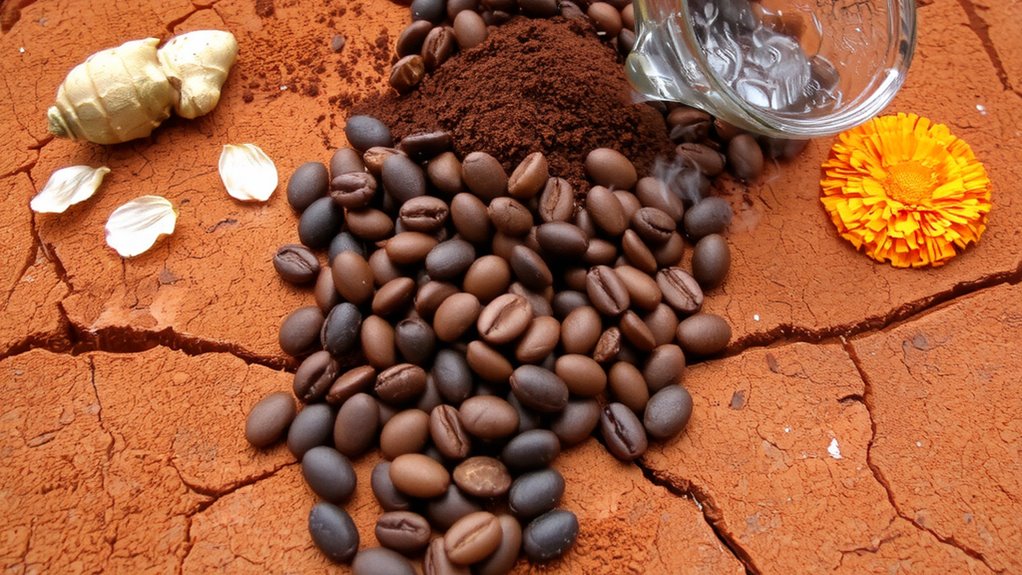
Ruvuma’s terroir benefits from its high-altitude plateaus, where cool nights and nutrient-rich soils slow coffee maturation, enhancing bean density and flavor complexity. You’ll notice the microclimate influence here is more stable than in lower regions, giving beans a longer, more consistent development period. This stability supports even drying and reduces defects during processing. The region’s floral biodiversity isn’t just ecological background-it directly affects pollination and bean health, contributing to clean, balanced profiles. These conditions favor washed and honey processes, where clarity matters. If you’re using a pour-over like a Kalita Wave or V60, expect enhanced sweetness and structure. Even in a flat-bottom brewer, the beans respond well to medium grinds and 93°C water. You’ll get fewer off-notes compared to regions with erratic weather. Unlike places relying on irrigation, Ruvuma’s natural water cycle cuts production risks. This combination of microclimate influence and floral biodiversity makes sourcing simpler and roasting more predictable. Top electric cupping machines help reveal subtle electric cupping machines differences in such high-quality beans during sensory evaluation.
How Altitude Shapes Spicy Notes in Ruvuma Coffee
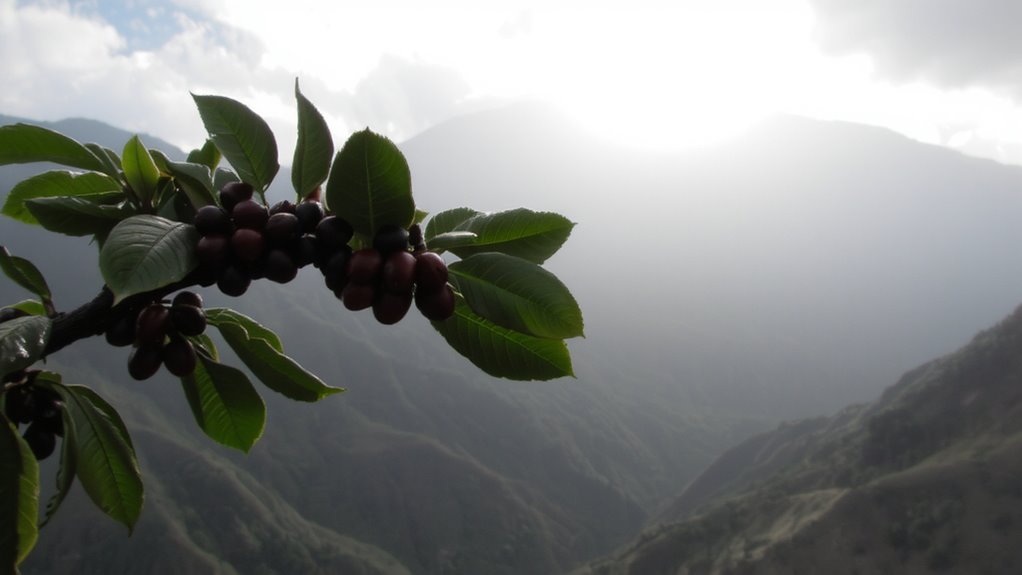
While higher elevations don’t directly create spicy notes, they set the stage by slowing bean development, and that’s where Ruvuma’s altitude makes a real difference. You’ll find farms at 1,500 to 1,800 meters, where cooler temps extend maturation, letting sugars and acids develop more complexity. This slow growth, driven by climate influence, supports the intensity behind those bright, peppery tones you taste. Ruvuma’s microclimate variation adds another layer-small shifts in elevation or slope alter temperature and sun exposure, even within a single farm. That means not all beans mature at the same rate, creating a broader flavor range in the final harvest. When you’re roasting these beans, expect to adjust profiles for consistency. Lighter roasts tend to enhance the spicy lift, while darker roasts may mute it. Altitude isn’t the whole story, but it shapes how those spicy notes emerge in your cup, especially when you pair the right beans with careful roasting.
How Granite Soils Boost Herbal Complexity
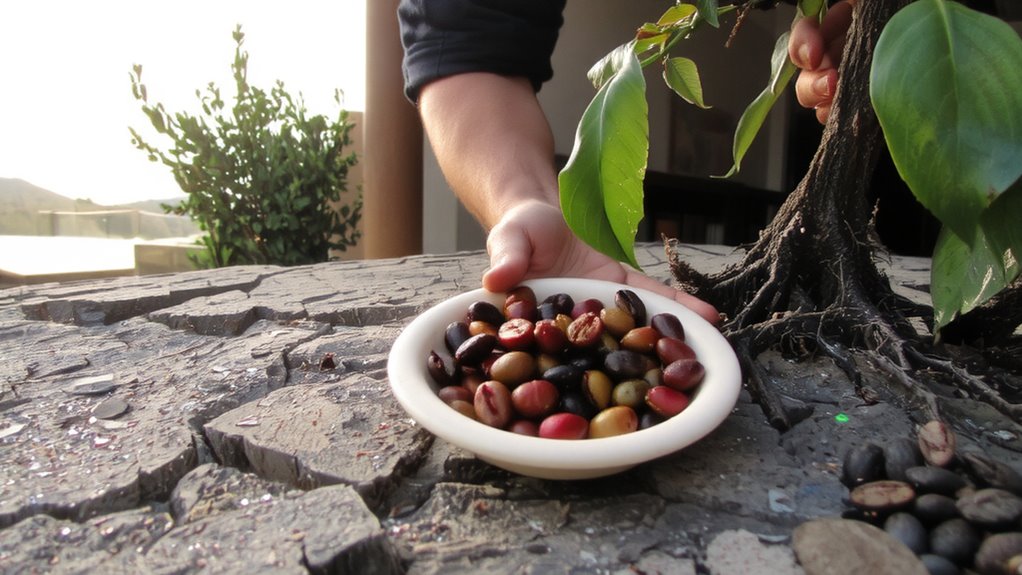
Since granite breaks down slowly, it helps form shallow, well-drained soils that stress coffee plants just enough to concentrate flavors. You’ll notice this stress leads to more intense herbal notes in the cup. The slow weathering of granite promotes steady soil mineralization, releasing trace elements like potassium and magnesium that support bean development. These minerals don’t overwhelm the plant-they fine-tune it. Because the soil is rocky, root depth remains limited, forcing roots to work harder and absorb a concentrated mix of nutrients. Shallow roots also mean less water retention, adding mild stress that boosts complexity. Unlike deep, rich volcanic soils, granite-based soils in Ruvuma focus the plant’s energy into fewer, more flavor-dense beans. If you’re roasting these coffees, expect brighter acidity and pronounced herbal tones. Use a consistent roast profile to highlight these traits without scorching delicate notes.
How Smallholder Farms Protect Ruvuma’s Flavor
You’ve seen how granite soils shape Ruvuma’s herbal brightness, but the region’s flavor doesn’t end with geology-farm size plays a role too. On smallholder farms, hands-on care keeps flavors consistent and clean. You’ll find farmers using crop rotation with beans or maize to prevent soil depletion, which supports balanced plant growth and avoids off-notes in the cup. Shade management is common-banana or indigenous trees filter sunlight, slowing cherry ripening and helping sugars develop evenly. These methods aren’t flashy, but they work. Smaller plots mean each tree gets attention, reducing disease spread and overharvesting. Unlike large plantations, there’s less need for synthetic inputs since natural systems stay intact. Crop rotation builds resilience, while proper shade management improves bean density. You’re not just tasting terroir-you’re tasting careful stewardship. These practices maintain the nuanced profile Ruvuma’s known for, without relying on processing tricks. It starts on the farm, and it starts small.
How Processing Enhances Ruvuma Coffee’s Character
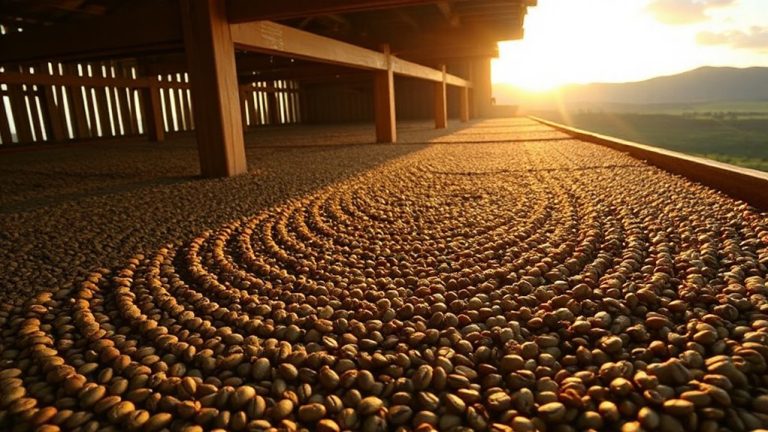
Terroir sets the stage, but how farmers process their coffee seals the deal. In Ruvuma, you’ll often see wet-hulling or natural processing, each shaping flavor differently. Fermentation control is key-farmers watch time and temperature closely to avoid over-fermenting, which can mute those delicate herbal notes. Too long, and you risk off-flavors; too short, and the spice profile won’t develop fully. After washing, drying techniques make another big difference. Many smallholders use raised beds, turning beans hourly for even drying under the sun. This slow, steady process helps preserve clarity and balance. Some co-ops now use solar dryers to manage humidity during rainy spells, improving consistency. You’re not just tasting the region-you’re tasting these precise post-harvest choices. Proper fermentation control and smart drying techniques don’t just protect quality; they highlight Ruvuma’s natural complexity in every cup.
On a final note
You’ll get the best from Ruvuma coffee by using a pour-over or flat-bottom espresso machine, which highlight its spicy, herbal tones. Grind fresh and brew just off boiling to avoid bitterness. These beans thrive in light to medium roasts, so skip dark roasts-they mute the nuance. Compared to Sumatran or Colombian beans, Ruvuma’s granite-grown profile is brighter, more tea-like. Storage in an airtight container keeps flavors intact longer.