Turning Frequency Guidelines for Uniform Drying in Natural Process Coffee
Turn your natural process coffee cherries every 1–2 hours during peak sunlight to guarantee even drying and prevent mold. In hot, dry conditions, go every 2–3 hours; in cool or humid weather, adjust to every 4–5 or 2–3 hours, respectively. Use a wide rake or wooden tool for gentle, uniform turning. Keep layers under 5 cm thick and prefer mesh beds for better airflow. You’ll see how small changes in timing and tools make a clear difference in quality.
Notable Insights
- Turn coffee cherries every 1–2 hours during peak drying hours for uniform moisture loss.
- Adjust frequency to every 2–3 hours in hot, dry, or humid conditions to prevent over-drying or mold.
- In cool, stable climates, turning every 4–5 hours suffices due to slower evaporation rates.
- Use shallow layers (2–5 cm) and mesh drying beds to enhance airflow and drying consistency.
- Employ gentle, uniform turning tools like bamboo rakes or mechanical turners to preserve bean quality.
Ideal Turning Frequency for Natural Process Coffee
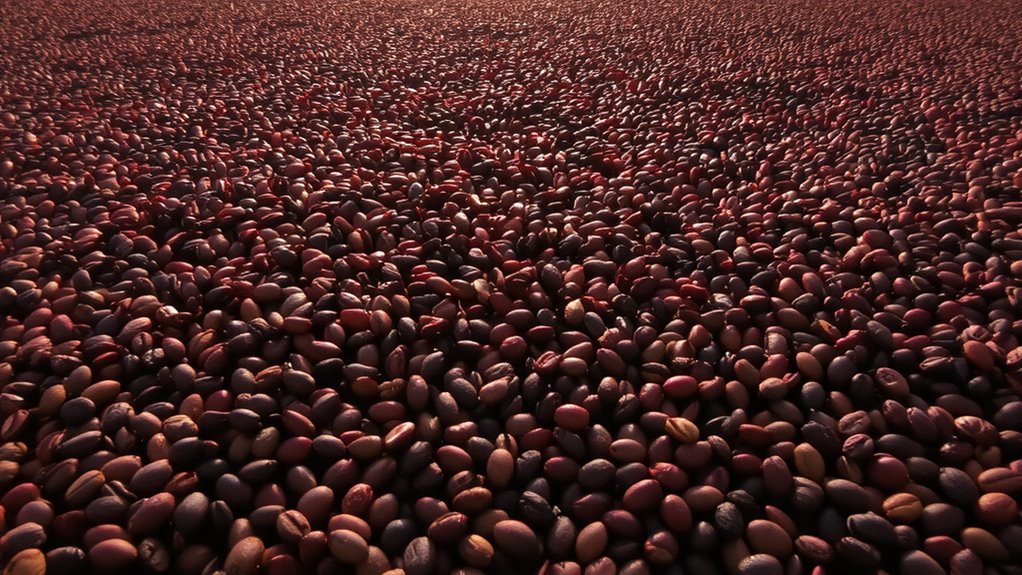
How often should you turn your natural process coffee to get even drying without overhandling? Every 1–2 hours during peak drying hours, usually morning to mid-afternoon. Turning too little risks fermentation and mold; too much harms skin integrity and slows moisture loss. You’re balancing airflow, temperature, and cherry density. Dense cherries, like those from high altitudes, hold more moisture and need consistent turning to avoid uneven drying. But aggressive turning damages the fruit’s skin, letting microbes in and risking spoilage. A medium rake or wooden tool works better than hands-gentler and more uniform. On tarps or patios, spread cherries no deeper than 5 cm to maintain control. Use mesh beds if humidity’s high-they improve airflow and reduce turning frequency slightly. Your goal is steady, visible drying without puckering or splitting skins. Watch for shine turning to matte-then adjust. It’s not just timing; it’s reading the beans.
How Climate Changes Your Turning Schedule
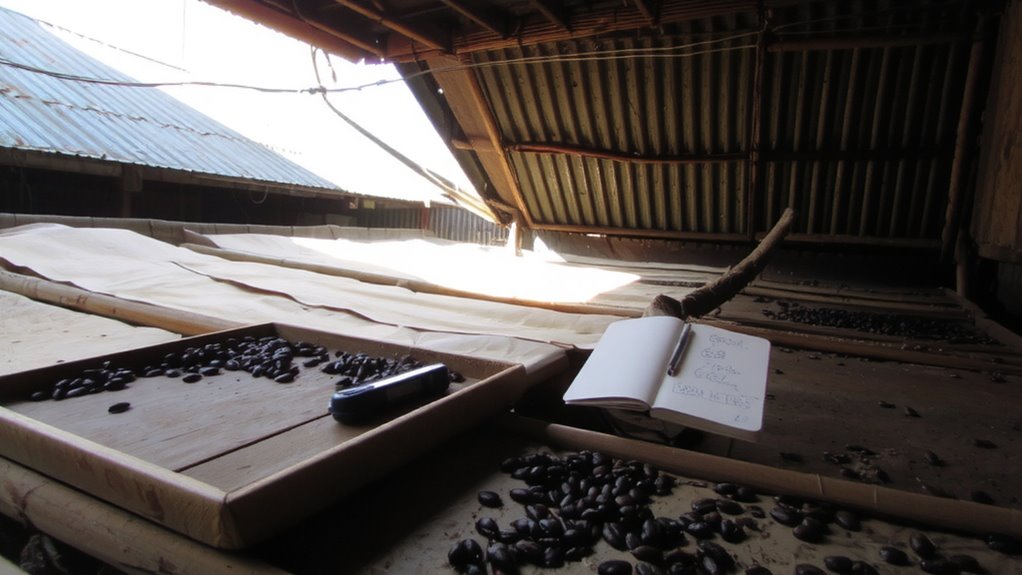
While temperature and humidity shift from day to day, your turning schedule shouldn’t stay fixed-adjusting it to match current conditions keeps drying steady and risk low. Temperature shifts can speed up or slow moisture loss, so you’ll need to respond quickly. High wind exposure? That dries cherries faster but can create case hardening if you don’t turn more often. Watch daily patterns and tweak your rhythm accordingly.
| Condition | Turn Frequency | Why |
|---|---|---|
| Hot & dry | Every 2–3 hrs | Prevents over-drying surface |
| Cool & stable | Every 4–5 hrs | Slower moisture release |
| High heat spike | Every 2 hrs | Counters rapid drying |
| Low wind | Every 4 hrs | Even interior drying |
| Strong wind | Every 3 hrs | Balances wind exposure |
Turning Cherries in Humid or Rainy Conditions
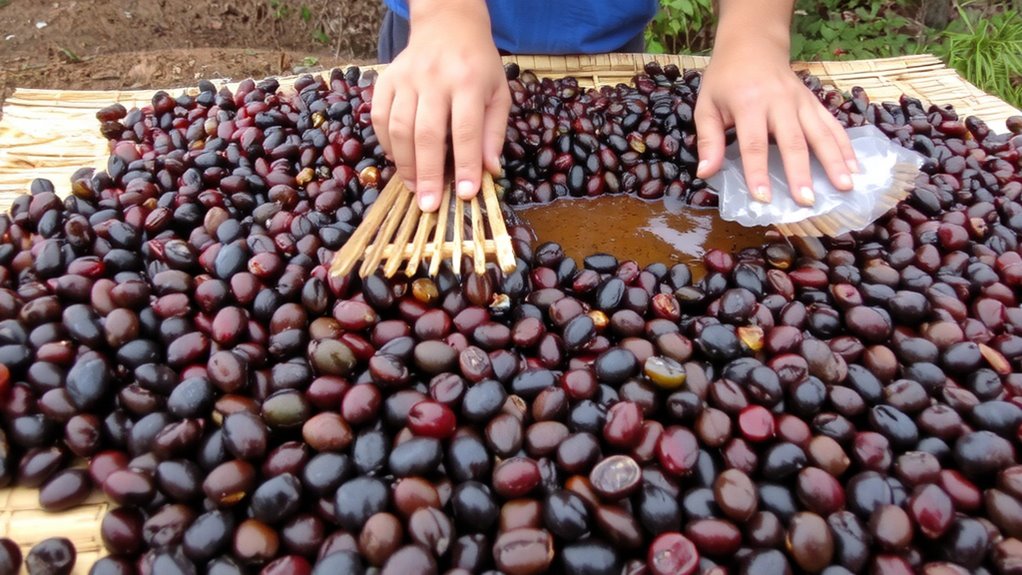
You’ve already adjusted your turning schedule for heat and wind, but when humidity rises or rain moves in, the rules change. During wet conditions, you need to turn cherries more frequently-every 2 to 3 hours-to combat stalled drying. High moisture in the air slows evaporation, and if cherries sit too long, surface moisture can lead to spoilage. Increased cherry density in the bed also raises airflow resistance, trapping humidity within the layer. Using shallower beds-around 2 to 3 inches-reduces this resistance, helping air circulate evenly. Mesh-bottomed drying tables work better than solid surfaces in these conditions because they improve cross-ventilation. If you’re using patios, consider raking more often, but avoid compacting the cherries. Tarp coverings during rain should be temporary and removed immediately after to resume drying.
How Turning Prevents Mold and Over-Fermentation
Why does mold take hold so easily in drying coffee cherries if you aren’t careful? Because stagnant heat and moisture create a breeding ground for unwanted microbes. When you turn the cherries regularly, you boost air circulation across each layer, helping moisture escape evenly. This simple action disrupts humidity pockets where mold thrives. It also supports a stable microbial balance, favoring beneficial bacteria over destructive fungi. Without turning, fermentation accelerates in hot spots, leading to over-fermentation-sour, off-flavor notes in the cup. You’re not just drying coffee; you’re managing an environment. Proper airflow and consistent movement keep conditions predictable. Raised beds with mesh sides, for example, enhance air circulation better than solid patios. But even on plastic sheets, frequent turning helps. You don’t need fancy gear-just timing and attention. Turn early and often, especially in humid conditions, and you’ll protect quality from day one.
Signs of Over- and Under-Turning
Turning the cherries too little or too much can both cause problems, and spotting the signs early helps you adjust before quality suffers. If you’re turning too infrequently, you’ll notice damp patches, musty smells, or visible mold-clear red flags for poor mold detection. These spots mean airflow is blocked and fermentation balance is tipping toward over-fermentation, risking sour or rotten notes. Under-turned lots often dry unevenly, with outer layers hardening while interiors stay moist. On the flip side, over-turning dries the surface too fast and stresses the bean, stripping sweetness and disrupting fermentation balance. You’ll see cracked fruit skins and overly brittle texture. Frequent turning in high heat or low humidity worsens it. Watch closely during the first 48 hours-this phase is critical for setting drying pace. Adjust frequency based on feel, smell, and visual cues, not just a fixed schedule.
Tools for Gentle, Fast Turning
While speed matters in turning coffee cherries, doing it gently is just as important to avoid damaging the fruit and disrupting fermentation. You can achieve this balance with the right tools. Manual raking using wide, smooth-bottomed rakes made of plastic or bamboo helps turn cherries evenly without bruising them, ideal for small batches and raised beds. For larger operations, mechanical turners with slow-rotating paddles offer consistent movement while reducing labor. Pairing these tools with airflow optimization-like spacing beds for cross-ventilation or using mesh siding-ensures heat and moisture escape efficiently. Some farms use perforated drying tables with small fans beneath to improve airflow without disturbing the cherries physically. While manual raking gives you precise control, airflow optimization reduces how often you need to turn, saving time and effort. Choose tools based on scale, climate, and bed type for fast, gentle turning that supports uniform drying.
On a final note
You should turn your coffee cherries every 30 to 60 minutes in hot, dry conditions to prevent over-fermentation, but every 3–4 hours in cooler or humid weather. Too little turning risks mold; too much slows drying. Use a wooden rake or specialized drying bed tool to flip cherries gently and quickly. Adjust frequency based on temperature, humidity, and cherry density. Consistent, informed turning gives you cleaner flavors and avoids defects.