Why Toraja Coffee Offers Complex Spices and Wood Notes
You get bold spiced and woody flavors in Toraja coffee because it’s grown at high altitudes on Sulawesi, where cool air and volcanic soil slow bean development, boosting density and complexity. Wet hulling, or *giling basah*, adds earthy warmth and a heavier body, while shade trees help balance maturation. These factors combine to preserve clove-like spice and dark, cedar-like depth, especially in medium roasts. The highland microclimate fine-tunes these traits-something worth exploring further if you’re chasing nuanced, structured cups.
Notable Insights
- High elevation slows bean maturation, increasing density and enhancing bold spiced flavors like clove and nutmeg.
- Volcanic soil rich in minerals supports gradual growth, contributing to earthy depth and woody, dark chocolate notes.
- Wet hulling (giling basah) reduces acidity and amplifies body, yielding a smooth, earthy warmth in the cup.
- Shade-growing promotes even sugar development and denser beans, improving flavor complexity and roast stability.
- Highland microclimates with cool air and humidity concentrate flavors, preserving floral undertones and intensifying spice.
Spice, Smoke, and Earth: Tasting Toraja Coffee
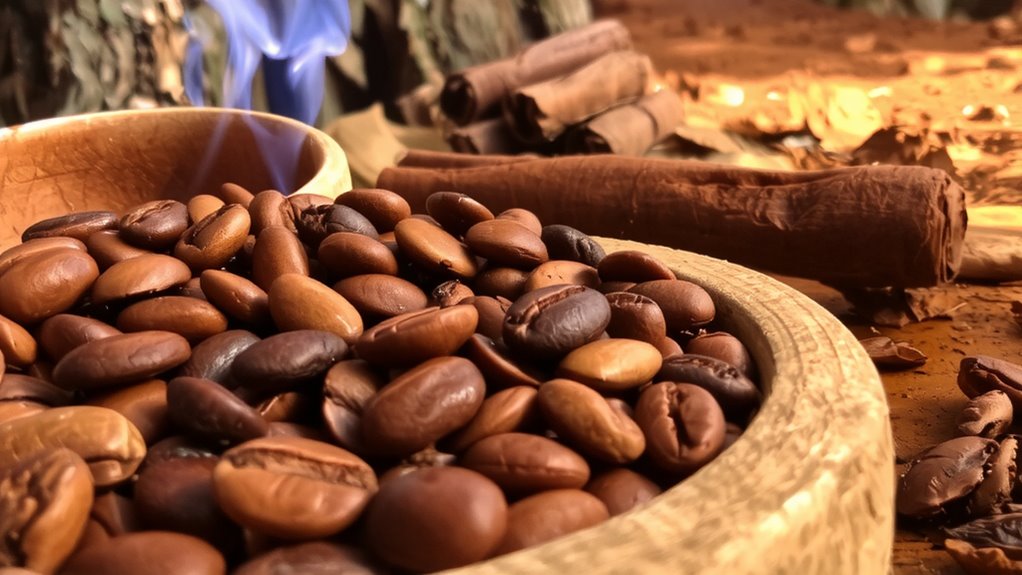
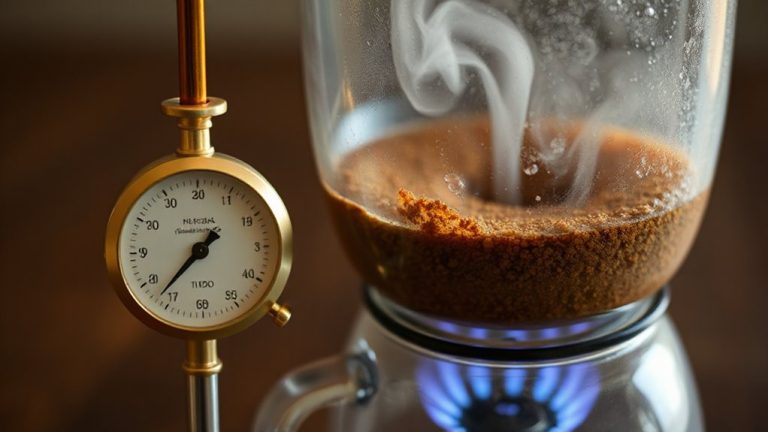
While you might expect a bold, fruity profile from Indonesian coffees, Toraja stands out with its deep spice, subtle smoke, and earthy base notes that come through clearly when brewed properly. You’ll notice hints of fermented fruit-think dried mango or plum-layered into a cup that balances richness and complexity. Its rustic charm isn’t just marketing; it reflects traditional processing methods that shape the flavor. For best results, use a gooseneck kettle with a medium roast to avoid masking delicate notes. A pour-over like the Hario V60 highlights clarity, while a French press brings out body. Avoid over-extraction by grinding slightly coarse and keeping water just under boiling. You don’t need expensive gear, but consistency matters. This coffee rewards attention-not just in brewing, but in slowing down enough to taste what’s really there. For those exploring the country’s diverse profiles, Best Indonesian Coffee Picks offer curated options that highlight regional distinctions.
How Altitude Builds Bold, Spiced Notes in Toraja Coffee
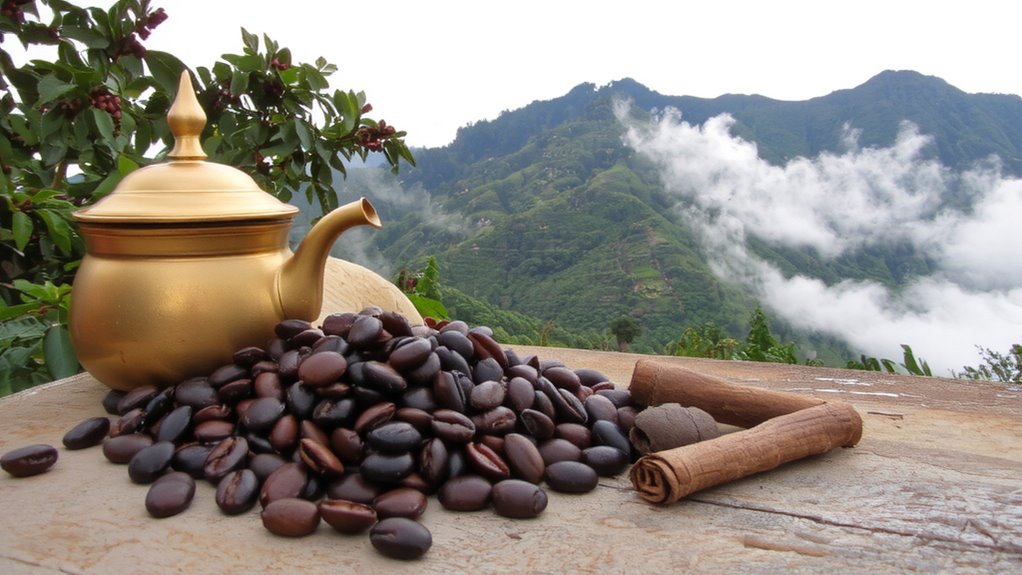
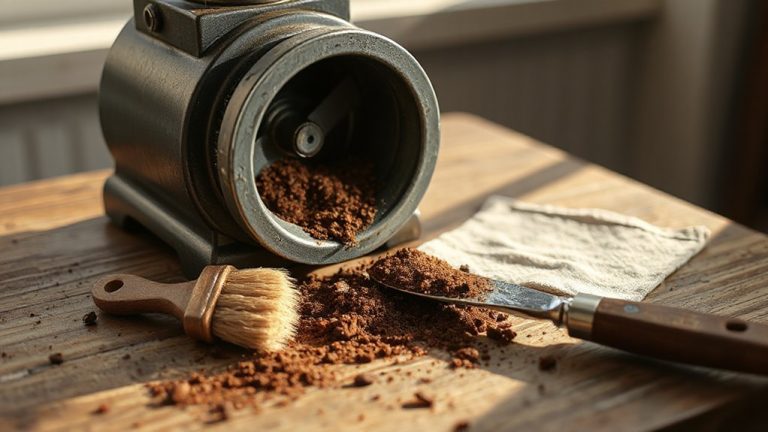
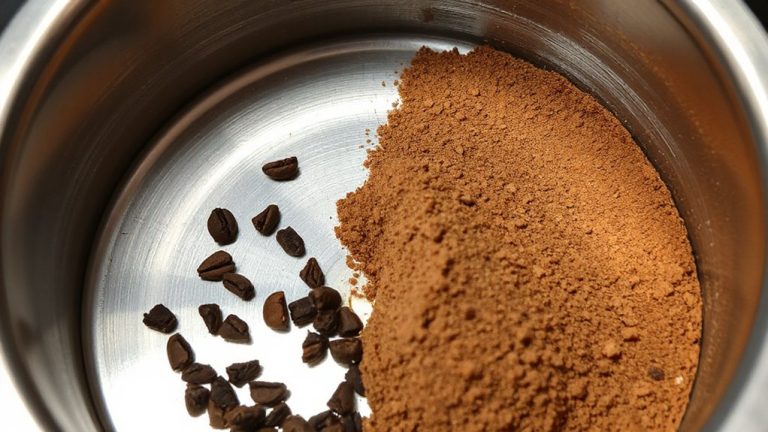
Because the coffee grows at higher elevations, typically between 1,200 and 1,800 meters above sea level, the beans develop more slowly, which helps build the bold, spiced characteristics Toraja is known for. The cool mountain air slows sugar development, increasing bean density and enhancing flavor complexity. You’ll notice this in the cup as deeper spice notes-like clove and nutmeg-coming through more clearly. This is a direct result of terroir influence, where elevation shapes how the beans mature. Higher bean density also means the coffee can handle medium roasts well, preserving those spiced tones without tipping into bitterness. If you’re brewing, use a burr grinder and pour-over setup to highlight these traits. Avoid dark roasts-they’ll mute the nuance. The altitude-driven density gives you room to experiment, but keep water temperature around 195–205°F for best extraction.
Volcanic Soil and Toraja’s Deep, Woody Character
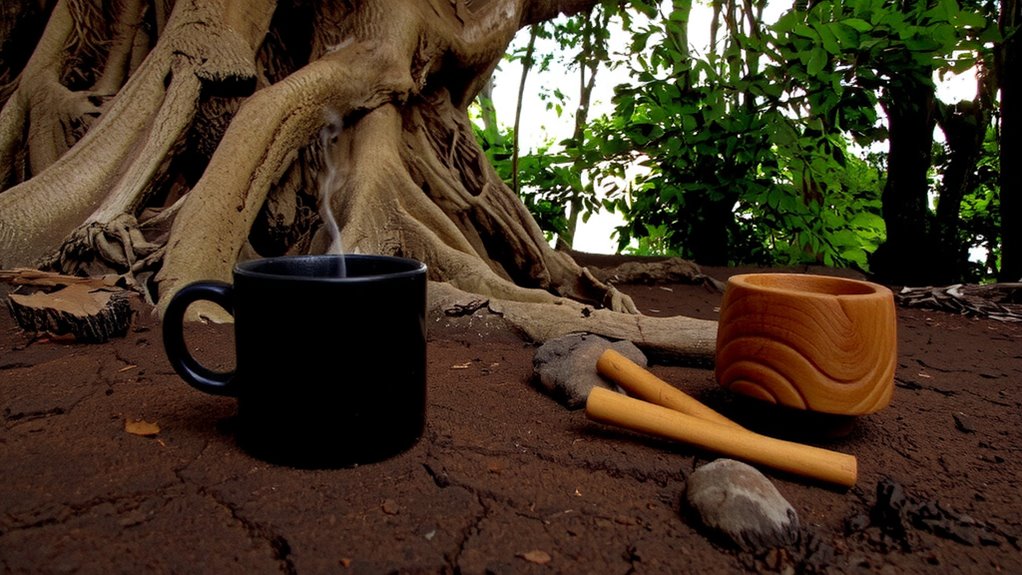
Since the coffee grows in mineral-rich volcanic soil, you’ll notice a distinct depth in the cup-earthy and woody notes that become the backbone of Toraja’s profile. That mineral richness feeds the plants with essential nutrients, promoting slow, steady growth that enhances bean density and flavor complexity. You’re not just tasting soil chemistry-you’re experiencing organic depth shaped by volcanic ash, iron, and trace minerals. This terroir gives Toraja coffee a structured, layered mouthfeel, often compared to dark chocolate or aged cedar. When brewing, use a gooseneck kettle with water just off boiling (around 200°F) and a medium-coarse grind to highlight these woody tones without over-extracting bitterness. A V60 or Kalita Wave brings clarity, letting the earthy character stay grounded, not muddy. Don’t expect fruity brightness here-this is coffee built for depth, not sparkle.
Why Wet Hulling Adds Warmth to Toraja Coffee
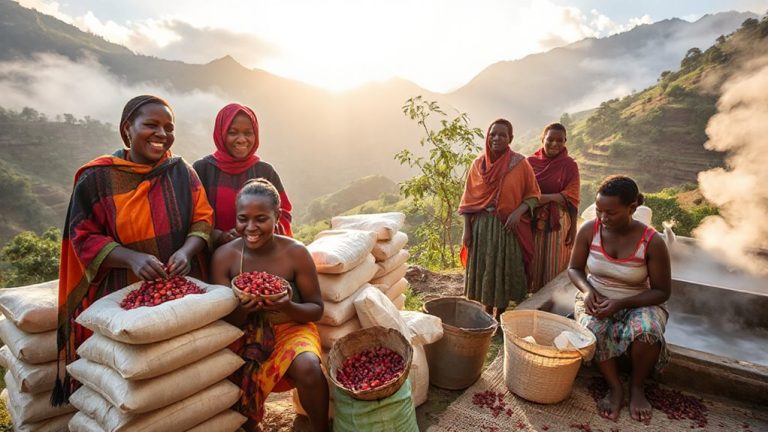
Even though most specialty coffees are processed using washed or natural methods, Toraja coffee often goes through wet hulling-a unique step that shapes its warm, rounded character. You’ll find this method, called *giling basah* locally, pulls parchment off the bean while it’s still moist, speeding up drying but lowering acidity. It gives Toraja coffee that distinct earthy warmth and heavier body. Unlike honey processing, which leaves some mucilage for sweetness, wet hulling strips more away, focusing flavor on depth. Natural drying follows, but at a faster pace since beans are hulled early. This can raise risk of mold if not monitored, so proper airflow and frequent turning are key. Compared to fully washed coffees, wet-hulled beans develop a smoother, woodier profile-less bright, more grounded. It’s not for every palate, but if you like low-acid, full-bodied cups, wet hulling delivers. Your brewing gear should handle oils; a sturdy metal filter or espresso machine works well.
Shade-Grown Farming and Flavor Complexity in Toraja
While sunlight can speed up coffee growth, Toraja farmers often choose shade-grown methods to develop deeper flavor complexity in their beans. You’ll find this approach slows flavor maturation, allowing sugars to build more evenly inside the cherry. That slower development boosts bean density, which helps the beans withstand high heat during roasting without scorching. Dense beans also tend to roast more uniformly, giving roasters better control. Shade trees reduce stress on coffee plants, improving bean consistency across harvests. Though yields are lower than in full sun, the trade-off is worth it for specialty markets. You’re not just buying beans-you’re getting a product shaped by intentional farming. Unlike open-field plots, shaded farms in Toraja rely on natural canopy cover, often using native trees. This method supports sustainable land use while enhancing the sensory profile you taste-think layered spice, subtle wood, and balanced body.
How Sulawesi’s Microclimate Shapes Aromatic Spice
You’ll find the unique spice notes in Toraja coffee aren’t just from farming methods-they’re shaped by Sulawesi’s highland microclimate. Cool mountain air slows bean maturation, allowing denser structure and more complex sugars to develop. This slow growth enhances spice intensity without overpowering the cup. Tropical humidity keeps the soil consistently moist, reducing stress on plants and supporting steady nutrient uptake. That balance helps preserve delicate floral undertones often lost in drier regions. Day-night temperature swings further concentrate flavor, boosting aromatic complexity. Unlike lowland farms, where heat speeds ripening, Sulawesi’s elevation delivers beans ideal for medium roasts that highlight spice and wood notes. For best results, use a burr grinder and pour-over-this combo clarifies flavors without masking them. You won’t need exotic gear; a Hario V60 or Chemex works well. Just maintain clean water and consistent grind size to reveal what the microclimate built.
On a final note
You get Toraja’s complex spice and wood notes thanks to high altitudes, volcanic soil, and shade growing in Sulawesi’s microclimate. Wet-hulling adds warmth and body, common in Indonesian processing. For best results, use a burr grinder and pour-over or drip brewer to highlight clarity without over-extracting earthy tones. Dark roasts work well in French presses, but avoid boiling water-it can amplify bitterness. Freshness matters, so buy whole bean and use within three weeks.