Exploring the Social Impact of Women’s Coffee Cooperatives in Rwanda
You’re drinking coffee that’s reshaping Rwanda’s rural economy through women-led cooperatives. With secure land rights, women invest in quality crops and access loans. Fair Trade guarantees stable prices, letting them reinvest in health and education. Buyers like Equal Exchange support long-term contracts, ensuring consistency. These cooperatives don’t just produce specialty-grade beans-they build resilience, equity, and opportunity where it’s needed most. There’s more behind each cup than you might think.
Notable Insights
- Women-led cooperatives in Rwanda improve coffee quality through standardized harvesting and training in sustainable farming practices.
- Legal land rights enable women to own, inherit, and leverage land for long-term agricultural investments and financial independence.
- Fair Trade certification guarantees stable prices and premiums, boosting women’s incomes and community development.
- Reinvestment of cooperative earnings enhances access to education, school supplies, and maternal and preventive healthcare.
- Global partnerships with ethical buyers provide market stability, infrastructure investment, and recognition of women’s expertise.
How Women-Led Cooperatives Are Modernizing Rwanda’s Coffee Sector
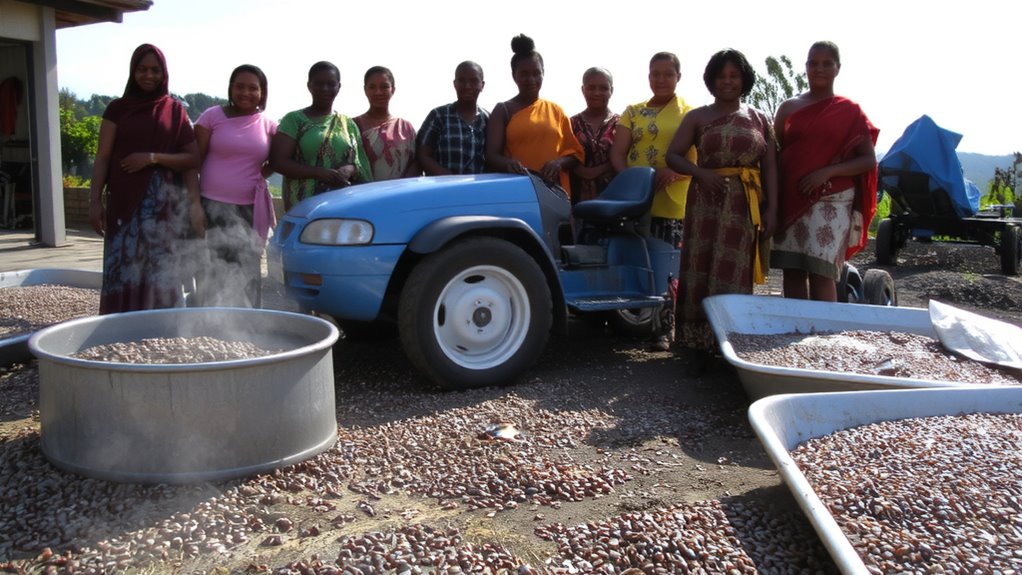
While Rwanda’s coffee industry was once dominated by small-scale farmers working in isolation, women-led cooperatives are now driving its transformation into a more organized and competitive sector. You see this shift when you taste the beans-higher coffee quality due to standardized harvesting and processing. These cooperatives invest in wet mills, which improve consistency, and train members in sustainable farming practices like composting and shade growing, which protect soil and yields long-term. Unlike scattered farms, organized groups can afford better tools and access international buyers, giving them pricing power. Women reinvest profits into training and infrastructure, creating a cycle of improvement. You’ll notice the difference in cupping scores-many now exceed 85, qualifying as specialty grade. By prioritizing both quality and sustainability, these cooperatives don’t just produce better coffee-they set a benchmark for the industry.
How Land Rights Enable Women’s Participation in Coffee Farming
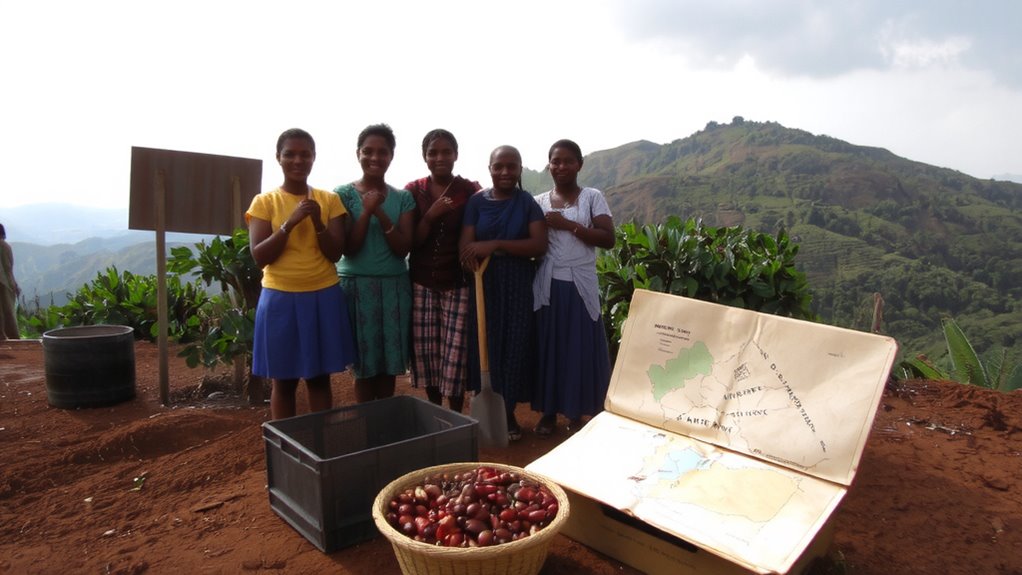
You can taste the results of Rwanda’s coffee transformation, but behind those high-scoring beans is something less visible: secure land rights that allow women to farm, invest, and lead. When you have land ownership, you’re not just growing coffee-you’re making long-term decisions about soil health, shade trees, and processing methods. In Rwanda, legal reforms now let women inherit and register land, a shift that’s quietly revolutionizing who controls farms. Legal empowerment means you can get a loan, buy a pulping machine, or join a cooperative with real bargaining power. Without land titles, women often worked plots they couldn’t control or improve. Now, with documented rights, you see more women planting high-yield varieties, using precision fermentation tanks, or investing in eco-friendly washing stations. It’s not symbolic-it’s practical. Land ownership turns effort into equity, letting women shape Rwanda’s specialty coffee future rather than just participate in it.
How Fair Trade Increases Earnings for Women Farmers
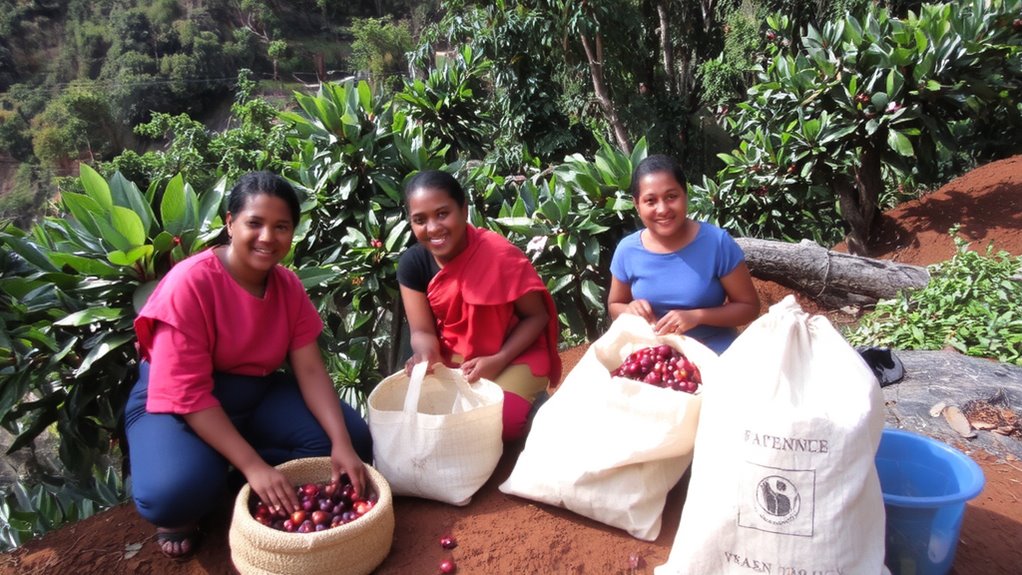
A fair share of women coffee farmers in Rwanda now earn noticeably more thanks to Fair Trade certification, which guarantees minimum prices and adds a premium for community investment. You get paid fairly even when global prices drop, reducing the risk that comes with market swings. This stability supports gender equality by giving you more control over your income and decision-making power in your household. Fair Trade also rewards better coffee quality, encouraging you to invest time in careful harvesting and processing. Buyers often pay above the minimum for beans that meet higher quality standards, boosting your earnings further. Unlike conventional markets that prioritize volume, this system values skill and consistency. The combination of price protection and quality incentives means you can improve both your product and your livelihood. It’s not a shortcut, but it’s a reliable path toward financial independence in a tough industry.
How Women Reinvest Income in Health and Education
Fair Trade earnings give you more than just steady income-they open doors to better health care and school supplies for your children. You now pay school fees without borrowing, ensuring your kids stay in class and get uniforms, books, and materials they need. Many women like you use extra income for maternal care, attending prenatal visits and delivering in clinics instead of at home, which lowers health risks. Preventive care and emergency services become reachable, not luxuries. You also afford malaria treatments, eye exams, and dental care-small costs that make big differences. Education and health aren’t just goals; they’re regular line items in your household budget now. This shift didn’t happen overnight, but with consistent Fair Trade premiums, planning becomes possible. You track expenses, prioritize needs, and make informed choices-just like managing crop inputs or coffee processing steps. The result? Healthier families and children who stay in school longer.
How Global Buyers Support Women-Led Coffee Cooperatives
Global buyers play a key role in strengthening women-led coffee cooperatives by offering stable market access and long-term partnerships. When you purchase from these cooperatives directly, you enable direct investment in infrastructure, training, and quality control. This isn’t just charity-it’s practical. Buyers like Equal Exchange and Intelligentsia commit to long term partnerships, guaranteeing prices that cover production costs and support community growth. These deals mean women can plan ahead, reinvest profits, and improve processing methods. Unlike volatile spot markets, this model reduces risk and promotes consistency. You’ll notice better bean quality, too-more uniform roasting, cleaner flavors. It’s a win-win: ethical sourcing meets high standards. Just as you’d choose a reliable grinder or scale, choosing transparent supply chains secures your coffee gear isn’t undermined by unreliable beans. Support matters most when it’s structured, sustained, and mutual.
On a final note
You see how women-led coffee cooperatives in Rwanda don’t just grow better beans-they lift communities. With secure land rights and fair trade access, farmers earn more and reinvest in health, education, and better farming gear. Global buyers who pay fair prices help sustain this cycle. If you’re brewing Rwandan coffee, you’re likely using beans from small farms where women use manual pulpers, solar dryers, and raised beds-simple tools, well-maintained, doing real work.