How to Clean and Dry a Wooden Coffee Scoop to Avoid Cracking
Always hand-wash your wooden coffee scoop with warm water and mild soap-never soak it or put it in the dishwasher. Use a soft sponge to clean coffee residue, then rinse and dry it immediately with a clean towel to prevent moisture absorption. Letting it air-dry can lead to warping or cracks. Apply food-safe mineral oil monthly to maintain moisture balance. Proper cleaning and drying keep the wood stable and extend its life. There’s more to get right for long-term care.
Notable Insights
- Always hand-wash your wooden coffee scoop with warm water and mild soap immediately after use.
- Gently scrub the scoop’s bowl to remove coffee oils, avoiding harsh brushes or prolonged soaking.
- Rinse thoroughly to eliminate all soap residue, which can affect coffee flavor and wood integrity.
- Dry the scoop immediately and completely with a clean towel to prevent moisture absorption and warping.
- Condition monthly with food-safe mineral oil to maintain moisture balance and prevent cracking.
Hand-Wash Your Wooden Scoop Safely
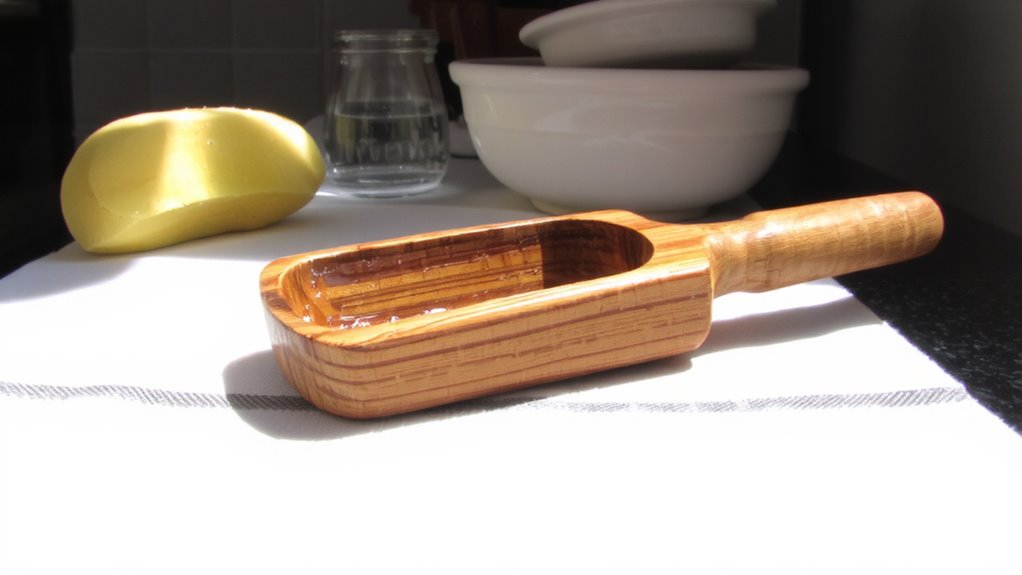
A wooden coffee scoop should always be hand-washed to protect the wood from damage. You can’t toss it in the dishwasher-high heat and prolonged moisture warp and crack the grain over time. Instead, rinse it under warm water right after use. Add a drop of mild detergent to a soft sponge and use gentle scrubbing to remove coffee oils. Avoid harsh brushes or soaking; they raise the grain and weaken the structure. Focus on the bowl of the scoop, where residue builds up. Rinse thoroughly to remove any soap traces, since leftover detergent affects flavor. Wash it quickly-don’t let it sit wet. This method keeps the wood intact and prevents bacterial growth. While plastic scoops tolerate dishwashers, wood demands this extra care. It’s a small step that extends your scoop’s life. Hand-washing isn’t hard, just consistent. Do it every time, and you’ll avoid premature wear.
Dry It Right: Every Time
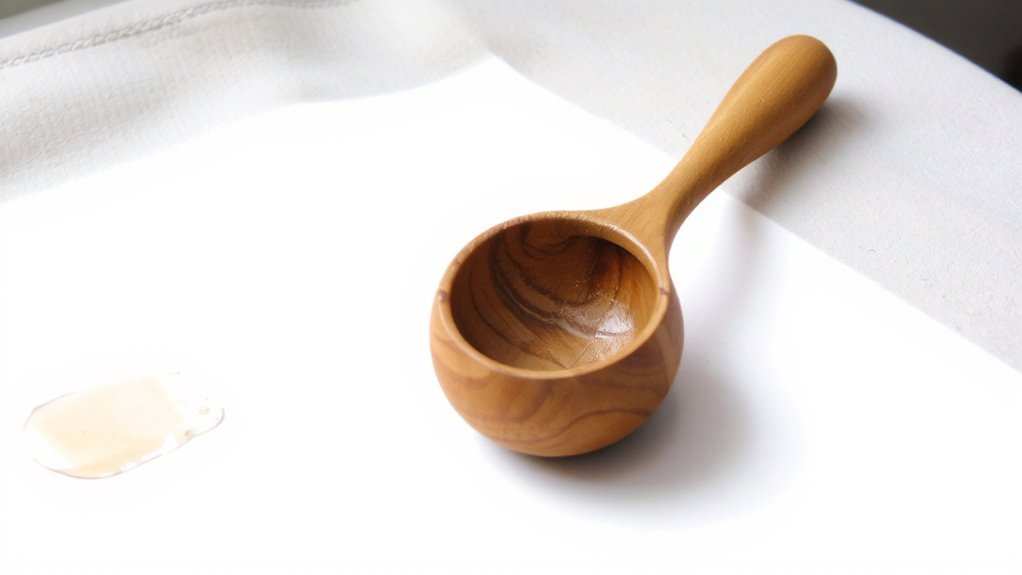
Always dry your wooden coffee scoop immediately after washing-never let it air-dry on the counter or in the sink. Air drying might seem convenient, but it exposes the wood to moisture for too long, increasing the risk of warping or cracking. Instead, use towel drying with a clean, dry cotton or microfiber cloth. Gently rub all surfaces, including the bowl and handle, to remove every drop of water. This simple step drastically reduces moisture absorption and helps maintain structural integrity. Don’t skip corners or the underside-those spots hold water and can lead to uneven drying. Towel drying takes less than a minute but makes a lasting difference in your scoop’s lifespan. Keep the process consistent every time you wash it. Proper drying isn’t just about cleanliness-it’s essential maintenance. With regular towel drying, your wooden scoop stays safe from damage and ready for daily use.
Oil Your Coffee Scoop Monthly
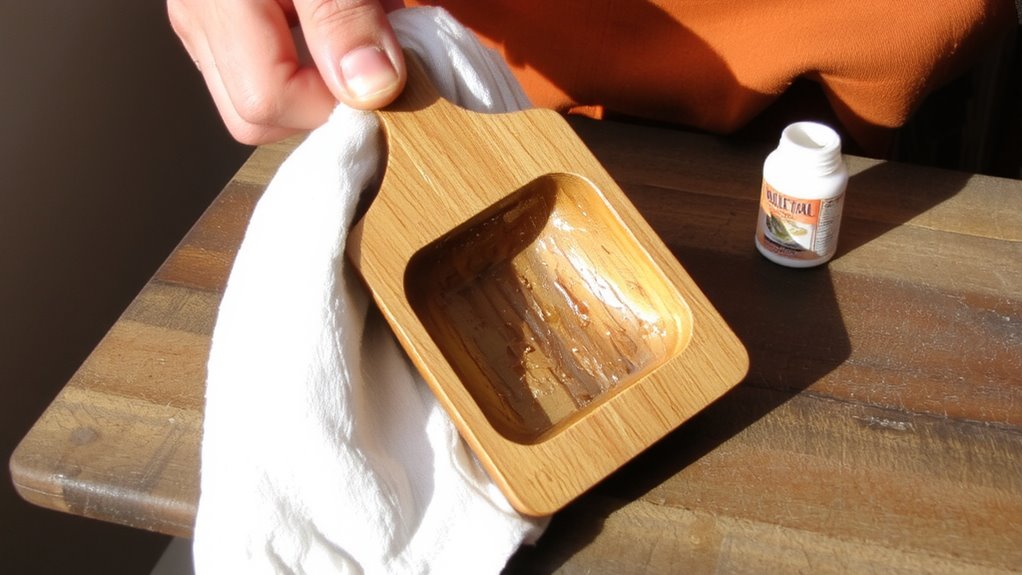
Once a month, oiling your wooden coffee scoop helps preserve its finish and prevent drying or cracking. This monthly oiling is a simple step, but it makes a real difference in longevity. Use food-safe mineral oil or a beeswax blend-coconut or walnut oil can go rancid, so they’re best avoided. Apply a small amount with a clean cloth, rubbing it evenly along the grain. Let it soak in for at least a few hours, preferably overnight. This routine acts as wood conditioning, replenishing natural oils lost over time. Don’t overdo it-excess oil can leave a sticky surface or attract dust. If the wood looks dull or feels dry, it’s a sign you might need to stay more consistent. Regular care like this keeps your scoop functional and smooth without needing replacements. For most users, monthly oiling strikes the right balance between maintenance and practicality.
Why Your Scoop Cracks: And How to Stop It
Cracks in your wooden coffee scoop usually come from uneven moisture exposure-leaving it in the sink, tossing it in the dishwasher, or letting it air dry on a damp counter. Wood grain naturally expands and contracts with moisture changes, so sudden shifts stress the material. When one part absorbs water faster than another, the imbalance leads to splits. To prevent this, maintain a steady moisture balance: rinse quickly, wipe dry immediately, and let it air dry upright or on its side to allow even evaporation. Never leave it soaking or in standing water. Over time, consistent drying and monthly oiling help the wood acclimate. A stable moisture balance protects integrity, especially along the grain. Think of it like caring for a cutting board-gentle use, prompt drying, and routine upkeep keep it strong. Proper handling means fewer cracks and a longer life.
Don’t Soak or Dishwash: 3 Common Mistakes
You’ve seen how moisture imbalance leads to cracks, and that same sensitivity is why soaking or running your wooden coffee scoop through the dishwasher is a bad idea. First, never soak it-wood absorbs water, and prolonged exposure causes swelling and warping. Second, avoid the dishwasher: its hot water and steam force moisture deep into the grain, increasing the risk of splits. Third, don’t use harsh dish soap regularly; it strips natural oils, drying out the wood over time. Instead, wipe clean with a damp cloth and mild soap if needed, then dry immediately. Hot water should be limited-lukewarm is safer. These mistakes seem small, but repeated exposure weakens the wood. Hand-washing gently and air-drying flat prevents damage. Treat your scoop like a cutting board: simple care goes a long way.
On a final note
Keep your wooden coffee scoop in good shape by hand-washing it quickly with mild soap, then drying it right away with a towel. Never soak it or put it in the dishwasher-moisture causes cracks. Oil it monthly with food-safe mineral oil to protect the wood. These simple steps prevent damage and extend its life. A well-maintained scoop lasts years and performs better than plastic or metal in preserving flavor.