How to Calculate the Perfect Coffee-to-Water Ratio for Pour Over Brewing
Start with a 1:16 coffee-to-water ratio-like 20g of coffee to 320g of water-for a balanced 12 oz pour over. Use a medium-fine grind and water between 195°F and 205°F. Adjust to 1:15 for stronger flavor or 1:17 for lighter cups, depending on bean origin and roast. Weigh everything with a precise scale to stay consistent. If your brew’s bitter or weak, tweak the grind or ratio. Light roasts often work better at 1:16, while dark roasts may need less coffee. Small changes make noticeable differences.
Notable Insights
- Start with a 1:16 coffee-to-water ratio, using 1 gram of coffee per 16 grams of water for balanced extraction.
- Adjust the ratio to 1:15 for stronger flavor or 1:17 for a lighter, tea-like cup based on taste preference.
- Tailor the ratio to bean origin-Ethiopian for more intensity, Sumatran for smoothness at higher dilution.
- Use a digital scale to measure coffee and water precisely, ensuring consistency and accurate repeatable brews.
- Modify grind size and water temperature alongside ratio to fix bitterness or sourness and match roast level.
Start With the Coffee-To-Water Ratio
A good starting point for pour over coffee is a 1:16 ratio-one gram of coffee for every 16 grams of water. You can adjust later, but this ratio consistently delivers balanced extraction for most brews. Use a digital scale to measure both coffee and water for accuracy-eyeballing leads to inconsistency. The grind size matters just as much as the ratio; aim for a medium-fine texture, like sea cud. Too fine and your brew becomes bitter; too coarse and it’s weak. Coffee origin affects how you might tweak grind and ratio-dense beans from high-altitude regions like Ethiopia may need slightly finer grinds or warmer water. Light roasts often require more attention to extraction than dark roasts. Always grind fresh using a burr grinder for uniform particles. Consistency in grind size and ratio sets the foundation. For precise measurements, consider investing in one of the best coffee scales to maintain consistency across brews. best coffee scales
Use the 1:16 Pour Over Ratio as a Baseline
You’ve got your scale, your burr grinder, and a solid idea of how important consistency is-now let’s put those tools to work with the 1:16 ratio, the go-to starting point for pour over coffee. That means 1 gram of coffee for every 16 grams of water. It delivers a balanced cup for most beans and brew methods. If your brew time runs too short-under 2:30-your grind size is likely too coarse. A longer brew time, past 3:30, suggests the grind is too fine. Adjust accordingly. This ratio works well with medium-fine grind settings, similar to table salt. Try it with a V60 or Kalita Wave to see how extraction changes. It’s not perfect for every bean or taste, but it’s a reliable baseline. Track your adjustments so you can repeat what works.
Brew 12 Oz Pour Over With 20G Coffee
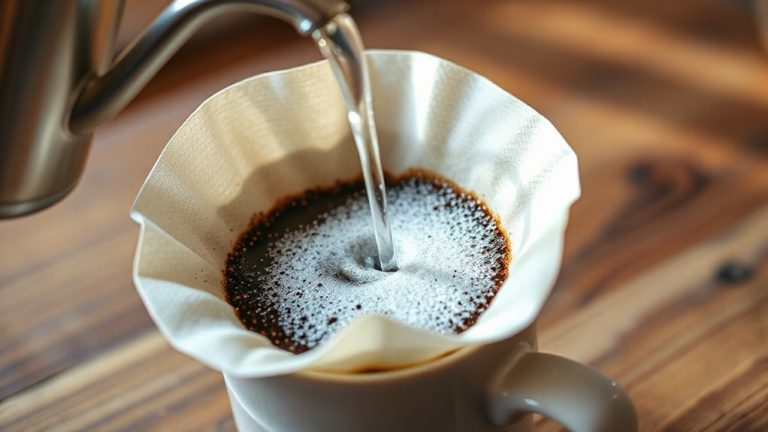
20 grams of coffee is the right dose for a 12 oz pour over when you stick to the 1:16 ratio-just add 320 grams of water to hit that balance. Use a medium-fine grind size, similar to table salt, for even extraction. Water temperature should be between 195°F and 205°F-just off boil-for ideal flavor without scalding the grounds. These settings work well with most brewers like the Hario V60 or Kalita Wave. A high-quality burr grinder ensures consistent grind size for optimal pour over results.
| Brew Element | Value | Notes |
|---|---|---|
| Coffee | 20g | Freshly ground |
| Water | 320g | 1:16 ratio |
| Grind size | Medium-fine | Consistent particles |
| Water temperature | 195°F–205°F | Avoid boiling water |
| Brewer type | V60, Kalita, etc. | Match grind to design |
Customize Your Ratio for Taste
Why does one ratio work for some but not others? Because your flavor preference and the bean origin matter. A standard 1:16 ratio might taste balanced to some, but if you like stronger, bolder notes, try 1:15. For lighter, tea-like cups, go 1:17. Beans from Ethiopia often shine brighter with a higher coffee concentration, enhancing floral and citrus tones. Meanwhile, a Sumatran bean might taste muddy at 1:15 but smooth at 1:17. Adjusting the ratio lets you tailor extraction to the bean’s character. You don’t need fancy gear-just change the dose or water slightly. Start with small tweaks and note the results. What works for one brew won’t fit all, so match the ratio to both bean origin and your flavor preference for best results. Using the right grind size is just as crucial as the ratio, and a best coffee grinds recommendation can make or break your pour-over experience.
Weigh Coffee and Water for Consistency
While volume measurements might seem convenient, they’re inconsistent and can lead to uneven brews because coffee grounds vary in density and size. You’ll get better results using a scale for true consistency. Scale accuracy guarantees you’re using the exact coffee and water amounts every time, which is key for repeatable pour overs. Even small variances-like 1–2 grams-can impact flavor, extraction, and temperature stability during brewing.
For reference, here’s a standard starting point:
| Coffee (g) | Water (g) | Brew Ratio |
|---|---|---|
| 20 | 300 | 1:15 |
| 25 | 375 | 1:15 |
| 30 | 450 | 1:15 |
| 36 | 540 | 1:15 |
| 45 | 675 | 1:15 |
Digital scales with 0.1-gram precision are affordable and essential. Pairing scale accuracy with stable water temperature gives you control where it matters most.
Fix Bitter or Weak Pour Over Coffee
You’ve weighed your coffee and water, but if your pour over still tastes bitter or weak, it’s likely due to grind size, water temperature, or brew time. If your coffee tastes bitter, your grind is probably too fine or your water temperature too high-aim for 195–205°F. A finer grind increases extraction, but go too fine and you’ll pull out harsh compounds. Try a slightly coarser setting on your burr grinder, like those from Baratza or 1ZPresso. If the brew tastes weak or sour, your grind might be too coarse or water temperature too low, reducing extraction. Adjust incrementally. Cooler water under 195°F slows extraction, leading to underdeveloped flavors. Match grind size to your equipment and keep water temperature consistent. Small tweaks make a big difference. Test one variable at a time for clear results.
Adjust Ratio for Light vs. Dark Roast Beans
A slightly different ratio often works better depending on whether you’re using light or dark roast beans. Light roasts are denser and retain more moisture due to shorter roast times, so they need more time and a finer grind to extract fully. A 1:16 ratio (like 20g coffee to 320g water) often works well here. Their higher bean density means they resist water absorption, so you might even go to 1:17 if the brew tastes too strong. Dark roasts are less dense and more porous, extracting faster. They’re also often older due to longer roast age, meaning they lose some aromatic freshness. Use a 1:15 ratio to avoid over-extraction and bitterness-especially if the beans are more than two weeks past roast. Adjust slightly based on your beans’ roast date and how they taste on day seven versus day fourteen.
On a final note
Start with a 1:16 coffee-to-water ratio-20g coffee for 12 oz water-for balanced pour over results. Use a scale to measure both for accuracy. Adjust the ratio slightly based on taste: go stronger with 1:15 if weak, or milder with 1:17 if bitter. Light roasts may need more coffee; dark roasts often brew well with slightly less. Tweak in small steps and note changes for consistency.