The Role of Trace Metals in Tap Water and Their Interaction With Coffee
Your tap water’s trace metals directly impact your coffee’s taste and machine health. Iron adds a metallic bitterness and stains equipment, while copper creates sharp, medicinal off-flavors. Chlorine brings chemical-like notes, and high pH water mutes bright, fruity tones. Magnesium helps extract flavor, but calcium causes scale that clogs machines and raises energy costs. Using filtered or specialty water like Third Wave Water improves taste and cuts maintenance. You’ll find out which filters work best and how to test your water for problem metals.
Notable Insights
- Chlorine in tap water creates a chemical bitterness, negatively altering coffee’s flavor profile.
- Iron imparts a metallic aftertaste and dulls brightness, degrading overall coffee quality.
- Copper leached from plumbing adds sharp, bitter notes and disrupts flavor balance.
- Magnesium enhances extraction of bright, complex flavors, especially in light-roast coffees.
- Calcium contributes to scale buildup, impairing machine performance and increasing maintenance costs.
What Water Minerals Do to Your Coffee
While you might think water is just a neutral carrier in coffee, the minerals it contains actually play a major role in how your brew tastes. Too much chlorine causes chlorine bitterness, giving your cup an unwanted chemical edge-common in tap water and easy to fix with a carbon filter. Alkaline dullness occurs when water’s pH is too high, muting bright, fruity notes and leaving flat, lifeless coffee. Ideal brewing water balances minerals like magnesium and calcium to extract flavor properly without corrosion or scaling. For best results, use filtered water with balanced TDS (120–150 ppm). Bottled spring water often works, but specialty options like Third Wave Water offer precise mineral profiles. Avoid distilled or softened water-they hinder extraction. Your machine’s longevity and taste quality both depend on water choice, so don’t overlook it. A simple $20 filter can make a real difference.
Iron in Water: Rusty Taste and Stains
If your tap water leaves a metallic aftertaste in your coffee or reddish-brown stains in your kettle, you’re likely dealing with excess iron. This common issue introduces a distinct taste alteration, dulling coffee’s natural acidity and brightness. Iron doesn’t just affect flavor-it also builds up as rusty residues in brewing equipment like portafilters and heating elements, reducing efficiency and shortening gear lifespan. While small amounts aren’t harmful, levels above 0.3 mg/L, the EPA’s secondary standard, become problematic. You’ll notice staining on sinks and coffee machines, and your espresso might taste flat or earthy. Using a simple carbon filter or water softener can greatly reduce iron content. For best results, test your water first with a home kit or lab analysis. Addressing iron guarantees cleaner machines and more accurate flavor extraction-keeping your coffee tasting as it should, not like a pipe.
Why Copper Can Ruin Your Coffee’s Balance?
Ever wonder why your coffee tastes sharper or more bitter than it should? It might be copper in your water. Copper oxidation can occur in older plumbing, leaching metal into your brew and causing noticeable flavor distortion. Even small amounts interfere with delicate coffee compounds, skewing sweetness and acidity out of balance.
| Source | Effect on Coffee |
|---|---|
| Copper pipes (older homes) | Promotes oxidation, alters taste |
| Brass fittings in espresso machines | Can leach copper if corroded |
You’re better off testing tap water if you suspect copper. Look for a metallic or medicinal hint-those are red flags. Use filtered or bottled water if levels are high. Stainless steel kettles and non-brass group heads help avoid exposure. Fixing the source beats masking flavor distortion downstream. Your coffee’s clarity depends on what flows before the brew.
Magnesium: Why It Makes Coffee Taste Better
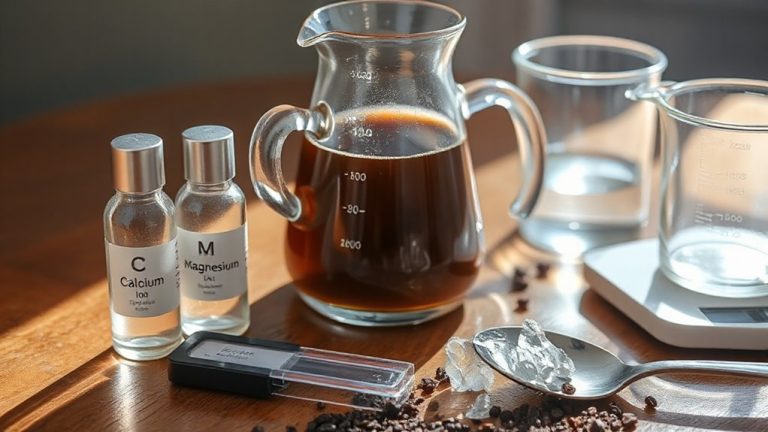
When it comes to extracting the best flavor from your coffee grounds, magnesium in water plays a key role you can’t afford to overlook. This mineral excels at pulling out bright, complex notes-especially in light-roast beans-giving you richer flavor enhancement with every sip. Unlike overly soft or distilled water, which can leave coffee tasting flat, water with balanced magnesium boosts clarity and acidity in a way that feels lively, not harsh. That’s due in part to mineral synergy: magnesium works alongside other beneficial ions like sodium and potassium to stabilize extraction. Brewers like the AeroPress or pour-over make this effect especially noticeable. But don’t overdo it-too much magnesium can create bitterness. Aim for 10–30 ppm in your water, using blended mineral packets or test strips to stay in range. It’s a small tweak with real payoff in taste.
Calcium and Scale: What It Costs You Over Time
While magnesium boosts flavor, calcium in your tap water can slowly undermine both taste and equipment. Over time, calcium builds up as scale inside your coffee maker, reducing heat transfer and clogging water pathways. This leads to higher maintenance frequency and a clear economic impact. You’ll face slower brew times, inconsistent extraction, and shortened appliance life-especially in espresso machines and drip brewers with heating elements. Using a Nespresso descaler helps maintain optimal performance and extends the lifespan of your machine.
| Issue | Result |
|---|---|
| Scale buildup | Reduced efficiency |
| Increased maintenance frequency | More downtime |
| Energy inefficiency | Higher bills |
| Component wear | Costly repairs |
| Economic impact | Replacement costs |
How to Test Your Tap Water for Metals at Home
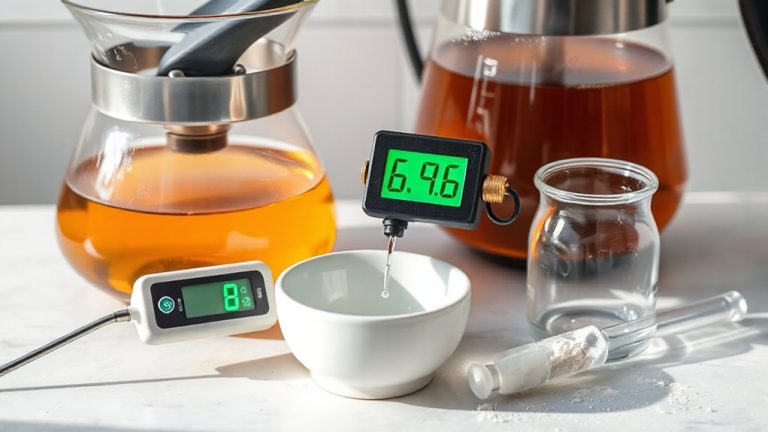
How clean is your tap water, really? If you’re brewing coffee daily, trace metals like iron, copper, or lead could be affecting both taste and your machine’s lifespan. The good news? DIY testing is easier than ever. Home kits from brands like Safe Home or First Alert let you check for common metals in under 10 minutes. You just collect a water sample and add reagents or dip test strips. Most kits test for lead, iron, copper, and sometimes nickel or chromium. They’re affordable-usually $20–$40-and give quick results. While not as precise as lab tests, they’re reliable enough for regular monitoring. Just follow the instructions carefully, use cold water from your kitchen tap, and test every few months. DIY testing with home kits helps catch issues early, so you can act before metals harm your coffee or health.
Best Water Filters for Coffee and Machines
You’ve tested your tap water and found traces of metals-now it’s time to take action. A good water filter improves your coffee’s taste and protects your machine. For most home brewers, reverse osmosis (RO) systems offer the highest filter efficiency, removing up to 98% of metals like iron and copper. However, they’re pricier and require regular membrane checks. Simpler options like Brita or Tico Coffee’s calcium-selective filters balance mineral retention and filter efficiency, ideal for espresso machines needing some hardness. Consider your water’s initial mineral content when choosing. Maintenance frequency varies: pitcher filters need changing every 40 gallons, while under-sink RO systems require servicing every 6–12 months. Neglecting this reduces effectiveness and risks bacterial growth. If you use a pod or super-automatic machine, frequent descaling is still needed, even with filtered water. Match the filter to your usage and machine type for best results.
On a final note
Your tap water’s trace metals quietly shape your coffee’s taste and machine health. Iron adds rustiness, copper throws off balance, while magnesium boosts flavor. Calcium builds scale, hurting equipment over time. Test water with simple kits, then choose filters like TDS meters or pitcher systems-Brita or ZeroWater-for better results. For consistent quality, consider a dedicated filtration system such as BWT or Peak Water. Clean water means better coffee and longer-lasting gear-worth the small effort.