Educating Baristas About How Pulped Natural Responds Differently to Light Roasting Profiles
You’ll need to adjust your light roast approach for pulped natural beans since they’re denser and hold more mucilage, boosting sweetness and body. Use a moderate charge temperature (385–400°F) and steady ramp rate to avoid baking. Prioritize airflow early to prevent moisture buildup. Keep drop temps under 205°C and development time to 6–8% for balanced brightness. With the right profile, you’ll highlight caramel and stone fruit notes without losing clarity-especially in Brazilian or Minas Gerais lots. Tweaking your roast curve this way opens up more nuanced espresso and filter options.
Notable Insights
- Pulped natural coffees retain mucilage, increasing sweetness and body compared to washed beans in light roasts.
- Higher bean density requires slower, controlled heat application to avoid internal roasting stress.
- Moderate charge temperatures (385–400°F) help manage heat transfer and prevent baked flavors.
- Early and steady airflow is critical to avoid steaming and ensure even, bright roast development.
- Target 195–203°C with 6–8% development time to balance sweetness, body, and acidity in the cup.
What Makes Pulped Natural Different in Light Roast?
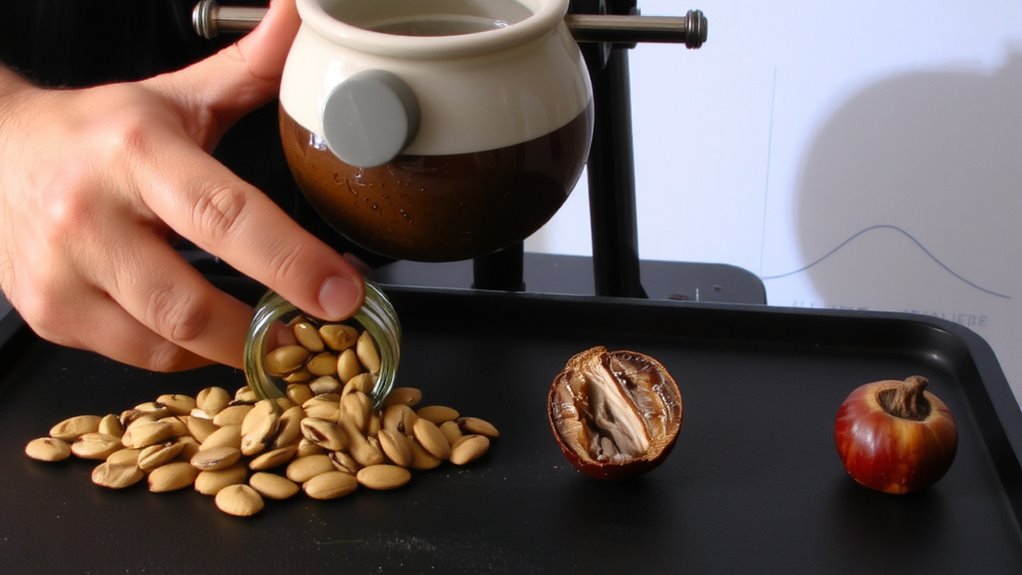
Processing method matters-especially when you’re roasting light. With pulped natural, you skip the washing step but keep some mucilage, which boosts the fermentation impact during drying. That means more structured sweetness and body compared to washed lots, but less funk than naturals. You’ll notice this most in bright, acidic roasts where origin influence stays clear-think Brazilian pulped naturals showing chocolate and nut tones without overpowering ferment. Since there’s less microbial activity than in full naturals, you get consistent results across batches, which helps when dialing in on espresso. Unlike washed coffees, pulped naturals often need slightly adjusted heat input early in roast to avoid baking. And because origin influence plays a big role, a Colombian pulped natural might express more red fruit, while Ethiopian ones remain floral-leaning. Know your source, track your fermentation impact, and you’ll lock in cleaner, more expressive light roasts.
How Mucilage Fuels Sweetness in Light Roasting
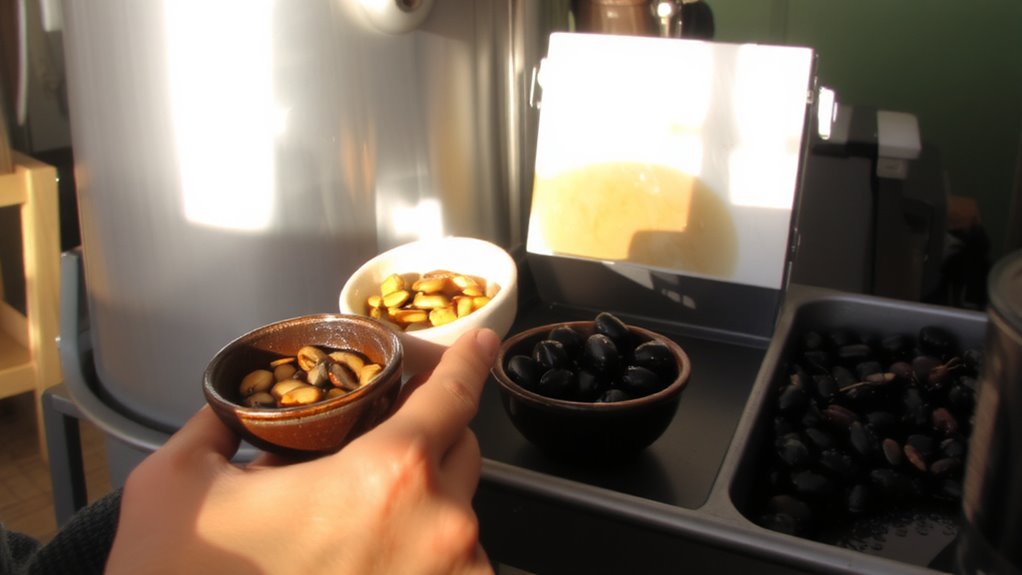
While light roasting preserves delicate flavors, it’s the mucilage left on pulped natural beans that really amps up the sweetness. You get more mucilage retention with this process compared to washed or honey coffees, and that sticky layer is packed with sugars. During roasting, those sugars go through sugar caramelization, boosting flavor complexity without tipping into bitterness. Since you’re aiming for a light roast, you’ll want to keep an eye on heat application-too aggressive and you risk fermenty notes or uneven development. But apply heat steadily, and the mucilage helps create a smoother, sweeter cup, often with hints of stone fruit or caramel. You’ll notice this especially on single-origin beans from Brazil or Minas Gerais, where pulped natural is common. Understanding mucilage retention helps you adjust your roast or brew to highlight sweetness without over-developing. It’s not just process-it’s practical impact on flavor.
Roast Ramps: Adjusting for Pulped Natural Density
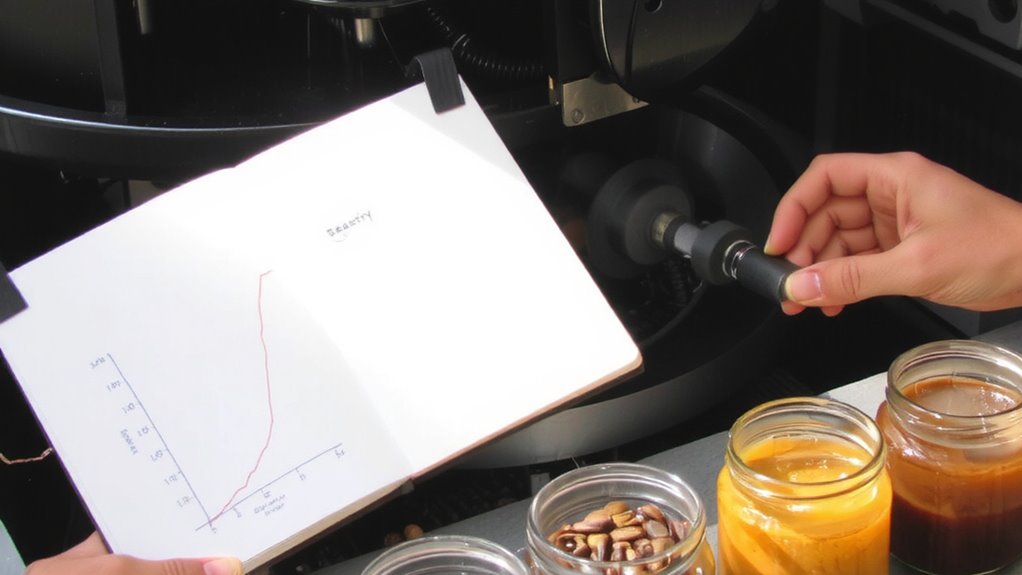
That denser bean structure in pulped natural coffees changes how heat moves during roasting, and you’ll need to adjust your ramp rates accordingly. Higher bean density means heat penetrates slower, so pushing too hard early can create internal stress and uneven development. You’ll want a steady, controlled ramp-avoid aggressive temperature spikes. Roast conductivity is lower in these beans, so energy transfer takes longer. Start with a moderate charge temperature, around 385–400°F, depending on your roaster. Build heat steadily through the first crack, monitoring time between turning point and first crack as a guide. If your ramp is too fast, you risk scorching; too slow, and you lose vibrancy. Unlike washed beans, pulped naturals need balanced momentum. Adjust airflow slightly higher to manage surface moisture, but don’t overdo it. Consistent bean density allows predictability, but always test small batches first.
Prevent Baked Flavors in Light-Roasted Pulped Naturals
If you’re not careful with heat application, light-roasted pulped naturals can easily develop flat, bready notes that dull their natural sweetness. To prevent this, you need precise fermentation control and smart airflow management from the start. Pulped naturals retain some mucilage, making them more prone to baked flavors if airflow lags during roasting. Keep your drum speed steady and increase airflow early-especially in the first crack phase. Models like the Probat BRZ or Loring S15 respond well when you adjust airflow proactively. Don’t rely on high heat to push development; instead, use moderate charge temperatures and let convection do the work. Poor airflow management traps moisture, creating a steamed, baked result. With clean fermentation control on the farm and tuned airflow in the roaster, you preserve clarity and avoid dullness. It’s not just about profile-it’s about matching the bean’s structure with the right roasting conditions.
Balance Brightness and Body: Time vs. Temperature
How do you get a pulped natural to shine with bright, vibrant acidity without losing its signature syrupy body? You balance time and temperature carefully. Roast too slow, and you risk dull, baked flavors; too fast, and you’ll flash out the sweetness. Aim for a moderate ramp rate-18–20°C per minute-through mid-roast to preserve body while developing acidity. Hold back on drop temperature; going above 205°C can overwhelm the delicate floral restraint these beans offer. Instead, target a roast end between 195–203°C to highlight malt complexity without tipping into sharpness. Shorter development times (6–8%) help lock in brightness, but don’t shorten so much that the body collapses. You’re not chasing extreme acidity-you’re balancing structure. Think of it like tuning an engine: small shifts in time or heat change the entire performance. Adjust based on bean density and moisture, not just time.
Best Brew Settings for Light-Roasted Pulped Natural
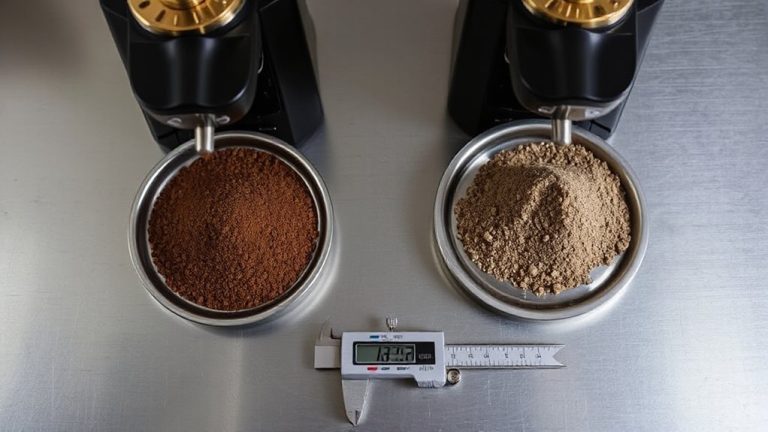
A well-tuned grinder and precise water control are your best tools when brewing light-roasted pulped natural coffees. These beans need clarity and balance, so start with a medium-fine grind-like table salt-for drip or pour-over. Grind consistency is essential; uneven particles lead to over- and under-extraction, muddying the bright fruit tones these roasts are known for. Use water between 195°F and 205°F, and guarantee your water quality isn’t too soft or hard-aim for balanced mineral content to support sweetness and avoid flatness. Try a 1:15 to 1:16 brew ratio (coffee to water) with a 2:30 to 3:00 minute brew time. For pulped naturals, a V60 highlights acidity, while a Kalita Wave enhances body. Adjust in small steps-these coffees respond sharply to changes. For optimal results, consider using one of the best pour-over coffee makers to maintain control over each phase of extraction.
On a final note
You’ll get the best from pulped natural coffees in light roasts by adjusting for their denser bean structure and sticky mucilage layer. Use a slightly slower ramp to avoid baking, and aim for even development. This highlights sweetness without losing brightness. Pair with a medium-fine grind and balanced brew ratio-like 1:16-on a reliable brewer such as the Fellow Stagg X. It keeps flavors clean and expressive.