The Impact of Machine Vibration on Grinder Placement
Keep your grinder away from vibrating machines like espresso units or dishwashers-those shakes can misalign burrs by up to 0.05mm and ruin your shot. Place it on solid surfaces like concrete or thick wood, not hollow counters. Use Sorbothane or rubber pads to dampen vibrations. Separate it from blenders and loud gear to avoid sensor issues. Monitor for wobble weekly. A stable setup means consistent grinds and better espresso every time-there’s more to get right for peak performance.
Notable Insights
- Machine vibration disrupts burr alignment, leading to inconsistent grind size and poor espresso extraction.
- High-vibration zones amplify wear on grinder components through acoustic resonance and mechanical stress.
- Place grinders on solid surfaces like concrete or thick wood to minimize vibration transmission and ensure stability.
- Separate grinders from espresso machines and blenders to reduce electrical interference and sensor malfunctions.
- Use isolation pads made of Sorbothane or rubber to absorb vibrations and maintain dose accuracy.
Avoid High-Vibration Zones When Placing Grinders
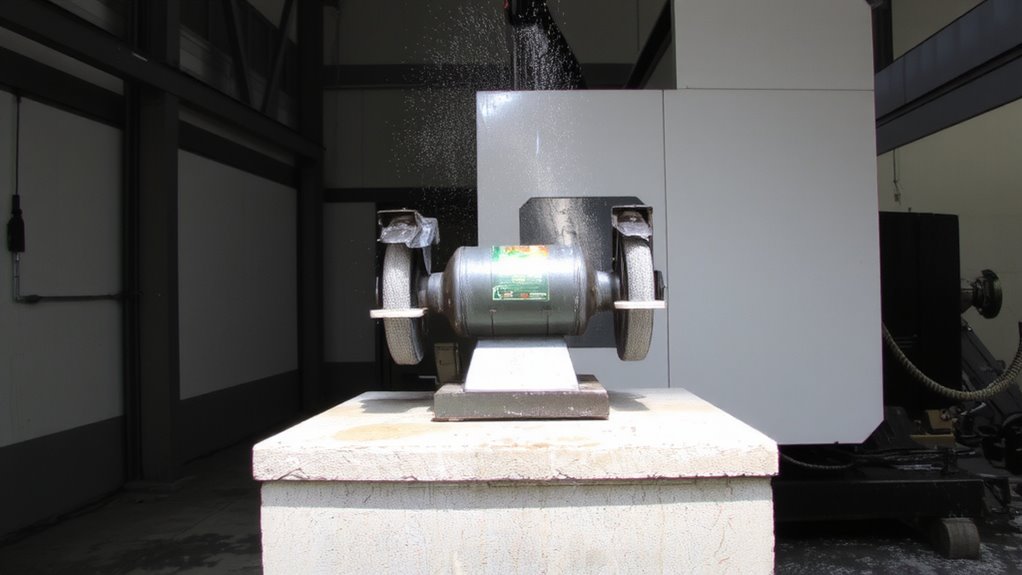
Vibration can throw off your grind consistency faster than you might think. When you place your grinder in a high-vibration zone-like near a busy espresso machine or on a shaky countertop-those subtle shakes travel into the burrs, disrupting uniform particle size. Over time, this leads to uneven extraction and flat-tasting espresso. Worse, constant shaking can trigger acoustic resonance, where the grinder’s internal parts amplify sound frequencies, increasing wear. It may even introduce harmonic distortion in sensitive digital grinders, skewing dose accuracy. You’re better off mounting your grinder on a solid, isolated surface away from foot traffic or heavy equipment. Concrete or thick wood slabs help absorb energy. Even a simple rubber mat won’t fix deep vibration issues. Choose stability over convenience-your shots will be cleaner, your machine will last longer, and your workflow stays predictable.
Separate Grinders From Noisy Equipment to Reduce Interference
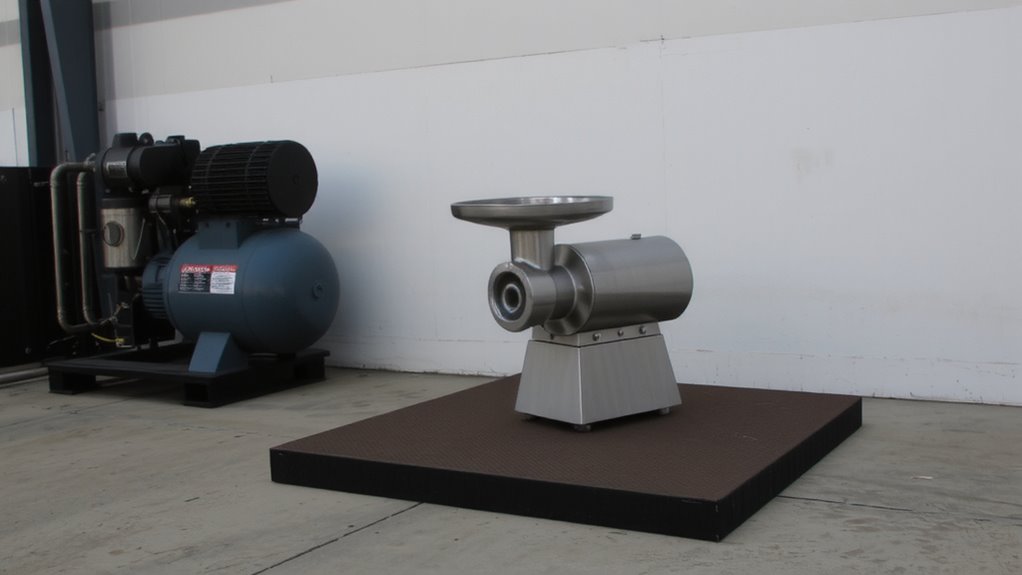
While sound itself doesn’t grind your beans, placing your grinder near loud equipment like espresso machines, blenders, or dishwashers can still cause issues-especially with digital models that rely on sensitive sensors and timers. Electrical interference from nearby motors may disrupt circuitry, leading to inconsistent dose timing. Acoustic resonance-sound waves vibrating at specific frequencies-can falsely trigger sensors, especially in compact, high-speed grinders. To avoid these problems, keep your grinder physically separated from noise-heavy devices. Investing in a high-quality mill grinder can also improve durability and performance in demanding environments.
| Equipment | Risk Level | Key Interference Type |
|---|---|---|
| Espresso Machine | High | Electrical interference |
| Blender | Medium | Acoustic resonance |
| Dishwasher | High | Electrical interference |
| Refrigerator | Low | Occasional resonance |
This simple layout adjustment improves reliability without costly upgrades. You’ll get more accurate grind times and better shot consistency, especially during busy service periods.
Choose Solid Mounting Surfaces for Stable Grinder Operation
Your grinder’s performance depends on a stable base-wobbly countertops or flimsy cabinetry can amplify internal vibrations, leading to inconsistent grinding and accelerated wear on motor components. For best results, secure it to a surface with solid surface stability, like a thick granite countertop or a sturdy workbench. Avoid mounting on hollow IKEA cabinets or thin shelves that flex under pressure. A rigid foundation maintains mounting integrity, keeping the grinder from walking or shifting during use. You’ll notice finer grind consistency, especially with high-speed burrs. If you’re using a powerful model like a Niche Zero or a 50/50, solid mounting isn’t optional-it’s essential. Check that bolts are tight and feet make full contact. Even small gaps reduce stability. Think long-term: a stable setup means fewer adjustments, less noise, and longer motor life. Prioritize structure over convenience.
Install Isolation Pads to Block Machine Vibration
Even with a solid mounting surface, some vibration will still transfer to your countertop or cabinet, especially when running high-torque grinders like the Niche Zero or the MK Conical. That’s where isolation pads come in. These pads provide surface dampening, reducing noise and protecting your setup. They won’t fix poor dynamic balancing, but they help manage residual shake. For best results, match pad material to your grinder weight and surface type.
| Pad Type | Best For |
|---|---|
| Sorbothane | High-end grinders, hard floors |
| Silicone | Budget setups, light vibration |
| Felt | Minimal dampening, easy cut |
| Rubber | Stability on smooth surfaces |
| Gel-filled | Maximum absorption, reposition often |
Place them firmly under each grinder foot. Replace pads if they harden or shift.
Set Up Real-Time Vibration Monitoring After Installation
After you’ve secured your grinder with isolation pads, it’s smart to check how much vibration still affects your setup. That’s where real-time vibration monitoring comes in. You’ll want to install compact sensors on the grinder’s base-brands like PCB Piezotronics or Digiducer offer reliable options. Just don’t skip sensor calibration; an uncalibrated sensor gives misleading data and weakens your readings. Once set, the system streams live vibration levels to software on your phone or tablet. From there, data analysis helps you spot abnormal spikes or patterns over time. This isn’t overkill-consistent monitoring reveals subtle changes before they cause issues. It works especially well on high-use commercial grinders where stability matters. You’ll know instantly if the machine shifts or mounts loosen. Think of it as insurance: low cost, high insight. With calibrated sensors and clear data analysis, you’re not guessing-you’re responding.
Reduce Wear With Proactive Vibration Management
Because unchecked vibration accelerates wear on grinder components, managing it early keeps your machine running smoothly and extends its lifespan. You’re not just preventing noise-proactive vibration control fights material fatigue, which weakens metal parts over time and leads to sudden failures. Regularly check mounting bolts and feet, since loose mounts let vibration build, speeding up damage. Over time, even small shifts cause alignment drift, throwing off grinder burrs and increasing uneven wear. Use anti-vibration pads or mounts designed for grinding equipment-they’re cheap and cut transmission by up to 50%. For heavier grinders, consider inertia bases to dampen movement. Monitoring vibration weekly lets you catch issues before they escalate. Don’t wait for cracks or wobble-by then, performance is already degraded. Staying ahead means fewer breakdowns, better grind consistency, and longer service intervals.
Optimize Grinder Placement to Maintain Precision and Safety
You’ve taken steps to minimize vibration at the source, but where you place the grinder matters just as much for long-term performance. Proper surface leveling guarantees stable operation and reduces unwanted movement during grinding. If the surface isn’t level, you’ll risk inconsistent grind output and increased wear on internal parts. Always check grinder alignment-especially with dos terraceless models-so the portafilter fits smoothly and grounds drop evenly. Misalignment can cause spills, static buildup, and dosing errors. Place the grinder on a solid, flat surface away from other vibrating equipment like espresso machines. Rubber feet help, but they can’t fix poor placement. For best results, use a small spirit level during setup. Mounting brackets or anti-vibration pads can also improve stability. Position matters-get it right, and your shots will be more consistent, safer, and easier to dial in.
On a final note
You’ll get better results and extend your grinder’s life by placing it away from vibrating or noisy equipment. Use a solid surface and add isolation pads if needed. Real-time vibration monitoring helps catch issues early. Proper placement isn’t just about space-it directly affects grind consistency and machine safety. Skip the shaky cart or shared bench; opt for stability. Small tweaks now prevent wear and costly fixes later.