Adjusting Grind Size to Compensate for Bean Age and Maintain Extraction Balance
You should grind older beans finer to maintain extraction as they lose moisture and CO₂ over time. Stale beans become brittle, producing more fines and extracting unevenly. For beans 6–14 days post-roast, go 1 notch finer; increase by a notch every week after. This helps compensate for lost aroma and sweetness. Use a quality burr grinder like a Baratza Encore for consistency. Adjustments help, but can’t stop flavor decline. Your next brew could reveal even better ways to keep flavor steady.
Notable Insights
- Older beans lose CO₂ and moisture, becoming more brittle and grinding finer, which increases extraction risk.
- Staling reduces solubility, so progressively finer grinds help maintain extraction as beans age.
- Adjust grind 1–4 notches finer between 6–28+ days post-roast to compensate for declining bean freshness.
- Fine-tune grind size to counteract lost aromatic complexity and maintain balanced flavor in aged beans.
- Use consistent, high-quality burr grinders to ensure precise adjustments and uniform particle distribution over time.
Why Coffee Bean Age Affects Extraction
Your coffee’s age plays a key role in how it extracts during brewing, and understanding that relationship helps you adjust for better results. As beans age, they undergo chemical changes that alter solubility, making extraction less efficient over time. Freshly roasted beans release CO₂, a process called gas loss, which affects how water flows through the grounds and dissolves flavor compounds. When gas loss is high, bubbles can disrupt water contact, leading to uneven extraction. After about 4–7 days post-roast, gas loss slows, allowing more consistent extraction. But as beans get older-beyond 3–4 weeks-chemical changes reduce aromatic complexity and sweetness. You’ll notice flat, dull flavors even with proper grind and brew settings. To compensate, you’ll need to tweak your grind size, but that’s the next step. For now, recognize that age isn’t just about freshness-it directly changes how your coffee responds in the brewer.
How Staling Changes Grind Behavior
As beans lose freshness, their physical and chemical properties shift in ways that directly impact how grind size affects extraction. You’ll notice stale beans grind more evenly and produce more fines due to increased brittleness from moisture loss. This happens because, over time, the oxidation rate accelerates, breaking down oils and degrading cell structure. With less internal resistance, the burrs slice through the bean more easily, changing particle distribution even if you don’t adjust the grinder. As a result, a setting that pulled well yesterday might over-extract today. You’ll need to go coarser to compensate. Moisture loss also makes beans lighter and more porous, affecting how water flows during brewing. Since these changes alter extraction consistency, it’s practical to tweak your grind size slightly every few days post-roast-especially with lighter roasts, which stale slower than dark.
Diagnose Freshness: Signs Your Beans Are Aging
How can you tell when your beans are losing their edge? Start by checking for aroma loss-fresh beans should hit you with a rich, immediate scent when opened. If that punch is gone, the coffee’s likely fading. You’ll also notice oxidation effects over time, especially if beans are in a clear container near light or air. These degrade volatile compounds, dulling the flavor long before mold or visible changes appear. Taste a brew: flat, stale, or one-note results often mean the beans aren’t fresh, even if roasted within the past month. Pre-ground coffee ages faster, so always grind just before brewing. Dark roasts oxidize quicker than light roasts due to porous structure. If you’re chasing clarity and brightness, freshness matters more than most realize. Check roast dates, store in opaque, airtight containers, and avoid bulk buying unless you’re certain you’ll use them fast.
Grind Finer for Older Beans: The Sweet Spot Formula
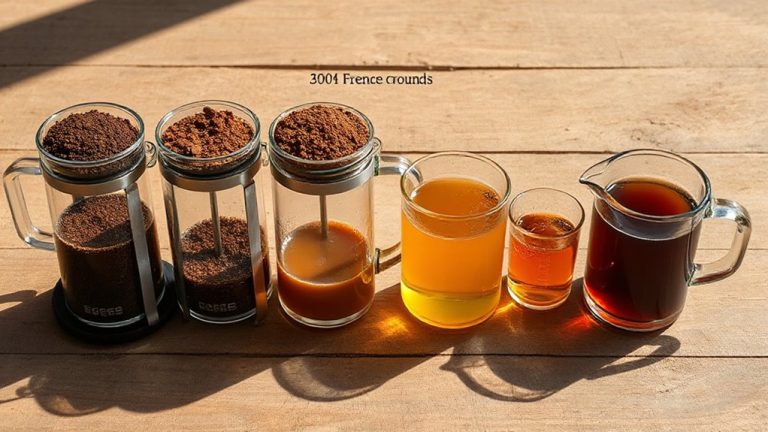
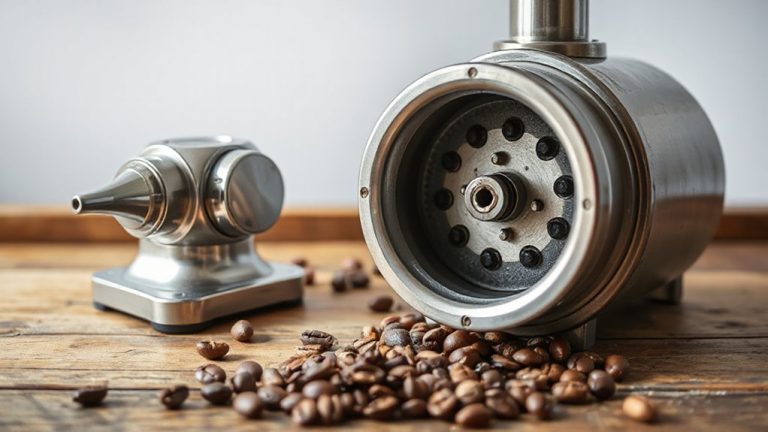
Why does stale coffee taste flat, even when brewed right? Because older beans suffer from flavor decay and moisture loss, reducing their ability to extract evenly. As gases escape and oils degrade, you lose brightness and sweetness. But adjusting your grind finer can help. A tighter particle size increases surface area, pulling out more compounds during brewing and counteracting staleness. A high-quality burr grinder ensures consistent particle distribution, which is critical for achieving balanced extraction as beans age.
Here’s a quick reference for adjusting grind:
| Days Past Roast | Suggested Adjustment |
|---|---|
| 0–5 (fresh) | As directed |
| 6–14 | 1 notch finer |
| 15–21 | 2 notches finer |
| 22–28 | 3 notches finer |
| 29+ | 4 notches, or reevaluate beans |
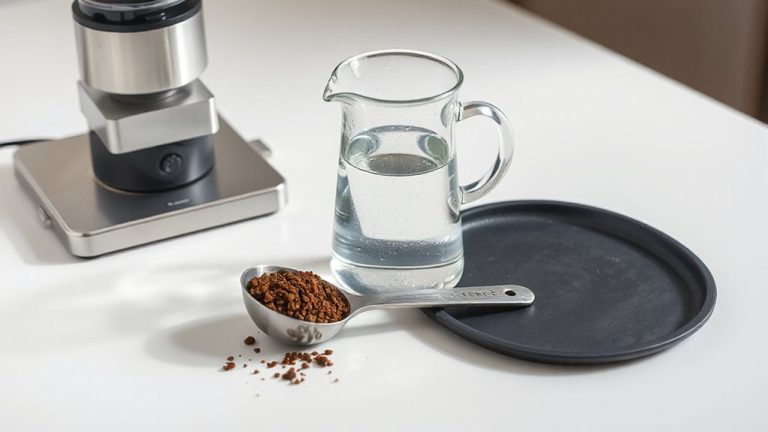
This isn’t a fix forever-eventually, flavor decay wins. But with precise grinding, you can extend usability and preserve balance. Use a quality burr grinder like the Baratza Encore or 1ZPresso Q2 to make micro-adjustments count.
Adjusting for Roast and Dose: Fine-Tuning the Balance
What if your coffee’s roast level is throwing off your brew, no matter how right the grind looks? Darker roasts need a coarser grind to avoid over-extraction, while lighter roasts often extract better when ground finer. Your dose also plays a role-increasing it without adjusting grind or brew temperature can slow shot timing and lead to bitterness. Lower the dose slightly, and you might need a finer grind to maintain proper flow. But don’t just tweak grind; consider brew temperature too. Dropping it 5–10°F for dark roasts helps prevent harshness. For light roasts, try 200–205°F to boost extraction. Always adjust one variable at a time. Track shot timing-aim for 25–30 seconds for espresso-and use that as your baseline for testing changes. It’s not about perfection on the first try; it’s about consistent, measurable tweaks. A high-quality espresso grinder ensures consistent particle size, which is critical for dialing in the right extraction when adjusting for roast and dose.
Pro Tips to Extend Usable Life Without Sacrificing Flavor
A well-stored bag of coffee can stay fresh longer if you know how to handle it. Use airtight containers made of opaque material to limit light and oxygen exposure-glass jars with rubber seals or stainless steel canisters work well. Store beans at room temperature, away from heat and moisture, not in the fridge or freezer, unless you’re using long-term freezing with vacuum sealing. Good storage methods slow oxidation, which degrades aroma and oils. For best flavor preservation, buy whole beans and grind only what you need. Dark roasts oxidize faster than light roasts, so consume them sooner. If beans are a few weeks old, slightly fine-tuning your grind size can help compensate for lost CO₂ and maintain extraction balance. Just avoid over-fining, which leads to bitterness. Proper storage and smart grind adjustments keep older beans drinkable-without sacrificing clarity or sweetness. Airtight coffee bean storage containers are essential for preserving freshness and preventing stale flavors.
On a final note
You’ll get more consistent extractions by adjusting grind size as beans age. Older beans lose gas and extract slower, so grinding finer helps maintain balance. Start with a slightly finer setting every few days past roast date, then tweak based on taste. A burr grinder like the Baratza Encore makes this easy. Just remember: too fine leads to bitterness, too coarse to weakness. Match adjustments to your roast and dose, and always taste test.