How to Pull a Perfect Espresso Shot Using a Lever-Style Machine
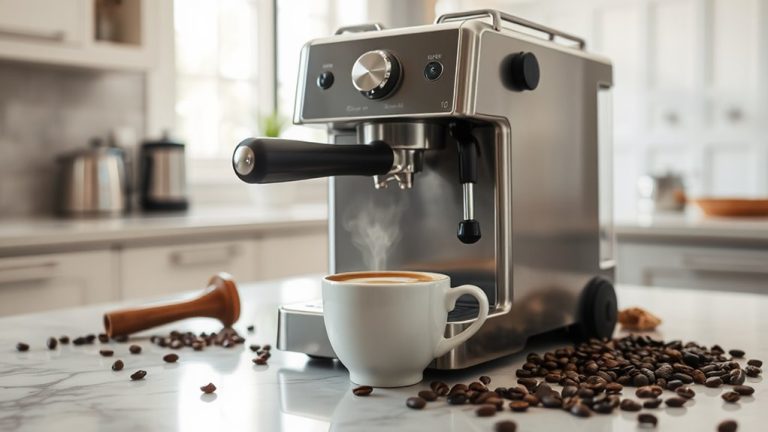
Use 18–20g of fresh coffee, ground to suit your lever machine’s sweet spot. Tamp evenly with 30 pounds of pressure-keep your wrist locked. Pre-infuse for 5–10 seconds by slowly pulling the lever until water just saturates the puck. Then steadily complete the pull over 15–25 seconds. Stop when the shot blondes. Consistency comes from practice, but small tweaks can dramatically improve flavor clarity and balance. Mastering the motion reveals how small changes affect every shot.
Notable Insights
- Use 18–20 grams of freshly roasted coffee and adjust grind size to control flow rate for optimal extraction.
- Tamp evenly with 30 pounds of pressure using a flat or convex tamper to prevent channeling.
- Apply pre-infusion by slowly pulling the lever to saturate the puck for 5–10 seconds until it glistens.
- Pull the lever steadily over 15–25 seconds, maintaining consistent hand pressure for balanced flavor.
- End the shot at 20–25 seconds or when the stream begins to blond to avoid bitterness.
Choose the Right Dose and Grind for Your Lever Machine
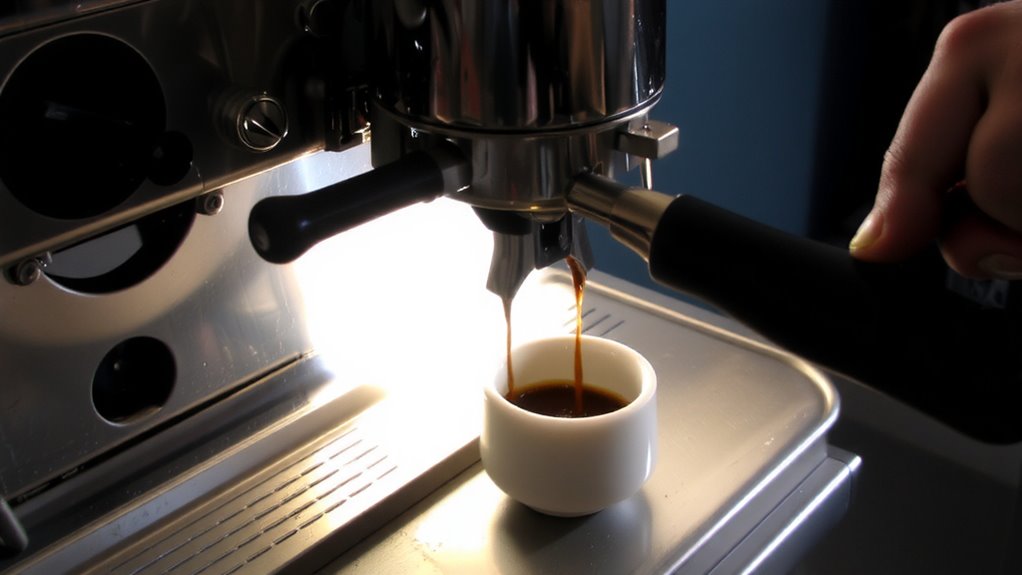
Most lever machines work best with a dose between 18 and 20 grams for a double shot, though the ideal amount can depend on your portafilter size and the model you’re using-some classic machines like the Flair Pro 2 or the Bezzera Strega have different basket requirements. You’ll want to adjust your grind based on how your shot flows; too fast and it’s under-extracted, too slow and it risks bitterness. Fresh beans matter-espresso freshness directly impacts flavor, so use beans within 2–4 weeks of roasting. Pair that with proper water temperature, ideally between 195°F and 205°F, to avoid scalding or under-extraction. Most quality lever machines maintain consistent heat, but if yours doesn’t, consider a pre-infusion warm-up. Grind size and dose work together: a finer grind slows flow, a coarser one speeds it up. Test in small increments, track results, and tweak accordingly for balanced, sweet, and clean shots. A consistent grind is essential, so invest in one of the best coffee and espresso grinders to ensure uniform particle size for optimal extraction.
Tamp Evenly for a Uniform Puck
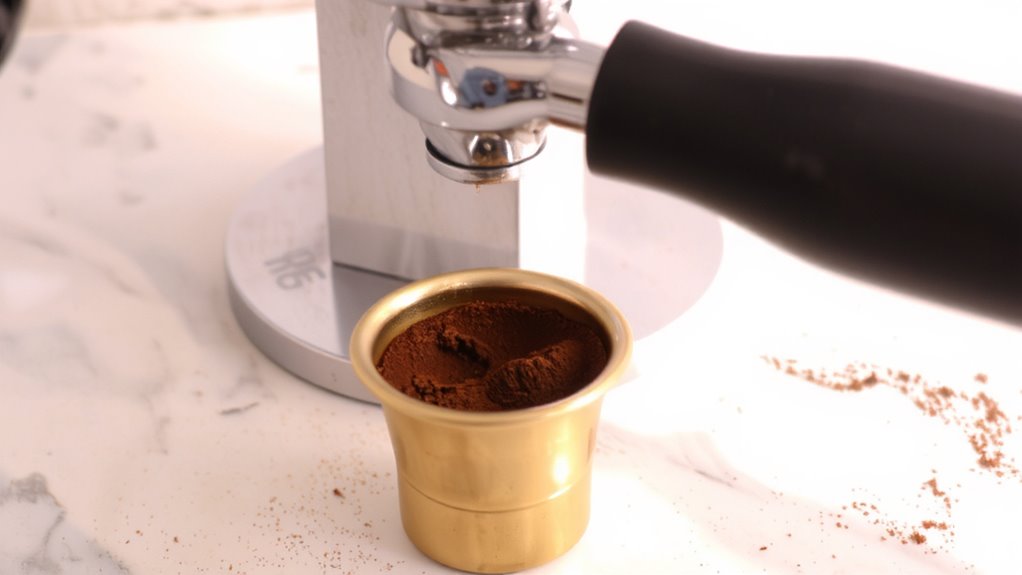
A solid tamp sets the stage for an even extraction, so don’t rush it. Apply about 30 pounds of pressure evenly across the puck, keeping your wrist locked and pressing straight down. An uneven tamp leads to channeling, where water follows the path of least resistance, hurting taste. Use a quality tamper that fits snugly in the portafilter-flat or slightly convex bases work best. Check the puck after tamping; if it’s tilted or has gaps, re-dose and try again. Consistent tamping helps when dialing pressure on lever machines, where small changes have big effects. It also makes monitoring flow easier during the pull, letting you spot issues fast. Twisting the tamper or tapping the sides introduces variables you don’t need. Stick to a repeatable motion, clean the basket first, and maintain the same angle every time. Uniformity here improves shot stability and flavor balance. For reliable performance, consider one of the top-rated options in the best coffee tamper category.
Pre-Infuse to Lock in Balanced Extraction
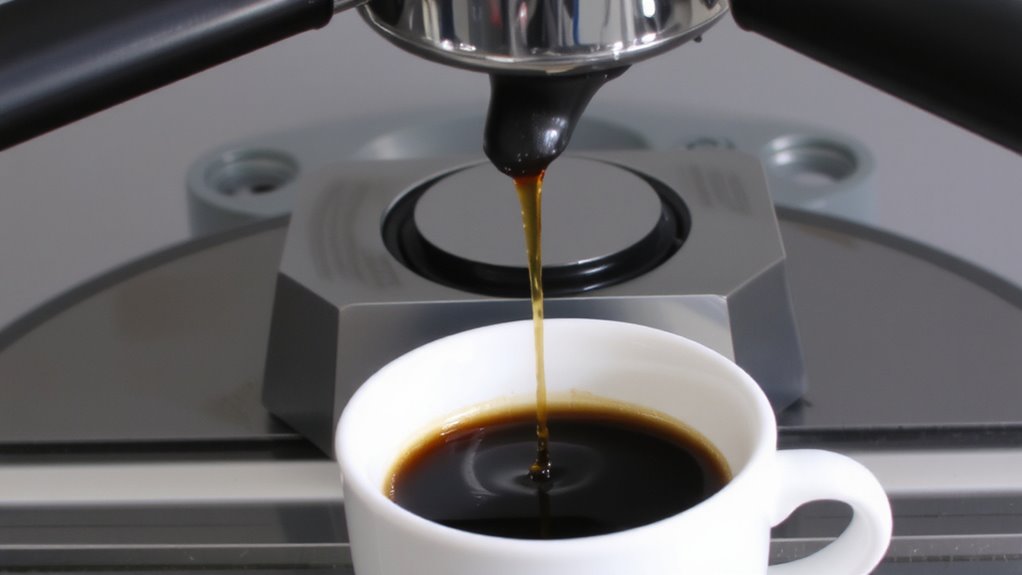
Once the puck is properly tamped, easing into the extraction with a pre-infusion phase helps evenly saturate the coffee bed before full pressure hits. This slow start minimizes channeling and promotes a more balanced shot. With lever machines, you control this phase directly-either by partially pulling the lever or using a spring-assisted model with built-in flow control. Machines like the Bezzera Unica or Quick Mill Silvano let you manually manage water entry, giving you precision over the pre-infusion length. It’s a simple form of pressure profiling that doesn’t require electronics. Aim for 5–10 seconds of low-pressure soak, just until the surface of the puck glistens uniformly. Too long, and you risk over-extraction early on; too short, and you lose the benefit. Proper flow control at this stage sets the foundation-no need for complex gear, just steady hands and attention to timing.
Apply Steady Lever Pressure
Consistently, the key to a balanced espresso shot on a manual lever machine lies in how you pull the lever. After pre-infusion, you slowly draw the lever down, engaging the lever mechanics that directly control water flow. Unlike spring- or pump-driven systems, your hand provides the force, so pressure consistency is critical. Too fast, and you risk channeling or bitterness; too slow, and the extraction falls flat. Aim for a smooth, even pull over 15–25 seconds, depending on your setup. Machines like the Flair Neo or La Pavoni Europiccola demand this control, rewarding skill with clarity and sweetness. Your arm strength and timing matter, but rhythm matters more. Practice builds muscle memory, letting you maintain steady resistance from start to mid-pull. There’s no assist here-just you, the lever, and the shot you’re shaping. Stay focused, stay smooth.
Stop the Shot at the Sweet Spot
When should you cut the shot to land in that ideal, balanced zone? It’s all about shot timing and watching for the flavor peak. With a lever machine, you’re in control-don’t just let it run. Aim for 20 to 25 seconds from start to finish, depending on your setup and beans. Watch the stream: when it starts thinning and blonding, that’s your cue. Past that point, you’ll pull out bitterness and weaken body. Freshly roasted beans often hit their flavor peak right around 22 seconds with steady pressure. If you’re using a La Marzocco Leva or a Flair Pro 2, experiment within this window. Too short, and the shot tastes sour; too long, it becomes harsh. Trust your taste, but use timing as a repeatable guide. The sweet spot isn’t random-it’s where balance, sweetness, and intensity align. Cut it there, every time.
Fix Common Lever Espresso Problems
Though lever machines deliver exceptional control, they can introduce issues if technique or setup slips. If you notice leaks during extraction, check your group gasket and piston O-ring-bad seals disrupt pressure and hurt leak prevention. Tighten the portafilter fully, but don’t over-tighten, as that can damage parts. Inconsistent pulls often trace back to poor machine calibration; guarantee your spring tension (in spring piston models) or weight (in manual levers) delivers steady 9 bars. Pressure gauge models, like the Bezzera Strega, help monitor this in real time. If shots spray or channel, verify that your grind size, dose, and distribution are even. Pre-infuse smoothly-yanking the lever too fast causes sudden spikes. Regular maintenance, including backflushing and checking for scale, keeps performance stable. Small tweaks in setup make a big difference in results.
On a final note
You’ve got the dose and grind dialed, tamped evenly, and pre-infused right. Now, pull the lever steadily-don’t rush it-and stop the shot at 25–30 seconds for best balance. If it’s too sour, grind finer; too bitter, go coarser. Machines like the Flair or Leva need practice, but consistency trumps perfection. Track your settings, tweak one thing at a time, and taste objectively. Good espresso comes from patience, not luck.