A Comprehensive Guide to Water Filtration Methods and Their Impact on Brewed Coffee
Your coffee’s flavor depends on water quality, and not all filters work the same. Tap water with chlorine or imbalanced minerals dulls taste. Carbon filters like Brita remove chlorine but may strip beneficial minerals. Reverse osmosis gives purity but needs re-mineralization for better flavor. For consistency, systems like TAPP 2 or AquaTru balance clean water with ideal mineral content, improving extraction. Hard water? You’ll need softening to avoid bitterness and machine scale. Get the mineral balance right-aim for 100–150 ppm TDS-and your brew will be cleaner, brighter, more repeatable every time. The right filter makes all the difference, and knowing which one fits your brew method changes how you experience coffee at home.
Notable Insights
- Coffee’s flavor relies heavily on water quality, as it makes up 98% of the brew and carries dissolved solids that affect extraction.
- Chlorine and sediment in tap water degrade taste, while filtered water removes impurities and preserves essential minerals for balanced flavor.
- Activated carbon filters improve taste by reducing chlorine, but may not retain optimal mineral levels for full coffee expression.
- Reverse osmosis produces ultra-pure water but requires re-mineralization to prevent flat, under-extracted coffee.
- Ideal brewing water has 100–150 ppm TDS with balanced calcium and magnesium to ensure consistent, flavorful extraction across all brewing methods.
Why Your Coffee Depends on Water Filtration
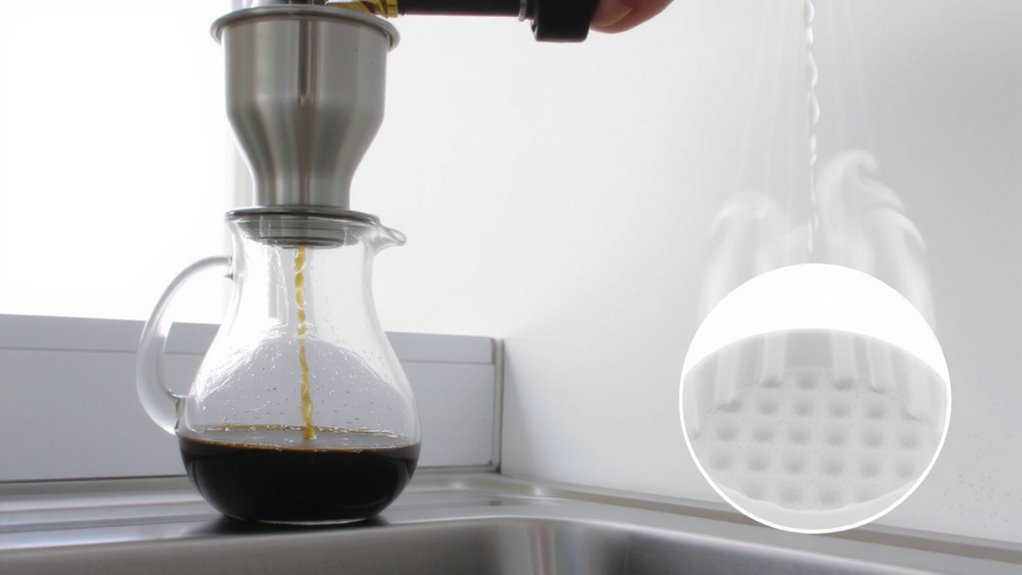
While you might focus on bean quality or grind size, the water you brew with plays an equally critical role in how your coffee tastes. Poor water purity introduces off-flavors and impurities that mask subtle notes in your brew. Chlorine, minerals, and sediment from tap water can dull your coffee’s profile, limiting taste enhancement. Using filtered water removes unwanted compounds while preserving balanced minerals needed for proper extraction. Standard pitcher filters, like Brita or Pur, offer an affordable start but may not remove all contaminants. For better consistency, consider faucet-mounted or under-sink filters with activated carbon and ion exchange. If your tap water is heavily chlorinated or hard, basic filtration dramatically improves flavor clarity and cup cleanliness. You don’t need lab-grade purity-just clean, balanced water. Reliable filtration guarantees every bean’s character comes through, boosting taste enhancement without extra effort or gear. For optimal results, choose the best water for coffee machines based on your brewing setup and local water conditions.
How Water Filtration Shapes Extraction and Flavor
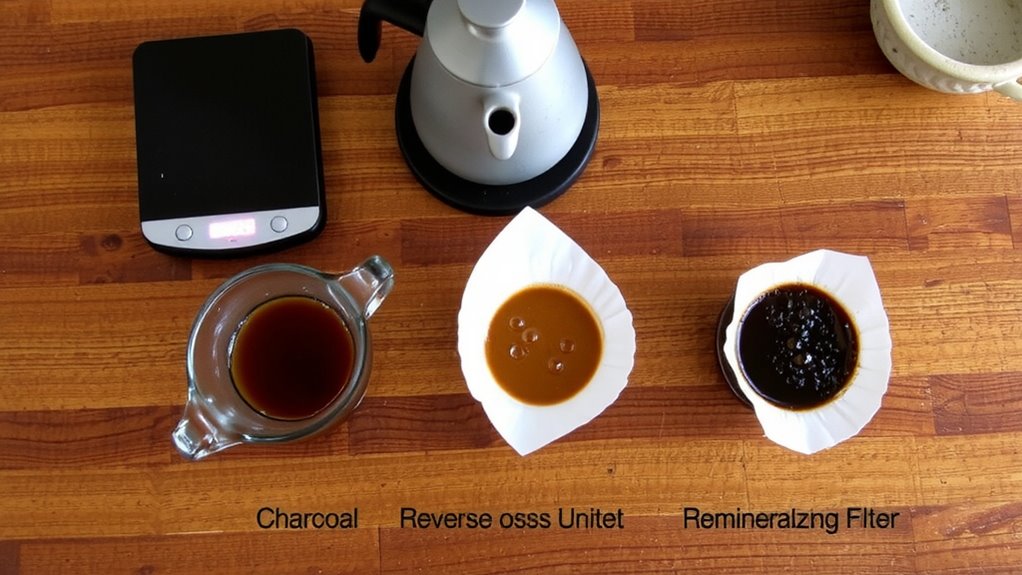
Since your coffee is about 98% water, the quality of that water directly affects how well flavors extract from the grounds. Poor mineral balance can lead to under-extraction or bitterness-too few minerals and your coffee tastes flat; too many and it becomes harsh. Filtered water with balanced minerals, like calcium and magnesium, supports ideal extraction. pH levels also matter; neutral to slightly acidic water (around 6.5–7.5) preserves bright, clean notes without muting sweetness. Tap water often skews too alkaline or acidic, distorting flavor. A basic activated carbon filter won’t adjust mineral content, so if your water’s too soft or hard, consider a re-mineralizing filter. Consistency starts with water you can rely on-matching the mineral balance and pH levels recommended by specialty coffee standards gives you repeatable, flavorful results every time. For optimal brewing, many experts recommend using expert picks tailored to enhance coffee flavor.
How Each Filter Changes Your Water (and Coffee)
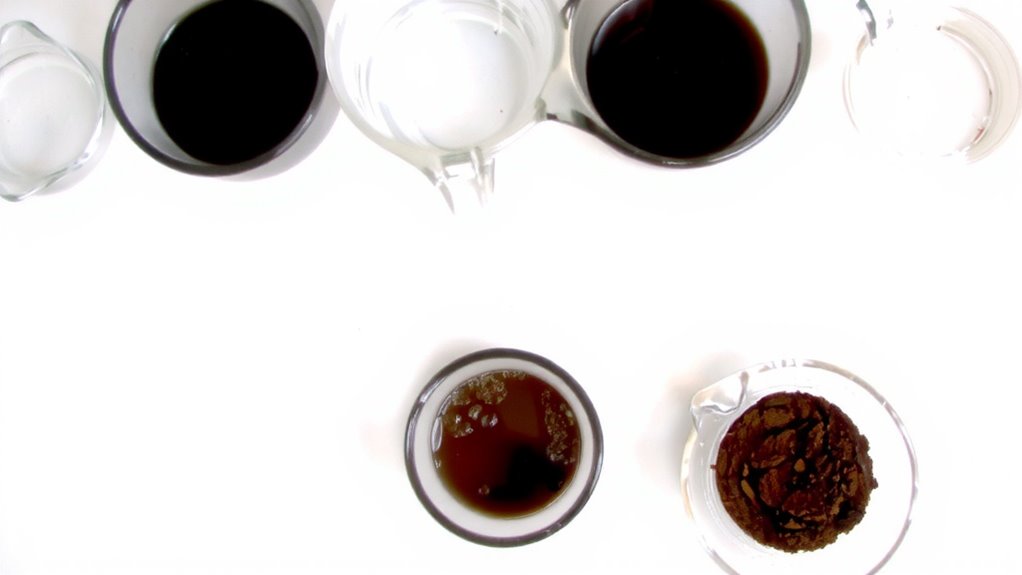
What if your coffee tasted better just by changing how you filter your water? Your filter doesn’t just remove impurities-it reshapes mineral balance, directly affecting extraction and your brew’s taste profile.
| Filter Type | Mineral Balance Effect | Taste Profile Change |
|---|---|---|
| Activated Carbon | Slight reduction | Cleaner, truer bean flavor |
| Reverse Osmosis | Removes almost all | Flat, needs re-mineralizing |
| Ion Exchange | Softens water | Smoother, less bitterness |
| Alkaline | Increases alkalinity | Fuller body, sweeter notes |
| ZeroWater | Near-zero TDS | Clean but under-extracted |
Each method alters what your coffee extracts, for better or worse. Know your water source and machine needs before picking one. Get the balance right, and your coffee’s flavor steps up-no guesswork needed.
Pick the Best Filter for Your Brew and Water
How do you choose the right water filter when every system changes your coffee differently? Start by matching filter types to your brewing style. Pitcher filters like Brita reduce chlorine but strip minerals important for flavor. Countertop systems like TAPP 2 or PUR offer balanced removal of contaminants while keeping some minerals, making them decent for everyday drip. For pour-over or espresso, consider re-mineralizing filters like AquaTru or 5-stage RO systems-you control mineral content, boosting brewing synergy. If your tap water’s hard, a softener-based filter prevents scale but may over-strip. For soft water, a simple carbon block adds clarity without altering mineral balance. Assess your water source, machine type, and taste goals. The best filter supports your brew method, not fights it-precision matters more than purity alone. Some of the most reliable options combine filtration with convenience, such as best coffee makers with built-in water filters.
How Clean Water Keeps Your Coffee Consistent
You’ve picked the right filter for your brew method-now keep that choice working for you by understanding how clean water maintains consistency in every cup. Unfiltered tap water often has fluctuating mineral content, leading to unpredictable extraction. High water hardness can cause scale buildup in machines and produce bitter, uneven coffee. Too few minerals, and your brew tastes flat. A stable mineral balance guarantees even extraction and repeatable flavor. Using a consistent filtered source means each batch reacts the same way to heat and grind size. Filters that reduce excess calcium and magnesium but retain some beneficial minerals help maintain this balance. Avoid extreme softening or full mineral removal unless adjusting manually later. Consistent water means consistent coffee-no surprises, just reliable results from one brew to the next. Your gear performs better, and your palate stays satisfied.
Build the Perfect Water for Great Coffee
The best coffee doesn’t start with beans-it starts with water. You need proper mineral balance to extract flavor without bitterness. Too few minerals, and your coffee tastes flat; too many, and it becomes harsh. Aim for 100–150 ppm total dissolved solids, with a mix of calcium and magnesium to support extraction. pH levels matter too-slightly acidic water (around 6.5–7.5) brings out brightness without sourness. You can’t always trust tap water, so consider a re-mineralization filter like the Third Wave Water or Peak Water tablets to fine-tune your brew. Reverse osmosis systems strip everything; you’ll need to add minerals back. Test strips or a digital TDS meter help monitor consistency. With the right water, your espresso shots and pour-overs improve dramatically. It’s not just equipment or beans-it’s what flows through them.
On a final note
Your coffee’s taste hinges on water quality, so choose a filtration method that matches your needs. Activated carbon filters, like Brita, remove chlorine but not minerals. For precision, consider reverse osmosis with re-mineralization, like Third Wave Water. Avoid distilled water-it leads to flat, sour brews. Consistent water means consistent coffee. Pick a system that balances cost, maintenance, and your local water profile to get reliable, great-tasting results every time.