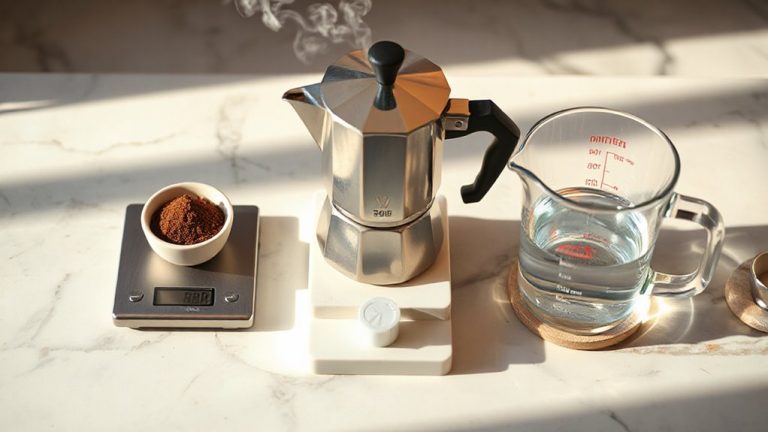
Fine-Tuning Moka Pot Pressure Release Times Based on Desired Taste Profiles and Coffee Bean Types
You control flavor by when you remove the pot from heat. For light roasts, pull it at the first steady stream to preserve brightness. With medium roasts, stop at the peak gurgle-just before sputtering-for balanced sweetness. Dark roasts benefit from 10–15 seconds past the gurgle to deepen body and richness. Match grind size to your pot: finer for stainless steel, slightly coarser in aluminum or larger models. Your perfect brew depends on timing, heat, and equipment working together-small tweaks make a clear difference.
Notable Insights
- Adjust moka pot pressure release time based on roast level to optimize flavor extraction and avoid bitterness.
- Stop brewing light roasts at the first steady stream to preserve bright, delicate acids and clarity.
- For medium roasts, end extraction at the peak gurgle to balance sweetness, body, and acidity.
- Extend pressure 10–15 seconds past gurgle for dark roasts to enhance body and bring out chocolate or caramel notes.
- Match grind size to pot material and roast type to control pressure buildup and prevent over- or under-extraction.
How Pressure Builds in Your Moka Pot
Steam is the hidden driver behind every moka pot brew. As water heats in the lower chamber, steam builds pressure, forcing hot water upward through the coffee puck. Your pot’s heat conductivity-affected by material like aluminum or stainless steel-determines how evenly and quickly this happens. Aluminum pots heat faster but can hotspot; stainless steel heats slower but more evenly. Valve mechanics play a critical role, regulating pressure to prevent dangerous overbuild-up. The safety valve opens automatically if pressure exceeds safe levels, but it’s not designed for flavor control. You rely on timing and heat input to influence extraction. Too much pressure too fast leads to bitter, over-extracted coffee. Controlling your stove’s output-using a lower flame on gas or a regulated electric plate-gives you better precision. Knowing how your moka pot manages steam and pressure lets you fine-tune results without guessing.
Pull Light Roasts Early for Brighter Flavor
Why do light roasts often taste sharper or more acidic when brewed in a moka pot? It’s because light roasts retain more natural acids, and the moka pot’s high pressure can amplify them. If you wait too long, those vibrant notes turn harsh. That’s why you should pull light roasts early-around the first noticeable stream, not the sputter. Doing so prioritizes acidity preservation and locks in flavor brightness. You’ll get citrus, floral, or fruity tones without baking them off. Use a stopwatch if needed: aim for 1:30 to 1:45 brew time. Going too long increases bitterness and dulls the sparkle. For beans like Ethiopian Yirgacheffe or Kenyan AA, early pull timing isn’t just helpful-it’s essential. You’re not cutting short for convenience; you’re protecting the roast’s character. This technique works best with freshly ground beans, medium-fine consistency. Don’t chase volume-chase clarity.
Hit Peak Gurgle for Balanced Medium Roasts
When brewing medium roasts in a moka pot, timing your stop at the peak gurgle gives you the most balanced extraction. You want to let the brew vigor build steadily-medium heat works best here-so the water rises through the coffee without scalding it. As the chamber pressurizes, you’ll hear the gurgle tone shift from a soft bubbling to a rapid, hollow sputter. That sharp, full gurgle is your signal; it means the majority of the coffee has passed through, and continuing risks tipping into bitterness. Shut off the heat just as the tone reaches that crescendo. This timing captures sweetness, body, and acidity in harmony. If you wait just a few seconds longer, the brew becomes over-extracted and loses clarity. For consistent results, use a flame tamer on gas burners and preheat water to about 160°F to stabilize pressure rise. Using a best moka pot for electric stoves ensures even heat distribution, which is crucial for hitting that ideal gurgle timing.
Extend Pressure for Rich Dark Roast Flavor
While you can brew dark roasts the same way as medium, pushing the pressure just a bit longer reveals deeper body and richer chocolate or caramel notes that define a well-extracted espresso-like shot. Extended pressure helps pull out the dark richness these beans are known for, especially with low-acid, oily roasts from regions like Sumatra or dark Italian blends. You’ll notice the flavor deepens past the standard moka pot gurgle-think 10 to 15 seconds more on medium-low heat. Too long, though, and you risk bitterness. Stop just before the steam phase dominates. This method works best with aluminum or stainless steel pots that respond evenly to heat shifts. Extended pressure isn’t for every roast, but with dark beans built for boldness, it turns a good cup into one with intense, velvety depth. For consistent results, consider using one of the best stainless steel coffee makers known for precise heat retention and durability.
Adjust Timing for Grind and Pot Design
You’ve already seen how extending pressure can deepen flavors in dark roasts, but how long you brew isn’t just about timing-it’s tied directly to your grind size and the design of your moka pot. A finer grind slows water flow, increasing pressure and extraction, but too fine risks bitterness or clogging, especially in aluminum pots that heat faster. Stainless steel models, like the Bialetti Mukka Express, retain heat longer, allowing more control and better handling of medium grinds. For even extraction, grind consistency is essential-blade grinders cause uneven particles, leading to unbalanced flavor. A burr grinder gives uniform size, helping match timing to your pot’s design. Smaller 3-cup pots build pressure quicker than 6-cup, so adjust grind slightly coarser in larger pots to avoid over-extraction. Match pot material and size to your grind to fine-tune results. Investing in high-quality coffee roasting supplies can further enhance flavor precision by ensuring optimal bean development before brewing.
Stop the Brew at the Perfect Moment
Though pressure builds steadily, knowing when to pull the moka pot off the heat makes the difference between rich espresso-like coffee and burnt, bitter sludge. You want to stop the brew just as the last drops rise, creating a clean flavor pause before the gurgle that signals over-extraction. Waiting too long pulls out harsh notes, especially with dark roasts. For balanced brew symmetry, remove the pot when the stream slows to a honey-thick dribble-usually around 20–30 seconds after coffee starts flowing. Stainless steel pots like the Bialetti Mukka Induction offer better heat control, helping you nail timing. Aluminum models heat faster but require quicker action. Use a cold, damp cloth on the base if you need to halt extraction instantly. Timing is part of your control chain-grind, heat, and stop point all shape the final cup.
Taste and Refine Your Pressure Timing
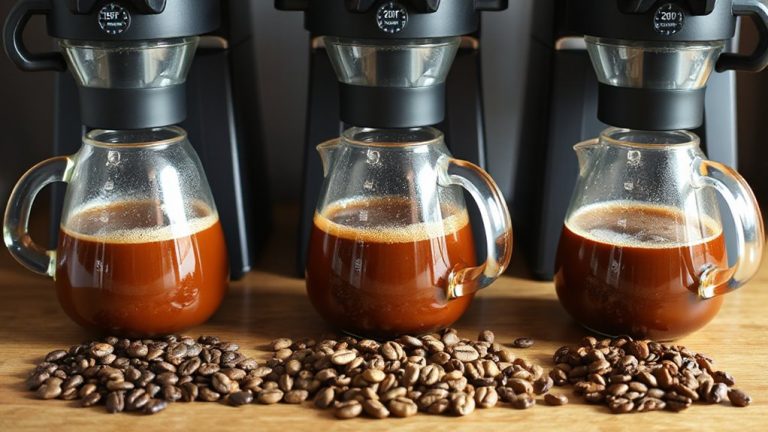
Pulling the moka pot off the heat at the right moment sets the stage, but your palate is the real guide to perfect pressure timing. You need flavor experimentation to find what works for your beans and taste. Light roasts often benefit from slightly shorter pressure times-around 30–45 seconds of brewing sound-preserving brightness and complexity. Dark roasts can handle longer exposure, up to 60 seconds, deepening body but risking bitterness if pushed too far. Conduct sensory analysis with each brew: note acidity, sweetness, and aftertaste. Try stopping the brew at 30, 40, and 50 seconds across three days, using the same coffee and water temperature. Compare results objectively. Aluminum pots respond faster than stainless steel, altering timing needs. Always cool the base immediately to halt extraction. Refinement comes not from guesswork, but consistent observation and small adjustments. Track your results-you’ll see patterns.
On a final note
You control the flavor by managing pressure release time. Pull light roasts just before full gurgle for brightness. Aim for the peak gurgle with medium roasts for balance. Let dark roasts brew slightly longer for richness, but avoid over-extraction. Adjust for grind size and pot design-Bialetti vs. Alessi heat differently. Stop brewing promptly. Tasting helps refine timing. Small tweaks make noticeable differences in body and clarity.