Grinder Producing Burnt Coffee Grounds? 5 Fixes That Work
If your grinder’s producing burnt particles, clean old coffee oils and residue from the burrs and chute-stale gunk can scorch during grinding. Check if the burrs are dull or misaligned; worn metal crushes beans instead of slicing them, creating heat. Grind in short bursts to reduce friction, and use an anti-static brush to prevent clumping. If problems persist with uneven grounds or overheating, consider upgrading to a Baratza Encore or Fellow Ode for more consistent, cooler performance. There’s more to optimizing your grind than just cleaning.
Notable Insights
- Grind in short bursts to prevent heat buildup from prolonged friction during grinding.
- Clean old coffee oils and residue from burrs to eliminate rancid, burnt-tasting particles.
- Sharpen or replace dull burrs that crush instead of cut, reducing excess heat generation.
- Check burr alignment to ensure even grinding and minimize friction-related burning.
- Upgrade to a high-quality grinder with better heat dissipation for consistent, cool grinding.
Why Is My Grinder Burning the Coffee?
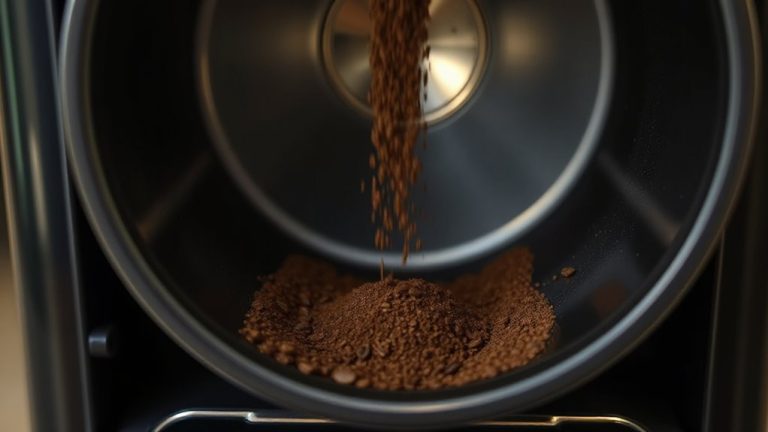
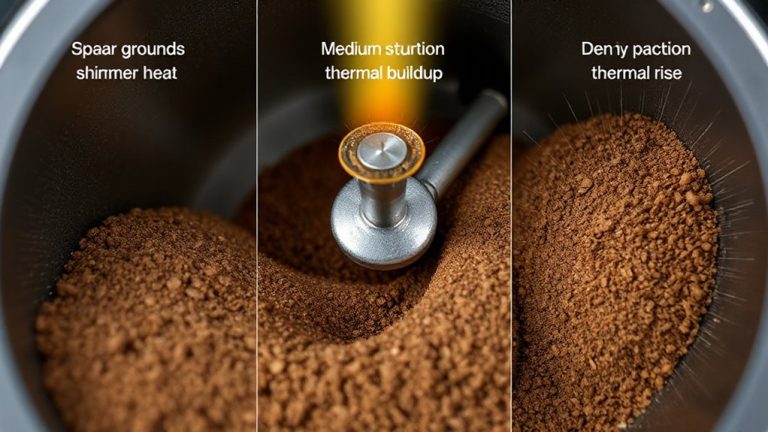
While grinding, if you notice dark, oily particles or a smoky smell, your grinder might be generating excess heat, and that’s likely affecting your coffee’s flavor. This usually points to grinder overheating issues, often caused by prolonged use or a motor struggling under load. High-speed blades or burrs create friction, and without proper heat dissipation, coffee beans can scorch. Cheaper grinders commonly have motor speed fluctuations, worsening the problem-when the motor slows under pressure, beans get mashed instead of cleanly cut, increasing heat buildup. Even high-end models can overheat during back-to-back grinding. To minimize risk, grind in short bursts and let the motor rest. Avoid super-fine settings for long periods. Models like the Baratza Encore manage heat well, while blade grinders often fail here. Addressing these factors helps preserve flavor and extends your grinder’s life.
Clean Old Grinds and Residue From Burrs
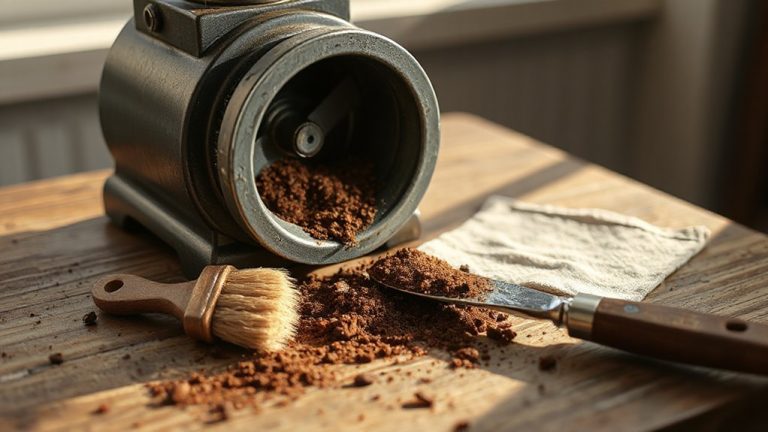
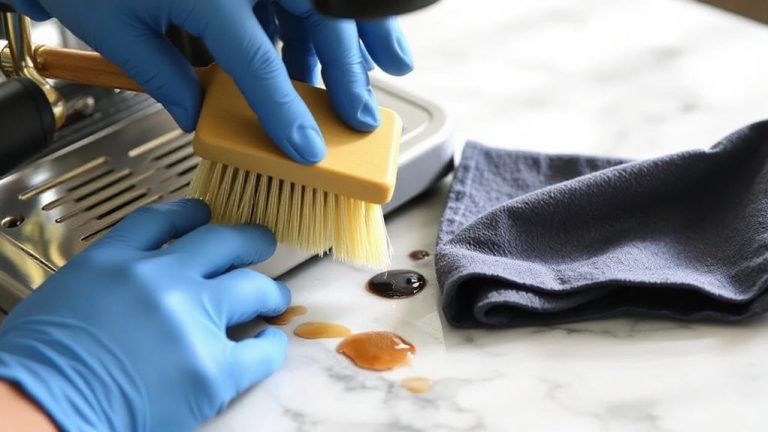
You’ve already seen how heat from prolonged grinding can scorch your beans and alter flavor, but leftover grounds and built-up coffee oils inside the grinder contribute just as much to off-tastes. Regular burrs cleaning prevents stale particles from mixing with fresh grind and reduces residue buildup that can trap moisture and heat. Over time, oils turn rancid, tainting your coffee with bitter, acrid notes. To clean effectively, disassemble your grinder (following manufacturer guidance) and remove the burrs. Use a small brush-like a dental or grinder-specific tool-to clear old grinds. A high-quality coffee grinder cleaning brush can make this process more effective by reaching tight spaces and removing stubborn residue without damaging components.
| Component | Tool Needed | Cleaning Frequency |
|---|---|---|
| Burrs | Brush, dry cloth | Every 2–4 weeks |
| Chute | Brush | Weekly |
| Grounds bin | Damp cloth | After use |
Wipe surfaces gently, avoid water near motor parts, and reassemble carefully. Consistent cleaning maintains grind quality and flavor purity.
Sharpen or Replace Worn Burrs to Prevent Heat
Dull burrs aren’t just inefficient-they generate excess heat that can scorch your coffee mid-grind. When burrs wear down, they crush instead of cut, increasing friction and temperature. You’ll notice burnt particles and flat flavor. Check your grinder’s burr alignment; misaligned plates create uneven grinding and more heat. Even with perfect alignment, low material quality-like soft steel-wears faster and heats up sooner. Hardened steel or ceramic burrs last longer and stay cooler, especially in high-use settings. Some manufacturers offer sharpening services, but it’s often better to replace worn burrs entirely. Replacement guarantees consistent performance and avoids lingering heat issues. Look for OEM parts to maintain proper fit and alignment. If your grinder’s original burrs were low quality, upgrading to higher-grade aftermarket ones can improve both grind consistency and thermal performance. Regular inspection helps avoid surprise degradation. For long-term reliability, consider investing in one of the best mill grinders known for durable burr construction and heat management.
Stop Static and Friction During Grinding
Burnt particles often trace back to heat from dull or low-quality burrs, but even with sharp, well-aligned grinding elements, you can still run into issues if static and friction aren’t managed. Uncontrolled static causes grounds to cling and clump, leading to uneven flow and localized overheating. Friction reduction isn’t just about burrs-it’s about smooth operation from hopper to portafilter. Proper static control reduces waste and improves dose accuracy. Simple changes make a difference.
| Method | Benefit | Example |
|---|---|---|
| Anti-static brushes | Immediate static control | Grounds sweep cleanly |
| Grounds deflector | Reduces friction in exit path | Less clumping, cooler grind |
| Humidity adjustment | Natural static control | 50–60% RH ideal |
Use tools that support friction reduction and static control for consistent, cooler grinding. Investing in a high-quality coffee distribution tool can further enhance grind dispersion and reduce retained particles.
When to Upgrade to a Better Grinder
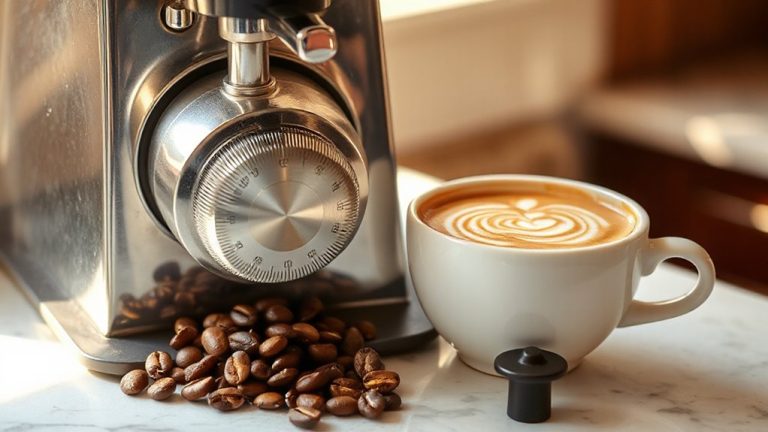
While some grind issues can be fixed with maintenance or accessories, there comes a point when the grinder itself holds you back. If your machine consistently produces uneven grounds or overheats, causing burnt particles, it might be time to upgrade. Lower-end grinders often lack precise burr alignment and heat management, no matter how well you clean them. When considering a new grinder, weigh budget considerations against long-term gains. Models like the Baratza Encore or Fellow Ode offer solid performance without breaking the bank. Investing a bit more can provide future proofing with features like stepless grind adjustment and upgraded burrs. These let you adapt to different brewing methods as your skills grow. Don’t overspend early, but choose a grinder that grows with you. A reliable upgrade pays off in flavor clarity and consistency, brew after brew.
On a final note
Your grinder shouldn’t burn coffee. Clean built-up oils and old grounds from the burrs regularly-use a brush or uncooked rice. Worn burrs generate heat and uneven cuts; sharpen or replace them. Combat static with a light tap or anti-static grinders like the Baratza Encore. If problems persist, consider upgrading to a model with better heat management, such as the Niche Zero or DF64. Proper maintenance and quality gear make a real difference in your cup.