How to Adjust Grind for a Balanced Cappuccino With Sweet, Rounded Body
Adjust your grinder to hit a 25–30 second extraction for a double shot-this sweet spot pulls balanced, sweet espresso for your cappuccino. If the shot’s sour, go finer; if bitter, go coarser. Use a quality burr grinder like a Baratza Encore or Fellow Ode for even particles. Fresh beans and a precise 18g dose matter too. Fine-tune in small steps, and you’ll find that smooth, rounded body hiding just beneath the surface.
Notable Insights
- Use a burr grinder to achieve uniform particle size for even extraction and balanced flavor.
- Aim for a 25–30 second extraction time for a double shot to maximize sweetness and body.
- Adjust grind finer if the shot is too fast or sour, indicating under-extraction.
- Adjust grind coarser if the shot is too slow or bitter, signaling over-extraction.
- Grind fresh before each shot to preserve aromatic compounds and ensure optimal extraction.
Why Grind Size Makes or Breaks Your Cappuccino
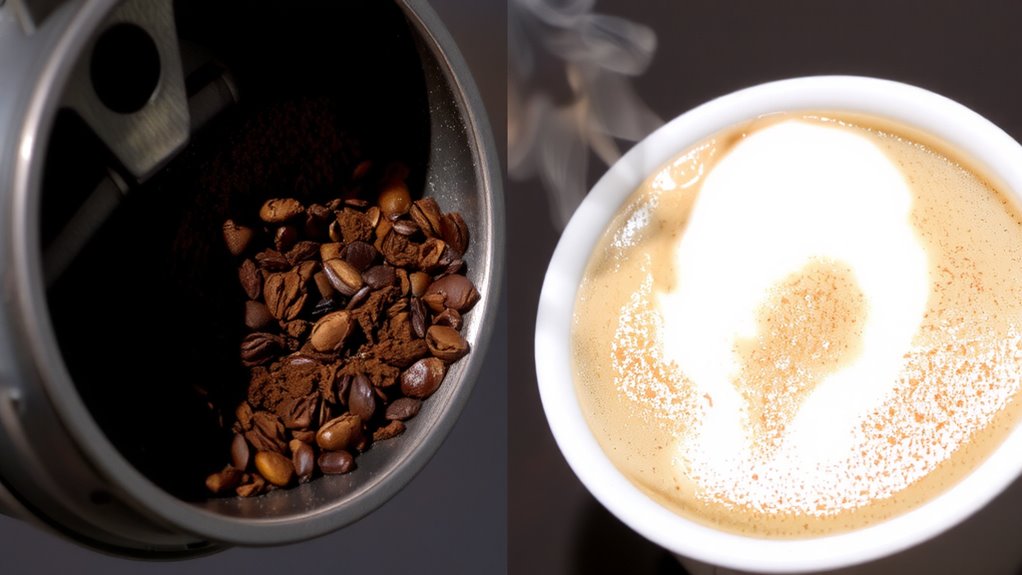
Even though you might not notice it at first, the size of your coffee grind plays a crucial role in how your cappuccino turns out-too fine and your shot drags, under-extracting sour, bitter flavors; too coarse and it runs too fast, leaving you with a weak, watery espresso that won’t stand up to steamed milk. That’s why grinder calibration matters: a consistent setting guarantees repeatable results. Uneven particle distribution leads to uneven extraction-some grounds over-extract, others under-extract, muddying your shot. A quality burr grinder reduces this spread, producing more uniform particles than blade grinders. Flat or conical burrs each have pros, but both need regular calibration as beans and humidity change. You’ll get better shots when you prioritize consistency over speed. Adjust in small increments and note what works. Your grinder isn’t just a tool-it’s the foundation of every balanced cappuccino. For those starting out, investing in a best espresso grinder under $200 can provide the consistency needed without breaking the bank.
Taste Your Espresso: Spot Under- and Over-Extraction
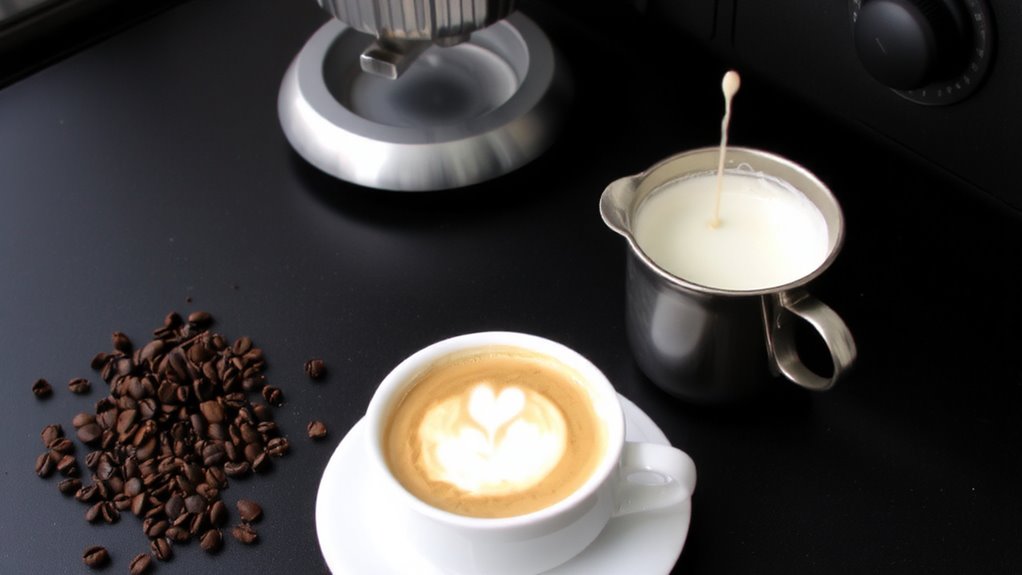
Your palate is the best tool for diagnosing extraction issues in espresso. If your shot tastes sour or sharp, it’s likely under-extracted-common when extraction timing is too short or grind too coarse. Under-extracted shots miss key flavor profiles, leaving you with weak, acidic notes and little body. On the flip side, if it’s bitter or astringent, you’re probably over-extracting, often due to grinding too fine or letting extraction run too long. Over-extraction pulls harsh compounds, muting sweetness and adding dryness. A balanced shot should taste sweet, clean, and rounded. Aim for extraction timing between 25–30 seconds for a double shot, then assess flavor. Adjustments come next-but only after you taste. Your senses tell you more than any timer or scale alone. Trust them to guide your grind changes.
Dial In Your Grind for Sweet, Rounded Shots
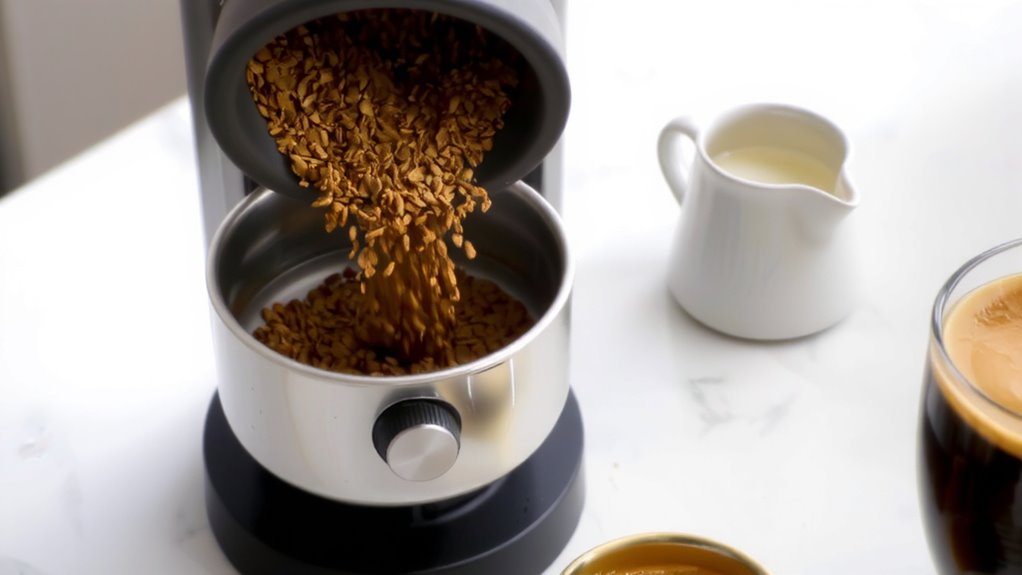
Because extraction starts the moment water hits coffee, getting your grind size right is essential for hitting that sweet, rounded shot. You need consistent grind uniformity so all particles extract evenly-uneven particle distribution leads to both over- and under-extracted bits, muddying flavor. If your grinder produces fines and boulders, no dial adjustment will fix the imbalance. Step-burr grinders, like the Baratza Encore, offer better uniformity than blade models. For espresso, you want a fine grind, but only as fine as your machine’s pressure and puck prep allow. Too fine and you’ll restrict flow, risking sourness or clogging. Adjust incrementally, then pull a shot to assess. Look for a steady, honey-like stream. Good particle distribution means soluble sugars extract before bitter compounds, giving you that balanced, rounded body. Grind fresh, and clean your burrs often-residue skews results. For more precision and long-term value, consider investing in one of the best coffee grinders recommended for espresso clarity and consistency.
Hit the Sweet Spot: Fine-Tune Grind for Balance
Once you’ve dialed in a stable shot, you can start tweaking the grind to hit the sweet spot for balance. Small adjustments make a big difference-go too fine, and your espresso risks over-extraction with bitterness; too coarse, and it’ll taste sour and thin. The goal is even extraction, which relies heavily on grind uniformity. A consistent particle distribution means most grounds are the same size, helping water flow evenly through the puck. Blade grinders create uneven particles, so if you’re serious, switch to a burr grinder-models like the Baratza Encore or Fellow Ode deliver better consistency. Avoid clumping or fines buildup, which disrupt flow. Check shot time and taste: aim for 25–30 seconds for a double shot with balanced sweetness and body. Adjust minutely and taste every change. For best results, consider investing in one of the top coffee grinders recommended for their precision and durability.
Keep Beans Fresh and Dose Consistent
Freshness starts the moment beans are roasted, and it’s non-negotiable if you want a balanced cappuccino. You lose volatile compounds fast, so buy whole beans weekly and use them within 2–3 weeks max. For best results, invest in proper bean storage-airtight, opaque containers like the Fellow Atmos or Planetary Design Savour keep moisture and light out, slowing staling. Avoid the fridge or freezer unless you’re sealing in vacuum packs; condensation ruins flavor fast. Grind only what you need per shot to preserve aroma and sweetness. On dose precision, always weigh your beans-don’t scoop. A digital scale (like the IKEA Värde or Acaia Lunar) gives you 0.1g accuracy, critical for consistency. Hitting 18g every time means even extraction and balanced milk drinks. Skip the guesswork; precise dosing and smart storage are cheap upgrades that pay off daily.
Fix Common Grind Problems for Smooth Cappuccinos
Why does your espresso sometimes taste sour or bitter, no matter how well you steam the milk? Poor grind distribution is often the culprit. If your particles are uneven, some over-extract while others under-extract, leading to harsh or sour notes. This usually stems from dull or misaligned burrs. Burr alignment affects how evenly your coffee is ground-off alignment causes inconsistent sizing, ruining shot balance. Check your grinder’s burrs every few weeks, especially if you use it heavily. For grinders like the Baratza Sette or Lelit, realignment or replacement might be needed after six to twelve months. A good distribution tool or simple finger tap can help, but fixing the root cause matters more. Regular cleaning and burr maintenance prevent most issues. Fixing grind distribution and alignment means smoother, sweeter cappuccinos-every time.
On a final note
You’ve got the tools and steps to nail a balanced cappuccino. Adjust your grinder in small tweaks-finer for sweetness, coarser if it’s bitter. Fresh beans and consistent dosing matter just as much as the grind. If shots run too slow or taste sharp, open the grind slightly. A good rotary burr grinder, like a Baratza Virtuoso or Fellow Ode, gives the control you need. It’s not magic-just method.