Drip Coffee Optimization: Pre-Wetting, Grind Size & Water Ratios
Pre-wet your grounds with twice the coffee’s weight in water to release CO2 and prevent channeling, especially in fresh beans. Use a medium-fine grind for even flow-too fine risks bitterness, too coarse brings sourness. Match water levels to your brewer: flat-bottom like Moccamaster needs balanced volume, while cone brewers like Kalita Wave handle more water with slower, even extraction. Keep water between 195–205°F and adjust grind daily for humidity. Proper technique gives sweet, balanced coffee-small tweaks make a noticeable difference. You’ll find more ways to refine your daily brew with a few targeted changes.
Notable Insights
- Pre-wet coffee grounds with twice the weight in water to initiate degassing and prevent channeling during the 30–45 second bloom phase.
- Use a medium-fine grind for optimal flow rate and extraction balance in most drip brewers.
- Adjust grind size daily to counteract humidity changes and maintain consistent extraction.
- Maintain water levels that support a 5–6 minute brew time to avoid under- or over-extraction.
- Ensure even saturation with a steady, circular pour starting at the center to promote uniform extraction.
What Uniform Extraction Does for Your Drip Coffee
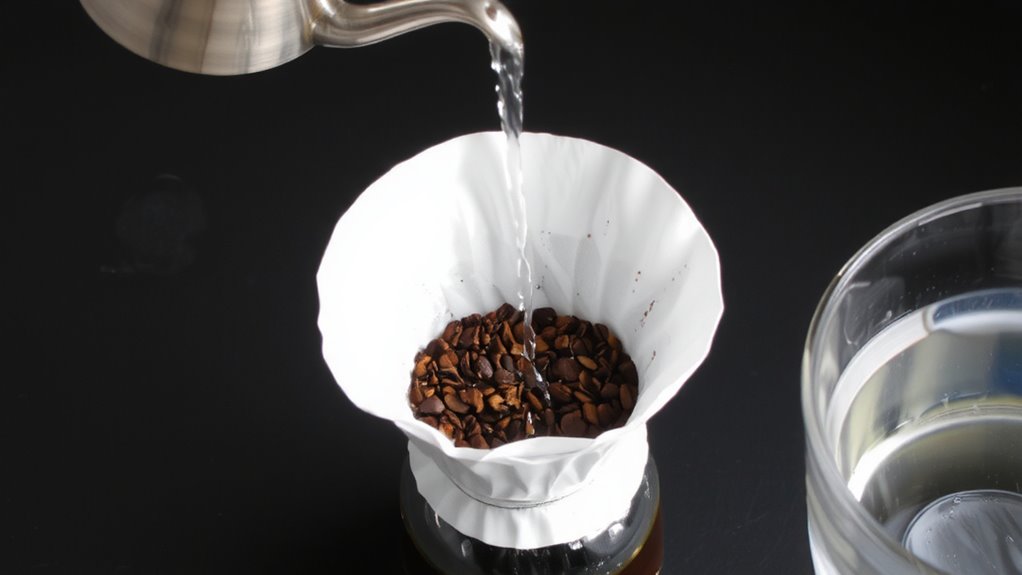
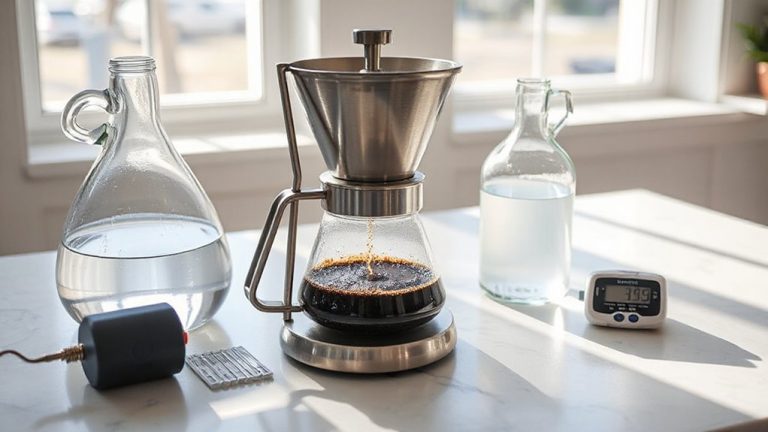
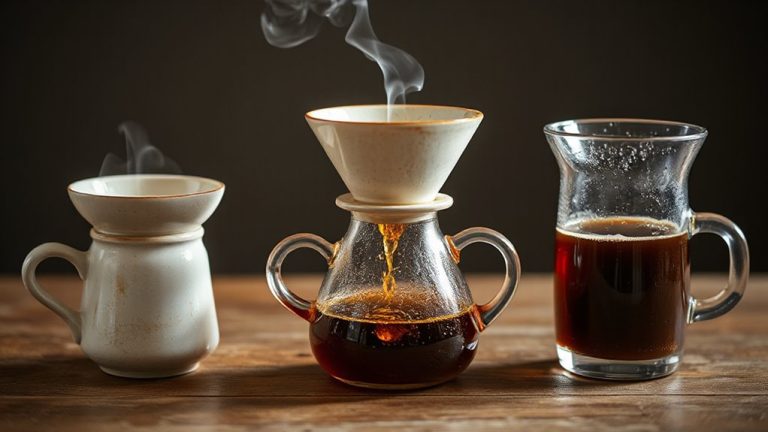
Uniform extraction starts with even water distribution. When water spreads consistently through your coffee grounds, every particle contributes equally, preventing some from over-extracting while others under-extract. This balance is critical-you’ll taste it in both flavor balance and aroma intensity. Without uniform extraction, your cup might have sour notes from under-developed compounds or bitter tones from over-extracted caffeine and lignin. Flat-bottom brewers like the Technivorm Moccamaster handle this well, while cone-shaped designs, such as the Kalita Wave, create longer contact time for even saturation. You’ll notice clearer highs and richer lows in the cup when extraction evens out. Pour technique matters, but even pre-infusion can’t fix poor initial wetting. Aim for steady, circular pours starting from the center. You don’t need expensive gear, but consistent grind size and controlled water flow are non-negotiable.
Why You Should Pre-Wet Your Coffee Grounds?
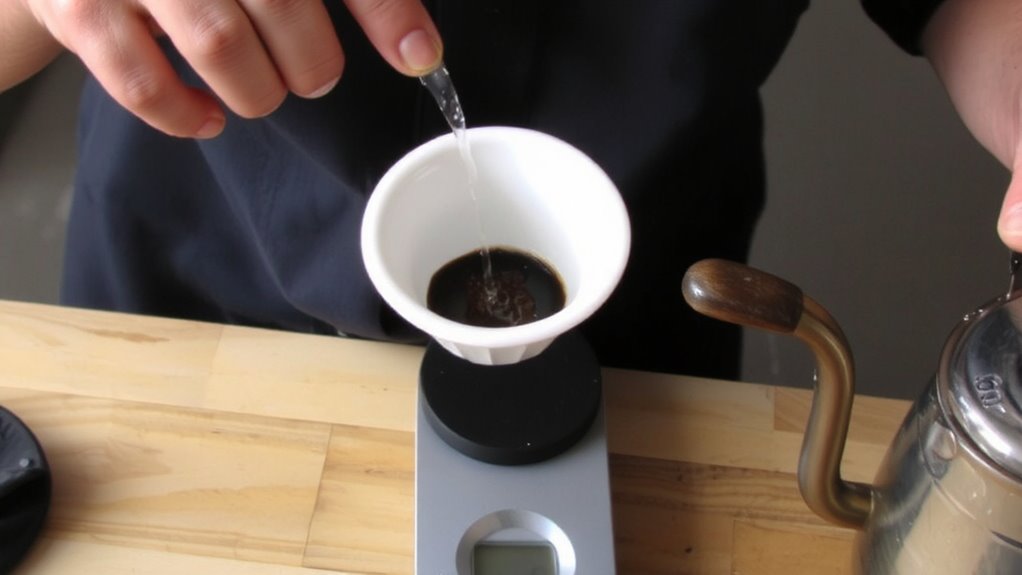
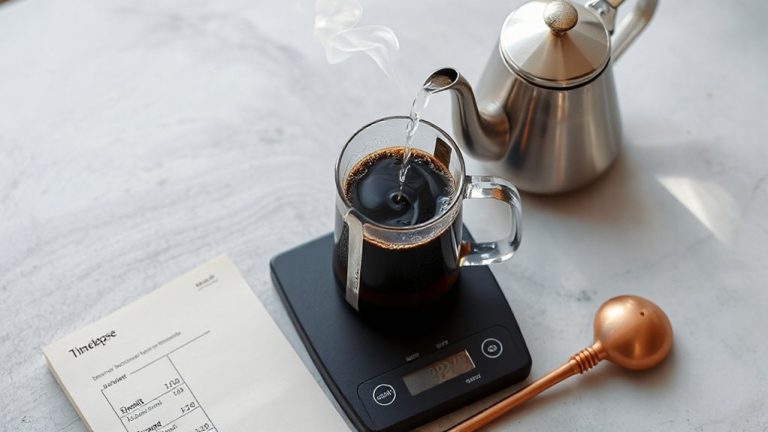
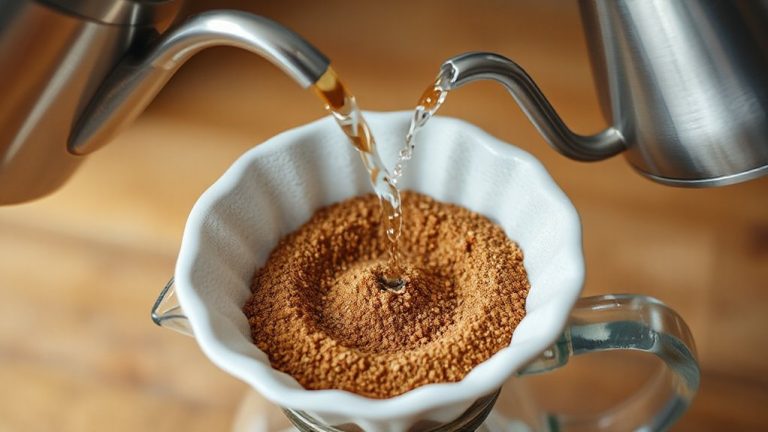
Why does your coffee sometimes taste off, even when you follow the recipe to the letter? The issue might be skipping the bloom phase. When you first pour hot water over fresh grounds, trapped CO2 escapes, which can block even saturation. By pre-wetting-using about twice the water weight of coffee-you initiate degassing and gain better saturation control. This step guarantees water extracts evenly during the main pour, helping achieve uniform extraction. Skipping it risks channeling, where water bypasses dry spots, leading to sour or inconsistent brews. A gooseneck kettle helps here, letting you pour slowly and evenly. Use just off-boil water (around 200°F) and wait 30–45 seconds before continuing. Light roasts often need a longer bloom; dark roasts, less. Pre-wetting isn’t just ritual-it’s practical. It’s one of the simplest ways to improve flavor clarity and balance without new gear. For precision in temperature and pour control, consider using a gooseneck electric kettle.
How Grind Size Changes Drip Coffee Flavor
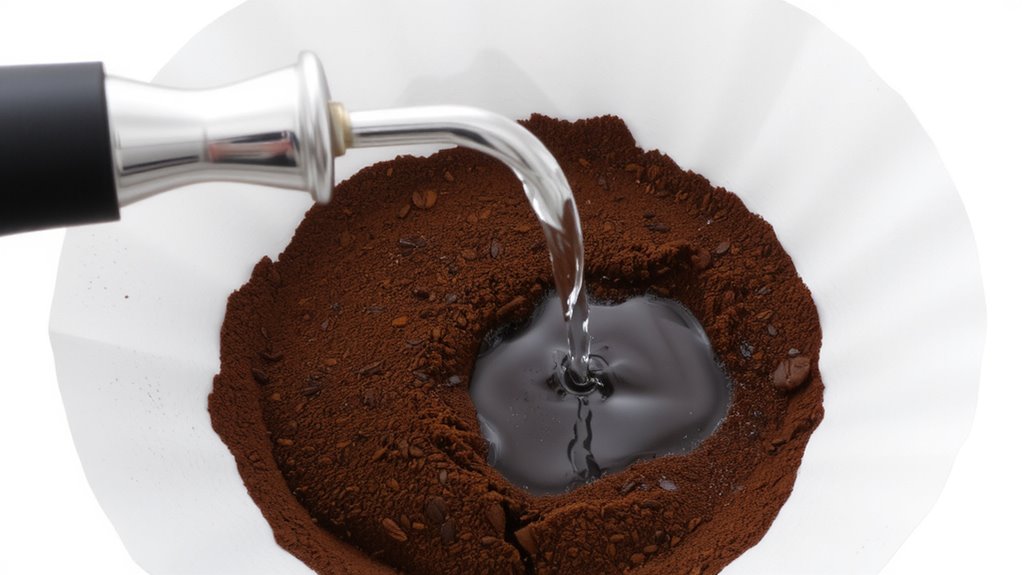
You’ve already seen how pre-wetting your grounds improves extraction by releasing trapped gas and ensuring even saturation-now consider how the size of those grounds shapes the entire flavor profile of your drip coffee. If your grind’s too fine, you’ll over-extract, pulling out bitter, astringent notes, especially with light roast level beans or dense high-altitude coffee origin beans like Ethiopian Yirgacheffe. Too coarse, and your brew tastes weak and sour since water bypasses the grounds too quickly. A medium-fine grind works best for most drip brewers, balancing surface area and flow rate. Blade grinders create uneven particles, leading to inconsistent flavor; burr grinders give you uniform size, which means more predictable results. Adjust based on roast level-darker roasts can handle slightly coarser settings. Always tweak grind size before changing coffee origin or dose-it’s the fastest way to fix flavor issues. For best results with freshly roasted beans, use a high-quality burr grinder that preserves bean integrity and offers precise grind adjustments.
How Water Level Shapes Brew Time and Flavor
What if the key to a better cup wasn’t just your grind or beans, but how much water you’re using? The water level directly affects brew time, which in turn shapes flavor extraction. Too much water prolongs contact time, risking over-extraction-think bitter, flat notes. Too little, and you’ll get a weak, sour cup from under-extraction. You need balance. Your pour technique and water temperature play supporting roles: keep water between 195–205°F, and pour evenly to maintain consistent flow. This helps all grounds extract uniformly.
| Water Level | Brew Time | Flavor Result |
|---|---|---|
| High | Long | Bitter, harsh |
| Balanced | Moderate | Balanced, sweet |
| Low | Short | Sour, underdeveloped |
How to Pair Grind Size and Water for Better Extraction
While grind size and water levels may seem like separate variables, they’re deeply connected in how they shape extraction. You need both working together to get even flavor. A finer grind slows water flow, so you’ll need lower water levels or it’ll over-extract and taste bitter. Go too coarse with high water, and your coffee turns weak and sour. For best results, pair medium-fine grinds with a consistent water temperature around 195–205°F. That heat helps dissolve flavors evenly, especially when your grind consistency is uniform-cheap grinders often fail here. A quality burr grinder gives you that. If you’re using a Chemex, go slightly coarser than for a standard drip brewer. Matching these factors keeps extraction balanced, avoiding extremes. You’ll notice cleaner taste and better clarity in every cup. It’s not magic-just smart, repeatable pairing. For drip coffee, the ideal grind size falls within the medium-fine range to ensure optimal flow rate and extraction time.
Fix These Common Drip Coffee Mistakes
Why does your morning drip coffee sometimes fall flat? More often than not, it’s due to preventable mistakes. Poor coffee storage exposes beans to moisture, heat, and light-killing freshness fast. Store beans airtight, in a cool, dark place. Old grounds or stale beans mean dull, flat flavor. Equally critical? Machine maintenance. Mineral buildup from hard water clogs internals and skews water temperature, leading to uneven extraction. Descale monthly with a vinegar or commercial solution. Overlooking either of these undermines even perfect grind and brew ratios.
| Mistake | Fix |
|---|---|
| Stale beans | Use airtight containers for coffee storage |
| Poor grind consistency | Use a burr grinder, not blade |
| Mineral buildup | Perform monthly machine maintenance |
| Wrong water temp | Verify machine reaches 195–205°F |
Daily Adjustments for Consistent, Balanced Drip Coffee
You’ve tackled storage, grind quality, and machine upkeep-now it’s time to fine-tune your daily routine for a more reliable cup. Start each morning by checking your brew temperature; most drip machines should hit 195–205°F, the ideal range for balanced extraction. If your coffee tastes flat or bitter, the water might be too cool or too hot. Many budget brewers don’t regulate heat well, so consider an upgrade to a model like the Technivorm or Breville Precision Brewer. Grind size needs subtle daily tweaks-humidity changes can affect how grounds absorb water. Adjust one notch finer or coarser as needed. Recheck brew time: aim for 5–6 minutes total. Consistent brews rely as much on daily observation as they do on solid machine maintenance. Wipe down surfaces, descale monthly, and replace water filters regularly to keep performance stable.
On a final note
You’ll get the best drip coffee by pre-wetting grounds to guarantee even saturation, using a medium grind as a starting point, and adjusting based on taste. Too bitter? Try a coarser grind. Too weak? Increase coffee or reduce water slightly. Match brewer type-like Chemex or drip machine-to grind and water levels. These small, daily tweaks improve extraction and flavor consistency without extra gear or guesswork.