Water Quality for Coffee: TDS, pH & Hardness Standards
Your coffee’s taste hinges on water with 75–250 ppm TDS, ideally 150 ppm, and a pH between 6.5 and 7.5. Chlorine and off-flavors in tap water ruin balance, so use activated carbon filters or reverse osmosis with mineral reintroduction. Magnesium boosts bright notes in light roasts; calcium adds body but risks scale. Hard water may over-extract, soft water under-extracts. For consistency, try Third Wave Water or test with a TDS meter. You’ll soon see how small tweaks transform your cup.
Notable Insights
- Water should have 75–250 ppm TDS, ideally around 150 ppm, to ensure balanced coffee extraction.
- Maintain pH between 6.5 and 7.5 to avoid sour or bitter flavors and support optimal taste.
- Use filtered water with activated carbon to remove chlorine and prevent medicinal off-flavors.
- Ensure adequate magnesium for bright, fruity notes and calcium for body, within 50–175 ppm hardness.
- Test water with a TDS meter and consider SCA standards or mineral additives for consistency.
Why Water Quality Controls Coffee Flavor
Water makes up over 98% of your brewed coffee, so the quality of what flows from your tap has a direct, measurable impact on flavor. If your water contains chlorine, you’ll likely taste it-chlorine impact can leave your coffee harsh or medicinal, even after filtering. Most tap water relies on chlorination, so using a simple activated carbon filter helps reduce this. pH levels matter too: water that’s too acidic (below 6.5) increases sourness, while overly alkaline water (above 8.5) mutes acidity and dulls aroma. Ideally, your water should stay near neutral-around 7-for balanced extraction. You don’t need a lab to check this; a basic pH test strip or affordable digital meter works. Remember, your brewing gear performs best when water isn’t too corrosive or scale-prone. Small adjustments now prevent flavor flaws and equipment issues later. For consistent results, consider using best water for coffee machines specifically formulated to meet specialty brewing standards.
The Ideal Mineral Balance for Brewing Water
You’ve probably noticed how off-flavors in your coffee can often be traced back to the water, and now it’s time to get specific about what’s actually in it. Achieving the right mineral equilibrium is key-too little and your brew tastes flat; too much and it’s bitter or harsh. The ideal brewing water maintains a balanced ionic balance to extract flavor evenly without overdoing it. Using optimal mineral composition can significantly enhance the clarity and balance of your coffee’s flavor profile. Here’s a quick reference:
| Parameter | Ideal Range | Effect on Brew |
|---|---|---|
| TDS (ppm) | 75–250 | Guarantees proper extraction |
| Hardness (CaCO₃) | 50–175 | Supports flavor development |
| pH | 6.5–7.5 | Prevents sour or bitter tones |
Use a TDS meter and adjust with specialty mineral blends if your tap water falls outside these ranges. Pre-mixed powders like Third Wave Water offer a reliable fix. Getting this balance right means consistently better coffee-no guesswork.
How Calcium and Magnesium Affect Coffee Taste
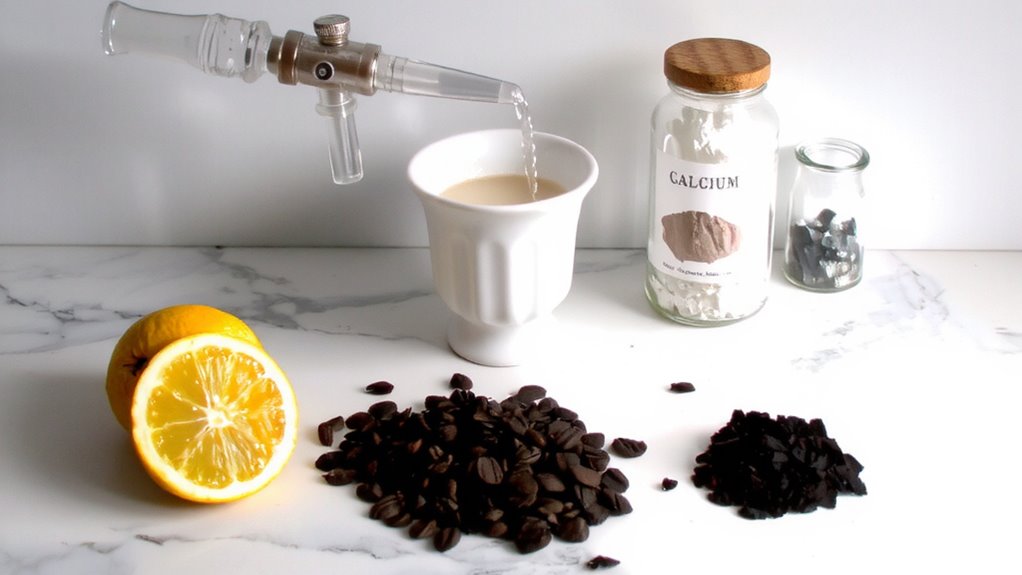
Minerals like calcium and magnesium play distinct roles in how your coffee tastes, and understanding their impact helps you tweak your water for better results. Magnesium boosts extraction of bright, fruity compounds, enhancing acidity and complexity-great for light roasts. Calcium extracts more body and chocolatey notes but can lead to over-extraction if levels are too high. Your taste perception shifts depending on which mineral dominates. The mineral interaction isn’t just about quantity-it’s about balance. Too much magnesium may make coffee taste sharp, while excess calcium can produce chalky, flat flavors. Using filtered water with known mineral content, like Third Wave Water or a re-mineralization kit, gives you control. You don’t need lab-grade precision, just awareness of how these minerals shape flavor. Adjust based on bean type and roast-what works for an Ethiopian bean may not suit a Sumatran. For consistent results, consider using best coffee brewing water specifically formulated to optimize extraction and flavor clarity.
Hard vs. Soft Water: What Goes Wrong in the Brew
Getting the mineral balance right means understanding what kind of water you’re actually using-because not all tap water is the same. Water hardness varies by region and affects how coffee extracts. Hard water, high in calcium and magnesium, can produce a full-bodied, vibrant brew but risks scaling in machines like espresso brewers, reducing efficiency over time. Soft water, often low in minerals due to water softening systems, may lead to flat, underdeveloped flavor because of mineral depletion. Without enough minerals, water can’t properly pull compounds from coffee, resulting in a sour or weak cup. Extremely soft or distilled water isn’t ideal for brewing-it strips flavor and can damage equipment. You need a moderate level of hardness to balance extraction and machine care. The best brewing water isn’t the softest or hardest-it’s balanced.
Test and Adjust Your Brewing Water at Home
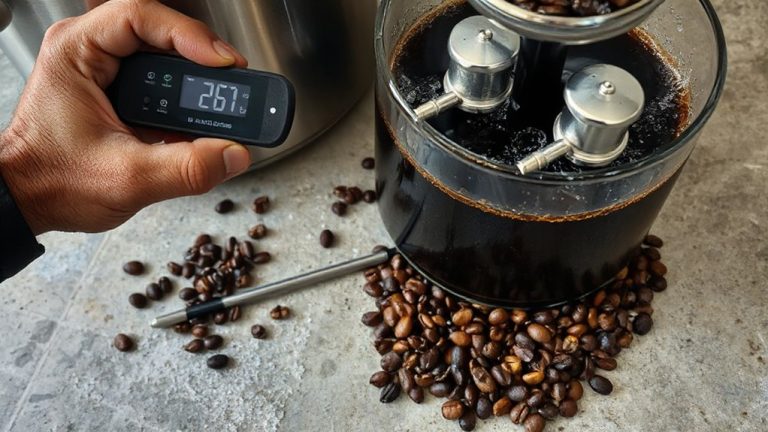
While your tap water might seem fine at first glance, it could be holding back your coffee’s potential-especially if you don’t know its mineral content. Testing at home with a TDS meter (like the HM-21 by Bluelab) helps you see what’s really in your water. Adjust with distilled water and food-grade minerals to hit the SCA’s ideal range of 75–250 ppm. Your water temperature and grind size work best when water chemistry supports extraction. Use this guide:
| Water Type | TDS (ppm) | Effect on Brew |
|---|---|---|
| Too low (<50) | 30 | Flat, sour; hard to extract |
| Balanced (100–150) | 120 | Sweet, clear; ideal pairing |
| Too high (>300) | 350 | Bitter, dull; clogs equipment |
Adjust wisely-great coffee depends on all variables working together.
Pick the Right Filter for Coffee Water Quality
You’ve tested your water and know its TDS, but if it’s outside the ideal range, you need a reliable way to correct it-consistently. That’s where filter types come in. Basic carbon filters, like Brita or PUR, reduce chlorine and some solids, but don’t offer precise control. For better results, consider a reverse osmosis (RO) system, which strips nearly all minerals-ideal if you want to rebuild water from scratch. Alternatively, specialty filters like the Third Wave Water mineral cartridge or TDS booster bottles let you adjust after filtration. No matter which you choose, maintenance schedules are critical. A clogged or expired filter won’t perform as intended, leading to off-flavors or inconsistent extraction. Change filters on time-whether every two months for countertop pitchers or yearly for under-sink RO units. Stick to the schedule, monitor your output, and match your filter type to your water goals.
Use SCA Standards to Perfect Your Brewing Water
The Specialty Coffee Association (SCA) sets clear water quality guidelines to help you brew the best-tasting coffee-aim for 75–250 ppm total dissolved solids (TDS), with a target of 150 ppm for balanced extraction. Use an accurate TDS meter to check your water, and adjust with third-party blends like Third Wave Water or DIY recipes if needed. Proper minerals support flavor clarity and help stabilize extraction. Keep your water temperature between 195–205°F; too hot and you risk bitterness, too cool and the coffee tastes sour. Pair this with a consistent grind consistency-uneven particles lead to over- and under-extraction. A good burr grinder, like the Baratza Encore or Timemore C2, guarantees even granules. These factors work together: even with perfect water, poor grind or wrong temperature ruins the balance. Stick to SCA standards, and you’ll get repeatable, clean results every time.
On a final note
Your water直接影响 the taste of your coffee, so don’t ignore it. Use filtered water that meets SCA guidelines-aim for balanced minerals, especially calcium and magnesium. Avoid distilled or overly soft water, as they flatten flavor. A good carbon filter or a dedicated system like Third Wave Water can help. Test your water if possible, and adjust based on your coffee’s taste. Simple changes make a real difference in every cup.