Adjusting Temperature Settings for Different Types of Coffee Beans During Cold Brew Processes
You should adjust your cold brew steep temperature based on roast and bean origin. Light roasts do best at 5–10°C for 14–18 hours to keep acidity bright. Medium roasts work between 14–18°C, depending on bean age and density. Dark roasts need cooler temps-12–16°C-and shorter soaks to avoid bitterness. Use filtered water and grind fresh, coarse for dark, slightly finer for light. Your fridge’s actual temp matters; verify with a thermometer. Best results depend on matching these variables carefully. There’s more to fine-tuning your setup for consistent flavor.
Notable Insights
- Light roast beans benefit from slightly warmer steeping (5°C–10°C) to enhance acidity and floral notes during a 14–18 hour cold brew.
- Medium roast cold brew temperature should match bean freshness and density, typically between 14°C–18°C for balanced sweetness and clarity.
- Dark roast beans require cooler temperatures (12°C–16°C) and shorter steeps (10–12 hours) to avoid extracting harsh, bitter compounds.
- Denser, high-altitude beans like Ethiopian or Kenyan may need slightly warmer cold brew temps to ensure proper extraction over 14–18 hours.
- Use filtered water with 100–150 ppm minerals and adjust temperature based on bean age, as older beans extract faster than fresh ones.
Why Temperature Changes Everything in Cold Brew
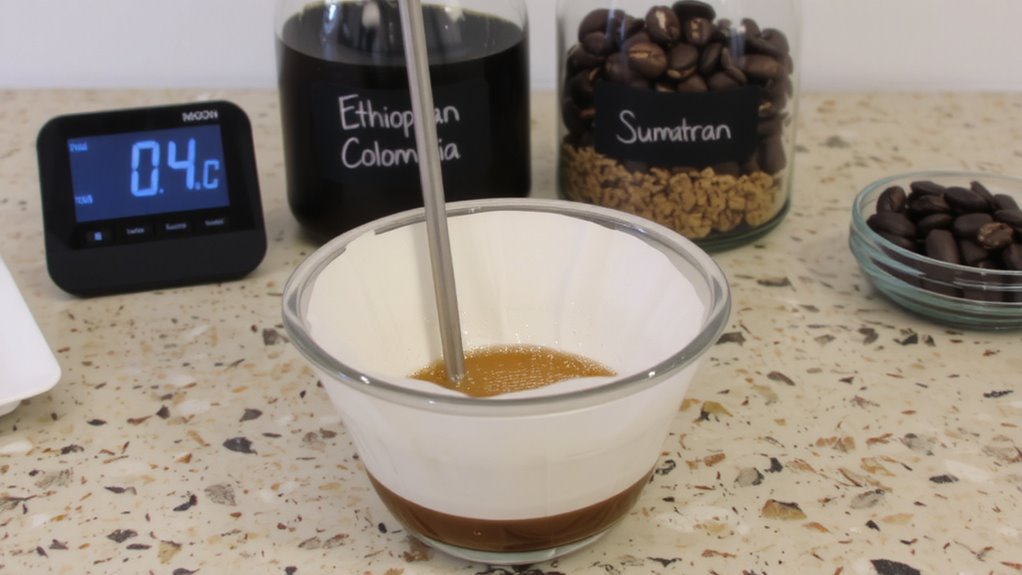
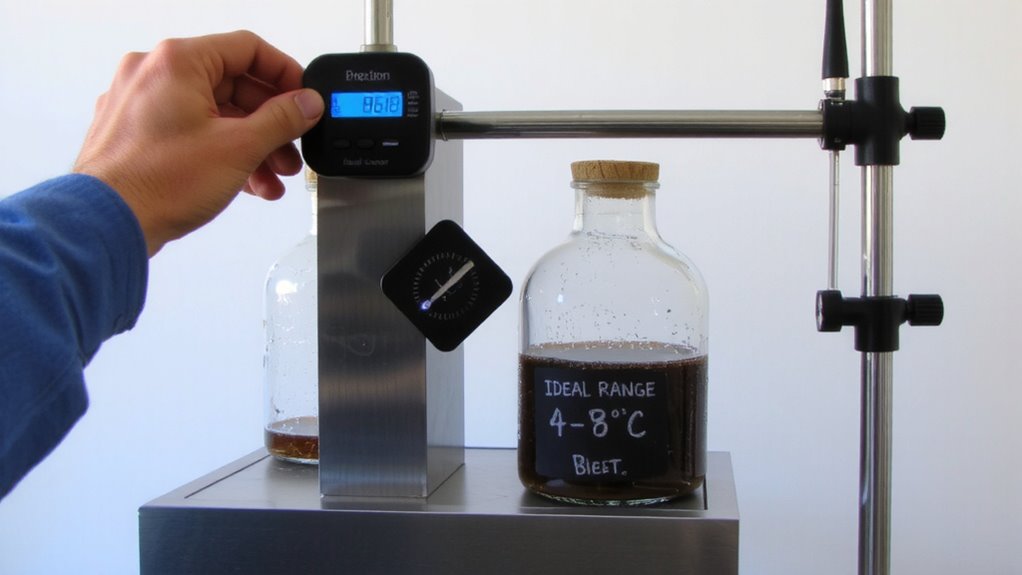
While you might think cold brew is just coffee steeped in cold water, the truth is that even slight temperature shifts during brewing can greatly alter the final flavor. Water solubility decreases as temperature drops, meaning cooler brews extract compounds more slowly and selectively, favoring smooth, low-acid notes. But if it’s too cold, under-extraction becomes likely, especially with dense beans. Bean density varies by origin and roast-high-density beans from high altitudes need more consistent thermal energy for even extraction. At 4–8°C (39–46°F), standard fridge temps may stall extraction; room temp (20–24°C) speeds it but risks bitterness. For balance, many baristas use a controlled 12–16°C setup. This range supports steady solubility without overheating, adapting well across bean types. Using insulated containers or temperature-stable brewing gear helps maintain this window. Small shifts matter-precision improves repeatability, cup after cup.
How to Extract the Best Flavor From Light Roast Beans
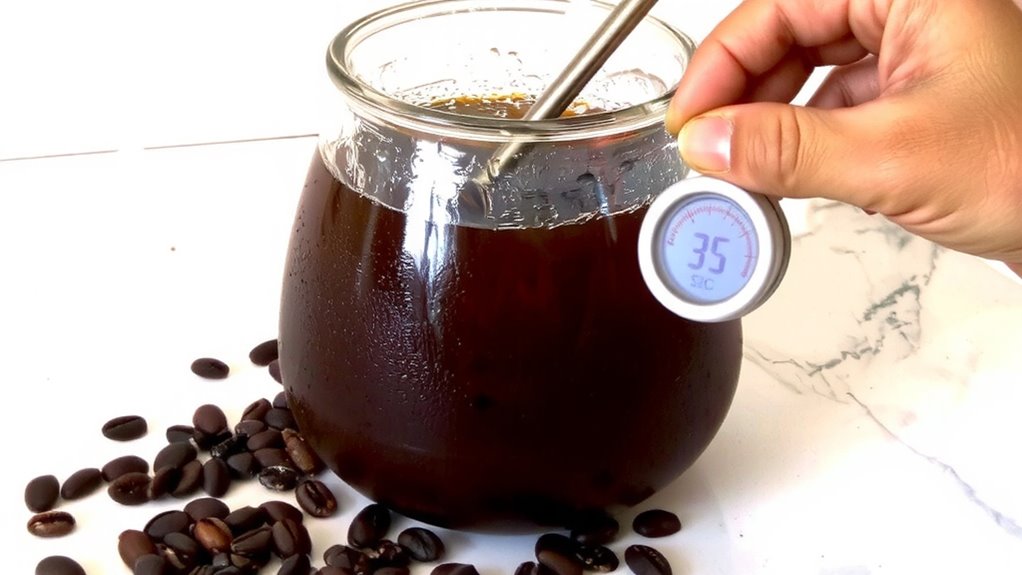
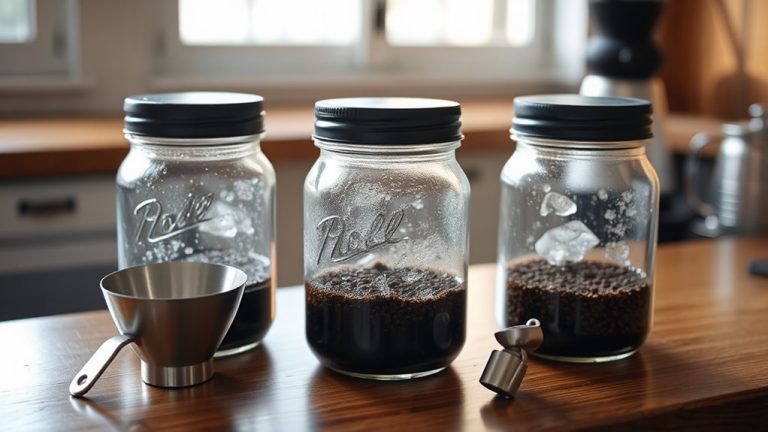
What if your light roast beans could taste brighter, more nuanced, and still smooth in cold brew? You can achieve this by steeping them at 5°C to 10°C (41°F to 50°F) for 14 to 18 hours. Lower temperatures slow extraction, helping preserve delicate flavor development without over-expressing sharp acids. Light roasts need careful handling to maintain acidity balance-too warm, and they turn sour; too cold, and they under-extract, tasting weak. Use a sealed mason jar or French press for consistency. Grind slightly finer than usual (but not too fine) to boost surface area without increasing bitterness. Avoid room-temperature steeping, which risks harshness. Always filter twice for clarity. This method works best with high-quality beans showing floral, citrus, or tea-like notes. The result? A clean, vibrant cold brew with layered complexity and acidity balance intact. For optimal sealing and ease, consider using cold brew mason jar lids designed specifically for this brewing method.
Find the Sweet Spot for Medium Roast Cold Brew
How do you get a balanced, flavorful cold brew from medium roast beans without slipping into bitterness or dullness? The key lies in matching water temperature to bean density and roast age. Medium roasts are denser than dark roasts but less dense than lights, so they need a temp that extracts fully without pulling out harsh notes. Freshly roasted beans (under 10 days) retain more gas, slowing extraction-use 14–16°C (57–61°F). Older or denser beans respond well to 16–18°C (61–64°F).
| Roast Age | Bean Density | Temp (°C) |
|---|---|---|
| Fresh (5–10 days) | High | 14–16 |
| Aged (10–21 days) | Medium-High | 16 |
| Very fresh, dense origin | High | 15 |
| Older blend | Medium | 17–18 |
Adjust within this range based on taste-aim for clarity, sweetness, and smooth finish.
Keep Dark Roast Cold Brew Smooth and Not Bitter
A well-chosen temperature can make all the difference in dialing in a smooth, balanced cold brew from dark roast beans. You’ll want to steep them between 12°C and 16°C (54°F–61°F) to limit over-extraction and avoid harsh bitterness. Dark roasts are more porous and soluble, so colder temps slow extraction just enough to keep flavors clean. Use a consistent coarse grind-fine particles increase grind oxidation, which degrades flavor fast, especially if you’re not brewing right away. Also, consider bean aging; darker roasts degrade faster due to oils on the surface. Beans more than two weeks post-roast may already taste flat or rancid. For best results, grind immediately before steeping and store your beans airtight, away from light. A fridge-safe mason jar or sealed Toddy system works well. Skip room-temp steeping-it’ll likely bring out smoky bitterness you don’t want. For easier cleanup and better flavor control, consider using a dedicated cold brew coffee maker.
How Origin and Density Shape Cold Brew Steep Temp
Dark roast beans aren’t the only factor that affects your cold brew’s final taste-where the coffee comes from and how dense the beans are play a big role too. You’ll notice a clear origin influence in flavor; for example, Ethiopian beans often bring floral, fruity notes, while Brazilian beans lean nutty and sweet. These differences affect how you should set your steep temperature. Beans from high-altitude regions, like those in Colombia or Kenya, usually have higher bean density. Denser beans extract slower, so you might need a slightly warmer steep-say, 5°C instead of 3°C-to pull out full flavor without over-lengthening time. Lighter, less dense beans from lower altitudes can extract more quickly even in colder setups like a standard fridge. Adjusting based on bean density and origin influence helps you avoid weak or flat cold brew. Use a thermometer in your fridge to confirm actual temps-it varies by model. For those who prefer brewing with domestic appliances, choosing a USA-made coffee maker can support local manufacturing while ensuring quality performance.
Steep Time vs. Temp by Roast Type
While light roasts tend to need a bit more time to fully develop their flavors in cold brew, you can speed things up slightly by raising the steep temperature just a few degrees above standard fridge temps-think 5°C instead of 3°C. Lighter beans are denser, so warmer water helps extraction without risk of spoilage. For medium roasts, stick to 4°C and a 14–18 hour steep-this balances sweetness and acidity. Dark roasts extract faster; go cooler (3–4°C) and shorter (10–12 hours) to avoid bitterness. Bean age matters: older beans extract faster, so adjust time or temp down. Freshly roasted beans may need longer. Water hardness also affects extraction; soft water can under-extract, while very hard water over-extracts. Use filtered water with moderate mineral content (around 100–150 ppm). Adjust based on your beans and taste.
Cold Brew Temperature Cheat Sheet by Bean
Since extraction changes with bean type, you’ll want to match your steep temperature to the roast for the best cold brew results. Light roasts, with higher bean density, need slightly warmer water-about 45°F-to extract fully without harshness. Medium roasts do well at 40°F, balancing clarity and body. Dark roasts, being less dense, extract easily, so stick to 35–38°F to avoid over-extraction and bitterness. Water hardness matters too; soft water can under-extract, while very hard water may amplify bitterness, especially in longer steeps. Use filtered water with moderate hardness (between 50–100 ppm) for consistent results. Always grind fresh and adjust temperature based on your bean’s origin and roast date. If your brew tastes flat, check both temp and water quality. A fridge thermometer helps maintain stability. This cheat sheet isn’t rigid-tweak based on your gear and taste.
On a final note
You now know how roast level and bean origin affect cold brew temperature. Light roasts benefit from slightly warmer steeping-around 55°F-to boost extraction. Medium roasts do well at standard fridge temps, 35–40°F, balancing sweetness and clarity. Dark roasts stay smooth when cold, avoiding bitterness. Adjust time and grind accordingly. Use a reliable fridge thermometer and consistent grind size. These small tweaks make a real difference in flavor, clarity, and body-no guesswork needed.