Using Silica Gel Chambers for Final Equilibrium Adjustments in Natural Coffee
You can use silica gel chambers to stabilize natural coffee’s moisture during final equilibrium, reducing mold risk and preserving flavor. Place beans in a sealed container with silica gel packs like DryPack or Boveda, which maintain 50–55% RH. Keep the chamber in a stable, dark spot and monitor with a hygrometer. When weight and moisture (10–12%) stay steady for 24–48 hours, it’s time to remove the beans. Overdrying can dull flavor, so check often. Saturated gel should be recharged in the oven. With proper setup and timing, you’ll enhance shelf life and flavor stability-understanding each step helps you consistently hit ideal conditions.
Notable Insights
- Silica gel chambers stabilize moisture in natural coffee by maintaining 50–55% RH during final equilibrium.
- Place chambers in enclosed, stable environments to ensure consistent humidity and protect flavor compounds.
- Use indicating silica gel to monitor moisture absorption and recharge when color indicates saturation.
- Equilibrium is reached when coffee weight and moisture content remain stable for 24–48 hours.
- Avoid overdrying by removing coffee at 10–12% moisture content to preserve flavor and prevent brittleness.
Getting Started With Silica Gel Chambers for Natural Coffee
Why start with silica gel chambers when fermenting natural coffee? Because they help manage moisture during final equilibrium, reducing mold risk and preserving delicate flavor compounds. You’ll need to set up the chambers in a stable, enclosed space-chamber placement matters. Keep them away from direct sunlight and high airflow, like near AC units, which can skew results. Stackable plastic totes work fine, but food-grade acrylic containers offer better visibility and durability. For best results, use a 50–55% RH silica gel, like DryPack or Boveda. Monitoring frequency is key: check moisture levels every 12–24 hours with a reliable hygrometer. Under-monitored chambers risk over-drying or moisture buildup. While not a replacement for proper drying, they add precision. Skip this if you’re processing in low-humidity climates. Otherwise, it’s a low-cost step with meaningful control.
How Silica Gel Stabilizes Coffee Moisture Levels
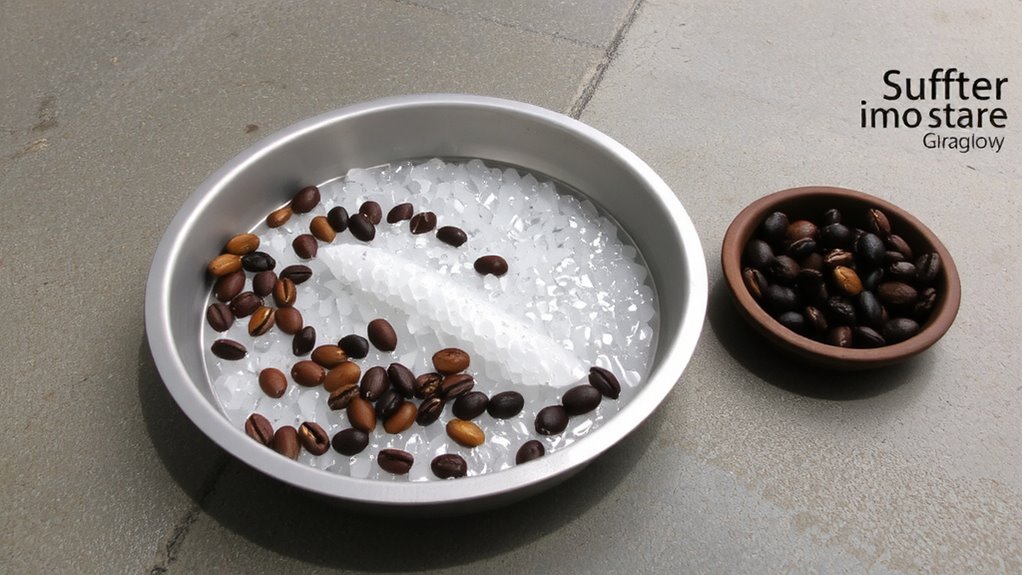
You’ve set up your silica gel chambers to manage moisture during the final stages of natural coffee processing, but how do they actually keep moisture levels steady? Silica gel works by absorbing excess moisture when humidity is high and releasing it when the air is dry, maintaining ideal humidity control. This reversible action helps preserve the coffee’s chemical balance, preventing mold and off-flavors. Think of it as a passive buffer-no power, no complexity, just consistent results.
| Condition | Silica Gel Action |
|---|---|
| High humidity | Absorbs moisture |
| Low humidity | Releases moisture |
| Stable climate | Remains neutral |
| Fluctuating RH | Balances gradually |
This dynamic response guarantees your beans reach equilibrium without overshooting, supporting cleaner flavor development throughout stabilization.
Ideal Chamber Conditions for Natural Coffee Moisture
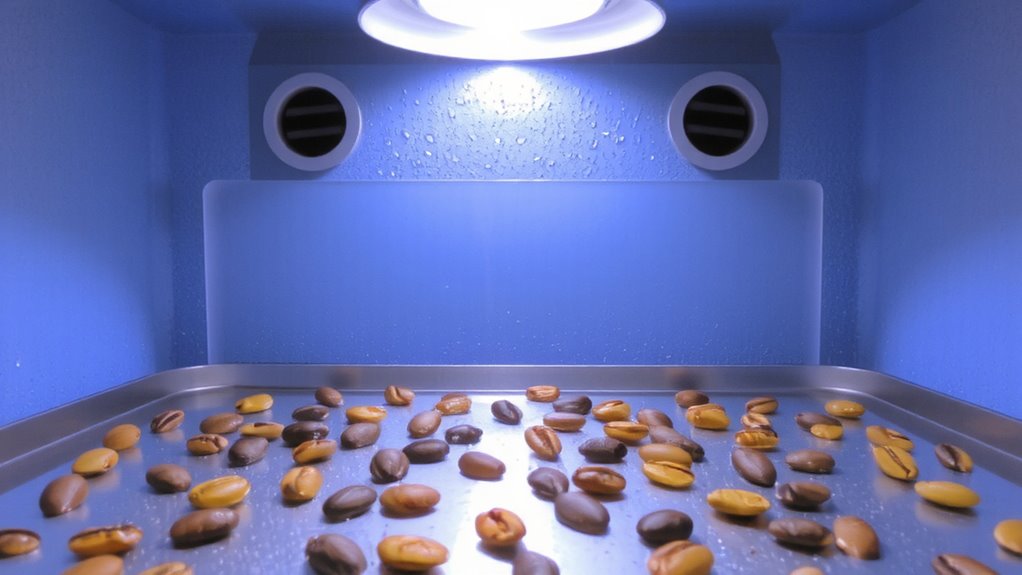
While humidity levels fluctuate during natural coffee processing, maintaining a stable chamber environment is essential for consistent moisture control. You’ll want to keep chamber humidity between 55% and 60% RH-this range supports slow, even drying without encouraging mold or over-desiccation. Silica gel helps regulate this balance by absorbing excess moisture when needed and releasing it if the air gets too dry. For natural coffees, which hold more sugars and fermentables, a longer equilibrium time of 7 to 10 days is typical. This gives beans time to stabilize uniformly, reducing the risk of cracking or flavor loss during storage or roasting. Use a digital hygrometer to monitor conditions daily and guarantee airflow isn’t restricted. Avoid overcrowding parchment-spaced trays work best. These settings won’t speed things up, but they do improve consistency and bean integrity in the final product.
When to Remove Coffee From the Chamber
Once the coffee’s had time to stabilize inside the chamber, you’ll need to determine when it’s ready to come out. The key is watching for clear timing cues and saturation signals. If you’ve been monitoring weight, a stable reading over 24–48 hours means equilibrium’s been reached. That’s your strongest timing cue. Saturation signals include the silica gel beads stopping moisture absorption-no more color change in indicator beads, if using them. For natural coffees, aim for 10–12% moisture content; going longer risks overdrying, which dulls flavor. Check beans with a moisture meter for accuracy-don’t rely solely on time. Pull samples every few days to track progress. Removing too early leads to uneven stability; waiting too long risks losing nuanced aromatics. Once stability and target moisture align, it’s time to remove the coffee. Seal it in barrier bags immediately to lock in the balanced state.
Common Silica Gel Mistakes to Avoid
A poorly managed silica gel chamber can undo weeks of careful coffee stabilization. You risk overdrying your beans if you leave them in too long or use too much gel-this pulls out essential moisture and dulls flavor. Watch for signs of overdrying risk, like brittle beans or a moisture content below 10%. You’ll need a reliable hygrometer and scale to track changes. Another common error is ignoring gel saturation. Once silica gel absorbs all it can, it stops working and must be recharged. If you don’t dry it properly in the oven, it won’t regulate humidity well. Use indicating silica gel-it changes color when saturated-so you know when to rebake it. Always balance gel quantity with bean mass; too much creates aggressive drying. Avoid mixing used and fresh gel batches, as this leads to uneven results. Stay precise, monitor often, and your adjustments stay in control.
How Silica Gel Preserves Flavor and Extends Shelf Life
Since moisture and oxidation are the main enemies of fresh coffee, keeping them in check is key to preserving both flavor and shelf life, and that’s where silica gel chambers come in. By maintaining a stable humidity environment, these chambers prevent flavor oxidation and slow aroma degradation. You’re not eliminating air, but you’re making it less reactive. Silica gel absorbs excess moisture without chilling or sealing out oxygen completely-critical for delicate natural-process beans.
| Factor | Without Silica Gel | With Silica Gel |
|---|---|---|
| Humidity control | Poor | Consistent |
| Flavor oxidation | High risk | Reduced |
| Aroma degradation | Accelerated | Slowed |
| Shelf life | Weeks | Months |
| Bean integrity | Deteriorates | Preserved |
You extend freshness passively and affordably, avoiding stale or flat cups down the line.
Setting Up Your First Silica Gel Drying Batch
Moisture’s the silent killer of fresh coffee, and getting your first silica gel drying batch set up right keeps it in check. Start by choosing a sealed container large enough for your coffee volume-food-grade acrylic or polycarbonate bins work well. Before adding coffee and silica gel, perform chamber calibration: precondition the gel to your target relative humidity (usually 45–55%) using a salt solution. This guarantees stable equilibrium. Use a digital hygrometer to verify conditions inside. Label each batch clearly-include harvest date, origin, and RH goal-so you can track results and avoid mix-ups. Batch labeling matters, especially if you’re testing multiple lots. Spread coffee in a single layer, add calibrated silica gel in breathable sachets, then seal the chamber. Check humidity every 24 hours until stable. Don’t overload the container; efficient airflow improves drying consistency. With proper setup, you’ll preserve aroma and prevent mold.
On a final note
You’ve stabilized your natural coffee’s moisture using silica gel chambers, which helps lock in flavor and extend shelf life. When done right, it’s effective and low-cost. Just don’t over-dry-check beans every 12 hours. Unlike traditional storage, this method gives precise control, especially in humid climates. It won’t replace proper drying, but it fine-tunes the final moisture. Use food-safe containers, recharge silica as needed, and label batches. Practical, simple, and proven.