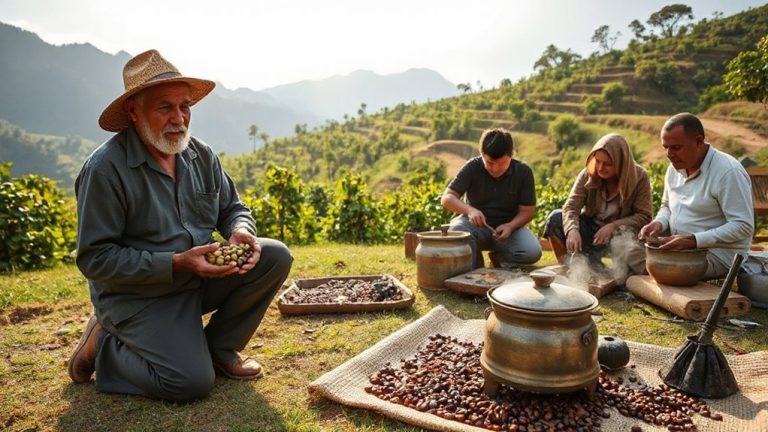
Selling Premium Microlots of Hand-Turned Natural Process Coffee Direct to Roasters
You get fresher, traceable microlots when you buy hand-turned natural process coffees directly from farms-cutting out middlemen improves transparency and quality control. Manual turning during drying reduces fermentation risks while enhancing sweetness and complexity. Source through platforms like Sucafina or farm partnerships, ensuring clear contracts and logistics planning. Prioritize elevation, varietal, and processing details to match flavor profiles with your roast style. Choosing direct trade means better beans and stronger grower relationships-there’s more to how this works.
Notable Insights
- Source premium microlots directly from farms through trusted export partners to ensure freshness and traceability.
- Use hand-turned natural processing to enhance flavor complexity and preserve delicate berry and tropical notes.
- Offer full price and origin transparency to build trust and support roaster budgeting and storytelling.
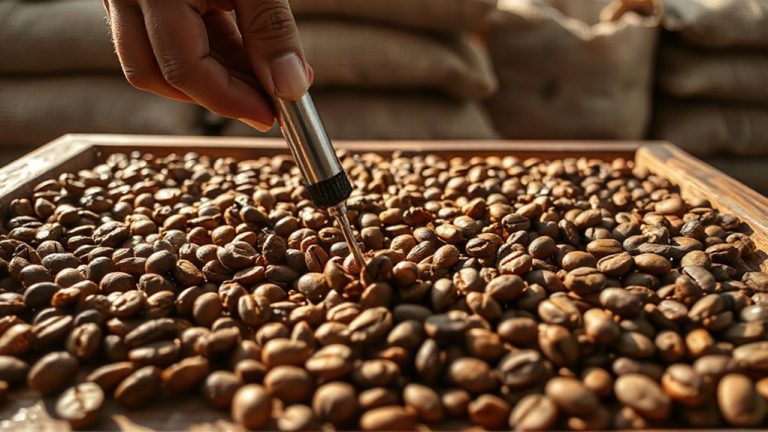
- Prioritize bean quality with strict control over density, moisture, and size for consistent roasting performance.
- Secure top microlots early via long-term farmer partnerships and fair premium pricing agreements.
How Direct Trade Gets You Better Microlots
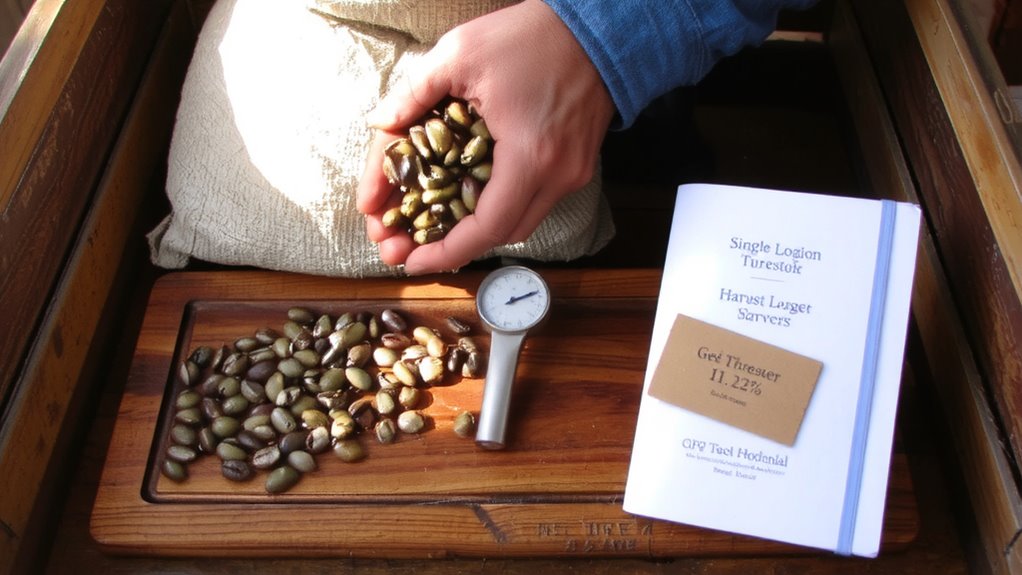
A direct trade model cuts out the middlemen, so you get microlots that are fresher, more traceable, and often higher quality. You deal straight with the farmer, which means you see exactly what you’re paying for-price transparency builds trust and lets you budget smarter. Without layers of brokers, more money goes directly to producers who prioritize care in growing and sorting, supporting better quality consistency across batches. That consistency matters when you’re roasting to profile and need reliable density, moisture, and bean size. While direct trade demands more legwork-vetting partners, managing logistics-the payoff is tighter control over sourcing. Unlike commodity markets or blended offerings, microlots from direct deals give you clarity on origin, harvest date, and processing method. You’ll spot flavor differences crop to crop, but with trusted partners, those shifts stay predictable. It’s not foolproof, but with clear contracts and communication, you reduce surprise-and roasting risk.
Why Hand-Turned Natural Process Coffee Tastes Distinctive
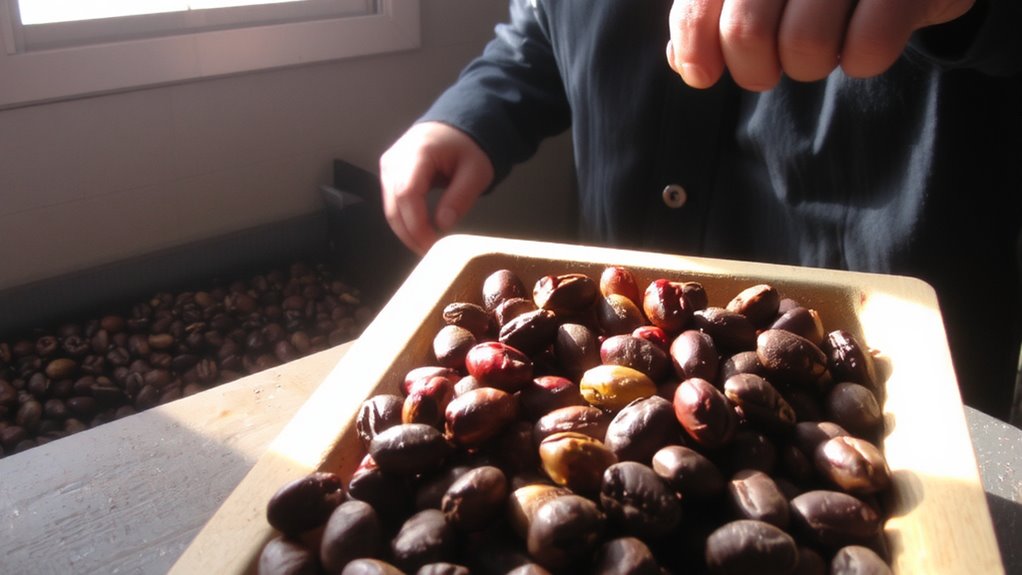
While most washed coffees rely on machinery to remove mucilage, hand-turned natural process coffees develop their flavor through slow, deliberate drying-where you’re turning the cherries by hand every few hours. This careful method lets the beans absorb sugars and compounds from the fruit as they dry, boosting complexity. Because you control the pace and exposure, you reduce over-fermentation risks and mold. The extended, even drying also preserves delicate flavor volatiles that give naturals their signature berry, wine, and tropical notes. Unlike mechanical tumblers, hand-turning doesn’t damage bean morphology, maintaining structural integrity for more consistent roasting. You’ll notice fewer fractures and better density, which translates to cleaner development in the roaster. Machines are faster, sure, but they can’t match the precision of hand-turning when it comes to protecting flavor compounds and bean shape. You’re trading speed for quality-something roasters taste in the cup.
Where and How to Buy Microlots Direct From Farms
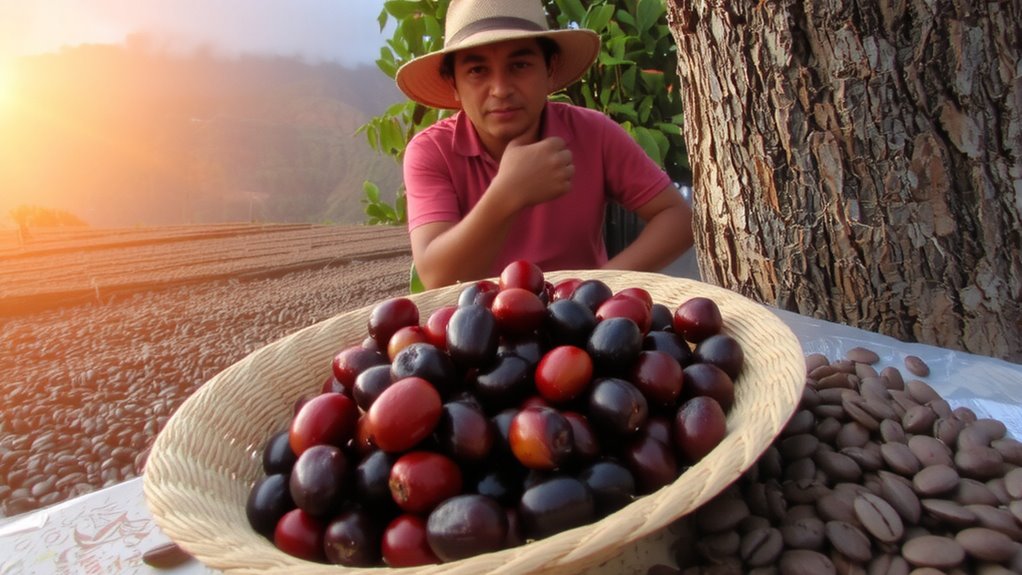
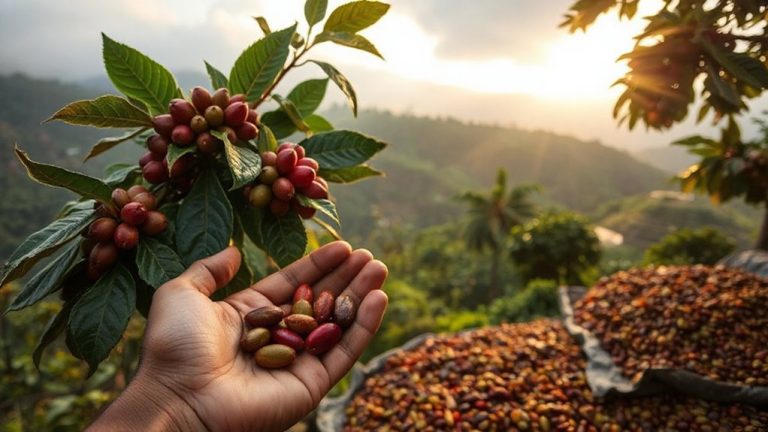
How do you get your hands on those rare microlots that most roasters only dream of? You go straight to the source-small farms producing hand-turned natural process coffee. Start by building relationships at origin, attending coffee expos, or connecting through export cooperatives. Many farmers list microlots on direct trade platforms like Sucafina’s microsite or the Alliance for Coffee Excellence auctions. When buying direct, you’ll face logistics challenges-think shipping delays, customs, and small batch handling. Coordinate with exporters who understand specialty standards. Always clarify payment terms upfront; some farms require full prepayment, while others accept milestone-based installments. Direct deals cut out middlemen but demand more coordination. You gain traceability and freshness, but only if you plan for supply chain variables. Know your risks and options before committing.
How to Evaluate Terroir, Varietal, and Fermentation
Your best shot at identifying standout microlots starts with understanding the flavor signals from terroir, varietal, and fermentation. Soil composition directly affects mineral taste and body-volcanic soils often boost brightness, while clay-heavy ones add richness. Elevation impact is equally critical: higher altitudes slow bean development, increasing density and sweetness. The varietal sets the baseline-Geisha brings floral notes, while Pacamara offers bold body. Fermentation style, whether aerobic or anaerobic, further shapes flavor: longer fermentation adds complexity, but risks off-notes if not controlled.
| Factor | Flavor Influence | Key Consideration |
|---|---|---|
| Soil Composition | Mineral profile, body | Volcanic vs. sedimentary soils |
| Elevation Impact | Acidity, sweetness | Above 1,500m enhances sugar development |
| Fermentation | Fruitiness, clarity | Monitor time and temperature closely |
Partner With Farmers for First Access to Top Lots
You’ve learned how terroir, varietal, and fermentation shape a microlot’s potential, but knowing what makes a coffee exceptional isn’t enough if you can’t get your hands on it. To secure top lots first, partner directly with farmers who prioritize quality. Offer fair farmer incentives like premium pricing or advance payments, which encourage them to save their best beans for you. Build trust through consistent communication and long-term contracts. Supply chain transparency is key-track every step from farm to cup using batch logs or blockchain tools like Farmer Connect. This guarantees authenticity and lets roasters verify quality claims. Direct relationships also reduce delays and middlemen, improving freshness. While it takes more effort than buying through brokers, the payoff is early access to rare, high-scoring coffees. Just remember: transparency means sharing both strengths and flaws in the lot. That honesty strengthens partnerships and supports better sourcing decisions down the line.
Turn Rare Microlots Into Your Best-Selling Offerings
A rare microlot isn’t just a coffee-it’s an opportunity. You can turn it into your best-seller with smart strategy. Prioritize flavor complexity and roast consistency to build trust with buyers. Small batches allow precise control, letting you highlight unique profiles while maintaining quality. Market the origin story, but back it up with repeatable results.
| Origin | Flavor Notes | Roast Guidance |
|---|---|---|
| Ethiopia Yirgacheffe | Blueberry, jasmine | Light, 385°F–395°F |
| Colombia Huila | Red fruit, caramel | Medium, 395°F–405°F |
| Kenya AA | Black currant, citrus | Medium-full, 405°F |
| Panama Geisha | Peach, bergamot | Light, 380°F–390°F |
| Brazil Minas | Nutty, chocolate | Medium, 400°F |
Source wisely, roast with precision, and let the coffee speak for itself.
On a final note
You get better microlots by cutting out middlemen and buying directly from farms that hand-turn natural process coffees. This method enhances flavor but demands precise fermentation control. Look for producers in Ethiopia, Colombia, or Guatemala with strong terroir and known varietals like Geisha or Pacamara. Taste samples side by side, track harvest dates, and commit early. Direct partnerships mean fresher, rarer beans and more consistent quality for your roastery’s top-tier offerings.