Monitoring Moisture Content in Washed Coffee Before Hulling and Export
You need to keep washed coffee moisture between 10–12% before hulling and export to avoid mold, off-flavors, and brittle beans. Without mucilage, these beans are more vulnerable to water damage. Use a calibrated meter like the Dickey John GAC 2100, test at room temperature, and sample multiple spots for accuracy. Dry evenly on raised beds or with controlled mechanical dryers. Stay in this range and you’ll protect aroma, density, and roast consistency-key for quality. There’s more to get right in the full process.
Notable Insights
- Aim to dry washed coffee to 10–12% moisture content to ensure optimal density, roast stability, and shelf life before hulling and export.
- Use calibrated handheld moisture meters, such as the Dickey John GAC 2100, for accurate and consistent moisture readings across batches.
- Measure moisture at room temperature to avoid false low readings caused by cold beans affecting electrical conductivity.
- Take multiple samples from different depths and locations within the batch to account for uneven moisture distribution.
- Prevent mold and fermentation by rejecting lots with moisture above 14% and re-drying if necessary before export.
Why Moisture Ruins Washed Coffee
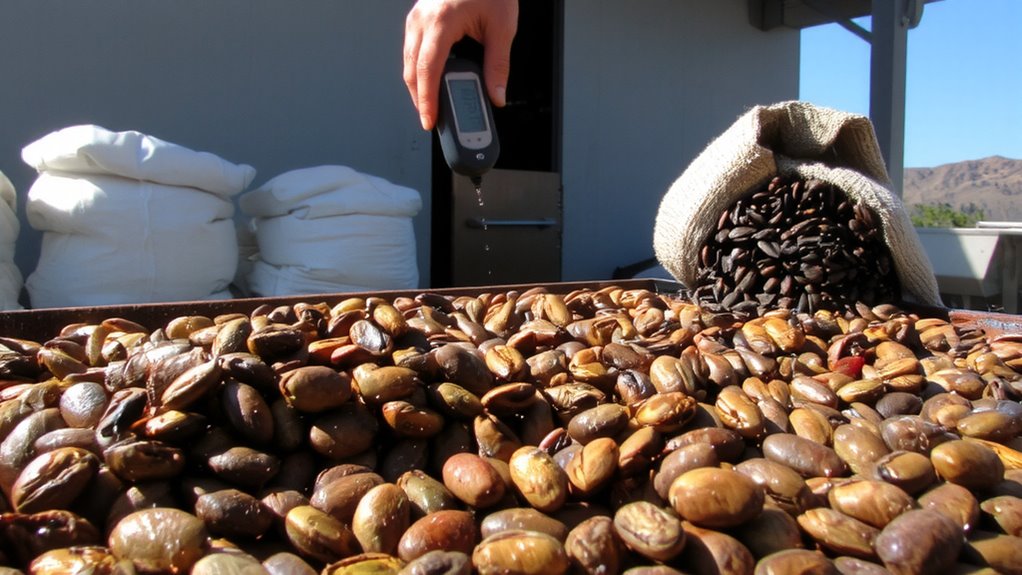
Moisture’s the silent killer of washed coffee quality, and it’s way more than just a storage issue. If you let beans sit too wet after drying, you risk bean discoloration and aroma loss-two sure signs of degradation. Even slight overexposure to moisture can trigger mold or fermentation inside the parchment, dulling brightness and clarity in the cup. You’ll notice uneven coloration first, often a yellowish or grayish tint-clear red flags. That faded scent? That’s volatile compounds breaking down, meaning your coffee’s complexity is vanishing. Unlike natural or honey processes, washed coffees lack protective mucilage, making them more vulnerable. You’ve worked hard to achieve clean, bright profiles-don’t lose them in the final stretch. Always measure moisture before hulling; rely on a calibrated meter, not guesswork. Aim below critical thresholds to preserve cup quality. Moisture control isn’t optional-it’s essential.
What 10–12% Moisture Means for Quality
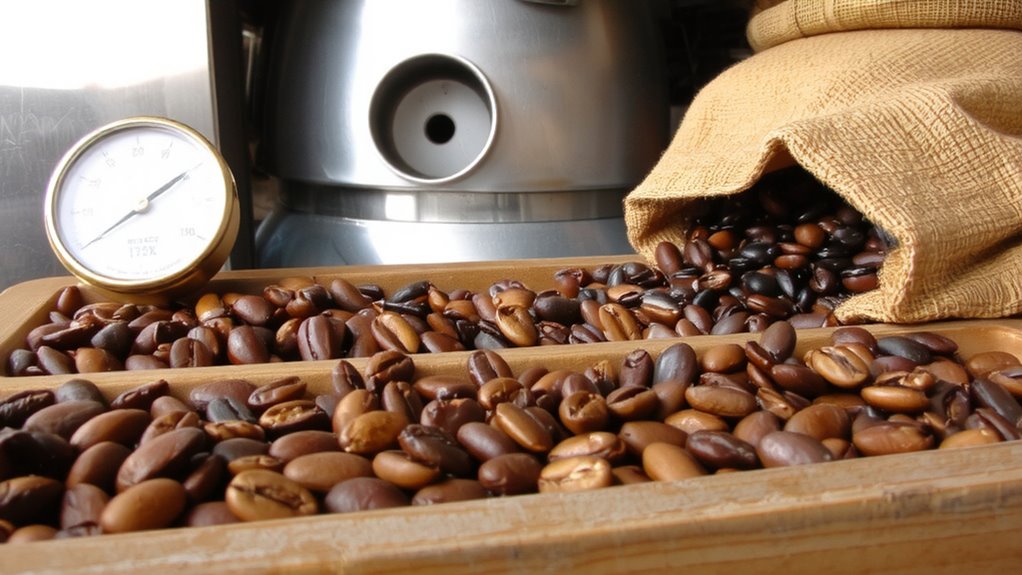
You’ll often hear pros aim for 10–12% moisture content in dried washed coffee, and for good reason-it’s the sweet spot where stability meets quality. At this range, bean density remains consistent, which supports even roasting and preserves cup complexity. Too dry, and beans become brittle, losing aromatic compounds; too wet, and you risk mold or fermentation post-hulling. Accurate monitoring with a reliable coffee bean moisture meter ensures you stay within this optimal range and uphold export-ready quality.
Here’s how moisture impacts key quality factors:
| Moisture Level | Effect on Coffee |
|---|---|
| Below 10% | Reduced bean density, flat cup complexity |
| 10–12% | Ideal balance, stable, vibrant flavor |
| 12–13% | Slight risk of spoilage, uneven roasting |
| 13–14% | Higher deterioration risk, must re-dry |
| Above 14% | High mold risk, poor shelf life |
Staying in the 10–12% range guarantees structural integrity and peak sensory performance before export.
How to Measure Coffee Moisture Accurately
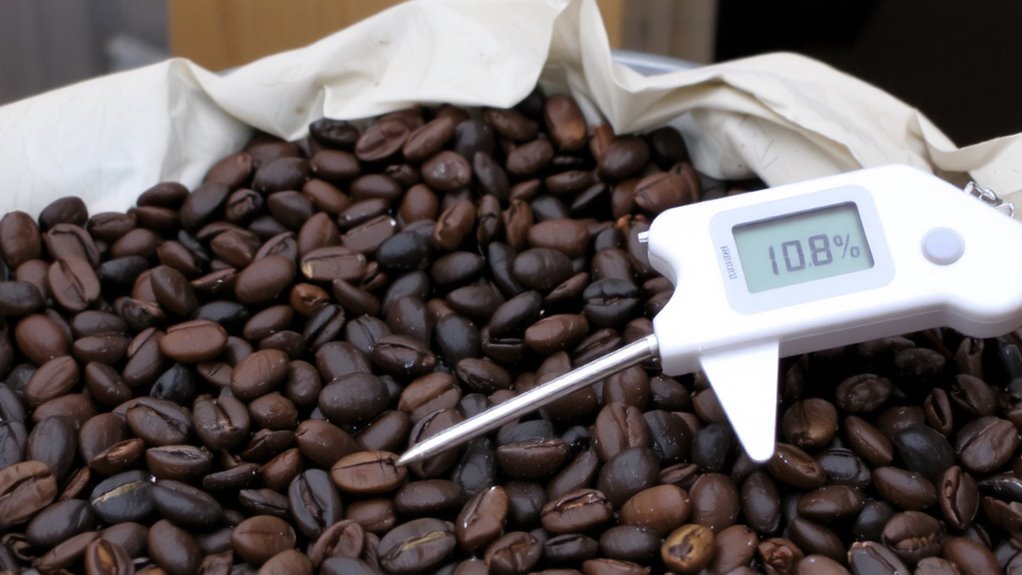
Hitting that 10–12% moisture target isn’t guesswork-it starts with accurate measurement. You’ll want a reliable moisture meter, preferably a calibrated handheld model like the Dickey John GAC 2100 or Protimeter. These use electrical conductivity to estimate moisture-water conducts electricity, so higher readings usually mean wetter beans. But here’s the catch: temperature variance affects readings. Cold beans can give false lows, making them seem drier than they are. Always test samples at room temperature for consistency. Take multiple readings from different bags or batches, since moisture isn’t always evenly distributed. Oven testing is more accurate but time-consuming and impractical daily. Moisture meters give fast results, but only if you use them right. Skip the guesswork-measure correctly, account for temperature variance, and trust the numbers, not touch or feel. It’s the only way to be sure.
Drying Washed Coffee Without Overdoing It
How do you know when your washed coffee’s dry enough but not too dry? You’re aiming for 10–12% moisture content-enough to prevent mold but not so low that beans become brittle. Sun exposure is effective and low-cost, but it demands constant monitoring. Spread beans in thin, even layers on raised beds, rotating them regularly for uniform drying. Overdoing sun exposure can bake the outside while trapping inner moisture, so shade part of the bed during peak afternoon heat. Pair that with proper airflow control: use mesh-sided drying beds or mechanical dryers with adjustable vents to manage humidity. If you’re using a mechanical dryer, go slow-high heat cracks beans. Natural drying takes longer, but with consistent airflow and moderate sun exposure, you maintain bean integrity. Check moisture levels daily using a calibrated meter. Stop drying as soon as you hit the target range.
Avoiding Mold, Fermentation, and Brittle Beans
While drying coffee might seem straightforward, failing to control moisture properly can lead to mold growth, unwanted fermentation, or brittle beans that crack during roasting. If beans stay too wet, mold spreads easily, causing off-flavors and health risks. You also risk ongoing fermentation inside the parchment, which harms bean texture and leads to inconsistent roasting. On the other hand, overdrying makes beans too brittle, increasing breakage during hulling and roasting. Both scenarios contribute to flavor degradation, reducing cup quality and market value. To avoid these issues, you need to dry washed coffee to the right moisture range-typically 10–12%-where beans remain stable without risking microbial activity or structural damage. Maintaining this balance preserves bean texture and protects flavor integrity through storage and transport.
Using Moisture Meters for Consistent Results
Since moisture levels directly impact shelf life and roast performance, relying on guesswork isn’t an option if you want consistent results. Using a moisture meter gives you real-time data to make informed decisions before hulling or shipping. But for accurate readings, you’ve got to pay attention to calibration drift-over time, sensors lose accuracy, so check them regularly with a known standard. Skip this, and your numbers become unreliable. Sensor placement matters too: sample beans from multiple depths and locations in the batch, not just the surface, since moisture can vary. Handheld meters like the DPM or GrainCheck are popular and portable, but only if used correctly. Take several readings and average them. Don’t trust a single number. Consistency comes from routine, proper technique, and regular maintenance-not luck.
On a final note
You need to monitor moisture in washed coffee before hulling and export to protect quality. Aim for 10–12%-too high risks mold and fermentation, too low makes beans brittle. Use a reliable moisture meter, like the Dickeya 200 or GrainCheck, for consistent readings. Check multiple batches and locations in the lot. Proper drying in the right conditions prevents issues. This step isn’t optional if you want stable, high-quality coffee.