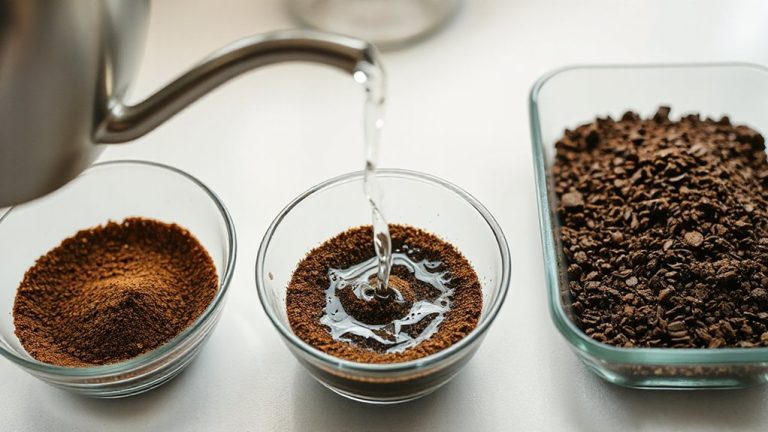
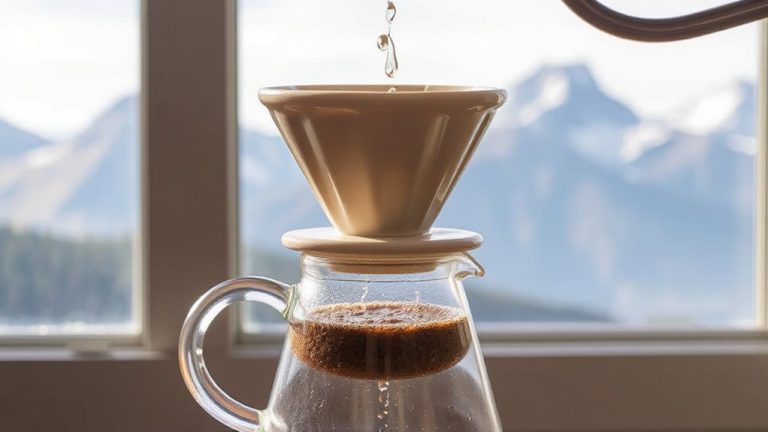
Optimizing Pour Over Technique: The Importance of Pour Height, Speed, and Pulse Timing
Keep your pour height low-just 2–4 inches above the bed-to limit turbulence and avoid over-extracting light roasts. Pour at 2–3 grams per second using a gooseneck kettle for control. Use pulses of 50–60g of water, pausing 10–15 seconds between them to prevent channeling. Maintain water between 195°F and 205°F for even extraction. Nail these details, and you’ll consistently brew balanced, bright coffee-every time. There’s more to mastering each variable than most realize.
Notable Insights
- Maintain a low pour height (2–4 inches) to minimize turbulence and prevent over-extraction, especially with light roasts.
- Control flow rate at 2–3 grams per second to ensure balanced extraction and avoid sour or bitter flavors.
- Use pulse pours of 50–60g water, pausing 10–15 seconds between pulses for even drainage and saturation.
- Keep water temperature between 195°F–205°F throughout brewing to maintain consistent extraction efficiency.
- Use a gooseneck kettle to precisely manage pour height, speed, and spiral pouring for optimal extraction control.
How Pour Height Changes Your Coffee’s Flavor
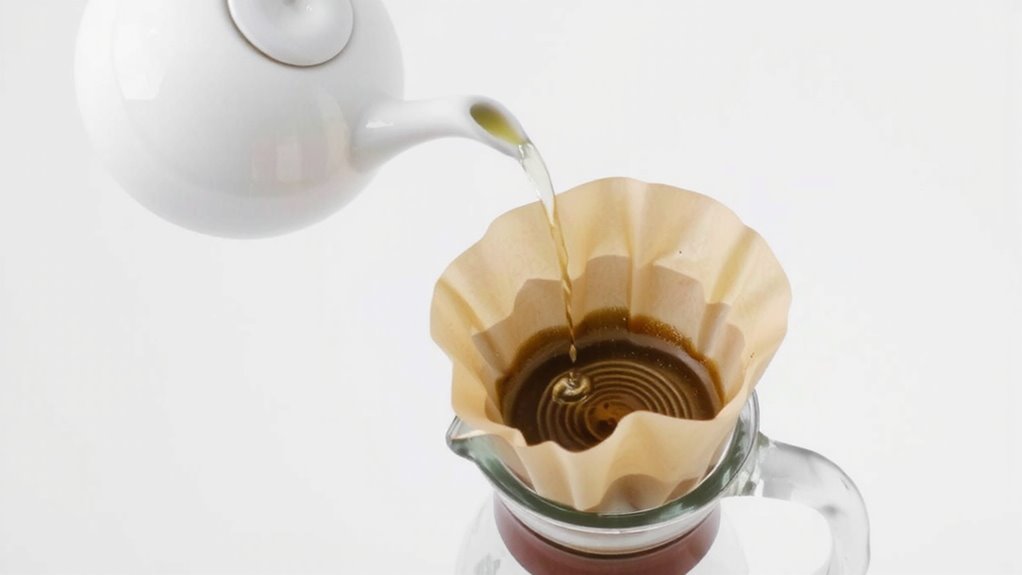
While you might not think a few inches make a difference, the height at which you pour water during your pour over brew can actually shift the flavor of your coffee in noticeable ways. Pouring from a higher point increases water turbulence, which can over-agitate the grounds and lead to uneven extraction, especially with delicate light roasts. Lower pours, around 2–4 inches above the bed, create gentler saturation, helping maintain control over bloom duration and reducing the risk of channeling. If your coffee tastes harsh or muddled, excessive turbulence from a high pour could be the culprit. For clarity and balance, particularly with pour overs like the Hario V60, keep your gooseneck kettle low after the bloom. This stabilizes flow and supports a more consistent extraction. Adjusting height is a simple fix with measurable results-no extra gear needed, just mindful pouring. Using a gooseneck kettle with precision pouring capabilities can significantly enhance control over pour height and flow rate.
Pour at This Speed for Balanced Extraction
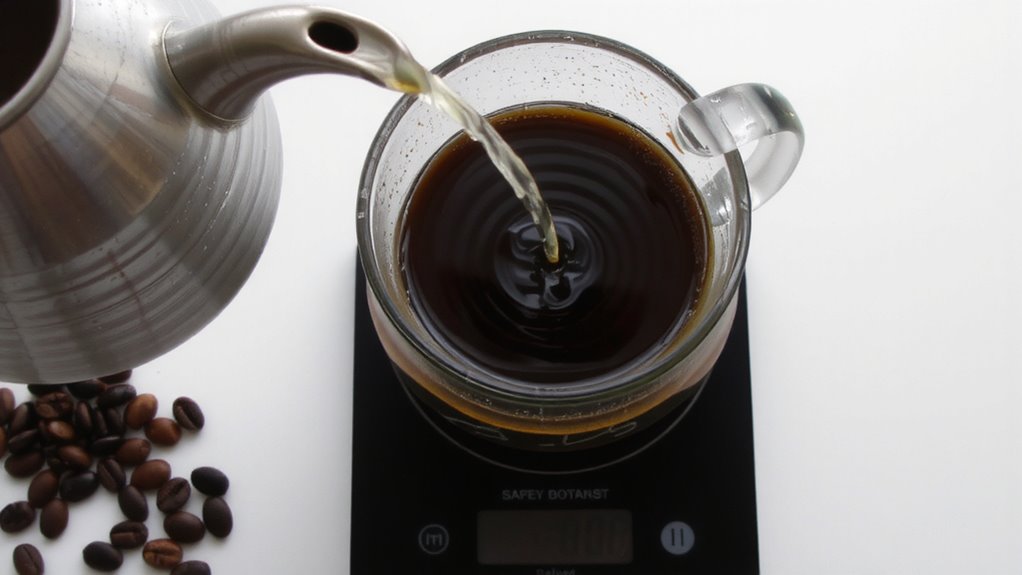
You’ve already seen how pour height affects agitation and extraction, and now it’s time to regard how quickly you’re adding water. Your water flow directly influences saturation control, which is key for balanced extraction. Too fast, and you’ll under-extract-your coffee tastes weak and sour. Too slow, and over-extraction leads to bitterness. Aim for a steady, medium-paced pour, about 2–3 grams per second, depending on your brewer. A gooseneck kettle helps here, letting you precisely manage flow without splashing. Brands like Fellow Stagg or Hario Buono offer kettles designed for this control. It’s not just about speed-it’s consistency. Uneven pouring creates channels, where water bypasses grounds, hurting flavor. With practice, you’ll match flow rate to your grind size and roast. Lighter roasts need slightly slower saturation; darker roasts handle a touch more speed. Master this, and your coffee will taste more even, clean, and balanced every time. Pairing your kettle with the right coffee drippers can further enhance control and flavor clarity.
Time Your Pulses for Even Brewing
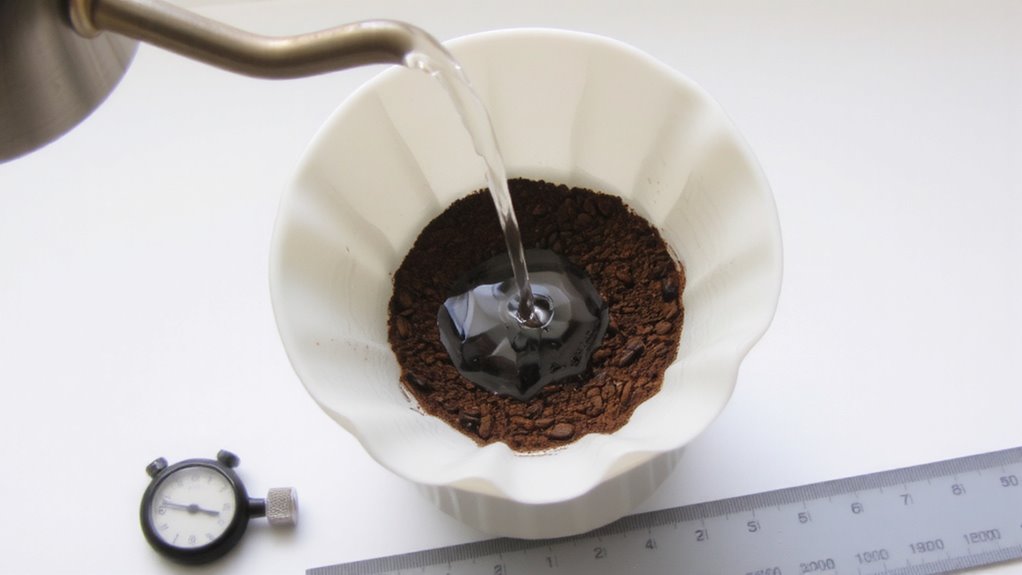
Why does your coffee sometimes taste uneven, even when you’re careful with grind and pour rate? You might be overlooking pulse timing. Spacing your pours correctly guarantees water moves evenly through the grounds, improving extraction. Aim for pulses of 50–60g of water, pausing just long enough-about 10–15 seconds-for the slurry to drain slightly before the next. This keeps the bed level and prevents channeling. Maintaining consistent water temperature (195°F–205°F) during each pulse is essential-too cool and extraction lags; too hot and you risk bitterness. Total brew time should fall between 2:30 and 3:30 for a 15g dose. Hesitate too long between pulses and the bed collapses, cooling the water and stalling extraction. Use a gooseneck kettle and timer to stay precise. With practice, timed pulses create balanced, repeatable results-no fancy gear required, just attention to rhythm and timing.
Fix Under- and Over-Extraction With Better Pouring
If your coffee tastes sour one day and bitter the next, the issue might not be your beans or brew time-it’s likely how you’re pouring. Under-extraction often leads to sour notes and happens when water moves too quickly through coarse grounds, not pulling enough flavor. Over-extraction creates bitterness, usually from water lingering too long on fine grounds. You can fix both by adjusting your pouring speed and consistency. Pour slower and in steady spirals to improve contact time. Pair this with the right grind size-medium-fine for most pour overs-and maintain a stable water temperature around 195–205°F. Too hot, and you risk scorching; too cool, and you under-extract. Your gooseneck kettle helps control flow, while a thermometer or temperature-controlled kettle maintains accuracy. Small pouring tweaks, matched to grind and heat, balance extraction and taste. For precise temperature control, consider using a temperature-controlled kettle.
Why Your Pour Technique Determines Coffee Quality
How much control do you really have over your coffee’s flavor? More than you think-and it starts with your pour technique. The way you pour directly affects extraction, which determines whether your coffee tastes balanced, sour, or bitter. Even with the right grind size and water temperature, a poor pour can ruin your brew. Pouring too fast cools the water too quickly, under-extracting the coffee. Pouring too slow overheats the grounds, risking over-extraction. A consistent, controlled pour maintains even saturation and stable water temperature throughout. Your grind size must match your pour speed: finer grinds need slower pours, coarser ones handle faster flows. Pulse pouring helps control this, letting you manage turbulence and contact time. A gooseneck kettle gives precision, improving control over height and flow. Ultimately, your technique ties all variables together-making it the deciding factor in coffee quality.
On a final note
You control extraction more than you think. Pour height, speed, and pulse timing directly shape flavor. A higher pour increases agitation, boosting brightness but risking over-extraction. Slow, steady pours with short pulses improve balance, especially with medium roasts. For lighter beans, use lower, slower pulses to avoid harshness. A gooseneck kettle gives precision-essential for consistency. Adjust one variable at a time, then taste. Small tweaks fix most issues, no gear upgrade needed.