What Makes Gesha Village Coffee a Benchmark for Modern Specialty Arabica
You’re tasting coffee shaped by rare high-altitude Ethiopian terroir, where volcanic soil and elevation over 1,900 meters slow bean development for greater density and clarity. The Geisha varietal delivers floral, citrus, and tropical notes best highlighted with medium-light roasts and precise brewing at 195–205°F. At Gesha Village, every step-from controlled fermentation to shade-drying and laser sorting-meets exacting standards that consistently yield 90+ scores, setting a benchmark others aim to match. There’s more behind how each lot gets there.
Notable Insights
- High-altitude cultivation above 1,900 meters enhances bean density and flavor complexity.
- Geisha varietal’s genetic origin delivers exceptional floral, citrus, and tropical fruit notes.
- Precision fermentation and shade-drying ensure clean, consistent, and nuanced flavor profiles.
- Rigorous quality control meets 90+ cupping standards through triple blind tastings and laser sorting.
- Sustainable practices and community investment support long-term ecological and social resilience.
The Terroir Behind Gesha Village Coffee
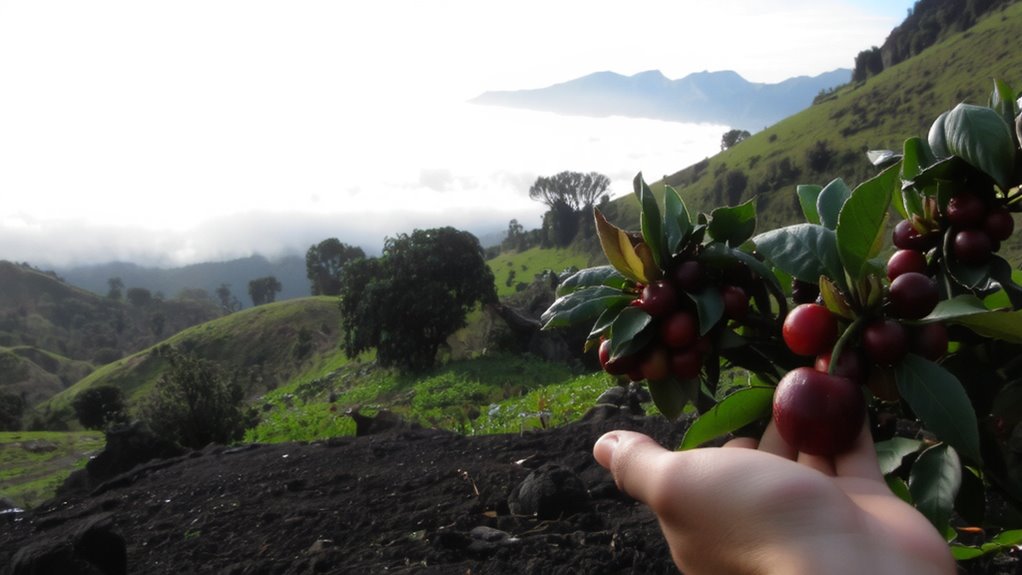
Its high elevation, consistent rainfall, and fertile volcanic soil give Gesha Village Coffee its distinct profile, making terroir a critical factor in its success. You’re dealing with high altitude here-over 1,900 meters-which slows bean development, boosting density and complexity. That elevation, paired with frequent rains, creates ideal growing conditions. The volcanic soil isn’t just fertile; it drains well while retaining enough moisture to sustain steady growth, reducing the need for irrigation. These aren’t minor advantages. Compare it to lower farms using synthetic inputs, and the difference shows in cup clarity and consistency. If you’re sourcing beans, prioritize farms leveraging natural terrain like this-it cuts production costs and supports cleaner processing. When brewing, expect even extraction thanks to uniform bean hardness. Terroir like Gesha Village’s isn’t replicable everywhere. High altitude and nutrient-rich volcanic soil together form a rare combo that works.
The Distinctive Flavor of the Geisha Varietal
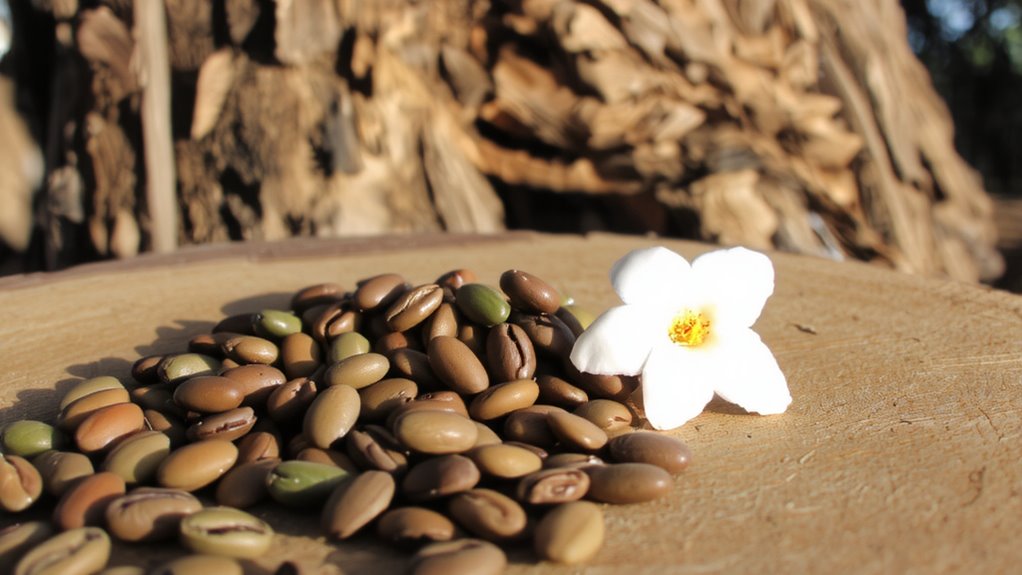
You’ll notice the Geisha varietal stands out the moment you taste it-floral, bright, and layered with citrus and tropical fruit notes that aren’t typical in most arabica beans. Its flavor clarity comes from its unique genetic lineage, traced back to wild Ethiopian coffee forests, which gives it an inherent edge in aromatic complexity. You’ll pick up jasmine, bergamot, and stone fruit even in a basic pour-over, but a gooseneck kettle with precise temperature control (around 195–205°F) helps extract the full range without bitterness. Compared to standard arabica, Geisha demands careful brewing; too hot or too long and you lose nuance. The bean’s structure responds best to medium-light roasts that preserve its delicate highs. Whether using a V60 or batch brewer, expect higher clarity and floral lift few other varietals can match. This isn’t just taste-it’s measurable in cupping scores and sensory data. For those seeking the highest expression of this varietal, Best Geisha Coffee Picks offer carefully sourced beans that highlight its exceptional profile.
Precision Processing at Gesha Village
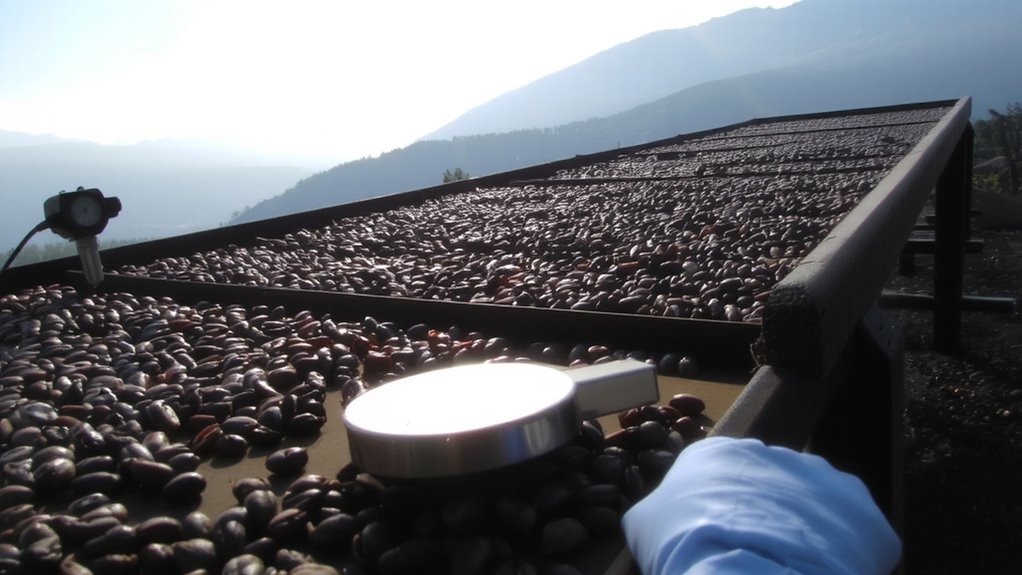
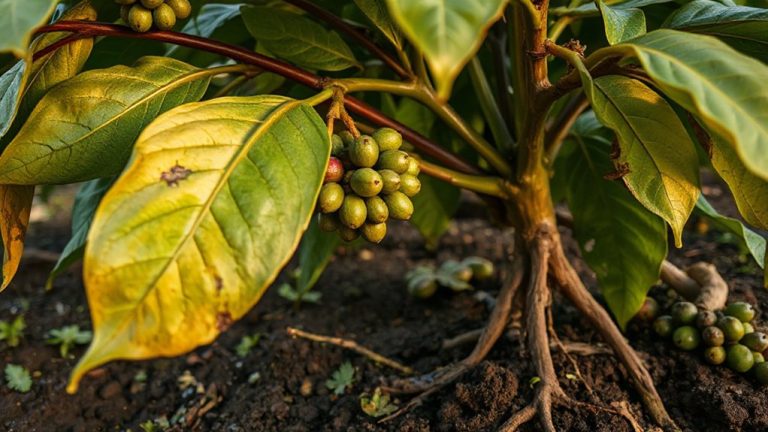
While many farms treat processing as a background step, at Gesha Village it’s where the coffee’s potential is locked in through tightly controlled methods. You’ll see fermentation control taken seriously-each lot is monitored hour by hour, with adjustments made based on temperature, humidity, and bean maturity. This isn’t guesswork; it’s precise, timed exposure that prevents over-fermentation and guarantees clean, expressive flavors. After pulping, beans move to drying beds under shade canopies, where drying optimization begins. Workers regularly rotate the beans and cover them during rain or high UV, maintaining an even moisture loss. Too fast, and you risk cracking; too slow, and mold becomes a threat. The goal is consistent, gradual drying to around 10–12% moisture. This level of attention, using simple tools but rigorous protocols, makes a measurable difference in cup quality and stability across batches.
How Gesha Village Achieves 90+ Cupping Scores
Though most specialty coffees aim for consistency, Gesha Village pushes further by treating every stage-from farm to cup-as a controlled variable that directly impacts cupping outcomes. Their scoring methodology follows Q Grader standards, but with added internal benchmarks to guarantee cupping consistency across harvests. Every lot is assessed multiple times, minimizing human error and environmental variance during evaluation.
| Factor | Standard Practice | Gesha Village’s Approach |
|---|---|---|
| Drying | Sun-dried on patios | Raised beds, humidity-controlled |
| Sorting | By density/size | Laser sorting + hand selection |
| Roast | Light specialty profile | Custom profile per micro-lot |
| Cupping | Single assessment | Triple evaluation, blind tastings |
This systematic rigor guarantees scores not just hit 90+, but stay there. You can replicate parts of this-like consistent roast development or precise moisture checks-but full control demands investment in both gear and process discipline.
Gesha Village’s Model of Sustainable Ethiopian Farming
Because sustainability shapes both quality and long-term yield, Gesha Village integrates eco-conscious practices into every layer of their farming model. You’ll find organic farming at its core-no synthetic pesticides or fertilizers, just compost, mulch, and shade trees that protect soil and encourage biodiversity. This isn’t just good for the environment; it produces cleaner, more stable beans, which matters when you’re chasing 90+ cup scores. Water management is precise: wet mills use recirculation systems to cut waste. But sustainability isn’t only environmental. Community empowerment is built in-farmworkers earn fair wages, get training, and contribute to decisions. The result? Lower turnover, better farm care, and higher-quality harvests. Unlike estates that prioritize short-term output, Gesha Village invests in people and land as part of the production chain. You see the payoff not just in the cup, but in lasting farm resilience. It’s a model others can copy, especially in Ethiopia’s highlands where smallholders dominate.
On a final note
You get the best from Gesha Village coffee by using precise brewing methods like pour-over or precision drip. Use fresh beans, clean gear, and filtered water heated to around 200°F. Grind just before brewing and stick to a 1:16 coffee-to-water ratio. This highlights its delicate floral and citrus notes. Lower-quality gear or old beans dull its 90+ cupping traits. For clarity, a Hario V60 or Fellow Stagg works better than standard drip machines.