V60 Grind Size Guide: Medium-Fine for 2:45–3:15 Brew
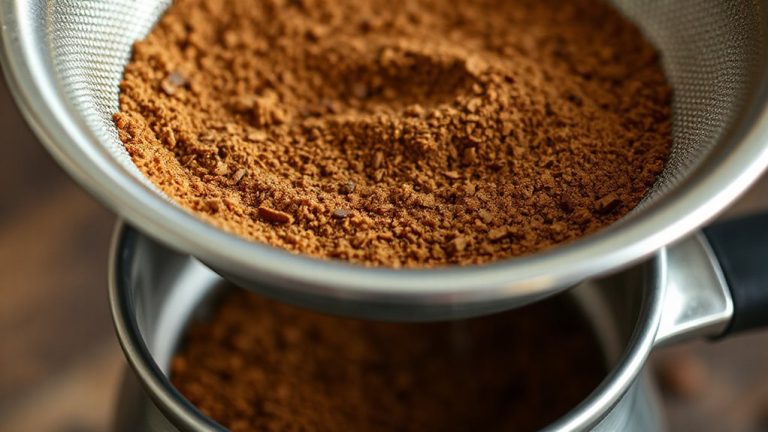
Use a conical burr grinder to start with a medium-fine grind, like granulated sugar, and aim for a 2:45–3:15 brew time. If your coffee tastes sour or thin, go finer; if it’s bitter or astringent, go coarser. Adjust in quarter-turns, using taste and time as your guide. Freshness and roast level matter-lighter roasts need finer grinds, darker ones coarser. Dial in fresh each session for clarity and balance-your next brew will be even more precise with a few simple tweaks.
Notable Insights
- Start with a medium-fine grind, similar to granulated sugar, to balance extraction and clarity in V60 brewing.
- Aim for a total brew time of 2:45 to 3:15 minutes, adjusting grind size to hit this sweet spot.
- If the coffee tastes sour or thin, refine the grind slightly to increase extraction and sweetness.
- If the coffee is bitter or astringent, coarsen the grind to reduce over-extraction and improve clarity.
- Use a conical burr grinder, clean and calibrated, to ensure uniform particles and consistent flavor precision.
How Grind Size Controls Your V60 Flavor
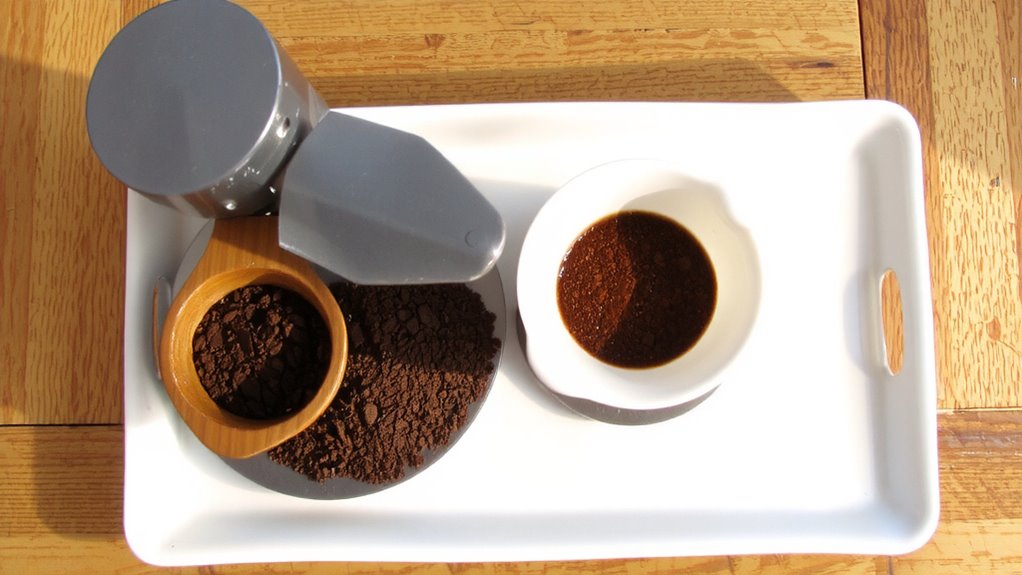
While the flavor of your V60 brew might seem like a matter of personal taste, it’s actually heavily influenced by something you can control: grind size. Going finer slows water flow, increasing brew time and pulling out more sugars and acids-this can enhance body and sweetness if done right, but risks bitterness if overdone. A coarser grind speeds things up, shortening brew time and often yielding lighter flavor notes like citrus or floral tones, though it may result in weak, sour coffee if too coarse. Aim for a medium-fine grind, similar to granulated sugar, as a starting point. Most specialty roasters recommend 2:45 to 3:15 minutes for total brew time. Adjusting even slightly can shift flavor notes noticeably. Use a quality burr grinder-like the Baratza Encore or 1ZPresso JX-Pro-for consistent results. Small changes make big differences. For precise adjustments, choose a grinder with stepless grind settings to fine-tune your preferred brew profile.
Spot Under- and Over-Extraction Fast
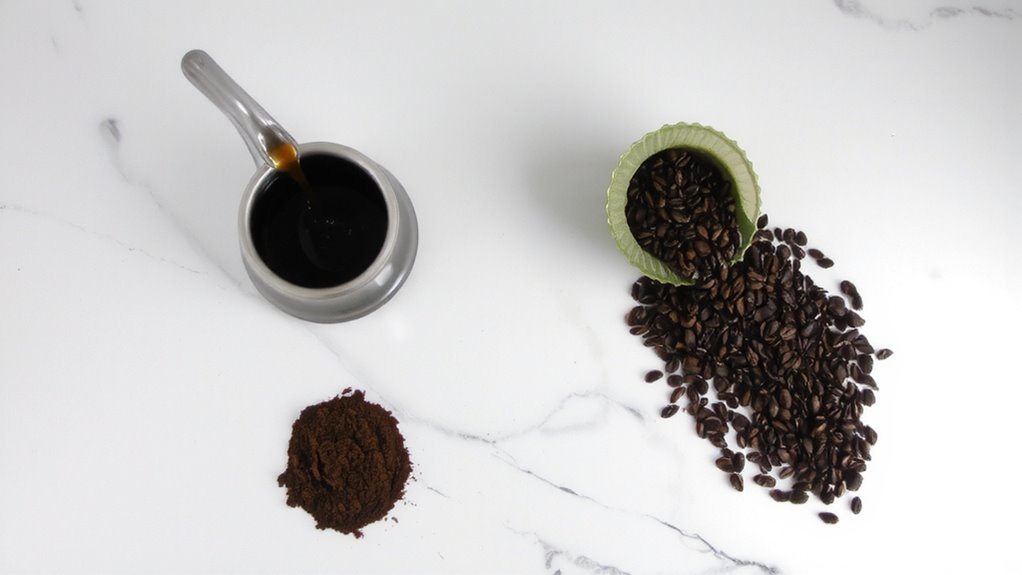
You can spot under- and over-extraction quickly by paying close attention to taste and brew time. If your coffee tastes thin or sharp, with prominent sour flavors, it’s likely under-extracted-common when the grind is too coarse or brew time is under 2:30. The acids come out first, and without enough contact time, sugars and body don’t follow. On the flip side, if you’re getting harsh bitter notes, especially a lingering astringency, the coffee’s probably over-extracted-usually from a grind that’s too fine or a brew time over 3:30. Water pulls deeper compounds too aggressively, creating imbalance. Sour flavors mean you need a finer grind or longer brew; bitter notes call for coarser. Taste tells you more than theory ever could-adjust, re-brew, and compare. Keep notes. Trust the process. Using a high-quality V60 dripper can enhance clarity and make it easier to dial in your grind size accurately.
Use a Conical Burr Grinder for Consistency
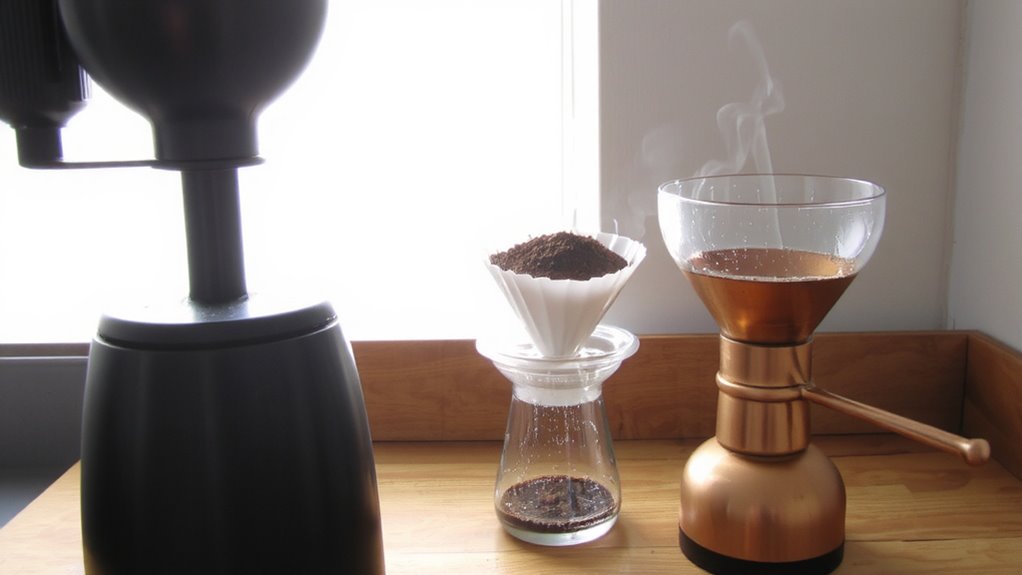
A good conical burr grinder is almost always worth the investment if you’re serious about better coffee. Unlike blade grinders, conical burr models crush beans uniformly, which is key for even extraction in your V60. Consistent particle size starts with proper burr alignment-misaligned burrs create fines and boulders that ruin clarity. You’ll also need regular grinder calibration to match your brew settings, especially when switching beans or adjusting for freshness. Conical burrs generate less heat than flat burrs, preserving delicate flavors. Look for grinders like the Baratza Encore or 1zPresso Q2, known for stability and ease of calibration. While more expensive upfront, they deliver repeatable results over time. Avoid skipping maintenance-check burr alignment every few months to guarantee performance stays consistent. With the right setup, you’re far more likely to achieve that clean, balanced cup. For more options tailored to pour-over brewing, consider exploring the best grinders for filter coffee.
Dial In Your V60 Grind in 5 Minutes
What if you could fix weak or bitter coffee in just five minutes? Start by brewing your V60 as usual, then taste. If it’s sour or thin, your grind is likely too coarse-adjust finer. If it’s harsh or astringent, go coarser. Small tweaks matter: a quarter turn on your grinder can shift extraction dramatically. Always use fresh beans and consistent water, and make sure your grinder maintenance is up to date-a clogged or uneven burr skews results. Clean your grinder monthly to preserve accuracy. Compare your brew to official cupping notes; if you’re missing the bright citrus or floral hints the roast promises, your grind size is probably off. This quick dial-in method prioritizes flavor clarity and balance. Within five minutes, you’ll land close to ideal, saving time and coffee. It’s not perfect, but it’s fast, effective, and repeatable.
Adjust for Roast Level and Bean Freshness
Since lighter roasts tend to be denser and more acidic, they generally need a finer grind to extract fully without tasting sour or sharp. Roast density plays a big role here-lighter beans are harder, so they resist water penetration, requiring more surface area (finer grind) for proper extraction. Darker roasts, being less dense and more brittle, extract faster and can turn bitter if ground too fine, so you’ll want to go slightly coarser. Freshly roasted beans also affect your grind. In the first few days after roasting, CO2 builds up during the degassing timeline, which can disrupt water flow and extraction. If your beans are less than four days old, you might need a coarser grind to offset channeling. Wait at least three to five days post-roast for ideal balance. Adjust based on roast level and age-don’t assume the same grind works every time.
Fine-Tune With Water and Pour Technique
While grind size sets the foundation, your water and pour technique can make or break the final cup, so it’s worth adjusting them deliberately. Use water temperature between 195°F and 205°F-too hot, and you risk scalding the coffee, pulling bitter notes; too cool, and extraction falls flat. A gooseneck kettle helps control pour speed, giving you precision. Start with a slow, steady pour during bloom (about 30 seconds), then maintain consistent, spiral motions to saturate the bed evenly. Faster pours increase agitation, boosting extraction but risking muddiness if overdone. Slower pours enhance clarity, especially with light roasts. Adjust pour speed to balance body and brightness-try pausing between pulses in a multi-stage pour. If the brew tastes sharp, lower the temperature slightly. If it’s dull, increase pour speed or temp. These tweaks refine what your grind starts.
On a final note
You’ve got the tools to nail a balanced, clear V60. Start with a medium-fine grind on a conical burr grinder like the Baratza Encore, adjust based on taste-faster flow or sourness means go finer, bitterness or slowness means go coarser. Match the grind to roast level: lighter roasts need finer settings. Tweak water temperature and pour speed if needed, but the grind size is your main control. It’s repeatable, precise, and makes all the difference.