The Ideal Grind Size for Moka Pot: Balancing Flow Rate and Extraction
Your Moka pot needs a medium-fine grind-like fine sand, a bit finer than table salt but not as powdery as espresso. This size balances flow and extraction, so water passes steadily without stalling or rushing. Too fine and you get bitter coffee or clogs; too coarse and it’s weak or sour. Use a burr grinder for consistency, and tweak one click finer or coarser based on taste. The right grind changes with roast and heat, so small adjustments matter. There’s more to optimize once you’ve nailed the basics.
Notable Insights
- Use a medium-fine grind, finer than table salt but coarser than espresso, for optimal Moka pot extraction.
- Grind size directly affects flow rate: too fine causes clogging, too coarse allows water to pass too quickly.
- Light roast beans require a slightly finer grind than dark roasts due to higher density.
- Uneven grounds from blade grinders can disrupt flow; burr grinders ensure consistent particle size.
- Adjust grind size incrementally to balance pressure, avoid over- or under-extraction, and achieve steady brewing.
Why Grind Size Makes or Breaks Moka Pot Coffee
Grind size is the make-or-break variable in your Moka pot brew. Too fine, and you’ll get clogging or bitter, over-extracted coffee. Too coarse, and the water rushes through, leaving it weak and watery. Your bean’s density and roast level directly affect the ideal setting. Lighter roasts tend to be denser, needing a slightly finer grind to extract fully. Darker roasts are more brittle and less dense, so they extract faster and benefit from a marginally coarser grind. You’re aiming for balance-enough resistance to build pressure, but not so much that flow stops. Most users find success with a medium-fine grind, but dialing it in based on your beans matters. Always adjust in small increments. Freshly ground beans give consistent results, so use a burr grinder. Your roast and bean density aren’t afterthoughts-they’re central to getting it right. For consistent results, consider investing in one of the best espresso grinders under $500.
What “Medium-Fine” Grind Looks and Feels Like
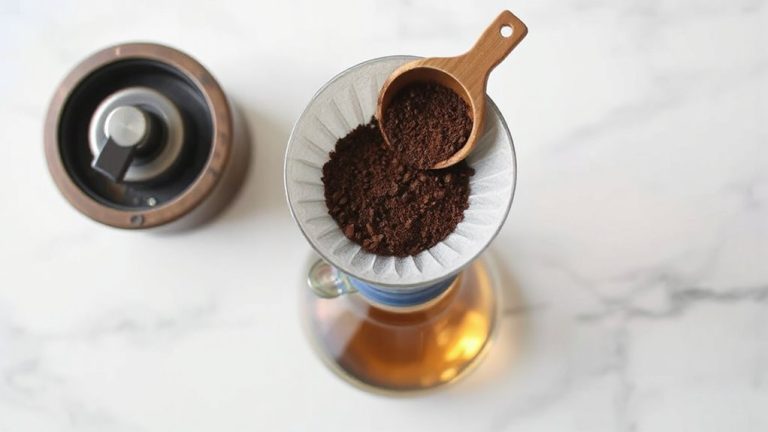
Texture is key when you’re trying to nail the right grind for your Moka pot. You want a medium-fine grind texture-finer than table salt but coarser than espresso. The particles should feel slightly gritty between your fingers, not powdery. Think of it like fine sand with a bit of tooth. Good particle consistency guarantees even extraction and steady flow through the brew cycle. If the grind’s too coarse, your coffee tastes weak; too fine, and pressure builds too fast. A quality burr grinder helps maintain uniformity, unlike blade grinders, which create uneven particle consistency. Popular models like the Baratza Encore or Timemore C2 deliver reliable results. This grind size works well with standard aluminum or stainless steel Moka pots. You’re aiming for balance: enough resistance to build pressure, but not so much that water struggles to rise. It’s practical, repeatable, and gives you that rich, full-bodied cup without bitterness. For filter brewing methods, achieving optimal extraction starts with choosing the right best grinder for filter coffee.
Grind Too Fine? How to Fix It
If your coffee tastes bitter or you hear loud gurgling as the water struggles to push through, the grind’s probably too fine. These are classic over extraction signs-your grounds are holding onto too much, pulling out harsh flavors. A clogged filter plate can make it worse, slowing flow and increasing pressure. First, check the plate: remove it and rinse under warm water to clear any coffee buildup. Then, adjust your grinder one or two settings coarser-on a blade grinder, that might mean reducing the time by a few seconds; on a burr model, bump the setting toward medium. Re-brew and observe: smooth coffee with balanced flavor means you’re closer. Avoid going too coarse too fast-you’ll under-extract. Start small, test, and tweak. Consistent grind size matters most, so stick with a reliable grinder. For convenience, consider trying a high-quality pre-ground coffee for moka pots specifically designed to match the ideal grind consistency.
Grind Too Coarse? How to Adjust It
Ever wonder why your moka pot brew tastes weak or sour, lacking that rich depth you’re after? You’re likely dealing with coarse grind consequences-when particles are too big, water rushes through too fast, under-extracting the coffee. That means flat flavor and sharp acidity. The fix? Adjusting grind settings to go finer. Use a burr grinder if possible; blade grinders lack consistency. Start by tweaking the setting just one notch finer-it’s easy to overdo it. Test the brew: aim for a balanced, full-bodied cup without bitterness. If it’s still thin, go slightly finer next time. Note that different beans and roast levels respond uniquely, so small adjustments matter. Remember, ideal grind size varies by moka pot size and heat level. With careful testing, you’ll find the sweet spot where flavor locks in.
How Grind Size Controls Pressure in Your Moka Pot
While grind size might seem like a minor detail, it plays a critical role in how pressure builds in your moka pot. Too coarse, and water moves too quickly through the grounds, weakening flow dynamics and limiting pressure buildup. That means weak, under-extracted coffee. Go too fine, though, and the coffee bed restricts water flow, increasing resistance. This can spike pressure beyond ideal levels, risking over-extraction or even safety valve activation. The right grind size keeps flow steady and even-like a slow drip rather than a rush or blockage. That balance supports ideal pressure buildup for full extraction without damaging your pot. You’re not just adjusting flavor-you’re managing how water moves and pressure forms. It’s not about extreme fineness; it’s about consistency that supports reliable performance every brew.
How to Fine-Tune Your Moka Pot Grind
You’ve seen how grind size shapes pressure and extraction in your moka pot, so now it’s time to adjust that grind for better results. Start with a medium-fine setting, like table salt, and tweak from there. If your coffee tastes bitter or over-extracted, go slightly coarser to improve flow rate. If it’s weak or sour, try a finer grind to increase resistance and contact time. Consistent bloom consistency-how evenly the coffee expands during brewing-tells you if your grind stability is on point. Poor grind stability from a low-quality grinder causes channeling, leading to uneven extraction. A burr grinder, like the Baratza Encore or Fellow Ode, delivers better uniformity than blade models. Make small adjustments, one notch at a time, and wait for results over several brews. Tracking changes helps lock in the ideal setting. Fine-tuning isn’t instant, but it’s essential for balanced, flavorful coffee.
On a final note
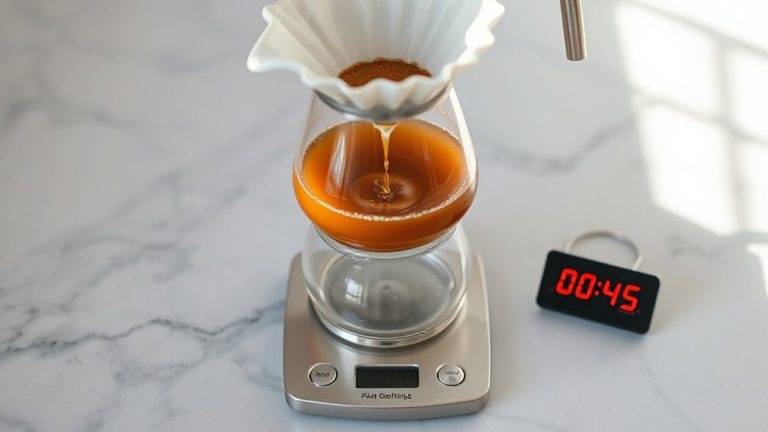
You’ll get the best moka pot results with a medium-fine grind, like table salt. Too fine, and pressure builds too much, causing bitter, over-extracted coffee. Too coarse, and water runs through too fast, leaving weak, sour results. Grind size directly controls flow rate and pressure, so adjust in small increments. Use a burr grinder for consistency. Fine-tune based on taste and brew time-around 4–5 minutes is ideal.