The Impact of Water Temperature on Caffeine Solubility in Coffee
You’re extracting less caffeine if your water’s too cool-below 195°F slows dissolution, leaving potential energy in the grounds. Too hot, above 205°F, and you risk bitter over-extraction without gaining more caffeine. The sweet spot is 195–205°F, where heat boosts solubility and kinetics just right. Electric kettles with temperature control make this easy. Light roasts need the upper range; dark roasts do better slightly cooler. Keep equipment preheated, and use balanced water-distilled won’t extract as well. You’ll see how brew method changes the game.
Notable Insights
- Higher water temperatures increase caffeine solubility by enhancing molecular movement and extraction efficiency.
- Optimal caffeine extraction occurs between 195°F and 205°F, just below boiling point.
- Water below 175°F significantly reduces caffeine dissolution due to slower molecular kinetics.
- Excessively hot water near boiling can over-extract bitter compounds without boosting caffeine yield.
- Stable water temperature during brewing ensures consistent caffeine extraction and balanced flavor.
How Temperature Changes Caffeine Solubility in Coffee
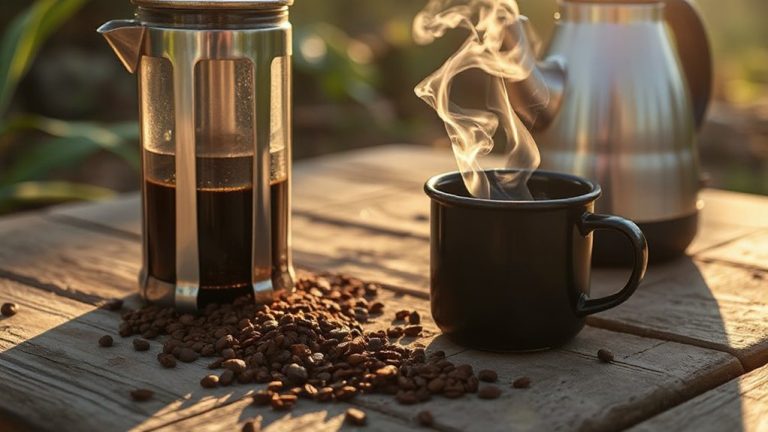
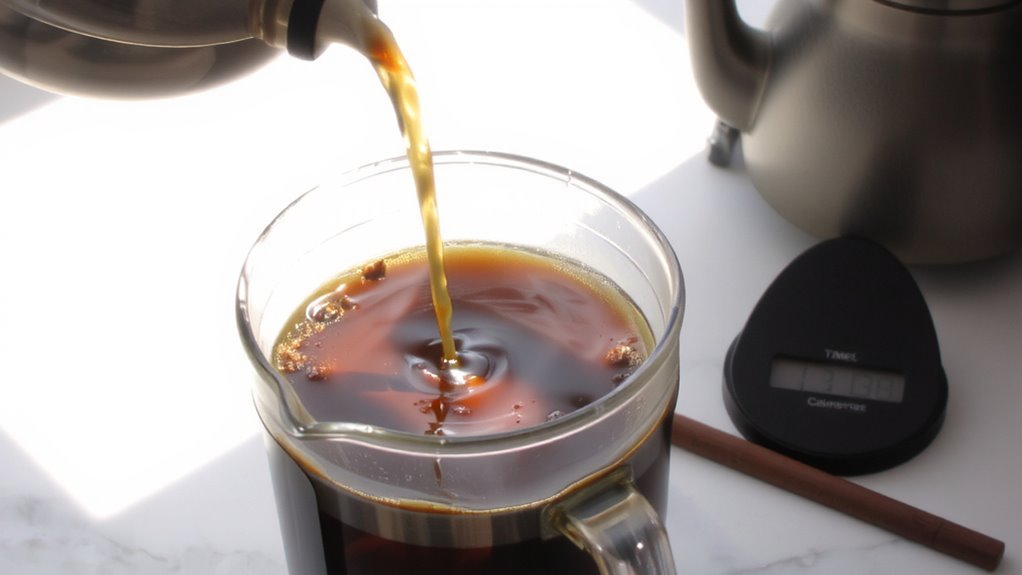
Every degree counts when it comes to extracting caffeine from coffee grounds, and temperature plays a direct role in how much ends up in your cup. When water heats up, molecular kinetics increase-molecules move faster and collide more, boosting the dissolution rate of caffeine. At around 195–205°F (90–96°C), you’re in the sweet spot for efficient extraction. Below that, say 175°F (80°C), the process slows, leaving caffeine behind and yielding a weaker brew. Too hot, near boiling, and you risk over-extracting bitter compounds without gaining much extra caffeine. Electric kettles with temperature control, like the Fellow Stag or Bonavita variable models, help maintain precision. Pour-over, French press, or drip machines all depend on this principle-consistent heat means consistent strength. You don’t need lab gear, just awareness: hotter water extracts faster, but balance matters. Aim for stability in the high 190s for reliable results.
How Brewing Method Impacts Caffeine Extraction
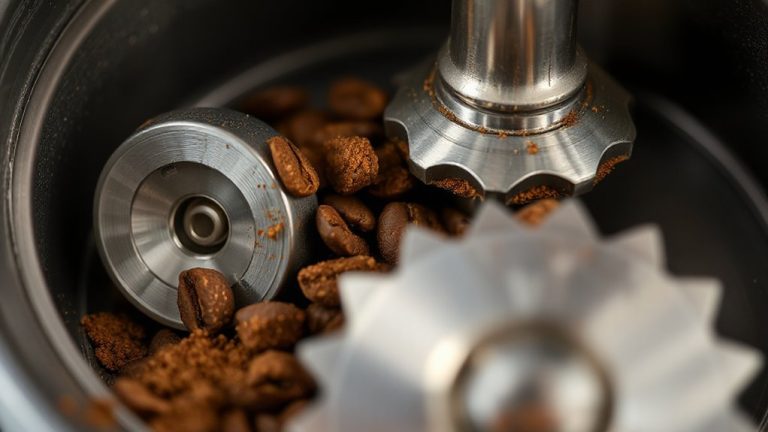
While temperature sets the foundation for caffeine extraction, the brewing method you choose plays a decisive role in how much caffeine ends up in your cup. Your brew time and grind size directly impact this. A longer brew time, like in cold brew or French press, allows more caffeine to be extracted-often yielding stronger results. Espresso uses short brew times but high pressure and fine grind size, pulling a concentrated dose quickly. Drip coffee, with medium grind size and moderate brew time, tends to deliver balanced caffeine levels. Finer grinds expose more surface area, boosting extraction, while coarse grinds slow it down. If you want more caffeine, opt for a coarse grind with a longer brew time-or a finer grind under pressure. Your gear matters: a French press immerses grounds, while pour-over relies on flow rate. Adjusting these variables gives you control. A precise coffee brewing timer helps maintain optimal extraction by tracking brew time accurately.
The Best Water Temperature for Maximum Caffeine
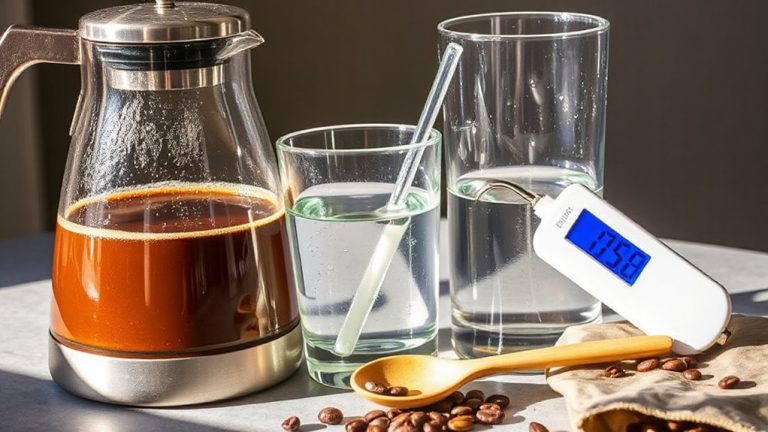
You’ve already seen how brew time and grind size affect caffeine extraction, but water temperature is just as influential when pulling the most caffeine from your grounds. For maximum solubility, aim for 195°F to 205°F-just below boiling. At this range, water density is low enough to move freely through coffee particles, yet hot enough to dissolve caffeine efficiently. Too cool, and extraction slows; too hot, and you risk scalding the grounds, increasing bitterness without boosting caffeine. Mineral content also matters: water with balanced minerals (like magnesium and calcium) improves extraction, while distilled water underperforms. Use a gooseneck kettle with a thermometer or an electric pour-over kettle to maintain precision. Even small temperature drops during brewing can impact results, so preheat your equipment. This range works reliably across drip, pour-over, and French press methods when optimizing for caffeine. For accurate readings, consider using one of the best coffee thermometers designed for brewing precision. coffee brewing thermometers
Cold vs. Hot Brew: Caffeine in Iced Coffee
Though cold brew has grown popular for its smooth taste and easy preparation, it’s worth noting that it doesn’t always deliver more caffeine than hot-brewed coffee. You’ll get a strong kick from cold brew if you steep coarsely ground beans for 12 to 24 hours-its long brewing time extracts ample caffeine, even without heat. But strength depends on concentration; many dilute it with water or milk, lowering caffeine per serving. Hot brewing, using water near 195–205°F, pulls caffeine faster and more completely in minutes. If you’re serving over ice, consider brewing stronger to offset melting-this also helps maintain flavor. For ice clarity and a clean finish, use filtered water and avoid agitation during brewing. Whether you choose cold or hot, your method affects caffeine levels, but neither guarantees a stronger buzz. It comes down to how you prepare and serve it. The right best at-home cold brew makers can simplify this process and improve consistency.
Flavor vs. Caffeine: The Heat Trade-Off
What if brewing coffee is more than just chasing caffeine or flavor-what if it’s about balancing both? You’ll find that hotter water pulls out more caffeine quickly, but it also extracts bitter compounds, especially from darker roasts. Lighter roast levels tend to preserve bright, complex notes, but they need higher temps-around 195–205°F-for full extraction. Dark roasts? They’re more soluble, so they risk over-extraction if the water’s too hot. Your bean variety matters, too: Arabica often shines with slightly cooler water, while robust Robusta can handle heat but brings more bitterness. If you want balanced flavor with decent caffeine, aim for 200°F and adjust grind size first. Boiling water isn’t always better-it can scald your coffee, especially with delicate beans. Ultimately, fine-tuning temperature, bean variety, and roast level gives you control-no gear upgrade required.
On a final note
You’ll get more caffeine from hot water, as heat boosts solubility and extraction. For max caffeine, brew with water near 195–205°F using methods like drip or French press. Cold brew gives less caffeine per ounce but is smoother and less acidic. If you want strong caffeine and bold flavor, stick with hot brewing. For milder taste and convenience, cold brew works. Match your method to your caffeine and flavor needs.