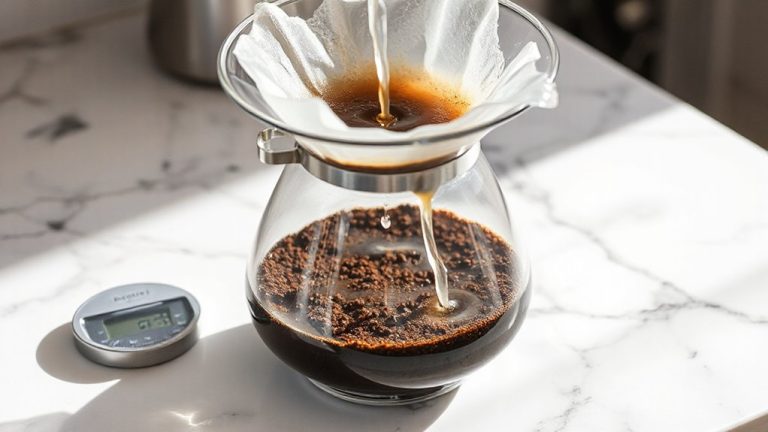
Why Central American Beans Excel at Standard Medium Grind Settings
You’ll get the best results from Central American beans with a medium grind because their high-altitude density and volcanic soil richness create a balanced structure and sweetness. These beans, like those from Antigua or Acatenango, extract evenly without turning bitter or weak. The grind suits most drip, pour-over, and Aeropress setups, revealing bright acidity and cocoa-like body. Use a medium roast and water around 200°F for peak clarity-your next cup could easily be your best.
Notable Insights
- High-altitude growing conditions slow bean development, creating denser beans ideal for medium grind extraction.
- Volcanic soils rich in minerals enhance sugar development, contributing to sweetness that shines with medium grind.
- Dense bean structure from cool, high-elevation climates responds evenly to standard medium grind settings.
- Natural acidity and balanced body in Central American beans are optimally extracted using a medium grind.
- Medium grind prevents over- or under-extraction, preserving the region’s signature brightness and nuanced sweetness.
How Altitude Shapes Central American Bean Density
While altitude might seem like just a number on a map, it actually plays a major role in how dense and flavorful Central American coffee beans become. You’ll find that higher elevations, like those in Guatemala’s Antigua or Honduras’s Marcala regions, lead to slower bean development. This slow growth tightens the bean structure, making the coffee denser. That density matters when you’re roasting or brewing-it affects how heat penetrates during roasting and extraction during brewing. The climate influence at these altitudes-cooler nights and consistent cloud cover-further shapes bean hardness and sugar development. Denser beans often respond better to standard medium grind settings, offering more even results with less risk of over- or under-extraction. So when you’re choosing beans, consider altitude as a direct signal of physical bean structure and expected performance in your grinder and brewer.
Why Volcanic Soil Makes These Beans Sweeter
Because volcanic soil is packed with minerals like potassium, phosphorus, and magnesium, it gives Central American coffee plants the ideal environment to develop complex sugars during growth, and that’s why beans from regions like Acatenango in Guatemala or Santa Ana in El Salvador often taste noticeably sweeter. You’re tasting the mineral richness absorbed by the roots, which directly boosts sugar synthesis in the beans. This isn’t just about sweetness-volcanic soil balances it with natural organic acidity, giving clarity without sharpness. When you brew these beans using a medium grind, the sweetness comes through cleanly, especially in pour-over or drip setups. Compared to beans grown in depleted soils, volcanic-grown beans deliver a more consistent, rounded profile. You’ll notice the difference most when using fresh, light-roast beans that preserve the terroir. Look for origin labels that specify volcanic regions-those markers are reliable indicators of both quality and flavor balance.
Why These Beans Taste Bright But Never Thin
That natural sweetness from volcanic soil sets the stage, but what really defines Central American coffees is how that sweetness interacts with brightness. You get lively bean acidity, yes-but it’s never sharp or unbalanced. Instead, it’s wrapped in a smooth body that keeps the cup full and satisfying. This flavor balance is why these beans stand out, even with basic brewing gear.
| Region | Acidity & Body Traits |
|---|---|
| Guatemala | Bright with cocoa-like depth |
| Costa Rica | Crisp, juicy acid with syrupy base |
| El Salvador | Smooth acid, nutty sweetness |
You don’t need special filters or grinders to taste it. The inherent structure of these beans does the work, giving clarity without thinness, acid without harshness-ideal for everyday medium roasts.
How Medium Grind Unlocks Their Flavor Clarity
A balanced grind size is your best bet for getting the most out of Central American beans-and medium grind hits that sweet spot. Too fine, and you risk over-extracting, muddying the flavor notes; too coarse, and the brew falls flat. Medium grind gives you ideal extraction balance, letting the bean’s natural acidity, sweetness, and subtle nuances come through cleanly. You’ll notice brighter citrus or floral hints in beans from Guatemala, or gentle chocolate and nut tones in those from Costa Rica. This setting works especially well with pour-over, drip, and Aeropress-methods that rely on consistent contact time. Unlike ultra-fine espresso grinds or super coarse French press settings, medium doesn’t demand precision gear or technique. Most blade or entry-level burr grinders can achieve it. You get reliable results without extra hassle. For daily clarity and true-to-origin flavor notes, medium isn’t just convenient-it’s effective.
Finding the Right Roast for Central American Beans
While lighter roasts tend to highlight the bright acidity and distinct varietal character of Central American beans, going too light can leave some profiles underdeveloped or grassy, especially in higher-density beans from regions like Honduras or El Salvador. You’ll want to aim for a roast that guarantees proper roast development without masking the bean’s natural brightness. Look for a medium roast where the beans reach an even internal temperature, letting sugars develop fully while preserving acidity. Bean maturity plays a key role-denser, more mature beans handle longer development times better. Avoid roasting too fast or hot, as this can lead to uneven results. A well-developed roast brings balanced sweetness, clarity, and a clean finish, making your brew more consistent across different brewing devices. Ultimately, matching roast development to bean maturity helps you get the most out of these high-quality coffees.
Drip and Pour-Over: Best Methods for These Beans
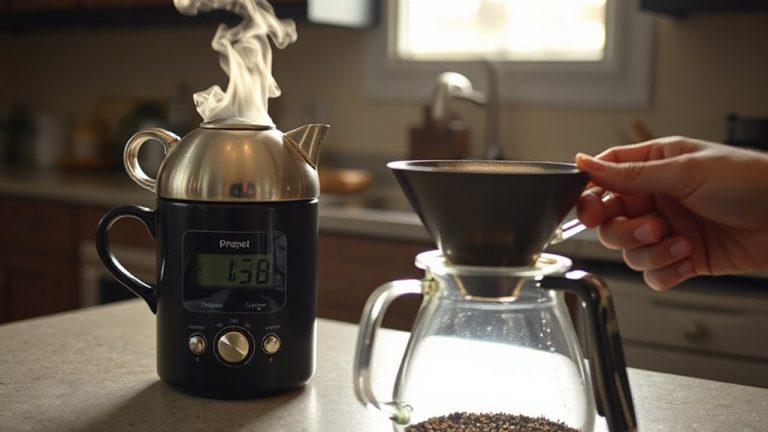
Because Central American beans often have bright acidity and nuanced, tea-like floral or fruity notes, pour-over and drip methods work especially well since they let you control water flow and extraction time. You can highlight these delicate flavors by adjusting brew time and water temperature. For best results, aim for a water temperature between 195°F and 205°F. Too hot, and you risk scalding the grounds; too cool, and extraction suffers. A reliable drip coffee maker under $200 can deliver consistent results without sacrificing flavor clarity.
| Method | Brew Time | Water Temperature |
|---|---|---|
| Pour-over | 2:30–3:30 | 200°F–205°F |
| Automatic drip | 5:00–6:00 | 195°F–202°F |
| Chemex | 3:00–4:00 | 200°F–205°F |
Shorter brew times suit lighter roasts; longer ones help balance denser medium roasts. Use a gooseneck kettle for precision in pour-overs. Standard drip machines offer consistency but less control. Either way, fresh grind and clean equipment matter most.
Why Central American Beans Shine at Medium Grind
Getting the most out of Central American beans isn’t just about your brew method-your grind size plays a key role, especially when using pour-over or drip setups. A medium grind works best because it matches the bean origin’s inherent density and moisture content. Central American beans, like those from Guatemala or Costa Rica, tend to have a balanced structure that responds well to this setting. It allows for even extraction without overdoing acidity or body. Too fine, and you risk bitterness; too coarse, and the brew tastes weak. With a medium grind, you preserve the flavor balance these beans are known for-bright citrus or chocolate notes without losing sweetness. This grind size fits standard drip machines and manual pour-overs alike. You don’t need specialty gear-most entry-level grinders have a medium setting that works. Just adjust brew time slightly if needed. For optimal results, consider using a coffee dripper designed to enhance flavor clarity and control during brewing.
On a final note
You’ll get the best from Central American beans using a medium grind-ideal for drip and pour-over methods. Their high altitude and volcanic soil boost density and sweetness, giving bright, clear flavors without thinness. A medium roast preserves nuance. Finer grinds risk over-extraction; coarser ones lose clarity. Stick to a consistent burr grinder and water just off the boil for balanced, flavorful results every time.