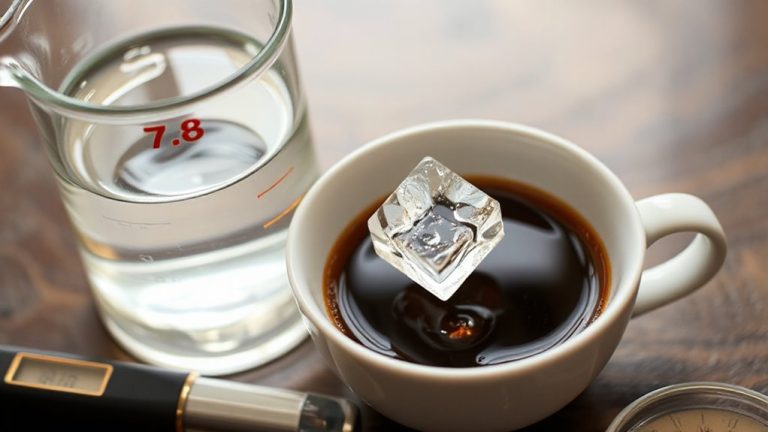
Why Softened Water Leads to Flat, Underdeveloped Coffee Flavor
You’re using softened water, and that’s why your coffee tastes flat and underdeveloped. Softening removes calcium and magnesium-minerals critical for extracting flavor. Without them, coffee lacks body and complexity. Sodium added during softening dulls taste, masking sweetness and brightness. Even at the right temperature, extraction suffers. For better results, use filtered tap water or try mineral-rebalanced options like Third Wave Water. You’ll notice richer, more balanced coffee right away-there’s more to get right once you fix the water.
Notable Insights
- Softened water lacks calcium and magnesium, reducing extraction efficiency and flavor development.
- Sodium from water softeners dulls taste perception and masks coffee’s natural sweetness.
- Low mineral content results in weak, thin-bodied coffee with underdeveloped aromatic complexity.
- Without essential minerals, acidity and brightness in coffee become flat and unbalanced.
- Softened water impairs the solubility of coffee compounds, leading to lifeless, insipid brews.
How Water Affects Coffee Taste
Water quality plays a bigger role in your coffee than you might think. Your water’s mineral balance directly affects how flavors extract during brewing. Too soft, and your coffee tastes flat or weak; too hard, and it can become bitter or over-extracted. Ideal water hardness lies in a moderate range-around 50–150 ppm-where minerals like calcium and magnesium support balanced extraction without causing scale. These minerals help pull out the nuanced notes in coffee, from fruity acids to chocolatey depths. Using distilled or highly softened water strips away this balance, leading to underdeveloped flavor. For best results, many baristas use filtered tap water or add mineral packets like Third Wave Water to fine-tune their water. Your brewer’s performance and flavor consistency depend on it. Don’t overlook water-it’s not just H₂O, it’s part of the recipe.
Does Softened Water Ruin Coffee?
You already know water’s mineral content shapes your coffee’s flavor, but if you’re using a home water softener, you might be trading cleaner pipes for a weaker cup. Softened water swaps calcium and magnesium for sodium, lowering water hardness. That might protect your machine, but it hurts extraction. Low mineral content means water can’t carry coffee’s flavors well, leading to flat, underdeveloped results-even if your brewing temperature is perfect. Ideal brewing happens around 195–205°F, but temperature alone can’t fix poor water. You’re better off using filtered tap water or adding specialty mineral packets like Third Wave Water. If softened water is your only option, consider blending it with bottled spring water to boost minerals. It’s a small tweak that improves extraction without costly gear. Don’t let soft water sabotage your brew.
How Minerals Unlock Coffee’s Best Flavors
Minerals are the unseen players behind a great cup, pulling out the flavors hidden in every coffee bean. Your water’s mineral balance directly impacts flavor extraction-too little, and coffee tastes hollow; too much, and it’s bitter. Calcium and magnesium help pull sweetness and acidity from the grounds, while bicarbonate stabilizes pH. For best results, aim for balanced water, not softened or distilled.
| Mineral | Role in Coffee |
|---|---|
| Magnesium | Boosts bright, fruity notes |
| Calcium | Enhances body and structure |
| Bicarbonate | Buffers acidity, prevents sourness |
Using filtered water like Third Wave Water or adding a small pinch of mineral salts gives reliable results. Avoid softeners-they trade flavor for appliance safety. Balanced water means better extraction, clearer taste, and more of what your beans can offer. It’s not fussy science-it’s practical brewing.
Why Softened Water Tastes Flat
That balanced mineral profile makes all the difference, but softened water strips it away-replacing flavor-driving minerals like calcium and magnesium with sodium or potassium ions. You’re left with a sodium residue that dulls taste and alters perception. Without those key minerals, your coffee lacks structure and complexity, giving it a bland mouthfeel. Softened water doesn’t just fail to extract flavors effectively-it actively masks them. Even if your brew looks right, it’ll taste thin and lifeless. This isn’t just about preference; it’s chemistry. Sodium interferes with how your tongue detects sweetness and acidity, muting bright or fruity notes. If your beans are high-quality but your coffee still tastes flat, softened water might be the culprit. Unless you’re using a system that adds minerals back post-softening, you’re better off bypassing softened tap water entirely for brewing.
Filtered, Spring, or Tap: Which Water Brews Better Coffee?
What makes one water source better than another for brewing coffee? It comes down to water hardness and mineral balance. Tap water varies widely-some areas have too many minerals, others too few, which can lead to over- or under-extraction. Filtered water, like that from a Brita, reduces chlorine and adjusts mineral levels slightly, offering a more consistent base. Spring water contains natural minerals, but its mineral balance isn’t always ideal for coffee-some brands are too soft or too hard. For most home brewers, filtered tap water strikes the best middle ground: it removes impurities while retaining enough minerals to support flavor extraction. You don’t need expensive gear or specialty water. A simple carbon filter improves taste and protects your machine. Test your local water if possible, especially if your coffee tastes off.
The Best Water for Flavorful Coffee
You’ve probably noticed how different water changes your coffee’s taste, and now it’s worth zeroing in on which one actually brings out the best flavor. The key lies in water hardness and mineral balance-both directly affect extraction. Water that’s too soft, like fully softened tap water, strips away essential minerals, leading to weak, flat coffee. On the other hand, overly hard water can cause scale buildup and bitter notes. The ideal is a balanced water profile: around 50–150 ppm total hardness, with a mix of calcium, magnesium, and bicarbonates. Brands like Third Wave Water offer mineral packets designed specifically for coffee, giving you consistent results. If you use tap water, a dual-filter system (like TAPP or HomeWater) can help adjust mineral levels without removing them completely. You don’t need pure water-you need smartly balanced water.
Keep Minerals: Optimize Water Without Softening Fully
Mineral balance matters more than you might think when it comes to brewing better coffee. Fully softened water strips out essential minerals, leading to flat, underdeveloped flavor. Instead of removing all hardness, aim to optimize water hardness by keeping key minerals. A balanced mix of calcium and magnesium helps extract coffee’s full flavor, while sodium from softeners can dull taste. You don’t need pure water-you need smart water.
| Mineral | Role in Coffee |
|---|---|
| Calcium | Aids extraction, adds body |
| Magnesium | Enhances brightness, pulls acids |
| Sodium | From softeners, dulls flavor |
| Bicarbonate | Buffers acidity, adds balance |
| Sulfate | Boosts clarity, intensifies flavor |
Adjust your water with mineral drops or blends like Third Wave Water to maintain mineral balance and avoid the drawbacks of full softening.
On a final note
You’re better off skipping fully softened water for coffee-it strips out essential minerals that pull out flavor, leaving your brew flat. Instead, use filtered tap or bottled spring water with balanced mineral content, like Third Wave Water or Peak Water. These keep just enough calcium and magnesium to enhance taste without causing scale. If you use a softener, mix in some unsoftened water to restore minerals. For great coffee, water quality matters as much as the beans.