Enhancing Chocolate Notes in Medium Roasts via Controlled Medium Grind
You’ll get the richest chocolate notes from medium roasts by using a consistent medium grind-like table salt-with a burr grinder. Beans from Ghana, Ecuador, or the Dominican Republic offer cocoa, milk chocolate, or nutty tones when roasted just right. A uniform grind balances extraction, preventing bitterness or sourness. Pair it with drip, pour-over, or espresso, adjusting water temperature and brew time. Filtered water helps, too. Your next cup could reveal even more depth with the right tweaks.
Notable Insights
- Use a medium grind, similar to table salt, to balance extraction and highlight chocolate notes in medium roasts.
- Choose beans from Ghana, Ecuador, or Dominican Republic for distinct cocoa profiles when roasted to precise temperatures.
- Employ a burr grinder to ensure uniform particle size and prevent bitter or sour off-flavors.
- Optimize brew methods with proper water temperature and time to amplify chocolate sweetness without over-extraction.
- Use filtered water with balanced minerals to enhance cocoa depth and avoid flat or bitter taste.
How Grind Size Reveals Chocolate Notes
A medium grind size often works best for bringing out chocolate notes in medium roast coffee, especially when using pour-over methods like the Hario V60 or Chemex. When you grind too fine, water struggles to flow, over-extracting bitter compounds and masking the subtle cocoa flavors you’re after. Too coarse, and you under-extract-leaving the cup weak and sour, with poor aroma development. A medium setting, similar to table salt, balances flow rate and contact time for ideal flavor extraction. That consistency helps dissolve the sugars and organic acids tied to chocolate-like richness. Blade grinders won’t cut it here-consistency matters, so go with a burr grinder like the Baratza Encore or Fellow Ode. Adjust slightly based on your brew time: if it’s under 2:30, go finer; over 3:30, coarsen up. Your grind size is a direct lever-use it wisely. For the most reliable results, consider a best mill grinder that delivers uniform particle size.
Medium Roast Beans That Taste Like Chocolate
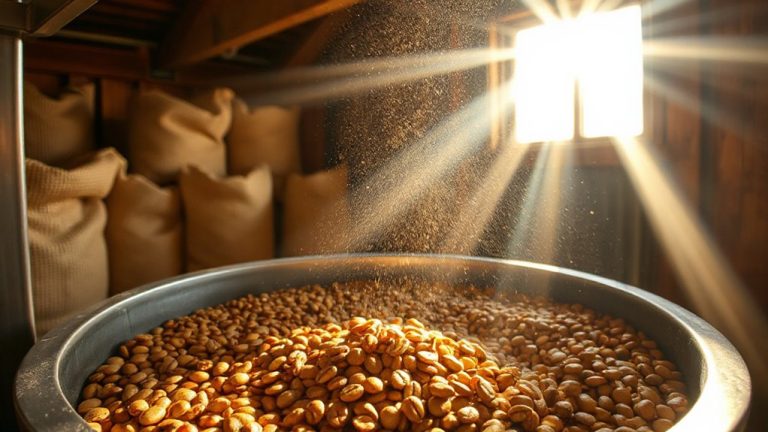
You’ve got the grind right-now it’s time to pick beans that actually deliver on the chocolate promise. The key lies in chocolate origin and roast timing. Beans from Ghana, Ecuador, and the Dominican Republic often have natural cocoa notes, especially when roasted to a medium profile. Roast too long, and you lose nuance; too short, and the chocolate character won’t develop. Watch the roast timing closely-pull around 410–420°F for ideal sweetness and depth. For the best results, consider starting with expert-recommended beans that highlight these origin-specific flavor profiles.
| Bean Origin | Typical Chocolate Note | Roast Timing Tip |
|---|---|---|
| Ghana | Dark cocoa | Stop at first crack + 45s |
| Ecuador | Milk chocolate | Target 415°F |
| Dominican Republic | Nutty chocolate | Avoid exceeding 420°F |
Choose fresh beans, store them properly, and brew within two weeks for best results.
The Ideal Grind for Chocolate Flavor
Consistency is king when it comes to extracting chocolate notes from medium roast beans. You need a uniform medium grind-think table sugar-to balance sweetness and avoid bitterness. If your grind’s too coarse, you’ll under-extract and lose the rich, cocoa-like depth; too fine, and harshness takes over. Your bean origin matters: beans from Ethiopia might shine brighter with a slightly finer grind, while Colombian or Brazilian beans often bring inherent chocolate tones that thrive with a balanced setting. Match the grind to your roast profile-lighter medium roasts benefit from evenness to highlight complexity, while deeper medium roasts emphasize body and chocolate richness when ground just right. Use a burr grinder like the Baratza Encore or 1Zpresso J-Max for control. Adjust in small steps. Your goal? Maximize chocolate flavor without tipping into sour or bitter. For baristas seeking precision, investing in expert-recommended grinders can make a significant difference in flavor clarity and shot repeatability.
Match Your Brew Method for Richer Taste
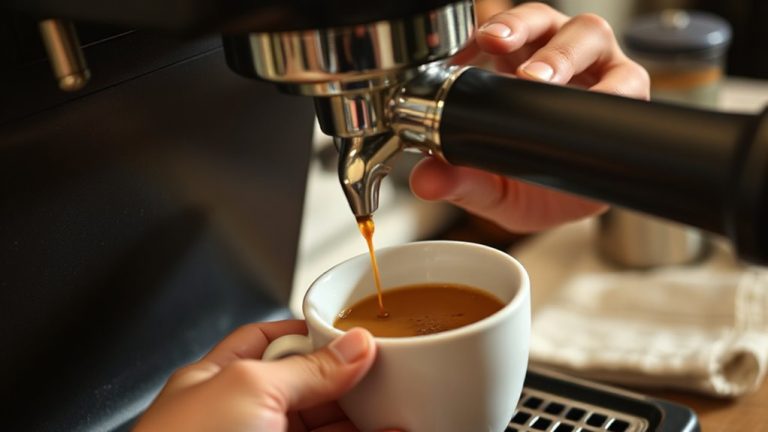
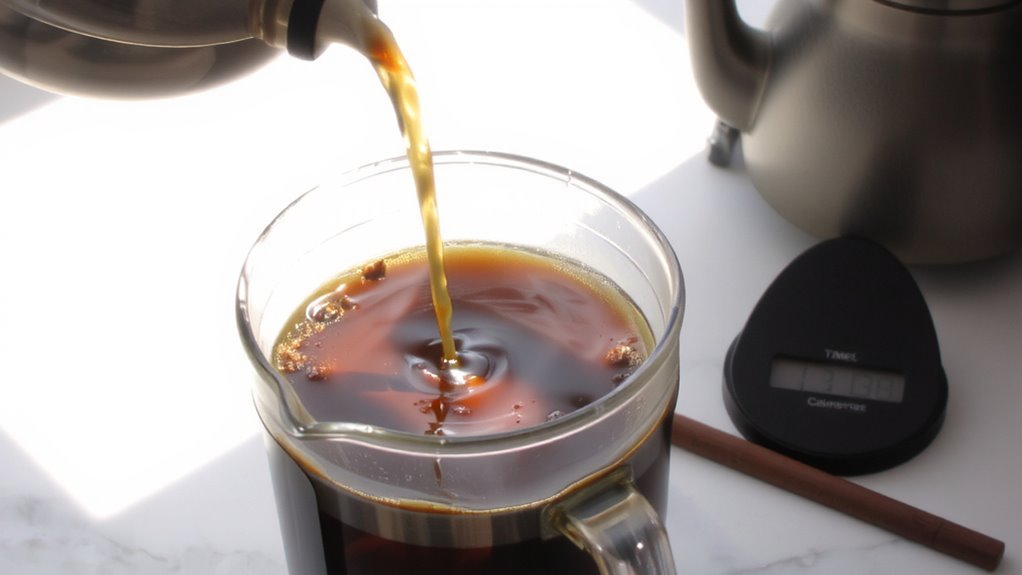
The right brew method can greatly amplify chocolate notes in medium roast coffee by controlling extraction time, water temperature, and contact with grounds. For drip brewers, aim for a water temperature between 195°F and 205°F and a brew time of 5–6 minutes to pull out sweet, cocoa-like flavors without over-extracting. Pour-over methods like the Chemex or V60 give you more control-use a gooseneck kettle and stay within that ideal temp range for cleaner, richer results. French press takes longer-about 4 minutes-and uses lower heat, which can mute chocolate tones if not adjusted. Espresso, with its quick 25–30 second brew time and high pressure, concentrates flavors but demands precise grind and fresh beans. Match each method’s strengths to your setup, bean, and taste. Tweaking water temperature and brew time is easier than changing beans-start there.
Boost Cocoa Depth Without Bitterness
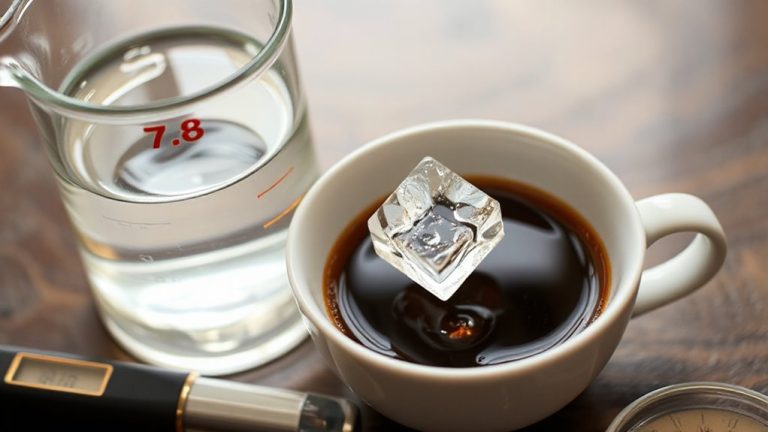
Getting the most from your brew method sets the foundation, but pulling out deeper cocoa notes without slipping into bitterness means paying close attention to grind size and water quality. You want even extraction, not overdoing it on the fines. A medium grind with a quality burr grinder-like the Baratza Encore-helps. Soft, filtered water enhances cocoa fermentation characteristics developed during flavor maturation. Too hard, and you risk harshness; too soft, and notes fall flat.
| Grind Size | Water Type | Cocoa Depth |
|---|---|---|
| Medium | Filtered | Rich, smooth |
| Coarse | Hard tap | Thin, sharp |
| Too fine | Distilled | Bitter, dull |
Adjusting these variables lets you highlight chocolate tones without tipping into astringency. Focus on consistency-you’ll taste the difference in every balanced sip.
Fix Flat or Bitter Coffee – Grind Solutions
Bitter or flat coffee usually points to one culprit: an uneven grind. When particles vary in size, some over-extract while others under-extract, leading to harsh or dull flavors. A burr grinder-like the Baratza Encore-gives consistent medium grind size, essential for balanced chocolate notes in medium roasts. Too fine, and bitterness creeps in; too coarse, and the brew tastes flat. Pair this with proper brew temperature-aim for 195–205°F-to avoid scalding or under-extraction. Water quality matters too; use filtered water with balanced minerals for cleaner, richer flavor. If your coffee still turns out off, check grinds first, then adjust temperature or water. Don’t rely on blade grinders-they create erratic grounds that ruin extraction. Consistency in grind, combined with stable brew temperature and good water quality, fixes most off-notes fast. Simple changes make the difference between harsh or hollow coffee and a smooth, chocolatey cup.
On a final note
You’ll get the most chocolate flavor from medium roasts by using a controlled medium grind-too fine brings bitterness, too coarse leads to flat taste. Try a burr grinder for consistency, like the Baratza Encore. Match the grind to your brew method: pour-over needs slightly finer, while Chemex leans coarser. This balance boosts cocoa depth without over-extracting.